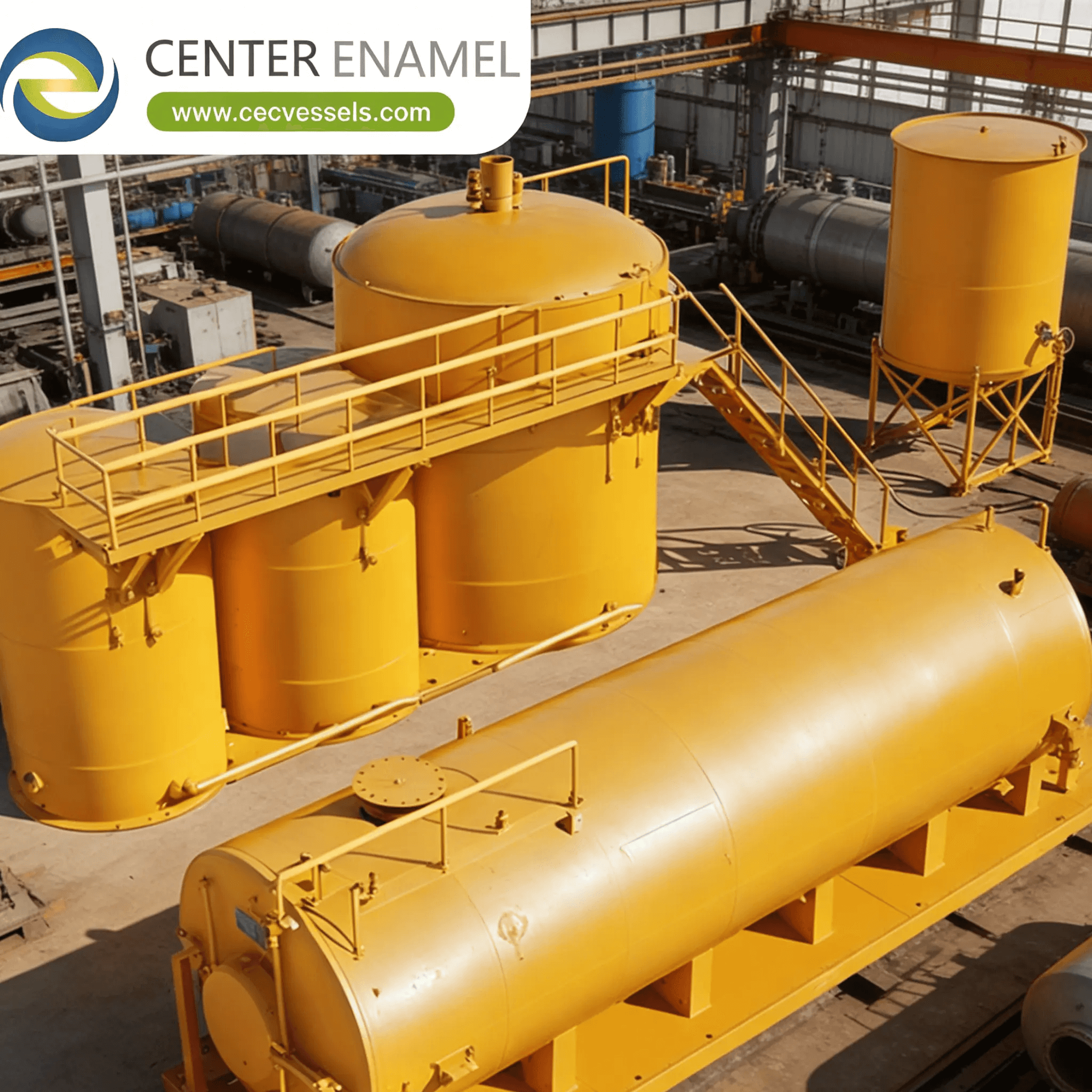
Quadruple-Effect Evaporator for High-Efficiency Industrial Concentration
A Quadruple-Effect Evaporatoris a multi-effect evaporation system designed for efficient industrial liquid concentration. It consists of four evaporation effects arranged in series, allowing vapor generated in one effect to serve as the heating source for the next effect.
Compared with a single-effect evaporator, a quadruple-effect configuration makes greater use of the available thermal energy. This reduces the amount of fresh steam required for evaporation and improves overall energy utilization.
Quadruple-effect evaporators are widely used for concentrating chemical solutions, food products, pharmaceutical liquids, wastewater streams, salt solutions, and other industrial materials. The system can be customized according to feed characteristics, evaporation capacity, target concentration, temperature requirements, and process flow.
How Does a Quadruple-Effect Evaporator Work?
The operating principle is based on sequential vapor reuse.
Feed liquid enters the first evaporation effect, where heating steam transfers heat to the liquid. Part of the liquid evaporates and produces secondary vapor.
The secondary vapor from the first effect becomes the heating source for the second effect. Because the second effect operates at a lower boiling temperature, the vapor can provide the necessary heat for further evaporation.
The same principle continues through the third and fourth effects:
First Effect → Second Effect → Third Effect → Fourth Effect As vapor moves from one effect to the next, its available heat is reused multiple times. This arrangement improves thermal efficiency and reduces fresh steam consumption.
The concentrated liquid can be discharged from the final effect or transferred to downstream equipment depending on the production process.
Main Features of a Quadruple-Effect Evaporator
Four-Stage Heat ReuseThe main feature of the quadruple-effect evaporator is its four-stage thermal arrangement. Vapor generated during evaporation is reused successively, making better use of the supplied heating energy.
Efficient Liquid ConcentrationThe system provides continuous evaporation and concentration for industrial liquids. Evaporation capacity and heat-transfer area can be designed according to the required production output.
Flexible Process ConfigurationFeed flow, heating arrangement, vapor routing, circulation method, and discharge configuration can be customized according to different process requirements.
Stable Heat TransferEach effect can be designed with an appropriate heat-transfer area and operating temperature. This helps maintain stable evaporation throughout the multi-effect system.
Automated OperationTemperature, flow rate, liquid level, concentration, and other process parameters can be monitored through an integrated control system. Automation helps operators maintain consistent process conditions.
Materials for Quadruple-Effect EvaporatorsMaterial selection depends on the properties of the process liquid and the operating requirements of the evaporation system.
Stainless SteelStainless steel is widely used for process-contact components because of its corrosion resistance, smooth surface, and suitability for food, pharmaceutical, chemical, and environmental applications.
Different stainless steel grades can be selected according to the feed composition, temperature, concentration, and cleaning requirements.
Carbon SteelCarbon steel can be used for compatible industrial applications and supporting structures. It provides practical mechanical properties and established fabrication performance.
Customized MaterialsFor special process media, material selection can be adjusted according to chemical compatibility and process requirements. Different materials may also be used for the evaporator body, heat-transfer surfaces, piping, and auxiliary components.
Manufacturing Process
As a China Quadruple-Effect Evaporator Manufacturer, Center Enamel follows a structured manufacturing process covering engineering design, material preparation, fabrication, assembly, inspection, and testing.
Engineering DesignThe design process begins with analysis of evaporation capacity, feed composition, inlet and outlet concentration, boiling temperature, heating requirements, circulation characteristics, and plant layout.
The four effects are then configured according to the required heat-transfer area and process flow.
Material PreparationRaw materials are inspected before production. Specifications, dimensions, material certificates, and identification information are checked against approved engineering documents.
FabricationEvaporator shells, heat-transfer components, piping, supports, separators, and other components are fabricated according to the approved drawings.
Cutting, forming, welding, machining, and assembly are controlled throughout production.
System AssemblyThe four evaporation effects are assembled with heating and vapor pipelines, pumps, valves, separators, condensate systems, instruments, and other auxiliary equipment.
The complete arrangement is checked to ensure correct component positioning and connection configuration.
Inspection and TestingQuality inspections can include material verification, dimensional inspection, weld examination, leak testing, surface inspection, piping checks, and final assembly inspection.
The specific testing program is determined by the equipment design, customer requirements, applicable standards, and process specifications.
Applications of Quadruple-Effect EvaporatorsA Quadruple-Effect Evaporatorcan be used in numerous industrial concentration processes.
Chemical IndustryChemical plants use multi-effect evaporators to concentrate process solutions, recover valuable components, and prepare materials for downstream processing.
Food and BeverageQuadruple-effect evaporation can be applied to liquid food concentration, ingredient processing, and other applications where efficient moisture removal is required.
Pharmaceutical IndustryStainless steel evaporation systems can be configured for pharmaceutical liquid concentration where controlled processing conditions and cleanable surfaces are important.
Wastewater TreatmentIndustrial wastewater streams can be concentrated to reduce liquid volume and facilitate subsequent treatment, separation, or resource recovery.
Salt and Mineral ProcessingThe equipment can be integrated into salt concentration and crystallization processes involving mineral-rich solutions.
Quality ControlCenter Enamel integrates quality control into every major manufacturing stage. Depending on project requirements, inspections may include:
lRaw material verification lMaterial identification and traceability lDimensional inspection lVisual inspection lWeld inspection lNon-destructive testing lHeat-transfer component inspection lLeak testing lPiping inspection lInstrumentation verification lFinal assembly inspection
Each inspection stage is designed to verify that the equipment corresponds with the approved technical specifications and manufacturing documentation.
Chemical Industry Project in Hubei, ChinaCenter Enamel supplied customized process equipment for a chemical industry project in Hubei, China.
The project included resin tanks, coalescing oil separators, fiber adsorption tanks, compressed air storage tanks, condensate tanks, and steam distribution cylinders. Stainless steel and carbon steel were selected according to the individual application requirements.
The project involved engineering review, material preparation, fabrication, welding, assembly, inspection, and delivery. This experience demonstrates Center Enamel's ability to coordinate customized industrial process equipment for chemical production systems.
Why Choose Center Enamel as a Quadruple-Effect Evaporator Manufacturer?
Shijiazhuang Zhengzhong Technology Co., Ltd. (Center Enamel) provides customized industrial equipment for chemical, environmental, food, pharmaceutical, and other process industries.
Our product portfolio includes evaporators, reactors, heat exchangers, process vessels, Glass-Fused-to-Steel tanks, and Fusion Bonded Epoxy tanks.
As a Quadruple-Effect Evaporator Manufacturer, Center Enamel can customize evaporation systems according to feed characteristics, evaporation capacity, target concentration, material requirements, plant layout, and process configuration.
Our manufacturing process covers engineering design, material selection, fabrication, assembly, inspection, testing, and delivery. Experience serving customers in more than 100 countries also supports international project coordination and customized equipment supply.
Customized Quadruple-Effect Evaporation SolutionA Quadruple-Effect Evaporatorprovides an efficient approach to industrial liquid concentration by reusing vapor across four evaporation stages. The multi-effect arrangement can reduce fresh steam consumption while maintaining continuous and stable evaporation.
For customers looking for a China Quadruple-Effect Evaporator Manufactureror Quadruple-Effect Evaporator Manufacturer, Center Enamel provides customized solutions based on evaporation capacity, feed composition, concentration requirements, operating conditions, material selection, and installation requirements.
Customers can provide process flow diagrams, feed data, required evaporation capacity, inlet and outlet concentration, or existing equipment specifications. Center Enamel's engineering team can evaluate these parameters and develop a suitable quadruple-effect evaporation system for the specific application.
|