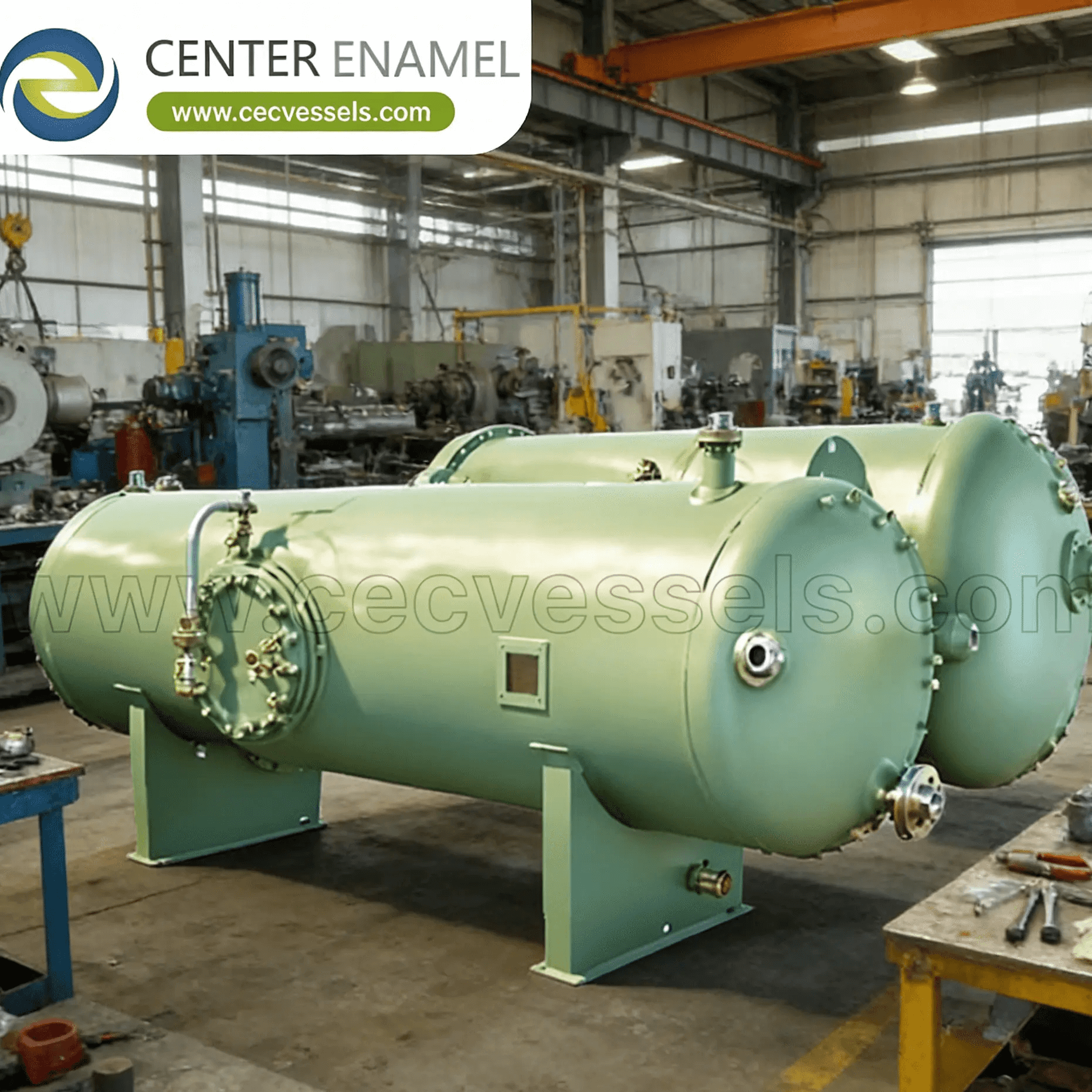
Scaling Yield and Mixing in Chemical Reactors
Scaling a chemical process from laboratory experiments to industrial production is one of the most important steps in process engineering. A reactor that performs well at a small scale may behave differently when its size increases. Mixing conditions, flow patterns, residence time, and heat transfer can all change during scale-up, influencing product quality and production efficiency. Understanding the relationship between mixing and yield is therefore essential when designing modern chemical reactors and mixing reactors. Why Is Scale-Up Important in Chemical Reactors? Chemical manufacturers often begin process development in laboratory equipment before moving to pilot plants and large production systems. This transition requires careful evaluation because operating conditions that are effective in a small reactor may not provide the same results in a larger vessel. Scale-up is not simply a matter of increasing reactor dimensions. When the size of a reactor changes, fluid flow, mixing intensity, mass transfer, and heat transfer may also change. These variations can influence reaction rates and product formation. The objective of reactor scale-up is to maintain consistent process performance while increasing production capacity. To achieve this goal, engineers study the relationship between reactor geometry, mixing conditions, flow characteristics, and reaction behavior. Modern reactor design increasingly combines experiments, engineering calculations, and simulation tools to improve scale-up accuracy. What Is the Relationship Between Mixing and Yield? Mixing is one of the most important factors affecting reactor performance. In many chemical processes, reactants must contact each other effectively to achieve the desired reaction. When mixing is insufficient, materials may not be evenly distributed inside the reactor. Different areas of the vessel may contain different concentrations of reactants. This can lead to variations in reaction rates throughout the reactor. Effective mixing helps create more uniform conditions by distributing materials throughout the working volume. Better mixing can improve reactant contact, increase reaction efficiency, and support consistent product formation. For some reactions, yield depends strongly on local concentrations inside the reactor. If reactants are mixed more effectively, the desired reaction can proceed more efficiently. This relationship becomes especially important when scaling reactors from laboratory size to industrial production. How Does Mixing Change During Scale-Up? Mixing characteristics do not always remain the same when reactor size increases. In a small laboratory reactor, agitation can often distribute materials quickly because the vessel dimensions are limited. In larger reactors, materials may travel longer distances before becoming fully mixed. Flow patterns can also change as the reactor size increases. The movement of liquid generated by an agitator depends on factors such as vessel geometry, impeller diameter, rotation speed, and fluid properties. Engineers often use dimensionless parameters such as the Reynolds number to evaluate flow behavior. These parameters help describe whether the flow is more laminar or more turbulent. As the Reynolds number increases, mixing generally becomes stronger. More effective mixing can improve material distribution and increase reaction performance. However, maintaining identical mixing conditions at different scales can be difficult because reactor dimensions and operating parameters change simultaneously. Why Does Residence Time Matter? Residence time refers to the average amount of time that materials remain inside a reactor. For many reactions, residence time directly influences conversion and product yield. If the residence time is too short, the reaction may not proceed sufficiently. If it is too long, process efficiency may decrease. Mixing and residence time are closely related. Two reactors with identical residence times may still produce different results if their mixing conditions are different. Improved mixing can increase contact between reactants and help reactions proceed more effectively. This may allow the desired product yield to be achieved in a shorter residence time. When scaling reactors, engineers therefore evaluate not only reactor volume but also the interaction between mixing and residence time. This approach helps improve production efficiency while maintaining product quality. How Does Reactor Geometry Influence Mixing? Reactor geometry plays an important role in determining flow patterns and mixing performance. The diameter and height of the vessel influence fluid circulation. Internal components such as baffles can guide flow and reduce rotational motion. Impeller position and impeller type also affect mixing behavior. Different impellers create different flow patterns. Axial-flow impellers move materials vertically, while radial-flow impellers create horizontal circulation. The choice of impeller depends on the process requirements and material characteristics. Low-viscosity liquids may require one type of mixing pattern, while more viscous materials may require another. Reactor geometry should therefore be considered together with agitation systems during scale-up. A properly designed mixing reactor can maintain consistent circulation and support uniform processing conditions across different production scales. How Does Mixing Affect Heat Transfer? Heat transfer is another important function of chemical reactors. Many industrial reactions require controlled temperatures to maintain stable operating conditions. Mixing helps distribute thermal energy throughout the reactor and reduces temperature differences inside the vessel. When a reactor includes a heating or cooling jacket, circulation generated by the agitator moves process materials past the heat-transfer surfaces. This improves energy transfer between the vessel wall and the process material. As reactor size increases, maintaining temperature uniformity can become more complex. Larger volumes require effective circulation to ensure that all areas of the reactor experience similar conditions. Good mixing therefore contributes not only to reactant distribution but also to effective thermal management. This is one reason why mixing reactors are widely used in industrial production systems. What Is the Role of Mass Transfer? Many industrial processes involve more than one phase, such as gas-liquid, liquid-liquid, or solid-liquid systems. In these applications, mass transfer becomes important because materials must move from one phase to another before a reaction can occur. Mixing increases contact between phases and improves material exchange. Agitation can distribute gas bubbles, suspend particles, or disperse droplets throughout the reactor. Better mass transfer often leads to improved reaction performance and more efficient use of raw materials. During scale-up, maintaining suitable mass-transfer conditions is essential because changes in reactor size can alter fluid movement and phase distribution. The design of mixing reactors therefore considers both mixing performance and mass-transfer requirements. What Are Common Scale-Up Methods? Several approaches are used to scale chemical reactors. One common method is geometric similarity, where the proportions of the reactor remain consistent as size increases. Another method is maintaining constant power input per unit volume. This approach attempts to preserve mixing intensity across scales. Some processes use constant tip speed, while others maintain similar Reynolds numbers or circulation patterns. No single method applies to every process because different reactions have different requirements. Modern reactor design often combines experiments with simulation techniques such as computational fluid dynamics. These tools help engineers visualize flow patterns, mixing zones, and concentration distributions before constructing large-scale equipment. How Do Mixing Reactors Improve Scale-Up? Mixing reactors combine agitation and reaction functions in one integrated system. Their design allows engineers to optimize fluid circulation, reactant distribution, heat transfer, and mass transfer simultaneously. Compared with simple vessels, mixing reactors provide greater flexibility because agitators, baffles, heat-transfer systems, and process controls can be customized according to production needs. This flexibility helps maintain similar process conditions as production scales increase. For batch processes, mixing reactors provide consistent conditions from one production cycle to another. For continuous processes, they support stable operation and controlled residence time. Because of these advantages, mixing reactors are widely used in chemical, pharmaceutical, food, environmental, and specialty material industries. How Can Simulation Support Reactor Design? Simulation tools have become valuable resources for reactor engineering. Computational models can predict flow patterns, concentration distributions, and mixing behavior inside reactors. Engineers can evaluate multiple reactor designs before manufacturing equipment. This reduces development time and helps identify suitable configurations. Simulation can also provide information about dead zones, circulation paths, and residence-time distributions. When combined with laboratory experiments, simulation improves confidence in scale-up decisions and supports more efficient reactor design. Modern chemical reactor development increasingly uses digital tools to complement traditional engineering methods. What Industries Depend on Mixing Reactors? Mixing reactors are used in many industrial sectors because they combine several important process functions. In chemical manufacturing, they support synthesis, formulation, dissolution, and reaction processes. In pharmaceutical production, they are used for ingredient preparation and controlled reaction steps. Food processing uses mixing reactors for blending, ingredient preparation, and specialized production processes. Environmental industries apply mixing reactors in water treatment and resource recovery systems. Specialty materials, coatings, polymers, and biotechnology also rely on mixing reactors for efficient production. The flexibility of these reactors makes them suitable for many applications where controlled mixing and reaction conditions are important. How Can Proper Scale-Up Improve Production Efficiency? Successful scale-up helps manufacturers increase capacity while maintaining product consistency. When mixing conditions are carefully evaluated, reactors can provide more uniform material distribution, improved heat transfer, and efficient mass transfer. Optimized mixing can reduce residence time and improve raw material utilization. Proper reactor design can also simplify process control and support stable operation. For industrial manufacturers, understanding the relationship between mixing and yield is essential for efficient production and long-term process performance. Understanding the Connection Between Yield and Mixing The performance of chemical reactors depends on much more than vessel size. Mixing, residence time, heat transfer, mass transfer, and flow behavior all influence product yield and process efficiency. As reactors are scaled from laboratory systems to industrial production, these factors may change significantly. A successful scale-up strategy therefore requires careful evaluation of reactor geometry, agitation systems, process conditions, and material properties. Mixing reactors play an important role because they combine agitation and reaction functions in one system, helping maintain uniform conditions throughout the process. By understanding how mixing affects yield and reactor performance, manufacturers can design more efficient chemical reactors, improve product consistency, and support reliable large-scale production. |