Separator Functional Principle: How Does a Separator Work
Industrial processing relies heavily on the ability to isolate, isolate, and purify different components from a mixed stream. Whether handling liquids, gases, solids, or a combination of these phases, the separation system forms the backbone of modern chemical, pharmaceutical, environmental, and food processing plants. Understanding the seaparator and its foundational mechanics is essential for engineers, operators, and plant managers who aim to maximize recovery rates, ensure safety, and improve operational longevity.
The basic separator meaning centers on a mechanical device or structural vessel designed to divide a mixture of materials into distinct constituents. Depending on the physical properties of the feed material, separation can occur through density differences, centrifugal force, filtration media, or physical barrier interaction. A material separator effectively takes a complex, multi-phase inlet stream and divides it into two or more distinct outlet streams, such as liquid-liquid, gas-liquid, or solid-liquid outputs.
Physical Mechanisms Behind Material Separation
At the core of every material separator lies one or more physical principles that govern phase separation. Gravity separation is the simplest form, utilizing the natural density differences between immiscible fluids or suspended solids. In a quiet settling environment, heavier fluids or solids sink to the bottom while lighter fluids rise to the top. While effective, gravity separation requires large vessel volumes and extended retention times to achieve acceptable purity levels.
To overcome the size and speed limitations of gravity settling, mechanical separator design often incorporates accelerated forces. Centrifugal separation utilizes high-speed rotational movement to generate gravitational forces thousands of times stronger than Earth standard gravity. This rapid rotation drives dense particles or heavy liquid phases outward toward the vessel walls while light phases concentrate near the central axis, drastically reducing the required process time and equipment footprint.
Impact and impingement principles offer another highly efficient mechanism, particularly in gas-liquid and gas-solid systems. As a gas stream carrying entrained droplets or dust particles passes through a tortuous path, the momentum of the denser liquid or solid prevents it from following the rapid direction changes of the gas flow. The entrained material collides with internal baffles, coalescing plates, or mesh pads, forming larger droplets or agglomerates that drain downwards away from the clean gas stream.
Types of Separator Systems and Configuration
Separation equipment comes in diverse physical configurations, each engineered to address specific operational requirements, fluid properties, and phase ratios. The main structural orientations include horizontal and vertical vessels, along with specialized mechanical units like centrifuges and cyclones. Selecting the right architecture depends on inlet flow rates, gas-to-liquid ratios, particle sizes, and available installation space.
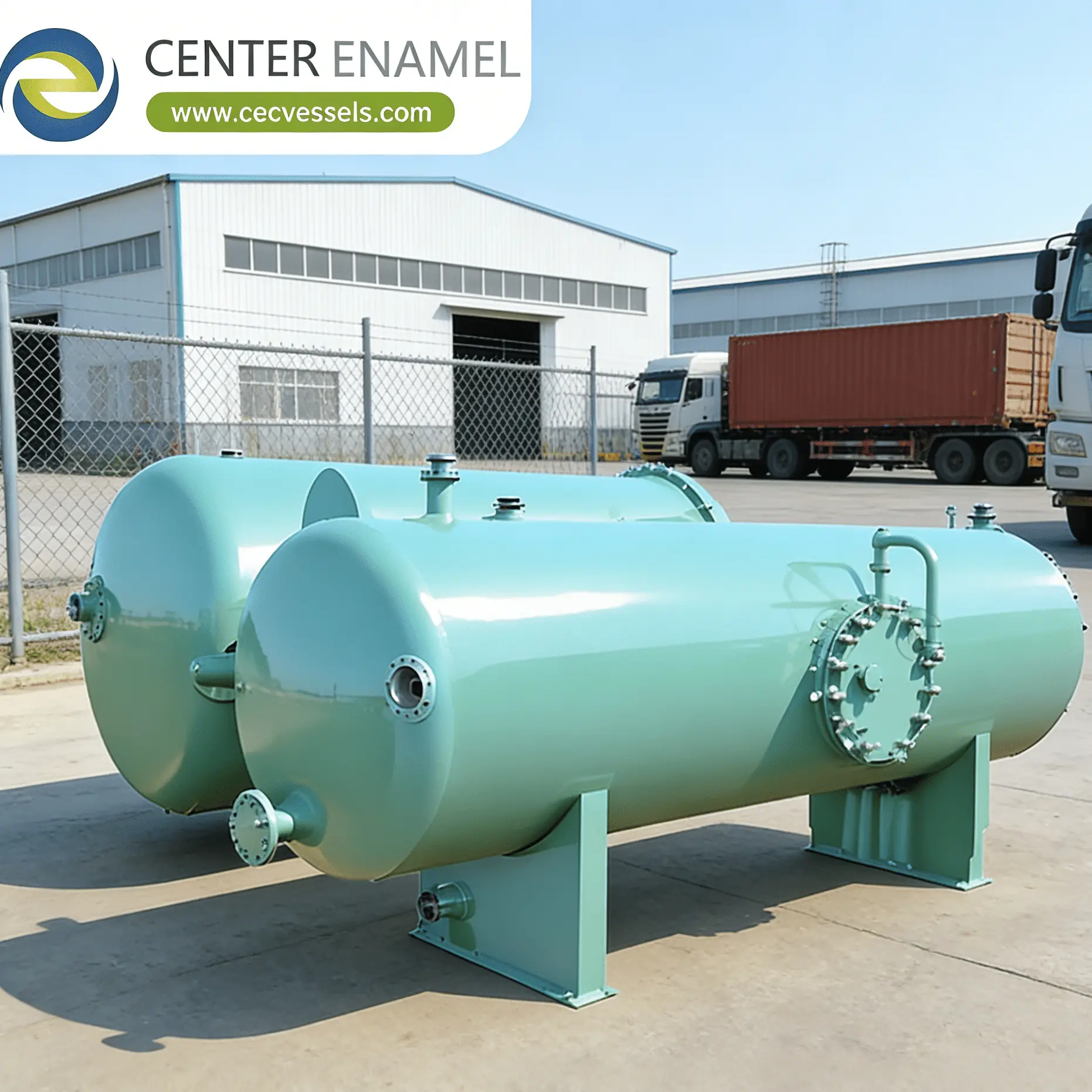
Horizontal vessels are widely preferred for applications handling large liquid volumes or high gas-to-liquid ratios. The long horizontal flow path provides an expanded surface area for liquid-liquid interface separation and gives gas bubbles sufficient time to rise out of the liquid phase. Internal components like liquid distribution baffles, wave breakers, and mist eliminators are strategically arranged along the length of the horizontal shell to ensure smooth, non-turbulent movement.
Vertical vessels, in contrast, excel in applications with high gas volumes and lower liquid loading. The vertical layout minimizes the footprint on the plant floor while providing substantial vertical distance to prevent liquid droplet re-entrainment into the gas stream. As the gas flows upward through the vessel, gravity works directly against the gas velocity to pull free liquid droplets downward into the liquid collection sumps.
Centrifugal and cyclone systems represent mechanical separators engineered for difficult separations where particles are small or density differences are minimal. Cyclones rely on stationary tangential inlets to create a high-velocity vortex inside a conical body, driving solids or liquid droplets to the outer wall and down to a discharge outlet. Centrifuges employ powered rotating assemblies, such as disc stacks or decanter bowls, to continuously separate fine solids from liquids or split liquid mixtures into clean streams.
Core Components of a Separator System
A complete separator system consists of several integrated sub-systems designed to receive, condition, separate, and discharge the process fluid streams smoothly. The performance of the equipment depends on the synergistic operation of these internal and external elements.
The inlet stream entering the vessel encounters the inlet momentum absorber or distribution device. This initial component breaks the kinetic energy of the incoming fluid, dampens velocity surges, and distributes the feed evenly across the separation area. By immediately dampening turbulence, the inlet device sets up ideal conditions for gravity settling or mechanical coalescing to begin without creating mixing zones.
The primary separation zone occupies the main volume of the vessel, where the bulk of the phases disengage from one another. In liquid-liquid configurations, coalescing packings, parallel plates, or structured packing grids are often installed within this zone. These structures provide large surface areas where tiny dispersed droplets collide, merge into larger drops, and quickly separate due to increased buoyancy or settling velocity.
The secondary collection zone handles fine droplets or remaining suspended matter that escaped primary separation. In gas outlet sections, mist extractors, wire mesh pads, or vane packs capture micro-droplets before the clean gas leaves the top of the vessel. In the liquid accumulation section, quiet zones isolated by calm baffles ensure that settled liquids settle without disruption from incoming fluids or surface waves.
Outlets and control interfaces complete the vessel assembly. Automated level control valves, pressure regulators, and flow meters monitor conditions inside the vessel to maintain steady liquid levels and operating pressures. Maintaining stable liquid levels prevents light phases from blowing through liquid outlets and stops heavy liquids from overflowing into gas exits.
Understanding Phase Separation Mechanics
The mechanics of phase separation vary according to the specific state of matter involved in the process stream. Gas-liquid separation focuses on removing liquid droplets from a gas stream or releasing dissolved gas bubbles from a bulk liquid. The efficiency of gas-liquid disengagement relies heavily on droplet size, fluid viscosity, operating temperature, and gas velocity relative to terminal settling velocity.
Liquid-liquid separation deals with immiscible fluids, such as oil and water. The rate at which one liquid separates from another is described by Stokes Law, which dictates that separation speed increases with larger droplet size, greater density difference between the liquids, and lower continuous phase viscosity. When emulsions form, specialized coalescing media or electrostatic charges are applied within the seaparator to force microscopic droplets to coalesce into manageable sizes.
Solid-liquid separation removes suspended particles from a liquid carrier. This process is common in wastewater treatment, mineral processing, and chemical synthesis. Depending on the solid concentration and particle size distribution, equipment can utilize gravity clarifiers, hydrocyclones, dynamic continuous centrifuges, or surface filter screens to capture the solid phase and discharge a clarified liquid effluent.
Factors Influencing Material Separator Performance
Achieving optimal performance from a material separator requires precise management of fluid dynamics, physical properties, and vessel operating conditions. Small changes in process inputs can dramatically affect separation efficiency and output purity.
Fluid retention time is a primary parameter governing separation quality. Retention time represents the average duration a fluid remains inside the vessel disengagement zone. Adequate time allows small droplets or fine solids to travel through the continuous phase and reach the collection interface. If the throughput rate is too high, retention time drops below the required threshold, resulting in carryover where one phase escapes into the outlet stream of another phase.
Density differential between the target phases directly controls separation speed. A wide gap in density allows for rapid phase segregation with smaller equipment sizes. Conversely, when fluids possess similar densities, natural settling slows significantly, requiring the integration of advanced coalescing media, mechanical centrifugal forces, or temperature adjustments to decrease fluid viscosity and encourage separation.
Fluid viscosity plays a dual role in performance. High viscosity in the continuous phase slows the movement of dispersed droplets or solids, retarding gravity settling and coalescing processes. Raising operating temperatures can reduce fluid viscosity, thereby boosting separation speed, provided the elevated temperature does not cause phase changes, fluid degradation, or unwanted thermal reactions.
Flow regimes within the vessel must remain controlled and laminar whenever possible. High velocity, swirling, or turbulent currents create shear forces that break large droplets into fine emulsions or resuspend settled solids back into the clean liquid stream. Baffling, distribution manifolds, and properly sized vessel diameters work together to maintain uniform, low-velocity flow profiles.
Industry Applications of Separator Systems
The application of the material separator spans virtually every industrial manufacturing sector, serving vital functions in quality control, resource recovery, and environmental protection.
In chemical and petrochemical plants, separators isolate raw reaction products from unreacted feedstocks, clear condensation from gas lines, and fractionate hydrocarbon mixtures into specific product streams. High-purity requirements demand multi-stage separation systems where initial bulk separation is followed by fine coalescing and polish filtration to achieve stringent product specifications.
In water and wastewater processing facilities, separator system equipment clarifies raw intake water, isolates industrial effluent streams, and removes suspended solids and free oils before environmental discharge or municipal reuse. Large gravity clarifiers, dissolved air flotation units, and centrifugal separators process massive volumes continuously to satisfy strict regulatory discharge standards.
In food, beverage, and biotechnology processing, hygienic separators perform critical liquid-liquid and liquid-solid separations under sterile conditions. Examples include cream skimming in dairy operations, clarification of fruit juices, harvesting of cell cultures in pharmaceutical fermentation, and recovery of edible oils from plant seeds. These applications demand specialized stainless steel construction, smooth surface finishes, and full clean-in-place capabilities to prevent contamination.
In mining and mineral refining, heavy-duty material separator units process slurries containing dense ores, sands, and chemical reagents. Hydrocyclones, rake thickeners, and magnetic separators extract valuable mineral concentrates from waste tailings, enabling water recycling and efficient resource extraction across large-scale processing lines.
Maintenance and Operational Best Practices
To sustain efficient separation performance and extend equipment service life, processing operations must implement rigorous maintenance routines and operational controls.
Regular inspection of internal components is vital. Over time, internal structures like inlet diverters, coalescing packs, mesh pads, and distribution baffles can suffer from erosion, mechanical fatigue, or chemical attack. Damaged or missing internals disrupt the uniform flow pattern inside the vessel, leading to immediate drops in output purity and increased carryover.
Fouling, scaling, and solids buildup represent common operational challenges in separator management. Suspended solids, wax, scale, or biological growth can accumulate on coalescing plates, mesh filters, and vessel bottoms. This accumulation restricts flow passages, increases pressure drops across internal components, and can re-entrain captured contaminants back into clean fluid streams. Routine cleanouts, automated wash systems, and monitoring differential pressures across internal elements help identify fouling before it impairs plant operations.
Instrument calibration ensures that automated control systems respond correctly to changing process conditions. Liquid level transmitters, pressure sensors, and interface detectors must remain accurate to prevent liquid carryover into gas lines or gas blow-through into liquid collection systems. Periodic testing and recalibration of these control loops guarantee stable performance during flow rate shifts or feed composition changes.
Choosing the Right Separator for Your Application
Selecting the ideal seaparator for a specific process requires a thorough evaluation of stream composition, fluid dynamics, target output purity, and physical plant constraints. Engineers must evaluate several factors during the specification phase.
Fluid characterization forms the starting point for equipment selection. Designing an effective material separator requires complete data on feed composition, operating temperatures, working pressures, fluid densities, viscosities, surface tensions, and expected particle or droplet size distributions. Knowing whether the feed contains corrosive compounds, abrasive solids, or emulsion-forming surfactants directly guides material selection and mechanical design.
Throughput capacity and future expansion requirements dictate vessel sizing and internal choices. Equipment must handle normal steady-state flow rates while maintaining sufficient margin to absorb temporary flow surges, pressure fluctuations, or liquid slugs without compromising separation quality.
Spatial constraints and installation requirements influence the final equipment form factor. When floor space is limited, vertical vessel layouts or high-speed compact centrifugal systems offer significant space savings over large horizontal gravity settling tanks. Operating costs, power consumption, maintenance accessibility, and capital investment must also be balanced to achieve the lowest total cost of ownership over the equipment lifecycle.
Advancements in Separation Engineering
The field of separation technology continues to advance, driven by the demand for higher energy efficiency, smaller equipment footprints, and superior product purities. Modern computational fluid dynamics modeling allows engineers to simulate complex multi-phase flow patterns inside vessel structures before fabrication begins. This digital design capability enables optimized internal geometry, precise baffle placement, and reduced turbulent zones, maximizing separation performance in smaller vessel shells.
Advanced materials, including structured ceramic media, specialized fluoropolymer coatings, and micro-engineered coalescing membranes, have expanded the operational limits of traditional separator system designs. These advanced materials offer high resistance to harsh chemical environments, minimize surface fouling, and enable the efficient coalescence of ultrafine emulsions that were previously difficult to break using conventional mechanical methods.
Smart sensor integration and real-time process monitoring are transforming how separation systems operate within automated processing facilities. Optical interface sensors, acoustic monitoring devices, and online oil-in-water analyzers deliver continuous feedback on output quality and internal phase boundaries. This data stream allows control systems to automatically adjust valve positions, rotation speeds, or chemical dosing rates in real time, ensuring constant output purity even when inlet conditions fluctuate rapidly.
The separator functional principle relies on applying fundamental physical forces like gravity, centrifugal acceleration, and mechanical impingement to split complex mixtures into distinct, useful components. Whether operating as a simple settling vessel or an advanced multi-stage centrifugal unit, a properly engineered material separator is vital to process efficiency, product quality, and resource recovery in modern industry. By understanding the core mechanics, structural configurations, and operational parameters that govern the seaparator, processing facilities can select, optimize, and maintain their separation systems to achieve reliable, continuous performance across all applications.
|