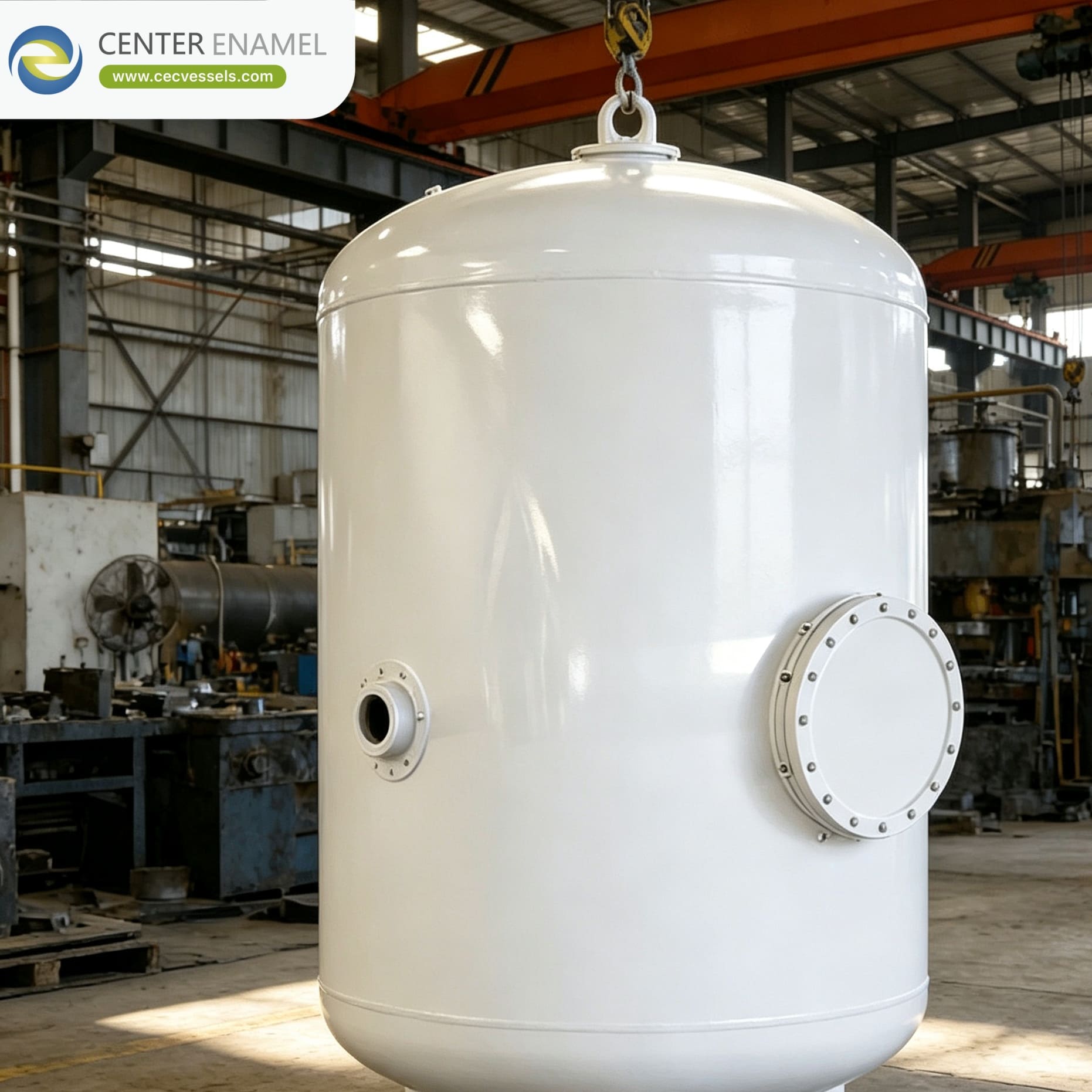
Dissolved gases in process liquids can affect flow, measurement and product quality. A Stainless Steel Degassing Towerremoves them by bringing the liquid into close contact with a stripping gas or with a reduced-pressure atmosphere, so the outgoing liquid meets the gas level the process requires. Center Enamel designs and fabricates these columns for water, beverage and chemical duties.
How Degassing Works Inside the Tower
Degassing relies on the difference between the concentration of gas in the liquid and the concentration in the space above it. Liquid enters at the top of the tower and travels down through packing or trays, which divide the flow into thin films and droplets. A stripping gas, air or nitrogen moves upward and carries the released gas away; in vacuum designs, the reduced pressure above the liquid produces the same effect without a stripping medium. The larger the contact area and the longer the residence time, the closer the outgoing liquid comes to the target gas level. Oxygen, carbon dioxide and other dissolved gases are removed in this way.
Tower Configurations for Different Duties
Packed towers suit duties where a large contact area is needed in a compact shell and the liquid is clean enough to pass through the bed. Tray towers are chosen where the liquid carries suspended solids or where a defined number of stages is preferred. Spray towers handle high flows with simple internals and low gas resistance. Some projects combine a packed section with a spray header to cover a wide turndown range. The configuration follows the required outlet concentration, the liquid flow and the space available on site, and it is agreed before fabrication drawings are released.
Stainless Steel Construction
The tower shell, internals and piping are built in stainless steel grades selected for the specific liquid. Standard grades cover potable and process water duties, while molybdenum-bearing grades suit chloride-containing streams and higher temperatures. Surfaces are pickled and passivated where the specification calls for a clean, passive finish, and welds are dressed so that the internal surface stays smooth. Supports, ladders and platforms are fabricated from the same family of materials to avoid dissimilar contact. Material certificates accompany each tower, and the grade used for every wetted part is recorded in the handover file.
Internals and Liquid Distribution
Liquid distribution decides how evenly the packing is used. A well-designed distributor spreads flow across the full cross-section, so no part of the bed runs dry or floods. Spray nozzles are positioned to cover the tower area without interference from the gas inlet, and a redistribution layer is added for tall beds. Gas enters through a dedicated inlet shaped to avoid carrying liquid upward. Internal supports, hold-down grids and access hatches are arranged so that packing can be inspected or replaced without removing the whole column, which keeps maintenance work simple and predictable.
Design Choices That Shape Performance
Performance depends on packing type, bed depth, liquid load and the gas path. Random or structured packing is selected from the required mass transfer and the allowable height, and the bed depth is set with a margin for changes in load. Turndown range matters: a tower that works well at full flow must also hold its outlet level at half load. Instrument connections for level, flow and gas concentration are placed where readings stay representative. The design is confirmed against the client's process data, and adjustments are made before the shell is cut, so the finished tower reflects the duty it will actually see.
Installation and Commissioning Support
Columns are delivered with lifting points, support details and internal protection suited to transport. Installation guidance covers setting the shell, connecting gas and liquid lines, filling the circulating system and checking distribution before the first run. During commissioning, flow rates are adjusted to the values used in the design, spray patterns are verified and the outlet gas level is measured against the target. Center Enamel provides drawings, checklists and supervision where requested, so the tower starts service with its internals correctly positioned and its instrumentation reading as intended.
Applications and System Integration
Degassing towers are used in water treatment, where oxygen removal protects downstream equipment, and in beverage plants, where dissolved oxygen affects shelf life. Chemical plants use them to strip carbon dioxide from process streams, and power plants apply them in make-up water circuits. Industrial sites use compact skid-mounted towers where space is limited. Each installation is matched to the surrounding pumps, tanks and piping, and the tower can be supplied as a standalone column or as part of a complete treatment skid with instruments, valves and interconnecting pipework.
Why Work with Center Enamel
Center Enamel is a China Stainless Steel Degassing Tower Manufacturerwith fabrication capacity for columns, internals and skid systems. Clients work with a Stainless Steel Degassing Tower Manufacturerthat builds to their process data and site layout, and receives the drawings, material records and test reports needed for installation and operation. As a Stainless Steel Degassing Towersupplier, the company delivers equipment that keeps dissolved gas levels within the range each process requires.


