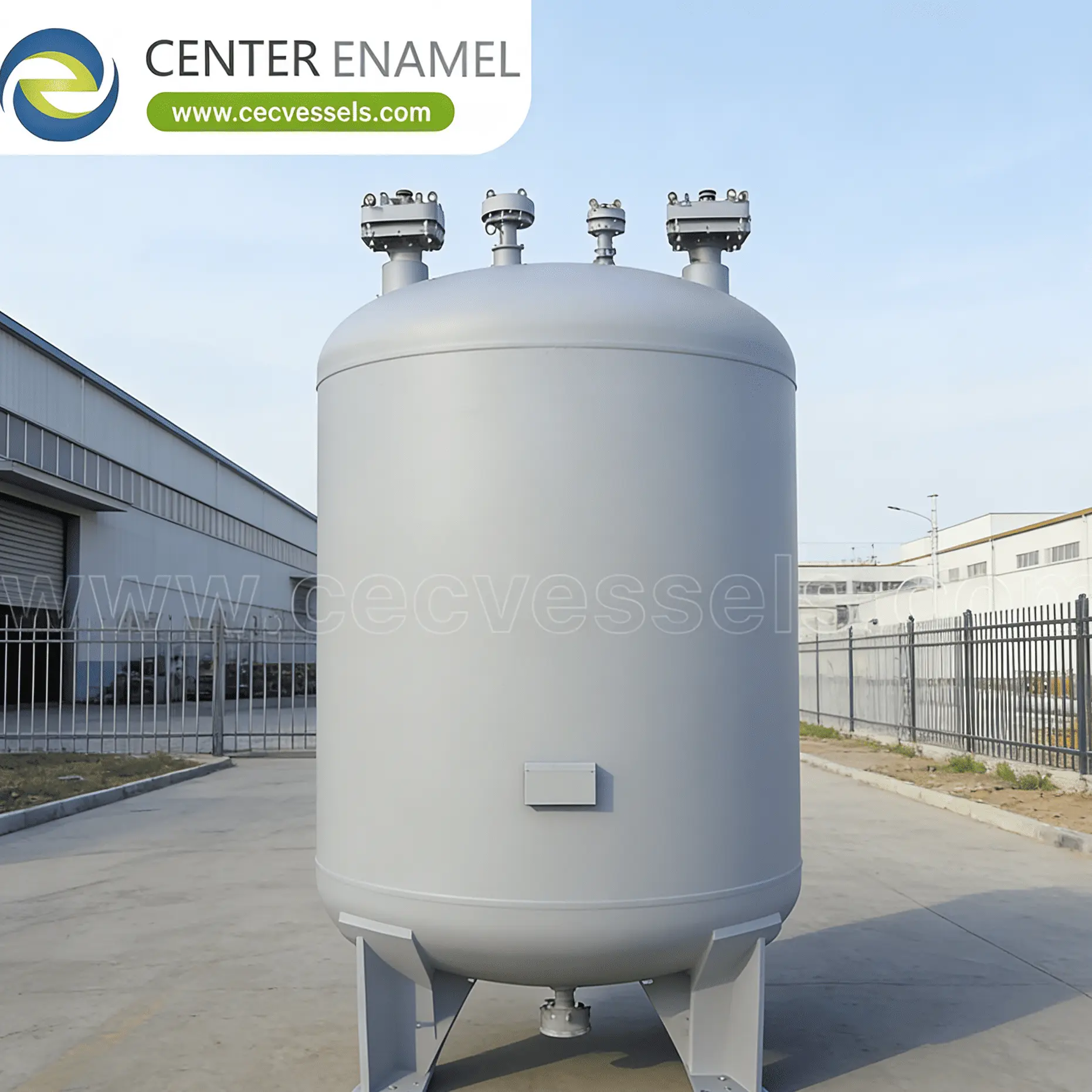
Sulfation Reactor for Controlled Sulfation and Chemical Processing
A Sulfation Reactoris specialized process equipment designed to facilitate controlled sulfation reactions in chemical manufacturing. Sulfation involves introducing a sulfate group into an organic or inorganic compound, and the reaction is widely used in the production of surfactants, detergents, pharmaceuticals, fertilizers, pigments, and other chemical products.
The reactor provides a controlled environment where reactants can be mixed, heated or cooled, and maintained at suitable reaction conditions. Depending on the specific sulfation process, the equipment may be designed for continuous or batch operation and can be customized according to feed materials, production capacity, reaction temperature, residence time, and material compatibility.
For industrial production, reactor design has a direct influence on reaction consistency and product quality. Appropriate internal configuration, heat transfer performance, mixing characteristics, and material selection help create stable processing conditions for different sulfation applications.
As a professional Sulfation Reactor Manufacturer, Center Enamel provides customized reactor solutions based on process requirements, equipment specifications, and applicable manufacturing standards.
How Does a Sulfation Reactor Work?
The working principle of a sulfation reactor depends on the chemical formulation and production process. In general, selected raw materials are introduced into the reactor, where controlled mixing and reaction conditions allow the sulfation reaction to proceed.
A typical process may include the following stages:
lRaw material feeding– Selected feedstocks are introduced according to the process formulation. lMixing– Agitation or controlled flow helps maintain uniform distribution of the reactants. lTemperature control– Heating or cooling systems maintain the required reaction temperature. lSulfation reaction– The sulfating agent reacts with the selected feed material under controlled process conditions. lReaction residence– The material remains in the reaction zone for the required period. lProduct discharge– The processed material is transferred to downstream neutralization, separation, concentration, or storage equipment.
Different sulfation processes may use different sulfating agents and operating configurations. Therefore, the reactor should be engineered according to the actual process route rather than using a single standardized configuration for every application.
Main Design Features of a Sulfation ReactorThe design of a sulfation reactor generally focuses on reaction control, heat transfer, material compatibility, mixing, and integration with the complete production line.
Controlled Reaction EnvironmentThe reactor provides a defined space for chemical conversion. Its volume and configuration can be selected according to production capacity, feed rate, reaction time, and process requirements.
Efficient MixingMixing performance is important when multiple liquid or solid-liquid components must be distributed uniformly. Depending on the application, the reactor can be equipped with an agitator and customized internal components.
The agitator type, impeller configuration, rotational speed, and installation position can be selected according to viscosity, density, solid content, and required mixing intensity.
Heat Transfer SystemSulfation processes may require heating, cooling, or temperature stabilization. The reactor can therefore be equipped with a jacket, internal coil, or other suitable heat transfer arrangement.
Effective heat transfer helps maintain the specified reaction temperature and supports consistent processing conditions.
Customized Internal ComponentsDifferent processes require different internal structures. A sulfation reactor may incorporate agitators, baffles, coils, spray systems, distributors, catalyst supports, thermowells, or other customized components.
The internal configuration is determined according to the process design and customer requirements.
Suitable Material SelectionMaterial selection is an important part of sulfation reactor engineering. Depending on the chemical medium, temperature, concentration, and process conditions, carbon steel, stainless steel, or other suitable materials may be selected.
For applications involving corrosive or chemically active media, stainless steel and specialized materials can be considered to provide appropriate chemical compatibility.
Materials Used for Sulfation ReactorsCenter Enamel can manufacture sulfation reactors using different materials according to the process medium and project requirements.
Stainless SteelStainless steel is widely used for chemical processing equipment because of its corrosion resistance, cleanability, and suitability for a broad range of industrial media.
Different stainless steel grades can be selected according to the chemical composition and operating conditions. Stainless steel reactors are particularly suitable for chemical, pharmaceutical, food-related, and specialty chemical applications where material compatibility and surface quality are important.
Carbon SteelCarbon steel provides a practical option for applications where the process medium and operating conditions are compatible with carbon steel construction.
It offers good mechanical properties and established fabrication characteristics. Appropriate surface treatment or internal lining can also be considered when required by the process.
Customized MaterialsSome sulfation processes require specific alloys or special material combinations. Center Enamel can evaluate material specifications according to the process medium, operating temperature, concentration, corrosion characteristics, and customer requirements.
The objective is to match reactor construction with the actual processing environment while maintaining suitable fabrication and maintenance characteristics.
Manufacturing Process of Sulfation ReactorsAs a China Sulfation Reactor Manufacturer, Center Enamel applies a structured manufacturing process covering engineering review, material preparation, fabrication, welding, assembly, inspection, and final delivery.
Engineering and Drawing ReviewBefore fabrication, technical engineers review the customer's process information and equipment drawings. Key parameters may include reactor volume, dimensions, operating temperature, material specification, nozzle arrangement, agitator requirements, heat transfer system, and internal components.
This stage establishes the technical basis for manufacturing.
Material InspectionRaw materials are checked against the approved specifications before entering production. Material certificates, dimensions, surface conditions, and identification information are verified.
Material traceability is maintained throughout fabrication where required by the project.
Cutting and FormingSteel plates are cut according to approved drawings and fabrication dimensions. Shell plates may then be rolled into the required cylindrical shape, while heads and other formed components are manufactured according to the reactor design.
Dimensional inspection is conducted during forming to maintain the specified geometry.
Welding and AssemblyThe reactor shell, heads, nozzles, supports, jackets, and other components are assembled through controlled welding procedures.
Welding operations are performed according to applicable procedures, while welds are inspected at appropriate manufacturing stages.
Internal Component InstallationAgitators, baffles, heating or cooling coils, catalyst supports, distributors, and other internal components are installed according to the approved design. Their dimensions and positions are checked to ensure proper integration with the reactor structure.
Surface TreatmentSurface treatment is selected according to the reactor material and intended application. Stainless steel surfaces may receive suitable cleaning and finishing procedures, while carbon steel equipment may receive industrial coating systems when required.
Final InspectionBefore shipment, the completed reactor undergoes final inspection covering appearance, dimensions, weld quality, nozzle orientation, internal components, and other project-specific requirements.
The inspection records form part of the manufacturing documentation provided according to the project.
Quality Control for Sulfation ReactorsQuality control is integrated into every major stage of sulfation reactor manufacturing. Rather than relying solely on final inspection, Center Enamel applies process-based quality management from material preparation through finished equipment.
Depending on project specifications, inspection activities may include: lRaw material verification lMaterial identification and traceability lDimensional inspection lVisual inspection lWeld inspection lUltrasonic testing lRadiographic testing lMagnetic particle testing lPenetrant testing lHardness testing lPositive Material Identification (PMI) lSurface inspection lTightness testing lFinal assembly inspection The applicable inspection methods are determined by equipment design, material selection, manufacturing requirements, customer specifications, and relevant standards.
This structured inspection system supports consistent fabrication quality and helps ensure that the finished reactor corresponds with approved technical documentation.
Applications of Sulfation ReactorsSulfation reactors are used in a variety of chemical processing applications.
Detergent and Surfactant ProductionSulfation is an important reaction in the production of surfactants and detergent ingredients. Specialized reactors can provide controlled mixing and temperature management for different formulations.
Chemical ManufacturingChemical manufacturers use sulfation reactions to produce intermediate compounds and specialty chemicals. Reactor configuration can be customized according to feed characteristics and production capacity.
Pharmaceutical ProcessingSome pharmaceutical and biochemical processes involve sulfated compounds or intermediates. Stainless steel reactor systems can be designed for applications where cleanable surfaces and precise process control are required.
Fertilizer and Agricultural ChemicalsSulfation-related processes are also applied in fertilizer and agricultural chemical production. Reactor size and internal configuration can be selected according to production scale and formulation requirements.
Specialty ChemicalsPigments, additives, polymers, and other specialty chemicals may involve sulfation or related chemical modification processes. Customized reactor equipment can support different reaction routes and production requirements.
Sulfation Reactor and Process System IntegrationA sulfation reactor normally operates as part of a complete chemical processing system rather than as an isolated vessel.
Depending on the production process, the system may include:
lRaw material storage tanks lFeed pumps lMetering systems lSulfation reactor lHeating or cooling system lAgitation system lNeutralization equipment lSeparation equipment lConcentration equipment lProduct storage tanks lProcess control instruments
Integration between these components helps maintain a continuous and organized material flow.
For example, feed materials can be metered into the reactor according to the required formulation. The reactor then maintains controlled mixing and temperature conditions before the processed material moves to downstream neutralization or separation equipment.
Center Enamel can manufacture the reactor according to the customer's process flow diagram, equipment layout, technical specifications, and connection requirements.
Chemical Industry Project in Hubei, China
Center Enamel has supplied customized process equipment for a chemical industry project in Hubei, China. The project included a range of process vessels and equipment designed for integrated chemical fluid handling.
The equipment portfolio included resin tanks, coalescing oil separators, fiber adsorption tanks, compressed air storage tanks, condensate tanks, and steam distribution cylinders. Carbon steel and stainless steel were selected according to the individual service requirements of each piece of equipment.
The project demonstrates Center Enamel's ability to coordinate different types of industrial process equipment within a unified manufacturing program. Engineering review, material preparation, fabrication, welding, inspection, and final delivery were organized according to project specifications and applicable manufacturing requirements.
This experience also provides a strong foundation for customized reactor manufacturing for chemical processing applications, including sulfation processes.
Why Choose Center Enamel as Your Sulfation Reactor Manufacturer?Center Enamel, operated by Shijiazhuang Zhengzhong Technology Co., Ltd., is an industrial equipment manufacturer integrating research and development, engineering, manufacturing, and global project services.
The company provides Glass-Fused-to-Steel tanks, Fusion Bonded Epoxy tanks, reactors, pressure vessels, and other customized industrial equipment for customers in different industries.
Customized EngineeringEvery sulfation process has different feed materials, production capacities, reaction conditions, and equipment configurations. Center Enamel develops reactor solutions based on specific project requirements rather than applying a single configuration to every application.
Professional ManufacturingOur production facility is equipped for plate cutting, forming, welding, assembly, surface treatment, and inspection. A structured manufacturing workflow supports consistent production quality.
Material SelectionOur technical team can evaluate carbon steel, stainless steel, and other suitable materials according to the process medium and operating conditions.
Complete Quality ControlInspection procedures are implemented throughout manufacturing. Material verification, dimensional inspection, weld examination, and final quality checks help maintain the required equipment standards.
Global Project ExperienceCenter Enamel has supplied industrial equipment to customers in more than 100 countries. Our international project experience supports communication and coordination with overseas engineering, procurement, and technical teams.
Center Enamel Sulfation Reactor Manufacturing Solution
A Sulfation Reactormust be matched carefully with the chemical process, raw materials, reaction conditions, production capacity, and downstream equipment. Proper engineering of the reactor structure, mixing system, heat transfer arrangement, materials, and internal components can help maintain consistent sulfation conditions and product quality.
Center Enamel provides customized Sulfation Reactormanufacturing for chemical processing, detergent and surfactant production, pharmaceutical applications, specialty chemicals, and other industrial processes.
As an experienced China Sulfation Reactor Manufacturer, Center Enamel supports projects from technical review and material selection to fabrication, inspection, delivery, and project coordination. Customers can provide process parameters, drawings, equipment dimensions, material requirements, or production capacity, allowing the engineering team to develop a reactor configuration suited to the specific sulfation process.
|