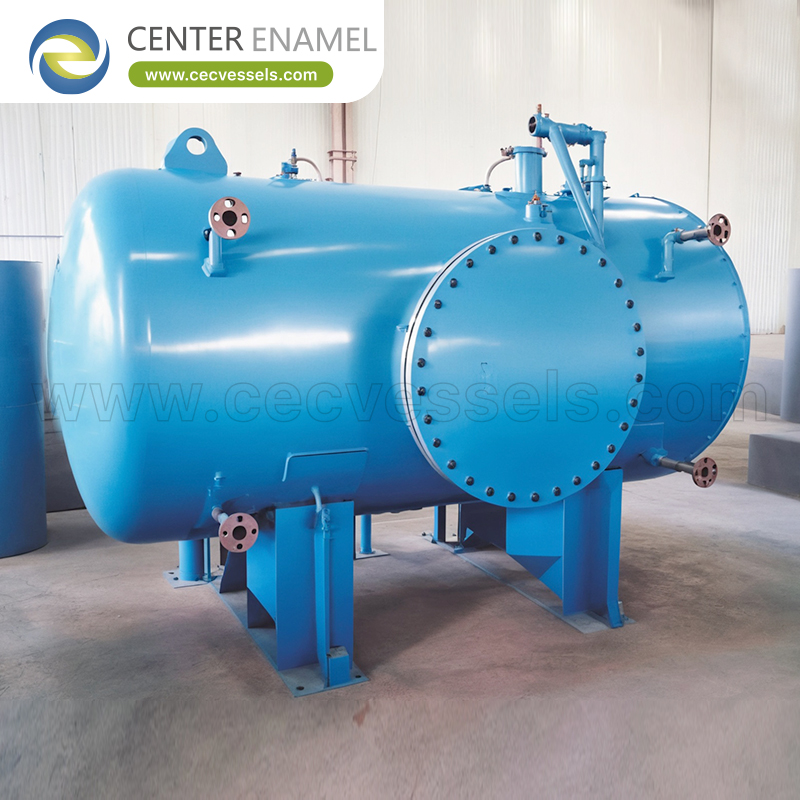
The Olefin Saturation Reactor Reactor in this context) is a crucial piece of equipment used in petroleum refining and petrochemical processing to improve the quality and stability of hydrocarbon streams. Its primary function is the catalytic addition of hydrogen to unsaturated carbon-carbon bonds (olefins) to convert them into stable, saturated alkanes.
This process is fundamental for several industrial goals:
Product Stabilization: Saturating reactive components in fuel streams (like gasoline) to prevent undesirable polymerization, gum formation, and color degradation during storage.
Feedstock Purification: Removing trace unsaturated contaminants that could poison downstream catalysts or interfere with polymerization reactions (e.g., preparing polymerization-grade propylene).
Specific Chemical Synthesis: Performing controlled saturation of one type of olefin while preserving others, requiring high selectivity.
The successful function of an Olefin Saturation Reactor depends critically on engineering solutions that support process selectivity and asset longevity: Precise Temperature Control to manage the exothermic hydrogenation reaction; Heavy-Duty Construction for structural integrity; Catalyst Bed Uniformity for flow distribution; and Long-Term Thermal Stability for continuous operation at elevated temperatures.
At the forefront of manufacturing these essential, high-integrity process vessels is Shijiazhuang Zhengzhong Technology Co.,Ltd (Center Enamel). Leveraging decades of excellence in the design and fabrication of robust Pressure Vessels for demanding thermal and structural service, Center Enamel has strategically established itself as a leading China Olefin Saturation Reactor Manufacturer. Our equipment features specialized internal thermal management systems, heavy-duty structural components, and rigorous compliance with global standards to guarantee thermal stability, sustained operational life, and uncompromising structural integrity.
Center Enamel is the trusted global partner for refiners and petrochemical companies where product quality, asset reliability, and uncompromising structural integrity are strategic priorities.
Engineering for Controlled Hydrogenation: Core Applications of Center Enamel’s Reactors
Center Enamel’s high-integrity reactors and Pressure Vessels are indispensable in sectors requiring the controlled addition of hydrogen to hydrocarbon molecules. Our technical focus ensures superior thermal management, exceptional manufacturing precision, and long-term asset reliability across various critical applications.
1. Central Application Spotlight: Fuel Quality Improvement and Upgrading
The most common use is improving the quality of finished fuel products or fuel blending components.
Gasoline Selective Hydrogenation: Used to saturate diolefins and trace olefins in cracking gasoline streams (e.g., from an FCC unit). This process is crucial for preventing gum formation. The reactor must be designed for uniform liquid-gas distribution over the catalyst bed and must manage the significant heat release of the highly exothermic hydrogenation reaction through quench systems or integrated cooling loops to prevent thermal runaway. As a premier Olefin Saturation Reactor Manufacturer, our focus is on vessels featuring optimized internal quench designs and reliable material selection for elevated temperature service.
C4 Stream Saturation: Used to selectively saturate butadiene in mixed C4 streams before further processing. The reactor must manage the flow of both liquid and gaseous phases (C4 and H2). The vessel requires precise bed support systems and inlet distributors to ensure the hydrogen and hydrocarbon are evenly mixed before contacting the fixed catalyst bed.
Diesel and Kerosene Upgrading: Used to saturate olefins and remove trace sulfur or nitrogen compounds to meet modern clean fuel standards. These fixed-bed reactors require heavy-duty structural design and internal supports capable of handling the weight of the massive catalyst charge over years of continuous operation at elevated temperatures.
2. Specialized Industrial Applications for Petrochemical Feedstock Preparation
The technology is essential for producing high-purity chemical monomers.
Polymer-Grade Propylene Purification: Used to remove trace C2, C4 and higher olefins, and acetylenes from propylene streams, which are severe poisons to polymerization catalysts. This highly selective process requires a reactor capable of extremely tight temperature control (often near ambient to mid-range temperatures) to achieve the desired saturation without losing the valuable propylene product. The vessel requires precise temperature monitoring ports and often external insulation/jacketing.
Benzene Saturation (to Cyclohexane): Used to produce high-purity cyclohexane, a precursor for nylon. This process is highly exothermic and operates at elevated temperatures. The reactor must incorporate specialized internal heat exchange systems or operate in a multi-bed configuration with inter-bed quenching to manage the thermal profile and prevent the catalyst from overheating. Center Enamel manufactures the complex internal grid plates and quench nozzles required for these systems.
Specialty Chemical Hydrogenation: Used in various fine chemical syntheses for the controlled saturation of specific functional groups (e.g., converting unsaturated fatty acids to saturated ones). These smaller-scale reactors require high-strength, often agitated systems to ensure thorough mixing of the liquid feed, gaseous hydrogen, and supported catalyst.
Guard Bed Reactors: Used upstream of the main saturation reactor to trap specific poisons (e.g., arsenic, mercury, or particulate matter) to protect the main catalyst. These vessels require robust material selection and heavy-duty structural supports for the guard bed media, ensuring protection for the most valuable downstream asset.
Engineering Excellence: Center Enamel’s Technical Foundation
Manufacturing a high-integrity Olefin Saturation Reactor requires exceptional focus on material strength for sustained operation, thermal gradient management due to the exothermic reaction, and precision fabrication of the catalyst bed supports. Center Enamel’s approach is validated by adherence to the world's most rigorous engineering standards.
Unwavering Compliance with Global Engineering Codes and Certifications
As a premier China Olefin Saturation Reactor Manufacturer, our commitment to structural safety and quality is validated by adherence to the most trusted global and national standards:
The ASME Boiler & Pressure Vessel Code (BPVC): Full compliance with ASME BPVC Section VIII (Div. 1 and 2) is fundamental. This ensures the structural integrity of the Pressure Vessel under all specified static (catalyst load), fluid, and thermal loads at elevated temperatures.
API Standards for Reactor Design: We adhere to relevant API guidelines for fixed-bed catalytic reactors, focusing on proper material selection for hydrogen service and accurate design for catalyst bed support and retention.
GB/T 150.1-150.4-2024 (Chinese National Standard): Adherence to the highest Chinese National Standards for Pressure Vessels further affirms our analytical design methods, material traceability, and fabrication precision for structural and thermal service.
Precision Manufacturing for Thermal Stability and Catalyst Integrity
Our fabrication processes are meticulously specialized to ensure the reactor's longevity and reliable, high-selectivity operation:
Specialized Material Selection: Reactor shells are often fabricated from low-alloy steels selected for their high-temperature strength and long-term creep resistance. Our material procurement ensures full traceability and certification for all plates and forgings.
Internal Quench and Thermal Management Systems: We precisely manufacture and integrate complex internal components, such as quench nozzles, distributor trays, and mixing baffles, required to manage the exothermic heat release. The internal geometry is fabricated with high dimensional accuracy to ensure uniform mixing and precise control of the temperature rise across the catalyst beds.
Catalyst Bed Support Fabrication: The grid plates, screens, and support rings that hold the heavy catalyst charge are fabricated with high-strength materials and meticulous attention to weld integrity. The design ensures maximum mechanical support while minimizing pressure drop and preventing catalyst migration.
FEA and Thermal Stress Modeling: Every design undergoes extensive Finite Element Analysis (FEA) to verify the structural integrity under the combined stresses of the catalyst weight and the thermal gradients experienced during startup, operation at elevated temperatures, and shutdown, ensuring optimal location of nozzles and support welds.
Shijiazhuang Zhengzhong Technology Co.,Ltd: Global Manufacturing Powerhouse
Center Enamel’s ability to consistently supply these highly specialized, high-integrity Olefin Saturation Reactor systems worldwide is a testament to our vast manufacturing scale and corporate stability.
Unmatched Production Capacity and Strategic Scale
Our operational infrastructure is optimized for high-specification global project delivery:
150,000㎡ Production and R&D Base: This massive, integrated facility is the logistical and technical heart of our operation. The 150,000㎡ production base is equipped with heavy-duty machinery for forming and welding the large-diameter, thick-walled shell sections and features advanced welding and NDT equipment essential for ensuring the integrity of the pressure boundary. This immense scale ensures that we can manage the concurrent fabrication of multiple critical Pressure Vessels and complex hydrogenation systems with reliable lead times.
R&D Focus on Thermal Management and Flow: Our R&D investment centers on refining the design of internal quench and distribution systems for highly exothermic fixed-bed reactors, maximizing catalyst life and product quality.
Corporate Assurance and Global Partnership
Center Enamel's long-standing reputation is built on decades of stable, high-quality manufacturing and global client trust:
Certified International Quality and Safety System: Our entire manufacturing and management system is rigorously certified to comply with leading global standards, ensuring clients of consistency, accountability, and adherence to the highest standards of corporate governance in every project phase.
Extensive Global Project Success: Our high-integrity Pressure Vessels and olefin saturation reactors are deployed in mission-critical applications across diverse global regions, supporting major refining and petrochemical producers. This successful track record validates our capability to handle the complex technical specifications, diverse regulatory requirements, and demanding logistics of international elevated temperature, structural, and catalytic service projects.
The Definitive Choice for Selective Hydrogenation
The reliable and efficient performance of olefin saturation processes is critical for producing stable fuels and high-purity chemical feedstocks, demanding a reactor built with specialized design features for elevated temperature structural integrity, precise internal thermal management, robust catalyst support systems, and uncompromising structural stability.
Shijiazhuang Zhengzhong Technology Co.,Ltd (Center Enamel) is the definitive global partner for this requirement. We unite the ultimate structural resilience of a world-class Pressure Vessels manufacturer with the specialized metallurgical, thermal management, and catalytic engineering expertise required for complex olefin saturation service. Our position as a premier China Olefin Saturation Reactor Manufacturer is validated by our strict compliance with The ASME Boiler & Pressure Vessel Code (BPVC), BS EN 13445, and GB/T 150.1-150.4-2024, and solidified by the immense capacity of our 150,000㎡ production and RD base.
Choose Center Enamel to invest in advanced, ultra-high-integrity equipment that guarantees the safety, efficiency, and longevity of your most critical olefin saturation reactor applications. We provide the technical foundation for process excellence and controlled petrochemical upgrading.


