Why Is Testing Important In Pressure Vessel Manufacturing?
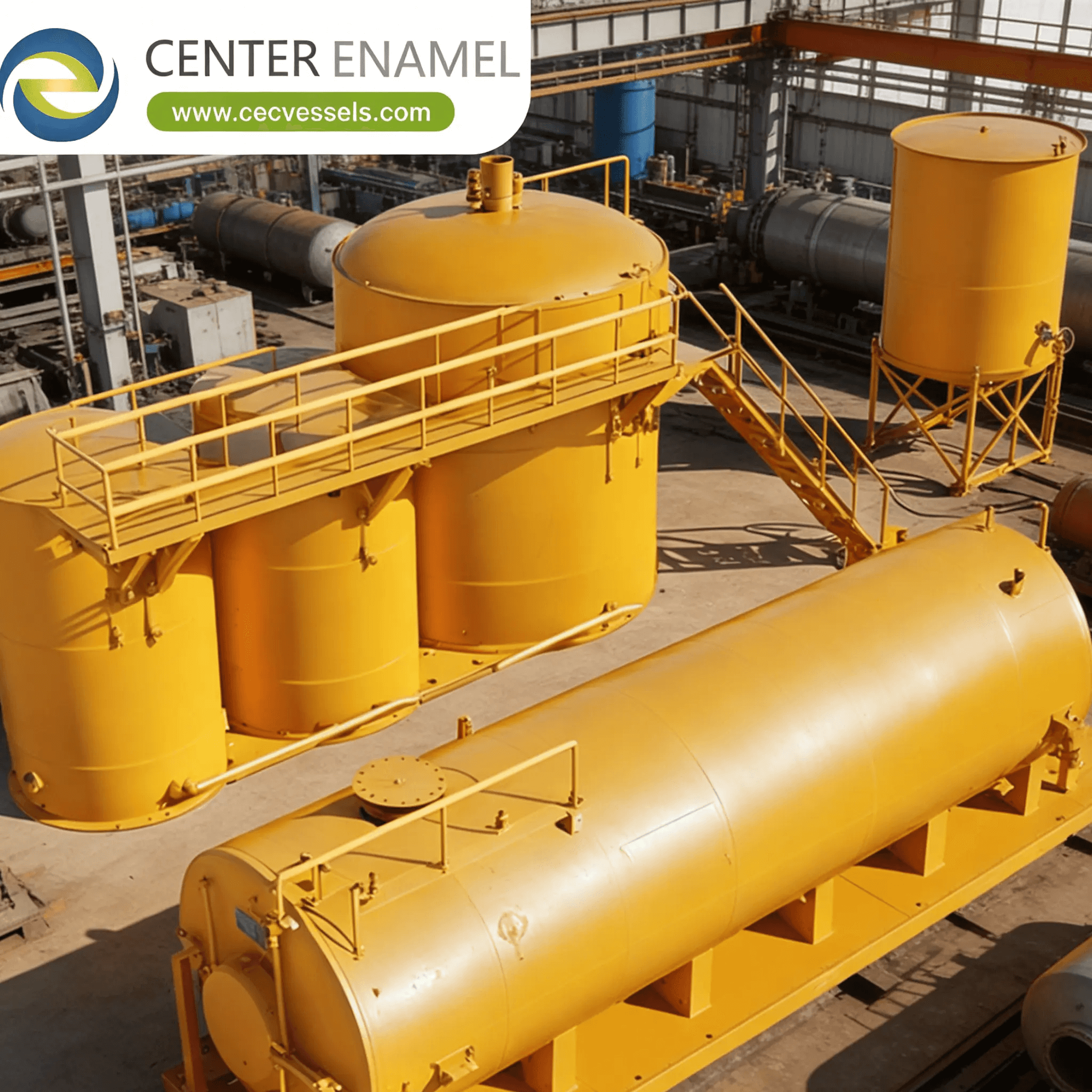
In the global industrial sector, heavy chemical processing complexes, and large-scale plant utility grids, process vessels operate as the core structural containers where fluid media experience thermal shifts, multi-phase separation, or molecular blending. Because these industrial units must maintain complete structural stability under continuous material loads and prolonged cyclic operations, verifying the structural integrity of every welded seam and metal plate is a foundational engineering requirement. Sourcing your equipment from a certified manufacturer that integrates comprehensive examination protocols into its production line is the ultimate strategy for ensuring project compliance and continuous production reliability. Finding out why testing is important in pressure vessel manufacturing reveals a highly technical discipline where advanced material science intersects with rigorous quality control workflows. As an established Pressure Vessel Manufacturer, Center Enamel develops high-performance fluid containment units, specialized processing columns, and industrial storage systems tailored for demanding factory layouts worldwide. By aligning all verification phases with elite international engineering benchmarks like the ASME BPVC, European EN rules, and China national specifications, a premier manufacturer delivers the operational longevity and structural security necessary to optimize facility uptime and protect capital infrastructure.
The Fundamental Purpose of Testing in Equipment FabricationTo appreciate the critical importance of testing in the heavy manufacturing sector, it is necessary to analyze how structural validation protects both the asset and the entire production facility. When raw steel plates are rolled and joined together to create a large containment hull, the metallic structure undergoes significant localized thermodynamic shifts, particularly along the welded interfaces.
As a prominent provider of China Pressure Vessel Manufacturer technology, Center Enamel structures its quality assurance matrix around these exact physical considerations. Without a rigorous, multi-stage testing regimen executed at critical assembly gates, microscopic imperfections such as subsurface porosity, micro-cracks, or incomplete weld root penetration could remain undetected within the vessel walls. Implementing systematic material and weld validations allows engineers to confirm that the finished unit possesses uniform mechanical strength, perfectly matching the design parameters required by the global processing grid. This exhaustive verification process eliminates the risk of early material degradation, ensuring that the vessel operates as a reliable production node for decades of continuous service.
Key Design Standards and Global Compliance FrameworksThe execution parameters, acceptance criteria, and specific methodologies for pressure vessel testing are strictly governed by international engineering codes. These frameworks provide the mathematical equations and validation frequencies required to guarantee structural compliance across different regional markets.
ASME Boiler and Pressure Vessel Code (BPVC) Section VIIIThe ASME code represents the premier global standard for pressure equipment manufacturing. It establishes clear guidelines for welder qualifications, material traceability, and mandatory non-destructive examination thresholds. A certified manufacturer must follow these precise protocols to ensure that every vessel shell exhibits the necessary safety coefficients under continuous thermal and fluid loads.
GB/T 150.1-150.4-2024The newly updated national standard for metal pressure vessels in China represents the latest advancements in structural finite element analysis, automated welding quality metrics, and modernized steel grade classifications. Adhering to the updated 2024 specifications guarantees that all testing methods align with modern industrial infrastructure requirements and domestic project compliance.
BS EN 13445For the European market, BS EN 13445 outlines harmonized rules for unfired pressure vessels, placing a significant emphasis on material fatigue analysis and advanced non-destructive testing regimes to ensure long-term structural security under cyclic production demands.
Essential Non-Destructive Testing (NDT) MethodologiesA good manufacturer implements a comprehensive matrix of Non-Destructive Testing (NDT) workflows. These advanced testing methods allow quality control technicians to inspect the interior structure of the steel and the full depth of welded joints without altering or damaging the finished equipment.
1. Radiographic Testing (RT)Radiographic testing utilizes industrial X-rays or gamma radiation sources to penetrate the welded seams of the vessel shell. Film or digital detectors placed on the opposite side of the weld capture an internal structural image of the joint. This method allows technicians to look deep within the metal matrix to identify subsurface anomalies, such as fine gas pockets, slag inclusions, or internal fissures, ensuring that all primary longitudinal and circumferential seams are completely sound.
2. Ultrasonic Testing (UT)Ultrasonic testing involves transmitting high-frequency acoustic waves into the steel plates and welded zones via a specialized transducer. As the sound waves travel through the metal, they reflect off the back wall or any internal structural discontinuities. By analyzing the return signal, quality control inspectors can precisely map the internal continuity of the metal walls and measure exact material thicknesses, ensuring that no laminar tearing or internal structural defects exist within the rolled plates.
3. Magnetic Particle Testing (MT)Magnetic particle testing is an effective surface and near-surface validation method used primarily on ferromagnetic materials like carbon steel. Inspectors apply a strong magnetic field across the weld zone and sprinkle fine iron particles over the surface. If a surface micro-crack or weld toe imperfection interrupts the magnetic field, a localized leakage field forms, trapping the iron particles and creating a highly visible visual indicator that allows technicians to identify and rectify surface flaws before the equipment moves to the next assembly stage.
4. Liquid Penetrant Testing (PT)For non-magnetic materials, such as austenitic stainless steel or duplex alloys, liquid penetrant testing is deployed to uncover surface-breaking discontinuities. A highly fluid dye penetrant is applied across the cleaned weld seam, allowing the liquid to draw into any microscopic cracks through capillary action. After removing the excess surface dye, a developer agent is applied, drawing the trapped penetrant out of the micro-cracks to reveal the exact location and geometry of any surface imperfections.
Destructive Testing and Material ValidationIn addition to inspecting the finished assemblies, a premier manufacturer must validate the chemical composition and mechanical performance of the raw materials before fabrication begins, as well as the strength of the welding procedures utilized during construction.
Production Weld Test PlatesTo ensure that the automated welding networks maintain excellent performance throughout the fabrication sequence, technicians attach sample test plates directly to the longitudinal seams of the vessel shell during the rolling and welding process. These test plates undergo the exact same heat inputs and operational cycles as the primary containment hull. Once welding is complete, these sample plates are removed and subjected to intensive destructive testing in an analytical laboratory, including tensile strength tests, bend testing, and Charpy V-notch impact evaluations, confirming that the mechanical properties of the weld match or exceed the base metal specifications.
Positive Material Identification (PMI)When a project specifies premium metallurgy, such as 316L stainless steel for pharmaceutical purity, Duplex 2205 for aggressive chemical processes, or specialized carbon steel grades like SA516 Grade 70, Positive Material Identification is performed. Using handheld X-ray fluorescence (XRF) analyzers, inspectors verify the exact percentage of chromium, nickel, molybdenum, and manganese within the steel matrix, confirming full material traceability and compliance with certified mill test reports (MTRs).
Final Proof Validation: Hydrostatic Testing ProtocolsOnce all non-destructive examinations are complete and verified, every finished pressure vessel must undergo a mandatory hydrostatic proof verification. This physical test serves as the ultimate confirmation of structural integrity before the asset is certified for delivery to the industrial facility.
During a standard hydrostatic test, the vessel is positioned on secure structural supports and filled completely with purified water or an appropriate testing liquid. Technicians carefully vent all air from the internal cavity to ensure a completely solid fluid volume. Using a precision utility pump, the fluid pressure inside the chamber is steadily increased to an elevated level above the standard maximum operational limit, strictly calculated in accordance with the governing design code (ASME, EN, or GB/T 150). The vessel is held at this elevated level for a designated duration while independent inspectors conduct an exhaustive visual examination of all dished heads, nozzle integrations, manways, and welded seams, confirming that the structural shell remains entirely liquid-tight and free of any material distortion.
Structural Components Requiring Intensive ValidationEvery industrial process unit produced by Center Enamel is a comprehensive mechanical assembly engineered for long-term operational control, featuring specialized sub-components that require meticulous fabrication and testing:
Heavy-Duty Cylindrical Shells: The primary fluid containment hull, constructed from rolled carbon steel or stainless steel plates joined via full-penetration automated welds that must pass 100% radiographic verification.
Formed Curved End Cover Heads: Ellipsoidal or torispherical dished covers that cap the cylindrical body, engineered and tested to ensure uniform stress distribution across the material structure in strict accordance with GB/T 150.1-150.4-2024 specifications.
Thermal Regulation Jackets: External conventional, dimple, or half-pipe channels wrapped around the primary shell perimeter to circulate heating steam or cooling water, requiring independent pressure tests to ensure zero cross-contamination.
Internal Fluid Agitation Baffles: Vertical steel plates positioned along the inner perimeter of the shell wall to disrupt circular liquid movement and eliminate dead zones during high-torque mixing operations, requiring magnetic particle verification at the attachment welds.
Forged Integration Nozzles: Precision-machined connection ports that accommodate high-velocity fluid entry and exit streams, requiring ultra-sonic testing to verify structural reinforcement at the shell openings.
Aseptic Mechanical Shaft Seals: Multi-stage fluid barrier assemblies surrounding the rotating agitator shaft to maintain absolute isolation at all operational fluid levels.
Vortex Breakers: Specialized structural caps placed over bottom discharge nozzles to ensure smooth fluid dynamics during liquid removal, preventing gas entrainment in downstream pump lines.
Broad Spectrum Industrial Testing CapabilitiesA good vessel supplier must possess the cross-industry expertise required to adapt their testing profiles to diverse global processing sectors. The technical capability of Center Enamel spans a comprehensive matrix of modern industrial fields:
Petrochemical and Upstream Refining Infrastructure: Validating thick-walled hydrotreaters, catalytic cracking columns, gas scrubbers, and oil-water separators where robust structural integrity prevents any process disruptions across extensive refinery networks.
Specialty Chemical and Polymer Processing Skids: Testing jacketed mixing reactors, distillation column overheads, and solvent recovery networks engineered to process resins, epoxies, and plastics under precise thermodynamic settings.
Biofuels and Renewable Green Energy Facilities: Certifying specialized transesterification reactors and phase separation vessels configured to handle organic biomass fluids and agricultural fats, ensuring high resistance to organic acids.
Environmental Wastewater Treatment and Leachate Management: Inspecting advanced horizontal and vertical separation units, neutralization vessels, and anaerobic digestor reactors enhanced with protective enamel coatings to handle corrosive landfill runoff and industrial factory effluents.
Factory Utility Control and Energy Networks: Testing steam distribution cylinders, air receivers, blowdown tanks, and condensate accumulation vessels to organize high-temperature utility lines across manufacturing grids.
Large-Scale Aquaculture and Water Filtration: Verifying high-volume vertical filtration tanks, carbon steel sand filter shells, and multi-stage biological containment units to maintain strict water purity profiles and protect sensitive aquatic environments.
Integration within Industrial Process NetworksIndustrial pressure vessels do not operate as isolated hardware; they serve as central processing nodes within comprehensive engineering layouts. Center Enamel provides a comprehensive range of equipment that works in tandem with these units, with each auxiliary component undergoing rigorous quality validation:
Steam Distribution Cylinders: Organizing and directing high-temperature steam lines from primary boilers to various vessel jackets, reactors, or storage tank heating coils across the facility, requiring complete ultrasonic seam testing.
Condensate Tanks: Collecting hot purified water and process fluids discharged from thermal steam heating loops for recycling, supporting overall facility resource conservation and requiring standard hydrostatic validation.
Tube Heat Exchangers: Adjusting the temperature of incoming fluid streams before they enter a separator or reactor nozzle, requiring independent tube bundle pressure tests to prevent thermal shock inside the main vessel.
Coalescing Fluid Separators: Purifying auxiliary fluids, compressed air streams, and cooling water loops to prevent grease or organic oils from coating heat transfer surfaces, preserving thermal conductivity.
Resin Tanks and Fiber Adsorption Tanks: Providing advanced upstream water treatment to ensure that utility cooling water loops remain entirely free of scale-forming minerals.
The Center Enamel Testing and Manufacturing AdvantageChoosing Center Enamel as your production partner means connecting with an industry leader in technical innovation, advanced engineering, and top-tier quality verification across all vessel classifications.
Advanced Computational EngineeringOur team utilizes Finite Element Analysis (FEA) and Computational Fluid Dynamics (CFD) to digitally simulate exactly how complex process fluids, steam vapors, and chemical utilities move inside our pressure vessel shells. This computational analysis allows us to predict stress concentration zones and optimize nozzle locations, guiding our physical NDT testing teams to focus on critical areas during final inspection.
Precision Fabrication and Automated WeldingWe operate a state-of-the-art manufacturing facility equipped with automated plate rolling lines, heavy-duty CNC machining setups, and advanced automated welding networks. This commitment to automation minimizes manual variation, accelerates production timelines, and guarantees that every weld profile complies with the strict quality standards of international engineering codes, lowering the rejection rate during radiographic and ultrasonic examinations.
Turnkey Inspection ManagementFrom initial metallurgical verification and certified weld qualifications to complete non-destructive evaluation, post-weld heat treatment, and final hydrostatic verification, Center Enamel manages the entire fabrication and testing sequence under one roof. This comprehensive oversight ensures elite structural reliability, seamless system integration, and long-term operational success for our global industrial partners.
Summary of Industrial Quality ExcellenceIn conclusion, analyzing why testing is important in pressure vessel manufacturing highlights a highly technical discipline where advanced material science, precision welding, and strict compliance methodologies intersect. Sourcing your process equipment from a certified, highly experienced manufacturer represents the ultimate strategy for ensuring processing consistency, plant safety, and continuous production reliability across your facility. The overall manufacturing throughput, conversion efficiency, facility safety, and operational longevity of an industrial plant depend fundamentally on the precision, material execution, and structural reliability of its underlying process containment assets. By designing, fabricating, and inspecting these critical units in absolute accordance with rigorous international benchmarks like the ASME code, European EN rules, and the updated GB/T 150.1-150.4-2024 national specifications, Center Enamel consistently delivers high-performance processing equipment that maximizes production yields, lowers facility operating costs, and ensures long-term operational success for our global industrial partners.
Let’s build a safer, more efficient future together. If you have an upcoming project that demands high-durability pressure vessels, we are here to help. Please send your requirements to our team, and our technical experts will connect with you promptly to ensure your project meets the highest industrial standards. |