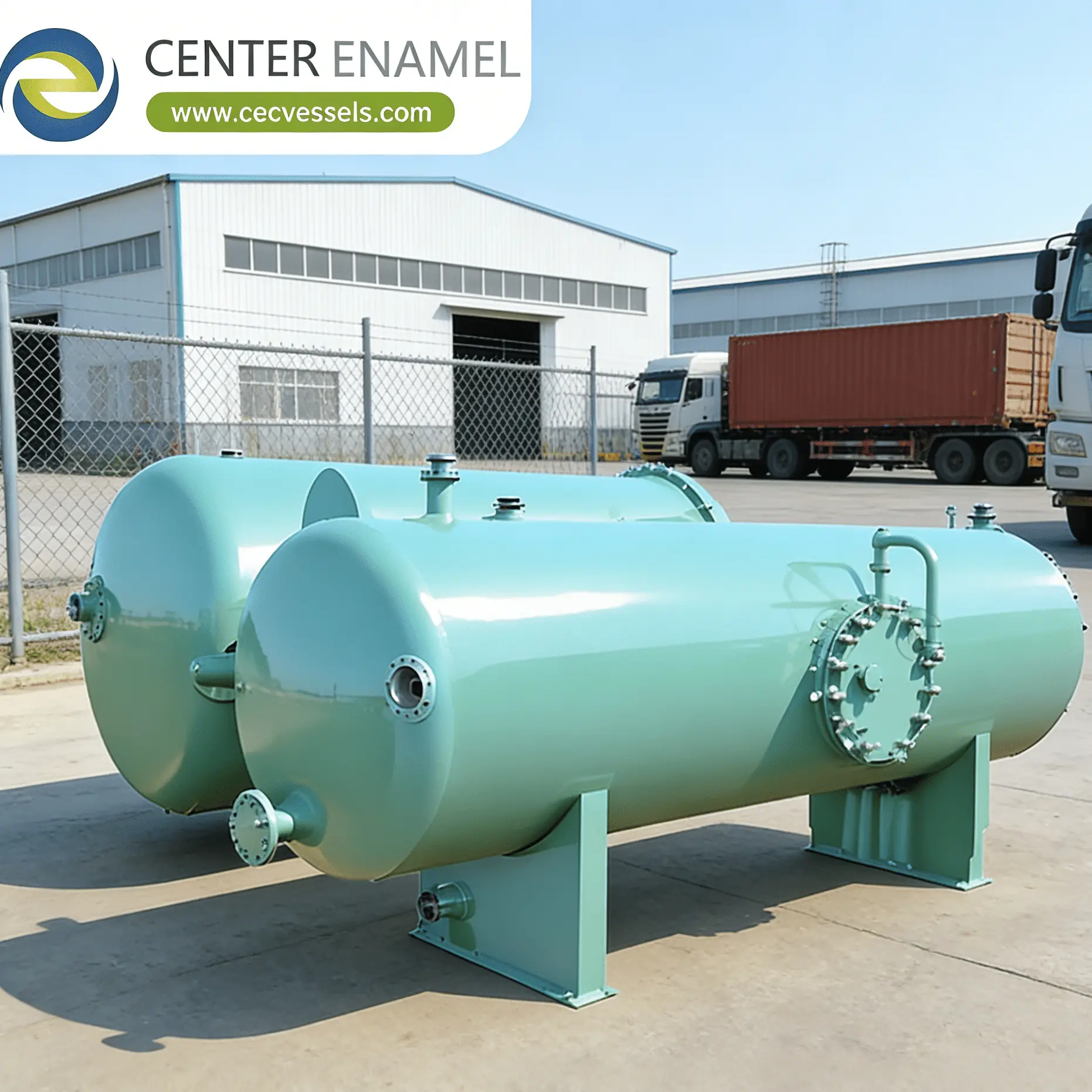
What Is The Principle Of Heat Exchanger?
A heat exchanger is a specialized device designed to transfer heat between two or more fluids—liquids or gases—that are at different temperatures. As a professional Heat Exchanger Manufacturer, Center Enamel develops these systems to provide precise thermal management solutions for chemical processing, food production, and energy sectors worldwide. The Working Principle of Heat Transfer
The fundamental principle of a heat exchanger is the transition of thermal energy from a hot medium to a cold medium. This process is governed by the laws of thermodynamics, specifically the Second Law, which states that heat naturally flows from a higher-temperature body to a lower-temperature body until thermal equilibrium is reached.
In industrial applications, this principle is utilized to either cool down a process fluid or heat up a product. Most heat exchangers facilitate this transfer through a solid conductive wall, such as a metal tube or plate, which prevents the fluids from mixing. The efficiency of the principle depends on three factors: the thermal conductivity of the material, the total surface area available for transfer, and the temperature difference between the two fluids. By optimizing these variables, a China Heat Exchanger Manufacturer can create highly efficient systems that save energy and reduce operational costs.
Classification by Pressure Vessel Type
Heat exchangers are essentially a specialized category of pressure vessels. Because they must contain fluids under various pressures, their mechanical design is critical. Different structural types are selected based on the specific industrial task and the characteristics of the fluids involved.
1. Shell and Tube Heat ExchangersThe shell and tube design is the most prevalent pressure vessel type used for heat exchange. It consists of a large cylindrical shell containing a bundle of parallel tubes. One fluid flows through the tubes, while the second fluid flows over them within the shell.
Working Principle: This type maximizes the contact area through the use of numerous small-diameter tubes. It is exceptionally robust and can handle significant pressure differences between the two fluid streams.
Structural Strength: The cylindrical shell is a naturally strong pressure vessel shape, making it ideal for the demanding environments of oil refineries and heavy chemical plants.
2. Plate and Frame Heat ExchangersThese vessels use a series of thin, corrugated metal plates clamped together in a frame. The fluids flow through alternating channels between the plates.
Working Principle: The corrugations on the plates create high turbulence even at low flow velocities, which significantly enhances the heat transfer rate.
Compactness: They offer a very large surface area for heat transfer in a very small volume, making them perfect for facilities with limited floor space.
3. Spiral Heat ExchangersA spiral heat exchanger is formed by rolling two long metal plates around a central mandrel to create two concentric spiral flow passages.
Working Principle: The curved path creates centrifugal forces that keep solids in suspension, making it a self-cleaning vessel.
Application: It is the preferred pressure vessel type for handling slurries, wastewater, or fluids with high fiber content that would clog standard tube bundles.
4. Air-Cooled Heat ExchangersThese units consist of a tube bundle across which ambient air is forced by one or more fans. They are often referred to as fin-fan exchangers because the tubes are equipped with fins to increase the external surface area.
Working Principle: Heat is transferred from the process fluid inside the tubes to the air passing over the fins. This eliminates the need for a liquid cooling medium like water.
Engineering Design Standards and Certificates
To ensure that these pressure vessels operate reliably, they must be designed and fabricated according to strict international codes. Center Enamel maintains a rigorous quality management system to comply with these global standards.
ASME Boiler and Pressure Vessel Code BPVCThe ASME BPVC is the most recognized standard for heat exchanger manufacturing. Section VIII of the code provides the specific rules for the design, material selection, and inspection of pressure equipment. Holding an ASME certification ensures that a China Heat Exchanger Manufacturer produces vessels that meet the highest global quality benchmarks.
GB/T 150.1-150.4-2024This is the latest national standard in China, recently updated in 2024 to incorporate the most advanced material science and fabrication techniques. It covers the design, manufacture, and inspection of metal pressure vessels. Center Enamel strictly follows the GB/T 150-2024 updates to ensure that our products are compatible with both domestic requirements and international expectations.
BS EN 13445For the European market, BS EN 13445 is the harmonized standard for unfired pressure vessels. It focuses on detailed stress analysis and material fatigue, ensuring the heat exchanger remains structurally sound throughout its intended service life.
Key Components of Heat Exchanger Vessels
A heat exchanger is a complex assembly where every component is engineered to support the thermal transfer principle.
l Shell Sections: The outer cylindrical body of the vessel that contains the shell-side fluid. l Tube Sheets: Thick metal plates that hold the tube bundle in place and provide a seal between the two fluid chambers. l Baffles: Internal plates that direct the fluid flow inside the shell, ensuring that the fluid passes over the tubes multiple times to maximize heat transfer. l Heads End Caps: These close off the ends of the vessel. They are often removable to allow for internal inspection and cleaning of the tubes.
l Nozzles: The entry and exit points for the hot and cold fluids. These are reinforced to ensure they can withstand the mechanical loads of the connected piping.
Material Selection and Thermal Efficiency
The choice of material is critical to both the structural integrity and the thermal performance of the vessel. Center Enamel selects materials based on the chemical properties of the fluids and the operational temperatures.
Stainless SteelGrade 304 and 316 stainless steels are frequently used in the food, beverage, and pharmaceutical industries. They provide excellent corrosion resistance and ensure that the process fluids remain pure and free from metallic contamination.
Carbon SteelFor general utility applications where the fluids are non-corrosive, carbon steel is a cost-effective and structurally strong choice. It is commonly used for air-to-water or oil-to-water exchangers in power plants.
Specialized Alloys and CoatingsIn cases where the fluids are highly aggressive, such as in saltwater cooling or acidic chemical processing, specialized alloys like Titanium or Nickel-based alloys are required. Additionally, Center Enamel offers specialized linings that combine the strength of steel with the chemical resistance of advanced polymers or glass-fused-to-steel technology.
Applications Across Industrial Processing
Heat exchangers are integrated into almost every step of modern production, playing various roles based on their pressure vessel type.
Chemical and Petrochemical ProcessingIn these industries, heat exchangers are used as condensers, reboilers, and pre-heaters. They allow for the recovery of heat from one part of a process to be used in another, which is a primary driver of plant efficiency.
Food and Beverage ProductionHeat exchangers are vital for pasteurization and sterilization. Center Enamel provides sanitary-grade vessels with high-polish internal surfaces to ensure that there are no areas where bacteria can grow, meeting the strictest food safety regulations.
Pharmaceutical and BiotechnologyBioreactors and fermenters often utilize internal cooling coils or external jackets that function as heat exchangers. These maintain the precise temperature environment needed for delicate biological cultures to thrive.
Power Generation and Energy RecoveryIn power plants, large-scale condensers turn steam back into water so it can be reused in the boiler. Heat exchangers also capture waste heat from exhaust gases, significantly improving the overall energy efficiency of the facility.
Manufacturing Advantages of Center Enamel
As a leading China Heat Exchanger Manufacturer, Center Enamel combines advanced engineering software with modern fabrication technology to provide superior thermal solutions.
Finite Element Analysis FEAWe use FEA software to simulate the stresses on the pressure vessel under various thermal and pressure loads. This ensures that the design is optimized for safety and material efficiency before the manufacturing process begins.
Automated Welding SystemsThe quality of the weld is paramount in a pressure vessel. We utilize automated submerged arc welding SAW and orbital tube-to-tubesheet welding. These systems provide consistent, high-quality joints that eliminate the risk of leaks between the hot and cold fluid streams.
Comprehensive Testing ProtocolsTo verify that every vessel meets the requirements of GB/T 150-2024 and ASME, we perform:
l Radiographic Testing RT: To check the internal structure of welds for defects. l Helium Leak Testing: The most sensitive method for ensuring the integrity of tube-to-tubesheet connections. l Hydrostatic Pressure Testing: Filling the vessel with water and pressurizing it to 1.3 or 1.5 times the design pressure to verify overall strength.
Innovation in Smart Thermal Management
The industry is moving toward more intelligent heat exchangers. By integrating sensors into the vessel nozzles and shell, operators can monitor temperature and pressure in real-time. This allows for predictive maintenance, as the data can indicate when a vessel is beginning to foul or scale up, allowing for cleaning to be scheduled before efficiency drops significantly.
Center Enamel is at the forefront of this trend, offering vessels that are ready for Industry 4.0 integration. This helps our clients maximize their uptime and maintain peak thermal performance throughout the life of the equipment.
Summary of Industrial ExcellenceThe principle of the heat exchanger—the efficient transfer of thermal energy—is a cornerstone of modern industrial processing. Whether using a shell and tube, plate, or spiral design, these specialized pressure vessels allow for the safe and precise control of temperature in countless applications. By adhering to international design standards like ASME and the updated GB/T 150.1-150.4-2024, Center Enamel ensures that every heat exchanger we manufacture provides reliable and high-performance service. As a dedicated China Heat Exchanger Manufacturer, we remain committed to technical innovation and quality excellence, helping our global partners achieve greater efficiency and sustainability in their operations.
Ready to bring your project to life? Whether your application requires compliance with EN, ASME, or GB standards, our team is equipped to deliver precision-engineered solutions tailored to your specific needs. Send us your technical specifications today, and our senior engineering team will contact you shortly to provide a professional consultation and a detailed proposal.
|