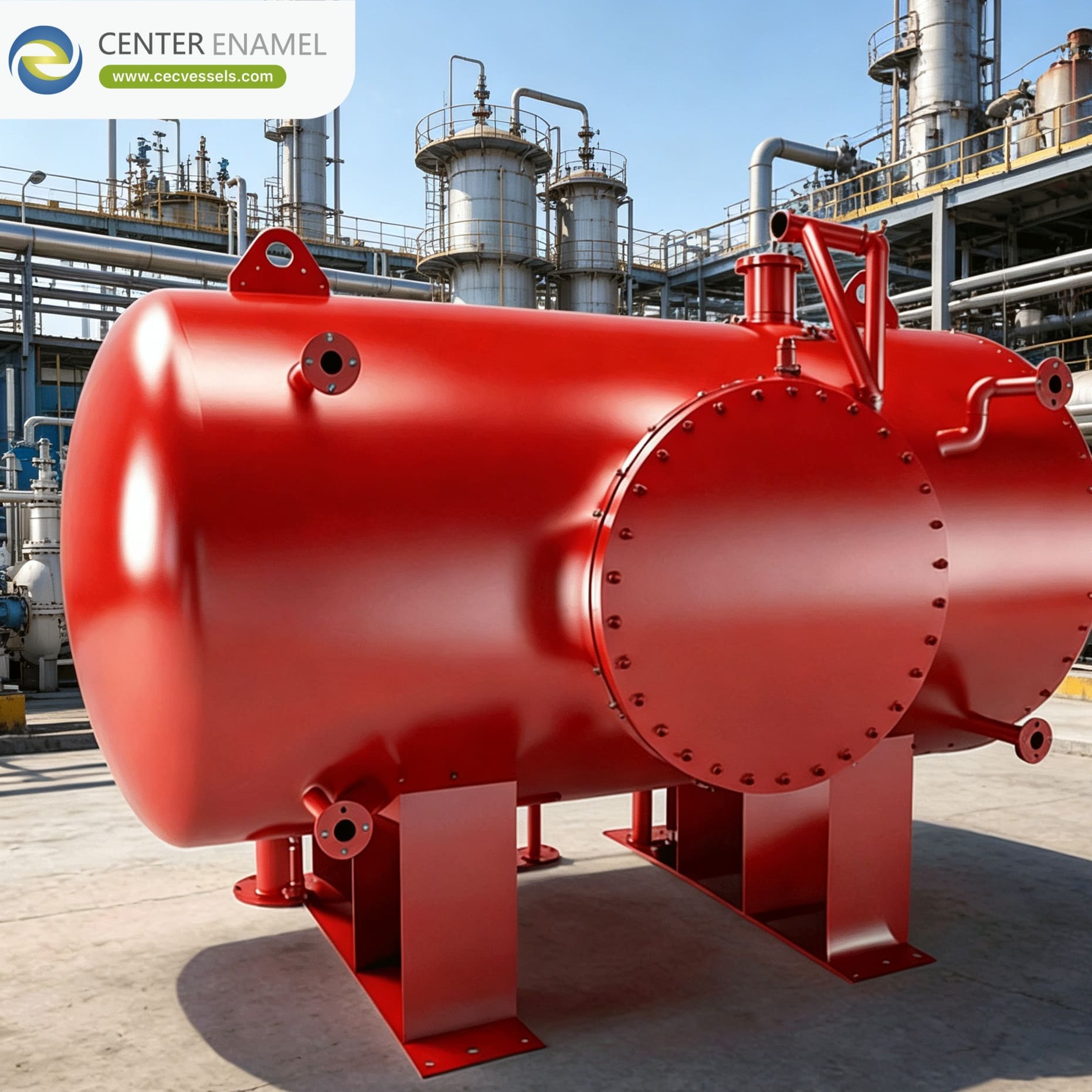
A Thermal Exchanger, also known as a Heat Exchanger, is industrial equipment designed to transfer thermal energy between two fluids at different temperatures. The fluids typically flow through separate channels or compartments, allowing heat to pass through a heat transfer surface without direct mixing.
Thermal exchangers are widely used in chemical processing, pharmaceutical manufacturing, food production, petroleum refining, and energy systems. They support essential operations such as heating raw materials, cooling process liquids, condensing vapor, and recovering energy from hot process streams.
Selecting suitable heat transfer equipment helps industrial facilities maintain stable process temperatures, improve energy utilization, and support consistent production. Center Enamel provides industrial equipment solutions for projects requiring reliable process integration and customized equipment configurations.
How Does a Thermal Exchanger Transfer Heat?
The operating principle of a thermal exchanger involves transferring heat from a hotter medium to a cooler medium. This process generally includes three stages: convection from the hot fluid to the heat transfer surface, conduction through the separating wall, and convection from the wall to the cooler fluid.
The two fluids may flow in parallel, in opposite directions, or across one another, depending on the equipment design. Counterflow arrangements can maintain a useful temperature difference between the fluids over much of the heat transfer area, supporting effective thermal performance.
Heat transfer efficiency depends on several factors, including fluid temperature, flow rate, heat transfer area, material properties, and fluid characteristics. Correct equipment sizing and process integration are therefore important for achieving the required heating or cooling capacity.
In industrial systems, a Heat Exchangermay operate independently or connect with reactors, storage vessels, condensers, evaporators, and other process equipment. This integration allows facilities to manage thermal energy throughout different production stages.
What Are the Main Types of Thermal Exchangers?
Different industrial applications require different thermal exchanger configurations. The most suitable type depends on process conditions, available space, required capacity, material compatibility, and maintenance requirements.
Shell and Tube Heat Exchanger
A Shell and Tube Heat Exchangerconsists of a bundle of tubes enclosed within a cylindrical shell. One fluid flows through the tubes, while the other passes through the shell side, allowing heat to transfer through the tube walls without direct fluid mixing.
This type of Heat Exchangeris widely used in chemical plants, petrochemical facilities, petroleum refining, and industrial processing systems. Its configuration can be adapted to different flow arrangements, materials, and heat transfer requirements.
When selecting a shell and tube design, engineers typically evaluate tube dimensions, shell configuration, heat transfer area, operating temperatures, material compatibility, and maintenance access. These factors help determine whether the equipment is suitable for the intended industrial process.
For projects requiring customized thermal processing equipment, working with an experienced manufacturer can help align the exchanger design with process conditions and production requirements.
Plate Thermal Exchangers
Plate thermal exchangers use a series of thin plates to form separate channels for hot and cold fluids. Their large heat transfer surface relative to their overall size makes them suitable for applications requiring compact equipment and effective thermal exchange.
Common applications include food processing, pharmaceutical production, HVAC systems, and industrial cooling circuits. Depending on the design, plate exchangers can offer convenient cleaning and flexible capacity arrangements.
The selection of plate materials and sealing components should match the process fluid, temperature range, and cleaning requirements.
Air-Cooled Thermal Exchangers
Air-cooled thermal exchangers transfer heat from a process fluid to ambient air. Many designs use finned tubes and fans to increase the available heat transfer area and improve airflow.
These systems are useful in industrial facilities where cooling water availability is limited or an air-based cooling arrangement is preferred. Their performance depends on ambient temperature, airflow, fluid properties, and heat transfer surface area.
Double-Pipe Thermal Exchangers
A double-pipe thermal exchanger typically consists of one pipe positioned inside another. The two fluids flow through separate passages, transferring heat through the inner pipe wall.
This configuration is suitable for selected small-capacity processes, pilot plants, and applications with relatively straightforward heating or cooling requirements. Its modular arrangement can also simplify certain installation and maintenance activities.
How Can Thermal Exchangers Improve Industrial Heat Transfer Efficiency?
Industrial heat transfer efficiency depends on the relationship between equipment design, operating conditions, and process requirements. Several factors can help improve thermal performance.
Optimize the Heat Transfer Area
The heat transfer surface area affects the amount of thermal energy that can move between fluids. Engineers should calculate the required heat duty and evaluate the temperature difference, flow rates, and fluid properties before determining equipment dimensions.
Proper sizing helps the exchanger achieve the desired outlet temperatures while making effective use of the installed equipment. Both undersizing and inappropriate equipment selection can affect process performance.
Choose the Appropriate Flow Arrangement
Parallel-flow, counterflow, and crossflow configurations offer different thermal characteristics. Counterflow arrangements can provide a more consistent temperature difference along the exchanger, depending on the application.
Selecting an appropriate flow arrangement helps improve heat transfer performance and supports the required process temperature conditions.
Recover Waste Heat
Industrial processes often generate hot liquids or vapor that retain useful thermal energy. A thermal exchanger can transfer part of this energy to incoming feed materials or another process stream.
For example, heat recovered from a hot product stream may be used to preheat incoming raw materials. This reduces the amount of additional energy needed for heating and improves overall energy utilization.
Heat recovery is particularly relevant to chemical manufacturing, evaporation systems, solvent recovery, and continuous production processes. Proper integration of heat transfer equipment can also help coordinate heating and cooling requirements across multiple production stages.
Maintain Clean Heat Transfer Surfaces
Deposits on heat transfer surfaces can reduce thermal performance by increasing resistance to heat flow. Regular inspection and suitable cleaning procedures help maintain the designed operating efficiency.
Monitoring inlet and outlet temperatures, flow rates, and other operating parameters can help operators identify changes in thermal performance and plan maintenance accordingly.
What Industries Use Thermal Exchangers?
Chemical and Petrochemical Manufacturing
Thermal exchangers support reactor heating and cooling, feed preheating, product cooling, vapor condensation, and energy recovery. Shell and tube designs are frequently considered for industrial applications that require defined heat transfer capacity and compatibility with specific process fluids.
These systems can be integrated with reaction vessels, distillation columns, storage tanks, and separation equipment. Suitable thermal management helps maintain the operating temperatures required for chemical reactions and downstream processing.
Pharmaceutical and Biotechnology Production
Pharmaceutical and biotechnology facilities use thermal exchangers to regulate process temperatures during material preparation, heating, cooling, and cleaning operations.
Material compatibility, surface finish, cleanability, and process requirements should be considered when specifying equipment for these applications.
Food and Beverage Processing
In food and beverage manufacturing, thermal exchangers support liquid heating, cooling, pasteurization, and temperature adjustment. Equipment design should reflect product properties, hygiene requirements, and the cleaning procedures used in the facility.
Evaporation and Solvent Recovery
Thermal exchangers play an important role in evaporation and solvent recovery systems. They supply heat to process liquids, condense vapor, and transfer thermal energy between different process streams.
In mechanical vapor recompression and multi-effect evaporation systems, suitable heat transfer equipment supports energy reuse and liquid concentration. Proper integration can improve energy utilization and help maintain stable production conditions.
Water and Wastewater Treatment
Thermal exchangers can regulate process water temperatures, support sludge heating, and recover heat in selected water and wastewater treatment applications.
The equipment configuration should account for fluid composition, solids content, flow characteristics, and cleaning requirements to support effective operation.
How Do You Choose a Thermal Exchanger Manufacturer?
Selecting a suitable Thermal Exchanger Manufacturerrequires evaluating technical capabilities, equipment quality, and project-specific requirements. Buyers comparing a China Thermal Exchanger Manufactureror a China Heat Exchangers Manufacturershould consider the following factors.
Evaluate Process Requirements
First, identify the process conditions, including the fluids involved, inlet and outlet temperatures, flow rates, and required heat transfer capacity. These details provide the foundation for equipment sizing and configuration.
For shell and tube applications, additional considerations may include tube arrangement, shell dimensions, heat transfer area, and the required maintenance method.
Assess Material Compatibility
Stainless steel, carbon steel, and other materials may be suitable for different applications depending on the process medium, temperature range, corrosion resistance requirements, and expected service life.
Material selection should be based on the actual process conditions rather than a general preference for one material.
Consider Installation and Maintenance
Available space, piping connections, inspection access, cleaning procedures, and integration with existing equipment can all influence the final configuration.
A well-planned equipment layout helps ensure that the heat exchanger can be installed and maintained in accordance with the requirements of the production facility.
Review Manufacturing and Engineering Capabilities
When comparing a China Shell and Tube Heat Exchangers Manufacturerwith other equipment suppliers, review engineering experience, fabrication capabilities, quality control procedures, customization options, and technical documentation.
A suitable manufacturer should be able to understand the intended application, evaluate the required specifications, and coordinate equipment design with the wider production system.
For international industrial projects, communication, manufacturing schedules, project documentation, and export coordination may also influence supplier selection.
Why Choose Center Enamel for Industrial Equipment Solutions?
Center Enamel provides industrial equipment solutions for applications requiring coordinated process equipment and customized configurations.
When planning a thermal processing system, customers should evaluate the heat exchanger as part of the complete production line. The equipment may need to work alongside reactors, storage vessels, evaporation systems, condensers, and other components to achieve the required process performance.
Defining the process flow, operating temperatures, material requirements, heat transfer capacity, and installation layout early in the project helps establish a clear equipment specification.
Center Enamel can support project planning by considering application requirements and equipment integration needs. This approach helps customers identify suitable industrial equipment configurations for chemical processing, liquid heating and cooling, evaporation, and other thermal management applications.
How Can the Right Thermal Exchanger Support Industrial Production?
A well-designed Thermal Exchangerhelps industrial facilities manage heating, cooling, condensation, and heat recovery more efficiently. Its performance depends on suitable materials, correct sizing, effective flow arrangements, and integration with the wider production process.
From chemical manufacturing and pharmaceutical production to evaporation and wastewater treatment, thermal exchangers support stable operating temperatures and effective energy utilization. A Shell and Tube Heat Exchangermay be an appropriate choice for applications requiring a tube-based heat transfer arrangement, while other configurations can meet different space, capacity, and process requirements.
Working with an experienced equipment supplier such as Center Enamelhelps businesses evaluate their process requirements and identify suitable equipment solutions for their industrial applications.


