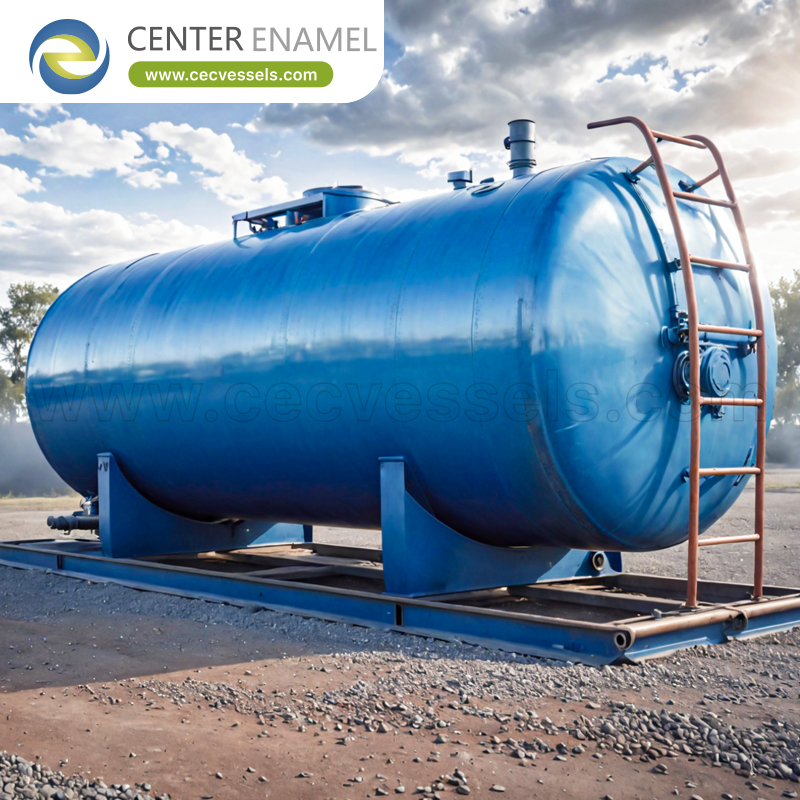
China has become an important manufacturing base for industrial pressure vessels and process equipment. Pressure vessel manufacturers in China serve a wide range of industries, including chemical processing, petrochemical production, oil and gas, environmental engineering, water treatment, food and beverage, pharmaceutical manufacturing, and energy.
However, finding a suitable pressure vessel manufacturer is not simply a matter of comparing product prices or factory size. For industrial buyers, the most important factors include engineering capability, applicable design codes, material selection, manufacturing quality, welding procedures, inspection, testing, documentation, customization, and international project experience.
There is also no single universal ranking that identifies the best pressure vessel manufacturer in China for every application. A top manufacturer should be evaluated according to the technical requirements of the project and its ability to consistently deliver safe, compliant, and properly documented pressure equipment.
This guide explains what buyers should look for when selecting a pressure vessel manufacturer in China and why Center Enamel is an experienced option for customized industrial pressure vessel solutions.
What Makes a Top Pressure Vessel Manufacturer in China?
A top pressure vessel manufacturer should be able to provide more than basic fabrication. The manufacturer should have sufficient engineering resources, production facilities, quality control procedures, inspection capabilities, and experience with the applicable pressure vessel standards.
For international buyers, several factors deserve particular attention:
Pressure vessel design capability
Applicable international standards
Material selection and traceability
Welding and fabrication capability
Non-destructive testing
Pressure testing
Quality management
Manufacturing capacity
Customized design capability
Technical documentation
International project experience
Delivery and project coordination
A manufacturer that performs well across these areas can provide greater confidence during equipment procurement and project execution.
Why Choose a Pressure Vessel Manufacturer in China?
Chinese pressure vessel manufacturers provide equipment for both domestic and international industrial projects. The country's established manufacturing supply chain allows manufacturers to source a wide range of steel materials, fabrication components, instrumentation, valves, fittings, and other industrial equipment.
For overseas buyers, sourcing from China can also provide access to customized manufacturing capabilities for equipment that may not be available as a standard catalog product.
Depending on the manufacturer and project requirements, Chinese suppliers can produce:
The key is to select a manufacturer based on the specific technical requirements of the project rather than choosing a supplier based only on the lowest quotation.
What Certifications Should a Pressure Vessel Manufacturer Have?
Certification is one of the first factors that industrial buyers should investigate.
The appropriate certification depends on the destination market, vessel design, operating conditions, and project specifications.
ASME BPVC
For many international projects, the ASME Boiler and Pressure Vessel Code is an important design and manufacturing reference. ASME Section VIII is commonly associated with pressure vessel construction.
When an ASME-certified vessel is required, buyers should verify the manufacturer's applicable certification, scope, and current status rather than relying only on a statement on a supplier's website.
EN 13445
EN 13445 is an important European standard for unfired pressure vessels. It may be relevant for equipment supplied to European markets depending on the project requirements and applicable regulations.
GB/T 150
GB/T 150 is widely used for pressure vessel design and manufacturing in China. For projects using Chinese standards, the applicable version and project-specific requirements should be confirmed during engineering.
ISO 9001
ISO 9001 certification relates to the manufacturer's quality management system. It does not replace pressure vessel certification, but it can provide useful information about the company's quality management processes.
The most suitable manufacturer should be able to identify the applicable standards at the beginning of the project and incorporate them into the design, fabrication, inspection, and documentation process.
Why Is Engineering Capability Important?
Pressure vessels are engineered products. The vessel cannot be properly specified based only on its dimensions.
The manufacturer needs to understand the actual process conditions, including:
Design pressure
Operating pressure
Design temperature
Operating temperature
Process medium
Vessel volume
Material requirements
Corrosion allowance
Nozzle arrangement
Internal components
Support structure
External loads
Inspection requirements
A capable pressure vessel manufacturer should be able to convert these process requirements into an appropriate vessel design.
For customized equipment, engineering analysis may also be required to evaluate structural integrity, stress distribution, deformation, thermal effects, and other design considerations.
This is particularly important for reactors, separators, heat exchangers, and other process vessels that include internal components or operate under demanding conditions.
What Manufacturing Capabilities Should You Check?
Factory capability is another important consideration when selecting a pressure vessel manufacturer in China.
A suitable manufacturing facility should have equipment and processes appropriate for the size and complexity of the required vessel.
Important manufacturing capabilities may include:
Plate Cutting and Forming
Steel plates must be accurately cut and formed according to the approved drawings.
Large pressure vessels may require heavy-duty plate rolling and forming equipment capable of processing thick materials.
Welding
Welding is a critical part of pressure vessel fabrication.
The manufacturer should have appropriate welding procedures, qualified personnel, and inspection processes for the selected materials and vessel design.
Machining
Machining may be required for flanges, nozzles, supports, connection components, and other precision parts.
Heat Treatment
Some materials and vessel designs may require heat treatment according to the applicable code or project specification.
Pressure Testing
Pressure testing is an important part of verifying the integrity of the completed vessel.
The specific test method and requirements should be determined according to the applicable design code and project specification.
Surface Treatment
Depending on the application, surface preparation, coating, lining, polishing, insulation, or other surface treatment may be required.
A manufacturer with comprehensive in-house capabilities can help reduce coordination between multiple suppliers.
Why Is Material Traceability Important?
Pressure vessel materials must be selected according to the operating environment and design requirements.
Common materials include:
Material selection depends on pressure, temperature, corrosion conditions, process medium, mechanical requirements, and applicable standards.
Material traceability is also important because pressure-bearing materials need to be identifiable throughout the manufacturing process.
Depending on the project, documentation may include material certificates, heat numbers, mechanical properties, chemical composition, and other material records.
A reliable pressure vessel manufacturer should have procedures for receiving, identifying, storing, processing, and documenting pressure-bearing materials.
How Is Pressure Vessel Quality Controlled?
Quality control should cover the entire manufacturing process rather than only the final inspection.
A typical quality control process may include:
Review of technical specifications
Design verification
Raw material inspection
Material identification and traceability
Welding procedure control
Welding inspection
Dimensional inspection
Non-destructive testing
Heat treatment when required
Pressure testing
Surface inspection
Final inspection
Documentation review
This systematic approach helps identify potential problems before the equipment reaches the customer.
What Is Non-Destructive Testing for Pressure Vessels?
Non-destructive testing, or NDT, is used to inspect materials and welds without damaging the completed component.
Depending on the project requirements, pressure vessel manufacturers may use:
The appropriate inspection method depends on the material, weld type, vessel design, applicable code, and project specification.
For international projects, buyers should clarify the required inspection level before fabrication begins.
Can Pressure Vessel Manufacturers in China Provide Customized Equipment?
Yes. Industrial pressure vessels are often customized because process conditions vary significantly between projects.
Customization can involve:
Vessel diameter
Vessel length
Working volume
Design pressure
Design temperature
Material
Wall thickness
Nozzle size
Nozzle location
Internal components
Supports
Jackets
Coils
Agitators
Manways
Insulation
Surface treatment
For this reason, a custom pressure vessel manufacturer should have both engineering and manufacturing capabilities.
A supplier that only provides standard catalog products may not be suitable for complex industrial projects requiring project-specific engineering.
What Types of Pressure Vessels Can Chinese Manufacturers Produce?
Pressure vessel manufacturers in China can serve many industrial applications.
Process Pressure Vessels
Process vessels are used to contain or process liquids, gases, or multiphase materials during industrial production.
They may be designed for holding, mixing, heating, cooling, separation, or other process operations.
Chemical Reactors
Reactors are process vessels designed to support chemical reactions.
Depending on the application, reactors may incorporate agitators, jackets, coils, baffles, special nozzles, temperature-control systems, or other internal components.
Separator Vessels
Separator vessels are used to separate different phases from a process stream.
Typical applications include:
Separator design depends on the fluid properties, flow rate, phase characteristics, and required separation performance.
Heat Exchangers
Heat exchangers transfer thermal energy between process fluids.
Depending on the application, pressure vessel manufacturers may provide shell-and-tube heat exchangers or other customized heat-transfer equipment.
Storage Vessels
Pressure-rated storage vessels can be used for gases and liquids that need to be contained under specified pressure and temperature conditions.
The appropriate vessel material, thickness, configuration, and testing requirements depend on the stored medium and operating conditions.
What Industries Use Pressure Vessels?
Pressure vessels are used across many industrial sectors.
Chemical Industry
Chemical plants use pressure vessels for reaction, mixing, storage, separation, and other process operations.
Material compatibility and corrosion resistance are particularly important when processing aggressive chemicals.
Petrochemical and Oil & Gas
Pressure vessels are used for separation, processing, storage, and other applications throughout oil and gas facilities.
Separator vessels may be used to divide gas, oil, water, and other phases before downstream processing.
Environmental Engineering
Pressure vessels and process equipment can also be used in environmental treatment systems, water treatment, and industrial wastewater applications.
The equipment must be selected according to the process medium and treatment requirements.
Food and Beverage
Food and beverage applications may require specialized materials, surface finishes, hygienic design, and cleaning procedures.
Stainless steel pressure vessels are often considered when corrosion resistance and process cleanliness are important.
Pharmaceutical Processing
Pharmaceutical applications may require strict material, surface, cleanliness, and documentation requirements.
The manufacturer should understand the relevant process and regulatory requirements before equipment fabrication begins.
How Should You Evaluate a Pressure Vessel Manufacturer?
Before selecting a pressure vessel manufacturer in China, buyers can use the following checklist.
1. Confirm the Design Standard
Determine whether the project requires ASME, EN, GB/T, or another specific standard.
2. Verify Certification
Confirm that the manufacturer has the certification required for the actual equipment and destination market.
3. Review Engineering Capability
Ask whether the manufacturer can perform the required design calculations, drawings, engineering analysis, and customization.
4. Inspect Manufacturing Facilities
When possible, evaluate the manufacturer's factory, fabrication equipment, welding facilities, testing equipment, and production capacity.
5. Check Quality Control
Ask about material traceability, welding inspection, NDT, pressure testing, and final inspection.
6. Review Documentation
Confirm whether the manufacturer can provide the required drawings, material certificates, inspection reports, testing records, and final data book.
7. Evaluate Project Experience
Experience with similar equipment and applications can reduce technical and execution risks.
8. Consider After-Sales Support
For large industrial projects, technical support after delivery can be important for installation, commissioning, troubleshooting, and future maintenance.
What Information Should You Provide When Requesting a Quote?
To receive an accurate quotation from a pressure vessel manufacturer, buyers should provide as much technical information as possible.
Useful information includes:
A process flow diagram, equipment data sheet, general arrangement drawing, or existing vessel drawing can also help the manufacturer understand the application.
The more complete the technical information, the more accurately the manufacturer can evaluate the equipment and prepare a quotation.
Why Choose Center Enamel as a Pressure Vessel Manufacturer in China?
Center Enamel, operated by Shijiazhuang Zhengzhong Technology Co., Ltd., provides customized pressure vessels and industrial process equipment for customers in China and international markets.
The company combines engineering, manufacturing, quality control, inspection, and project coordination to support customized equipment requirements.
Its pressure vessel and process equipment capabilities include:
Center Enamel can develop equipment according to the actual process requirements, applicable design standards, material specifications, and project conditions.
The company has a manufacturing base of nearly 100,000 square meters with automated production capabilities and extensive industrial manufacturing experience. Its broader engineering and manufacturing activities serve customers across multiple industries and international markets.
For customized pressure vessel projects, Center Enamel can support the process from technical evaluation and engineering design through fabrication, inspection, testing, and delivery.
Center Enamel Pressure Vessel Engineering Capabilities
The engineering stage is an important part of customized pressure vessel manufacturing.
Center Enamel's engineering approach considers the actual operating conditions of the equipment rather than simply selecting a standard vessel size.
Depending on the project, engineering considerations can include:
For complex equipment, engineering analysis can help evaluate structural performance before fabrication begins.
This approach is particularly useful for customized reactors, separators, heat exchangers, and other process equipment.
Center Enamel Quality and Inspection
Quality control is integrated into the pressure vessel manufacturing process.
Depending on project requirements, quality procedures can cover raw material verification, fabrication inspection, welding control, dimensional inspection, non-destructive testing, pressure testing, and final documentation.
For international projects, documentation can include material certificates, inspection records, welding documentation, NDT reports, pressure test records, drawings, and other project-specific quality documents.
The exact inspection and documentation package should be agreed upon during the technical clarification stage.
Why Is Choosing the Right Manufacturer Important?
A pressure vessel is not simply a steel container. It is engineered equipment that must perform safely and reliably under specified operating conditions.
An unsuitable supplier may create problems related to:
Selecting an experienced pressure vessel manufacturer can therefore help reduce technical and procurement risks.
For international buyers, the supplier should be evaluated based on the complete manufacturing process, from engineering and material sourcing through fabrication, inspection, testing, documentation, and delivery.
Frequently Asked Questions
What are the top pressure vessel manufacturers in China?
There is no single ranking that is suitable for every industrial application. A top pressure vessel manufacturer should be evaluated according to engineering capability, applicable certifications, manufacturing capacity, material control, welding quality, inspection, customization, documentation, and relevant project experience.
How do I choose a pressure vessel manufacturer in China?
Start by defining the vessel type, process medium, pressure, temperature, volume, material, applicable design code, inspection requirements, and destination market. Then compare manufacturers based on certification, engineering capability, manufacturing facilities, quality control, customization, documentation, and project experience.
Can pressure vessel manufacturers in China produce customized vessels?
Yes. Many industrial pressure vessels are customized according to process conditions. Customization can include dimensions, materials, wall thickness, nozzles, internal components, supports, jackets, coils, agitators, and other equipment features.
What certification should a pressure vessel manufacturer have?
The required certification depends on the project. Common standards and requirements may include ASME BPVC, EN 13445, GB/T 150, ISO 9001, and destination-market regulations. Buyers should confirm the exact requirements before manufacturing starts.
What information is needed for a pressure vessel quotation?
A manufacturer normally needs information such as vessel type, process medium, volume, design pressure, design temperature, material, corrosion allowance, nozzle requirements, internal components, applicable design code, inspection requirements, quantity, and delivery location.
What is the difference between a pressure vessel and a storage tank?
A pressure vessel is designed to contain a medium under specified pressure conditions and must meet the applicable pressure vessel design and manufacturing requirements. A storage tank may operate at atmospheric or relatively low pressure depending on its design. The correct equipment depends on the process conditions.
Why is material traceability important for pressure vessels?
Material traceability allows pressure-bearing materials to be identified and documented throughout manufacturing. This helps verify that the materials used in the finished vessel meet the specified requirements.
What should be included in a pressure vessel data book?
Depending on the project, a data book may include approved drawings, material certificates, welding documentation, NDT reports, inspection records, pressure test records, dimensional inspection reports, heat treatment records, and other required quality documents.
Selecting a Reliable Pressure Vessel Manufacturer in China
Choosing a pressure vessel manufacturer should be based on technical capability, quality assurance, certification, manufacturing resources, customization, and project experience rather than price alone.
For international industrial buyers, the ideal supplier should be able to understand the process requirements, select suitable materials, design the vessel according to the applicable code, manufacture the equipment under controlled procedures, complete the required inspections and tests, and provide comprehensive project documentation.
Center Enamel provides customized pressure vessel and process equipment solutions for industrial applications. With engineering and manufacturing capabilities covering pressure vessels, reactors, separators, heat exchangers, and other process equipment, the company can develop solutions according to specific operating conditions and project requirements.
If you have a pressure vessel drawing, equipment data sheet, process specification, or project requirement, Center Enamel's engineering team can evaluate the application and recommend a suitable pressure vessel design and manufacturing solution.


