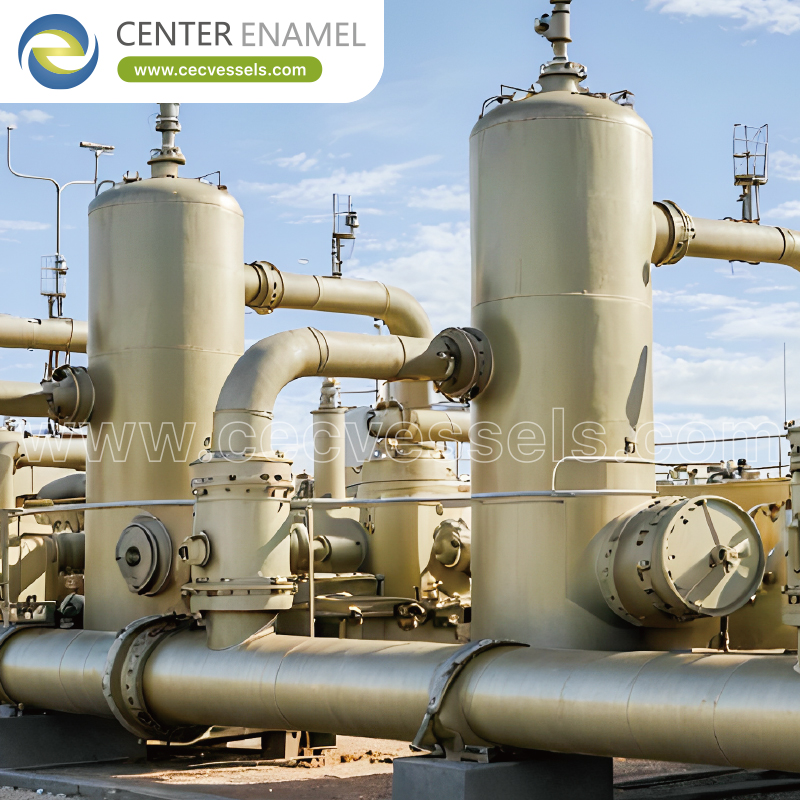
Optimized Tubular Reactors for Industrial Transesterification Processes
The global transition toward renewable energy and sustainable manufacturing practices is one of the most significant shifts of our time. At the heart of this movement lies a powerful and versatile chemical process: transesterification. This reaction is fundamental to the production of essential products, most notably biodiesel, a cleaner-burning and renewable alternative to fossil fuels. It is also a key process in the synthesis of a wide range of specialty chemicals, from lubricants and surfactants to plasticizers. The effectiveness and efficiency of this reaction are paramount, directly impacting the economic viability and environmental footprint of entire industries.
The challenges of industrial transesterification are complex and multi-faceted. The process typically involves reacting a triglyceride (found in vegetable oils and animal fats) with an alcohol, usually methanol or ethanol, to produce fatty acid alkyl esters (biodiesel) and glycerol. The core difficulty lies in the fact that the two primary reactants, the oil and the alcohol, are immiscible, meaning they do not mix easily. To achieve a high conversion rate, it is critical to ensure intimate contact between the two phases. Furthermore, the reaction is often carried out at elevated temperatures and pressures and can be highly sensitive to process conditions. Traditional batch reactors struggle to provide the uniform mixing, precise temperature control, and continuous operation required for high-volume, cost-effective production.
This is where the state-of-the-art tubular reactors come into play. A tubular reactor is a specialized piece of equipment designed for continuous flow, where reactants are fed into one end and the product exits the other. This design is highly suitable for both gas and liquid phase reactions and is renowned for its exceptional heat and mass transfer efficiency. In the context of tubular reactors for transesterification, the reactor serves as a high-pressure, high-temperature chemical pipeline where the reactants are propelled through a long, straight tube or a series of parallel tubes. This continuous flow provides a predictable plug-flow pattern, ensuring a uniform residence time for all reactants and maximizing their contact. This predictable flow is crucial for achieving consistent conversion rates and a high-quality final product.
The use of advanced tubular reactors for transesterification allows operators to unlock a new level of control and efficiency. They can precisely manage the process to achieve optimal reaction kinetics and a consistent product, while the large surface area of the tubes provides a highly efficient medium for heat exchange. This is vital for maintaining the optimal temperature for the reaction, which can be accomplished by circulating a coolant or heating medium through a surrounding jacket or shell. This controlled temperature profile along the length of the tube is a key factor in maximizing the yield of the desired products and minimizing unwanted side reactions.
Choosing the right Tubular Reactors Manufacturer is a critical strategic decision that directly impacts a company's ability to produce high-quality biofuels and chemicals safely and efficiently. Center Enamel, a global leader in the manufacturing of industrial equipment, is committed to providing top-tier solutions. Our mission is to supply robust, high-performance systems that are specifically tailored to the unique demands of the chemical and biofuel industries. Our unwavering focus on quality, innovation, and adherence to the most stringent standards has established us as a premier partner for manufacturers worldwide.
The Science of Transesterification: The Demands of a Precise Reaction
To fully appreciate the role of a tubular reactor, one must understand the intricate demands of the transesterification process itself. The reaction is typically catalyzed by an acid, a base, or an enzyme. While the reaction itself is relatively straightforward in theory, executing it on an industrial scale is complex due to the immiscibility of the oil and alcohol reactants. Without sufficient mixing, the reaction would be agonizingly slow, as it would be limited by the interfacial area between the two liquid phases.
The primary function of a reactor in this context is to overcome this mass transfer limitation and to provide a controlled environment where the reaction can proceed at a predictable and manageable rate. A tubular reactor achieves this with unparalleled efficiency. The "plug-flow" model, where the fluid moves through the reactor as a single, uniform plug, ensures that all molecules have the same residence time. This is a significant advantage over a stirred-tank reactor, where some molecules may exit the reactor very quickly while others may remain for a long time. For transesterification, this uniform residence time translates directly to a more consistent conversion rate, ensuring a high yield of the desired fatty acid esters.
Furthermore, the design of a tubular reactor addresses the mixing challenge head-on. While the basic design is a tube, an optimized reactor will incorporate internal components, such as static mixers or specially designed baffles, to promote a higher degree of turbulence and intimate contact between the immiscible phases. This intensive mixing at the molecular level is critical for accelerating the reaction rate and achieving a high conversion in a shorter period. This ability to enhance mass transfer is a key differentiator that makes tubular reactors for transesterification the technology of choice for modern, continuous processing plants.
The heat management capabilities of tubular reactors are also crucial for this process. The transesterification reaction can be exothermic, especially with certain catalysts. The tubular reactor's high heat and mass transfer efficiency is a result of its long, narrow geometry. The large surface area of the tubes relative to the volume of the reactants allows for rapid and uniform removal or addition of heat. This is often accomplished by a surrounding jacket or a shell-and-tube design where a cooling or heating medium circulates around the tubes. This ability to precisely control the temperature profile along the length of the reactor is critical for maintaining optimal reaction conditions and preventing side reactions that can reduce the purity and yield of the final product.
Center Enamel: A Pillar of Quality and Innovation
Center Enamel has established itself as a global leader in the manufacturing of high-quality industrial equipment. Our unwavering commitment to excellence is reflected in every aspect of our operations, from research and development to production and customer support. Our vast production and R&D base, spanning an impressive 150,000㎡, is a testament to our capabilities and our dedication to continuous improvement. This expansive facility is not just a factory; it is a hub of technological advancement. Here, our engineers and technicians work tirelessly to design and perfect processing solutions for the world's most critical and demanding sectors. Every piece of equipment, from the initial raw material inspection to the final assembly, undergoes a rigorous process of quality control. We utilize advanced welding techniques, non-destructive testing, and precision machining to ensure that every tubular reactor we produce is of the highest possible quality.
Our strength lies in our deep understanding of the engineering principles required for high-performance, high-safety equipment. Our designs adhere to and often surpass the most rigorous international standards, including the ASME Boiler & Pressure Vessel Code (BPVC), BS EN 13445, and GB/T 150.1-150.4-2024. These certifications are more than just stamps of approval; they are a testament to our unwavering commitment to safety, reliability, and engineering excellence. The ASME BPVC, for example, is a globally recognized standard for pressure vessels, ensuring that our reactors are designed and built to withstand the extreme pressures involved in chemical processing without risk of failure. The BS EN 13445 standard provides a framework for the design and construction of unfired pressure vessels, guaranteeing compliance with European safety regulations. Similarly, the GB/T 150.1-150.4-2024 standards are the Chinese national equivalents, reinforcing our commitment to both domestic and international excellence. These standards ensure that every piece of equipment leaving our facility is a symbol of our dedication to safety and quality, giving our clients complete peace of mind.
As a dedicated Tubular Reactors Manufacturer, our relationship with clients goes beyond a simple transaction. We offer comprehensive, consultative solutions. Our team collaborates with chemical engineers, production managers, and plant operators to understand their specific challenges and goals, providing customized designs and configurations that integrate seamlessly into their existing systems. This partnership approach has earned us the trust of clients globally, who rely on our technology to maintain the highest levels of operational efficiency and equipment longevity.
The Center Enamel Advantage: The Power of Customization
What truly sets Center Enamel apart as a top-tier Tubular Reactors Manufacturer is our deep commitment to providing custom solutions. We understand that no two transesterification processes are identical. The ideal reactor design depends on factors such as the type of feedstock (virgin oil, waste oil, animal fat), the chosen catalyst (homogeneous, heterogeneous, or enzymatic), and the desired product specifications. We don't believe in a one-size-fits-all approach. Instead, we see ourselves as an extension of our clients’ engineering teams, working collaboratively to develop a solution that perfectly matches their specific needs.
Our customization process is comprehensive and detailed. It begins with a thorough consultation where we analyze the client's specific process parameters, including feedstock viscosity, desired conversion rate, and operating temperature and pressure. Based on this analysis, our engineering team designs a bespoke tubular reactor. This includes optimizing key parameters such as the reactor’s length-to-diameter ratio, the number of parallel tubes in the shell-and-tube bundle, and the design of the heat exchange jacket. For example, a reaction with a highly viscous feedstock may require a reactor with a larger diameter and internal mixers to reduce pressure drop and ensure thorough mixing. For a process requiring a very narrow residence time distribution, we might design a reactor with a specific geometry to minimize back-mixing.
We also customize the materials of construction. For processes involving corrosive catalysts or byproducts, we can select specialized alloys that offer superior corrosion resistance and durability. The internal features of the reactor are also tailored to the specific application, including the design of the static mixers to ensure optimal mixing of the immiscible phases. This consultative and custom-driven approach is a key differentiator that sets us apart as a premier Tubular Reactors Manufacturer.
Unlocking Production Excellence and Economic Benefits
The implementation of expertly engineered tubular reactors for transesterification from Center Enamel brings a host of significant benefits to plant operators. The most significant of these is enhanced process efficiency and a higher final product quality. By providing a uniform and consistent environment for the reaction, our reactors ensure that the process is maximized, leading to higher conversion rates and a more consistent, higher-grade product. This directly translates to increased profitability, reduced raw material costs, and a stronger competitive position in the market.
Furthermore, the precise control over flow rates and temperature leads to a more energy-efficient process. The tubular reactor’s efficient heat transfer mechanism allows for the recovery of energy from the exothermic reaction, which can be used to preheat the incoming reactants or for other plant processes. This contributes to a significant reduction in operational costs and a smaller carbon footprint. The continuous nature of the process also reduces downtime, eliminates the need for repeated start-up and shut-down cycles, and allows for predictable, high-volume output. The robust design of our reactors also minimizes maintenance requirements and extends the operational lifespan of the equipment, providing a low total cost of ownership.
Beyond efficiency, our systems contribute to greater operational safety and reliability. The closed-vessel design, built to the highest safety standards, minimizes the risk of hazardous material leaks and protects personnel. The robust design, with high-quality materials and components, prevents premature equipment failure and unscheduled downtime, which are critical for maintaining a stable and consistent production schedule. This proactive approach to asset protection and operational safety is a key differentiator that provides a significant return on investment.
A Forward-Looking Vision: Innovation and Sustainability
The future of the chemical and renewable energy industries is marked by an increasing demand for high-performance products produced with greater efficiency and a smaller environmental footprint. As a forward-thinking Tubular Reactors Manufacturer, Center Enamel is at the forefront of this transformation. Our ongoing investment in research and development ensures that we will continue to lead the way in advanced reactor technology. We are exploring new frontiers in reactor design, including integrating smart sensors and advanced control algorithms to provide tubular reactors for transesterification that are even more efficient and autonomous. These intelligent systems can monitor process conditions in real-time, predict potential issues, and make proactive adjustments to optimize performance and prevent failures.
We are also committed to sustainability. Our durable, long-lasting reactors are designed to minimize the need for replacement and repair, reducing waste and raw material consumption. Our focus on improving process efficiency directly translates to lower energy consumption and a reduction in greenhouse gas emissions. By providing our clients with the tools they need to produce more with less, we are helping to build a more sustainable and prosperous future for the industry. This is the future of transesterification, and Center Enamel is building it, one expertly engineered tubular reactor at a time.
A Partnership for a Safer and More Efficient Future
In the highly competitive world of industrial transesterification, achieving and maintaining uncompromised efficiency and product quality are paramount. The choice of a reactor system is a strategic decision that can determine a company's long-term viability. By partnering with a leading Tubular Reactors Manufacturer like Center Enamel, producers gain a significant competitive advantage. Our advanced tubular reactors are more than just equipment; they are a gateway to higher operational efficiency, enhanced product quality, and a more sustainable business model.
Our vast production capabilities, adherence to international quality standards, and deep industry expertise position us as the ideal partner for any organization looking to optimize its processes. We are proud to be a trusted China Tubular Reactors Manufacturer, providing reliable, high-performance solutions to clients around the globe. Our unwavering commitment to innovation and our focus on providing customized solutions ensure that we will continue to develop the next generation of essential processing equipment, helping our partners stay ahead of the curve and consistently deliver a more reliable, safer, and more efficient product.
|