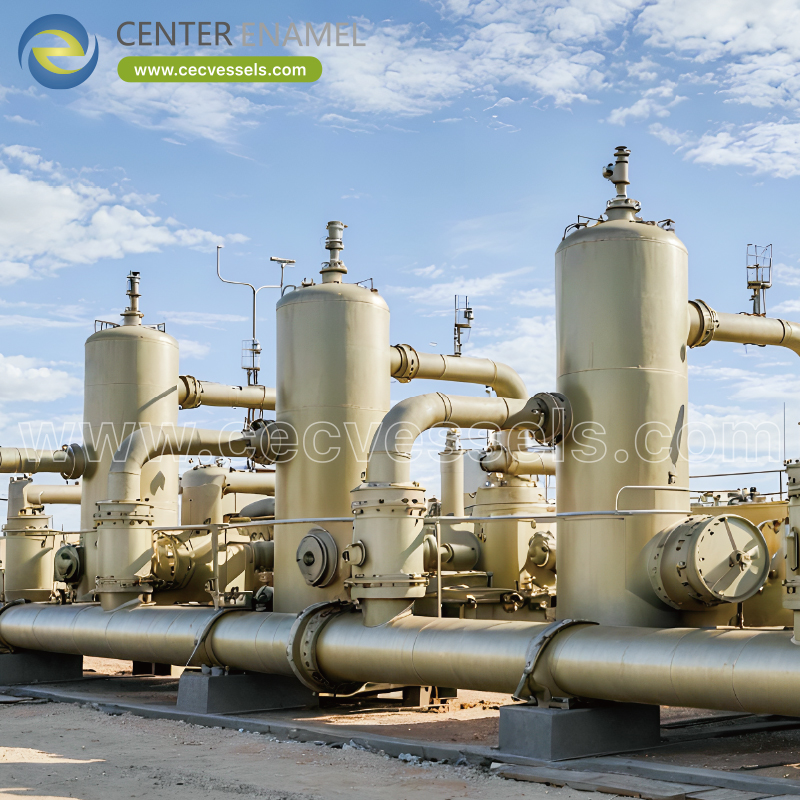
A pressure vessel is an engineered container designed to hold gases, liquids, or vapors at a pressure different from the surrounding atmosphere. Pressure vessels are widely used in chemical processing, petrochemical production, energy, pharmaceutical manufacturing, food processing, water treatment, and other industrial applications.
The design of a pressure vessel depends on its function, operating conditions, capacity, material, installation space, and applicable engineering standards. Common configurations include vertical pressure vessels, horizontal pressure vessels, spherical vessels, storage vessels, separators, reactors, and heat exchange pressure vessels.
What Is a Pressure Vessel?
A pressure vessel is a closed container designed to contain a fluid under a specified pressure and temperature. Unlike ordinary atmospheric storage tanks, pressure vessels are engineered according to defined design conditions and applicable pressure equipment standards.
Pressure vessels can contain:
Liquids
Gases
Vapors
Gas-liquid mixtures
Process fluids
Their function can range from storing compressed fluids to supporting separation, reaction, heating, cooling, mixing, and other industrial processes.
A pressure vessel is therefore not defined only by its shape. Its design is determined by the combination of its pressure-containing function, process requirements, materials, geometry, and operating conditions.
How Does a Pressure Vessel Work?
The basic function of a pressure vessel is to provide a controlled enclosed space for a pressurized fluid.
When a gas or liquid is introduced into the vessel, the internal fluid exerts pressure on the vessel shell, heads, nozzles, and other pressure-retaining components. The vessel is designed so that these components can withstand the specified operating and design conditions.
The shell and heads provide the primary pressure boundary, while nozzles, supports, manways, internal components, instruments, and other accessories are integrated according to the application.
The actual configuration varies according to the vessel's function.
For example:
A storage pressure vessel provides controlled fluid containment.
A separator separates different phases of a process stream.
A reaction pressure vessel provides a controlled environment for a chemical reaction.
A heat exchange pressure vessel supports heat transfer between process fluids.
An air receiver stores compressed air and helps stabilize the supply system.
What Are the Main Types of Pressure Vessels?
Pressure vessels can be classified according to geometry, orientation, function, material, and application.
For industrial equipment, functional classification is particularly useful because the vessel's internal configuration is closely related to its process purpose.
Vertical Pressure Vessels
Vertical pressure vessels have a vertically oriented cylindrical shell and are commonly selected when floor space is limited or when the process benefits from vertical flow.
Typical applications include:
Chemical processing
Gas separation
Distillation
Scrubbing
Process reaction
Liquid-gas separation
Storage and buffering
Vertical vessels can also accommodate agitators, internal coils, demister pads, distributors, baffles, and other process components.
Horizontal Pressure Vessels
Horizontal pressure vessels are installed horizontally and are often supported by saddles or other structural supports.
They are commonly used for:
Horizontal configurations can be useful where process flow, maintenance access, or plant layout favors horizontal installation.
Spherical Pressure Vessels
Spherical pressure vessels use a spherical geometry that distributes internal pressure efficiently across the vessel surface.
They are mainly associated with large-volume storage of liquefied gases and other applications where spherical geometry provides an appropriate balance between volume and material efficiency.
Spherical vessels require specialized fabrication and installation processes, so their use is generally associated with specific large-scale storage requirements.
Pressure Vessels by Function
Another useful way to classify pressure vessels is according to their industrial function.
Storage Pressure Vessels
Storage pressure vessels are designed to contain gases or liquids under controlled pressure.
They may be used for process buffering, compressed gas storage, intermediate storage, or supply stabilization.
Typical examples include:
Compressed air receivers
Industrial gas vessels
Process storage vessels
Buffer vessels
Accumulator vessels
The required vessel volume, material, orientation, and connection arrangement depend on the stored medium and operating conditions.
Separation Pressure Vessels
Separation vessels are designed to separate different phases or components of a process stream.
They are commonly used in chemical, petrochemical, oil and gas, and industrial processing facilities.
Depending on the process, a separator may separate:
Internal components such as inlet devices, demisters, distributors, and weirs can be incorporated according to the separation process.
Reaction Pressure Vessels
Reaction pressure vessels are designed for processes where chemical reactions take place under controlled process conditions.
They may include:
Agitators
Heating jackets
Cooling jackets
Internal coils
Baffles
Temperature instruments
Pressure instruments
Process nozzles
Reaction vessels are widely used in chemical, pharmaceutical, petrochemical, specialty chemical, and related industries.
Heat Exchange Pressure Vessels
Some pressure vessels are designed primarily for heat transfer.
Heat exchange equipment can transfer heat between two process fluids while maintaining the required pressure and temperature conditions.
Common examples include:
The selection of heat exchange equipment depends on heat-transfer duty, fluid characteristics, temperature difference, pressure conditions, and available installation space.
Accumulator and Receiver Vessels
Accumulator and receiver vessels provide temporary fluid storage within a process or utility system.
Compressed air receivers, hydraulic accumulators, and process surge vessels can help provide a stable fluid supply and accommodate changes in flow demand.
Pressure Vessel Materials
Material selection is an essential part of pressure vessel engineering.
The material needs to be compatible with the process medium and suitable for the required temperature, pressure, mechanical properties, fabrication method, and applicable standards.
Common pressure vessel materials include:
Carbon Steel
Carbon steel is widely used for many industrial pressure vessel applications because it provides a combination of strength, weldability, availability, and cost efficiency.
It may be suitable for applications involving air, water, hydrocarbons, and other process media where the material is compatible with the operating environment.
Stainless Steel
Stainless steel is commonly selected for applications requiring improved corrosion resistance or a cleanable internal surface.
Typical applications include:
Chemical processing
Pharmaceutical production
Food and beverage processing
Specialty chemicals
Water and process systems
Common stainless steel grades include 304 and 316, while duplex stainless steels and other grades may be considered for more specialized applications.
Alloy Steel
Alloy steels may be selected where specific mechanical or temperature properties are required.
The appropriate alloy depends on the design temperature, process medium, mechanical requirements, and applicable design standard.
Nickel Alloys and Other Special Materials
Nickel alloys, titanium, aluminum, and other specialized materials may be considered for applications requiring specific corrosion resistance, temperature performance, weight characteristics, or material compatibility.
Material selection should always be based on the actual process conditions rather than choosing a material solely according to the industry.
Pressure Vessel Design Considerations
A pressure vessel is designed around its intended service conditions.
Important design parameters include:
Vessel Shell
The shell forms the main cylindrical pressure boundary in many industrial vessels.
Its diameter, length, material, and wall thickness are determined through engineering calculations based on the design conditions and applicable code.
Vessel Heads
The vessel heads close the ends of a cylindrical pressure vessel.
Common head configurations include:
Hemispherical heads
Ellipsoidal heads
Torispherical heads
The appropriate head type depends on design conditions, vessel dimensions, fabrication requirements, and applicable standards.
Nozzles and Connections
Nozzles provide connections between the pressure vessel and external piping or equipment.
They may be used for:
Fluid inlet
Product outlet
Gas connections
Instrumentation
Drainage
Venting
Sampling
Heating
Cooling
Nozzle size, location, orientation, and reinforcement requirements should be established during the engineering stage.
Supports
Pressure vessels require suitable support structures according to their orientation and weight.
Common support arrangements include:
The support design considers vessel weight, operating loads, installation conditions, and project requirements.
Internal Components
Internal components depend on the vessel's function.
They may include:
Baffles
Coils
Distributors
Demister pads
Weirs
Agitators
Internal piping
Heat-transfer surfaces
Pressure Vessel Manufacturing Process
Pressure vessel manufacturing involves engineering, material preparation, forming, welding, inspection, testing, and final documentation.
A typical manufacturing process includes:
1. Engineering Review
The project requirements are reviewed, including vessel dimensions, operating conditions, materials, design code, connections, internal components, and inspection requirements.
2. Material Preparation
Approved materials are identified, inspected, cut, and prepared according to the manufacturing drawings and specifications.
3. Plate Cutting and Forming
Steel plates are cut and formed to produce the required cylindrical shells, heads, nozzles, and other components.
4. Welding and Assembly
Shell sections, heads, nozzles, supports, and other components are assembled and welded according to approved welding procedures.
5. Inspection
Dimensional checks, visual inspection, material verification, and applicable nondestructive examination are carried out according to project requirements.
6. Pressure or Leak Testing
Testing is performed where required by the applicable design code, project specification, and vessel configuration.
7. Final Inspection and Documentation
The completed vessel is inspected before delivery, and required manufacturing and quality documents are prepared according to the project requirements.
Pressure Vessel Design Standards
Pressure vessels are subject to engineering standards and regulations that define requirements for design, materials, fabrication, inspection, testing, and documentation.
Common standards may include:
ASME Boiler and Pressure Vessel Code
ASME BPVC Section VIII is widely used for the design and construction of unfired pressure vessels.
Depending on the project, different sections or divisions may apply according to the vessel design and service conditions.
EN 13445
EN 13445 is a European standard for unfired pressure vessels and can be applicable to projects requiring European design and manufacturing requirements.
GB/T 150
GB/T 150 is a widely used Chinese pressure vessel design standard.
The applicable edition and requirements should be confirmed during project engineering.
Other Project-Specific Standards
Depending on the installation location, industry, customer specification, and regulatory requirements, other standards may apply.
The correct standard should be determined before detailed design begins.
Industrial Applications of Pressure Vessels
Pressure vessels are used in many industries because their configurations can be adapted to different process functions.
Chemical Industry
Chemical plants use pressure vessels for reaction, separation, storage, mixing, heating, cooling, and other process operations.
Typical equipment includes:
Reaction vessels
Separators
Storage vessels
Heat exchangers
Process drums
Petrochemical and Oil and Gas Industry
Pressure vessels are important components in upstream, midstream, and downstream process facilities.
Applications include:
Oil and gas separators
Surge drums
Process vessels
Gas vessels
Storage equipment
Heat exchange equipment
Pharmaceutical and Biotechnology Industry
Pharmaceutical production may use stainless steel pressure vessels for controlled processing, mixing, heating, cooling, sterilization, and related operations.
Material selection and surface finish can be adapted to the required process and cleaning conditions.
Food and Beverage Industry
Pressure vessels can be used in food and beverage production for processing, heating, cooling, sterilization, fermentation, and other controlled operations.
Stainless steel is frequently considered where hygiene, cleanability, and material compatibility are important.
Energy and Power Generation
Pressure equipment is widely used in power and energy facilities.
Applications can include:
Steam-related equipment
Feedwater systems
Condensers
Heat exchangers
Air receivers
Process vessels
Water and Environmental Applications
Pressure vessels may be incorporated into water treatment, filtration, separation, and other environmental process systems.
The vessel configuration depends on the treatment process and required operating conditions.
How to Choose the Right Pressure Vessel
Selecting a pressure vessel starts with understanding the process rather than choosing a vessel based only on size.
The following factors should be evaluated.
1. Process Medium
Identify whether the vessel will contain gas, liquid, vapor, or a multiphase mixture.
The chemical characteristics of the medium are important for material selection.
2. Working Volume
Determine the required working volume and total vessel capacity.
For process applications, the required residence time and available installation space may also influence the vessel dimensions.
3. Operating Temperature and Pressure
Operating conditions establish the basic requirements for vessel design.
Both normal operating conditions and applicable design conditions should be provided to the manufacturer.
4. Vessel Orientation
Vertical or horizontal installation should be selected according to process requirements, available space, flow characteristics, maintenance requirements, and overall plant layout.
5. Material
The selected material should provide suitable mechanical properties and compatibility with the process medium.
6. Internal Components
Reactors, separators, heat exchangers, and other process vessels may require different internal components.
These should be considered during the initial design stage.
7. Applicable Standards
The project should identify the required design code and regulatory requirements before detailed engineering begins.
Pressure Vessel Specification Checklist
When contacting a pressure vessel manufacturer, providing complete technical information can help accelerate the engineering and quotation process.
| Specification | Information to Provide |
|---|
| Vessel Type | Storage / Separator / Reactor / Heat Exchanger / Other |
| Working Volume | Required operating volume |
| Total Volume | Total internal capacity |
| Medium | Gas / Liquid / Vapor / Multiphase |
| Operating Pressure | Normal operating condition |
| Design Pressure | Required design condition |
| Operating Temperature | Normal operating temperature |
| Design Temperature | Required design condition |
| Material | Preferred or required material |
| Orientation | Vertical / Horizontal / Other |
| Heating/Cooling | Jacket / Coil / Other |
| Agitation | Required or not required |
| Nozzles | Quantity, size and orientation |
| Internal Components | Required process internals |
| Design Standard | ASME / EN / GB / Other |
| Inspection | Project-specific requirements |
| Installation | Indoor / Outdoor / Plant layout requirements |
Why Work with an Experienced Pressure Vessel Manufacturer?
A pressure vessel project involves more than fabricating a metal container. Engineering, material selection, forming, welding, inspection, testing, documentation, and project coordination all influence the final equipment.
An experienced pressure vessel manufacturer should be able to support:
Center Enamel provides pressure vessel engineering and manufacturing solutions for industrial customers. Our pressure vessel product range includes reaction pressure vessels, separation pressure vessels, heat exchange pressure vessels, storage pressure vessels, and other customized process equipment.
Pressure Vessel Applications and Equipment at Center Enamel
Center Enamel's pressure vessel solutions can be configured according to the requirements of different industrial processes.
Our product range includes:
Reaction Pressure Vessels
Designed for controlled reaction and mixing processes, with configurations adapted to process temperature, pressure, agitation, heating, cooling, and internal components.
Separation Pressure Vessels
Designed for gas-liquid, liquid-liquid, and other separation processes where customized internal components may be required.
Heat Exchange Pressure Vessels
Designed for heat transfer applications, including process heating, cooling, condensation, and related thermal processes.
Storage Pressure Vessels
Designed for controlled storage and buffering of gases or liquids according to project requirements.
Each vessel should be engineered according to the actual process conditions and applicable standards.
Frequently Asked Questions About Pressure Vessels
What is a pressure vessel?
A pressure vessel is an enclosed container designed to hold gases, liquids, or vapors at a pressure different from the surrounding atmosphere. It is engineered according to defined operating conditions and applicable design standards.
What are the main types of pressure vessels?
Common pressure vessel types include vertical vessels, horizontal vessels, spherical vessels, storage vessels, separators, reactors, heat exchange vessels, accumulators, and other specialized process vessels.
What are pressure vessels used for?
Pressure vessels are used for storage, separation, reaction, mixing, heating, cooling, heat transfer, gas handling, and other industrial process functions.
What materials are used for pressure vessels?
Common materials include carbon steel, stainless steel, alloy steel, duplex stainless steel, nickel alloys, titanium, and other specialized materials. Material selection depends on the process medium and operating conditions.
What is the difference between a pressure vessel and a storage tank?
A pressure vessel is designed for specified pressure-containing service, while many conventional storage tanks operate close to atmospheric pressure. The appropriate equipment depends on the required process conditions and applicable standards.
Are pressure vessels customized?
Yes. Industrial pressure vessels are commonly customized according to capacity, dimensions, material, operating conditions, orientation, nozzles, internal components, heating or cooling requirements, and applicable design standards.
What information is required for a pressure vessel quotation?
Useful information includes vessel volume, process medium, operating and design pressure, operating and design temperature, material requirements, vessel orientation, internal components, nozzle arrangement, design code, and inspection requirements.
What standards are commonly used for pressure vessels?
Common standards include ASME BPVC Section VIII, EN 13445, GB/T 150, and other project-specific standards or regulations.
Get a Custom Pressure Vessel Solution
Looking for a pressure vessel manufacturer for a chemical, petrochemical, pharmaceutical, food, energy, water treatment, or other industrial application?
Share your vessel type, required volume, process medium, operating and design conditions, material requirements, vessel orientation, internal components, applicable standards, and other technical specifications with our engineering team.
Center Enamel can evaluate your requirements and provide a customized pressure vessel solution based on your process and project conditions.
Contact Center Enamel to discuss your pressure vessel requirements and request a technical proposal.


