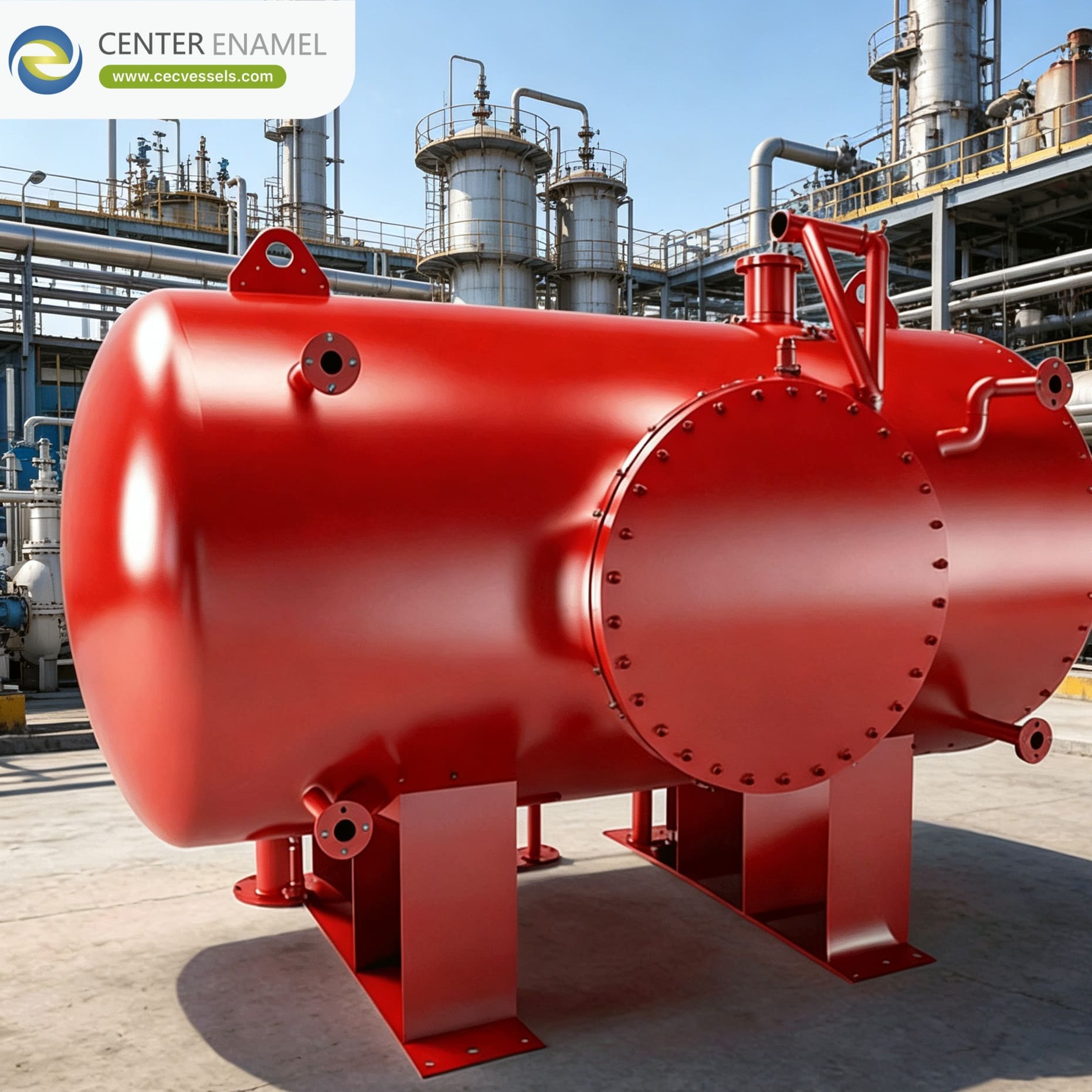
Understanding Batch Reactors Key Features and Applications
Batch reactorsare widely used in chemical processing, pharmaceutical manufacturing, food production, biotechnology, and specialty chemical industries. Unlike continuous reactors, they process a defined quantity of materials during each production cycle. A typical batch reactorcombines a reaction vessel, mixing system, temperature control equipment, and process instrumentation. Its flexible operating method allows manufacturers to process different formulations and products using the same basic equipment. What Is a Batch Reactor?A batch reactoris a type of chemical reactor in which a predetermined quantity of raw materials is introduced into a vessel and processed for a specific period. During a typical batch reaction, the materials remain inside the reactor while mixing, heating, cooling, and reaction take place. When the required processing stage is completed, the product is removed and the reactor is prepared for the next cycle. The basic operating sequence can be described as: Material Charging → Mixing → Reaction → Temperature Control → Holding → Product Discharge → Reactor Preparation This cycle-based approach distinguishes a batch reactor from continuous reactor systems, where feed materials enter and products leave the reactor continuously. How Does a Batch Reactor Work?The operation of a batch reactorgenerally begins with the preparation and charging of raw materials. The required quantities are introduced into the vessel according to a predefined process recipe. Once the materials are charged, the agitation system begins mixing the contents. Mixing helps distribute different components throughout the vessel and can support uniform temperature and composition. The reaction then proceeds under defined process conditions. Depending on the application, the reactor may use heating or cooling equipment to maintain the required temperature. During the reaction stage, operators or automated control systems can monitor important parameters such as temperature, mixing speed, material quantity, reaction time, and liquid level. When the required reaction time has been reached, the product is discharged. The reactor can then be cleaned, inspected, and prepared for another production cycle. This sequence makes the reactor batchconcept suitable for production processes that require defined and repeatable operating stages. Key Features of Batch ReactorsSeveral features make batch reactorssuitable for a wide range of industrial processes. Defined Production CyclesEach batch follows a specific production sequence. Raw materials are charged, processed, and discharged before the next batch begins. This allows manufacturers to establish clear operating procedures for each product. Flexible ProcessingA batch reactorcan often process different materials or formulations. Process recipes can be adjusted according to the requirements of individual products. This flexibility is particularly useful in facilities that manufacture multiple products. Controlled MixingAgitation is an important part of batch reactor design. The mixing system helps distribute raw materials and maintain suitable conditions throughout the reaction medium. Different agitator configurations can be selected according to viscosity, material characteristics, solids content, and required mixing performance. Temperature ManagementHeating and cooling systems can be integrated into the reactor design. A jacketed reactor, for example, can use a heat-transfer medium around the vessel wall to regulate the temperature of the process material. Process MonitoringModern batch chemical reactorscan include temperature sensors, level instruments, flow meters, agitation controls, and other monitoring equipment. These systems help operators follow the production recipe and maintain consistent process conditions. Batch Reactor DesignThe design of a batch reactordepends on the intended application, material properties, production volume, and reaction requirements. The reactor vessel is the main processing chamber. Its working volume must be selected according to the required batch size, while sufficient headspace should be provided for mixing and material expansion where necessary. The agitator is another important component. Its design influences fluid circulation and mixing performance. Other components may include:
lHeating and cooling jackets lTemperature sensors lLevel sensors lMaterial inlet connections lProduct discharge outlets lSampling ports lFeed systems lControl instruments lCleaning systems
The exact configuration can be customized according to the process. Mixing in Batch ReactorsMixing is essential for many batch reactions. When two or more materials are introduced into a reactor, the agitator helps distribute them throughout the vessel. Effective mixing can improve contact between reactants and help maintain a relatively uniform process environment. The required mixing system depends on several factors. Viscosity:Higher-viscosity materials may require different agitator designs and operating speeds. Density:Differences in material density can influence circulation and mixing behavior. Solid content:Processes containing suspended solids may require suitable impeller configurations to maintain distribution. Vessel geometry:The tank diameter, liquid height, and internal components influence fluid movement. Reaction characteristics:Some reactions require rapid and intensive mixing, while others require slower circulation. Therefore, agitator selection should be considered together with the complete reactor design. Temperature Control in Batch Chemical ProcessingTemperature can significantly influence the performance of a batch reaction. Depending on the process, materials may need to be heated before the reaction begins, maintained at a specific temperature during processing, or cooled after the reaction. A jacketed vessel is commonly used for temperature management. Heating or cooling media circulate through the jacket and transfer heat through the reactor wall. Temperature control can therefore be integrated into different stages of the batch cycle. For example: Preheating → Reaction Temperature Control → Holding → Cooling Automated temperature control systems can adjust the heat-transfer process according to programmed set points. This approach allows the reactor to support processes with changing temperature requirements during a single production cycle. Advantages of Batch ReactorsOne of the most important advantages of batch reactorsis their flexibility. A single reactor can potentially be used for several products by changing the recipe, raw materials, processing time, and operating conditions. This makes batch processing useful for specialty chemicals, pharmaceuticals, food products, and other applications where production requirements can change. Another advantage is the suitability of batch reactors for research and development. Different reaction conditions can be tested in separate batches, allowing engineers and researchers to compare results between experiments. Batch operation can also provide clear production records. Each batch can be assigned a specific identification number and associated with its raw materials, processing conditions, and production time. This makes batch processing suitable for industries where traceability and defined production records are important. Batch Reactor and Product FlexibilityProduct flexibility is a key characteristic of the batch reactor. For example, a chemical manufacturer may need to produce several formulations using the same production equipment. A batch system allows one formulation to be completed before the equipment is prepared for another. The process recipe can define:
lRaw material quantities lAddition sequence lAgitation speed lReaction temperature lReaction time lSampling points lProduct discharge conditions
By adjusting these parameters, manufacturers can use the same basic reactor platform for different production requirements. This makes batch chemical processingparticularly relevant to multiproduct manufacturing. Batch Reactors in Chemical ManufacturingBatch reactorsare widely used in chemical manufacturing because many chemical processes can be organized into defined production cycles. Typical applications include:
lSpecialty chemicals lFine chemicals lChemical synthesis lPolymer processing lResin production lPharmaceutical intermediates lFood ingredients lLaboratory development lPilot-scale production
The specific reactor design depends on the physical and chemical characteristics of the materials. For example, a liquid-phase reaction may require a different agitator and vessel configuration from a process involving suspended solids. Batch Reactors in Pharmaceutical ProductionThe pharmaceutical industry is another important application area for batch reactors. Pharmaceutical manufacturing often involves multiple products, formulations, and production campaigns. A batch reactor can provide a flexible platform for processing defined quantities of materials according to established production procedures. Temperature, mixing, addition sequence, and reaction time can be monitored throughout the batch. After one production cycle, the reactor can be prepared for the next manufacturing campaign. This operating structure supports the production of different materials using adaptable processing equipment. Batch Bioreactor ApplicationsA batch bioreactorapplies the batch processing principle to biological systems. A defined quantity of culture medium and biological material is introduced into the reactor. The process then continues for a predetermined period while conditions such as temperature, agitation, and dissolved oxygen may be monitored depending on the biological application. Batch bioreactors are commonly associated with biotechnology, fermentation, cell culture, and biological product development. The reactor configuration can vary depending on the organism, culture medium, production scale, and process requirements. Agitation is especially important because it helps distribute nutrients and maintain suitable conditions throughout the culture medium. Batch Reactor Applications in Food ProcessingBatch reactorscan also be used in food and ingredient processing. Many food-related processes involve mixing, heating, cooling, reaction, or formulation steps that can be completed in defined cycles. A batch vessel may be used for producing ingredients, sauces, additives, specialty food materials, or other formulated products. The ability to change recipes between production cycles makes batch equipment suitable for manufacturers that produce several product types. Batch Reactors for Research and DevelopmentResearch and development is an important area for batch reactortechnology. During process development, engineers may need to evaluate different combinations of temperature, reaction time, material ratios, catalyst quantities, or mixing conditions. A batch system allows each set of conditions to be tested independently. For example, researchers can conduct one batch at a specific temperature and reaction time, then modify the conditions for the next experiment. This makes the batch reactor a useful bridge between laboratory research and industrial production. Batch Reactor Scale-UpScaling a batch reactorfrom laboratory equipment to industrial production requires consideration of several process parameters. Simply increasing the vessel dimensions does not necessarily produce identical mixing and heat-transfer behavior. Engineers may evaluate: Mixing time:How quickly materials become uniformly distributed. Heat transfer:How efficiently heat can be added or removed. Agitation:How impeller speed and design influence fluid movement. Working volume:How much material the reactor should process in each cycle. Reaction time:Whether the reaction behavior changes at a larger scale. These factors help engineers develop a suitable industrial reactor configuration. Batch Reactor AutomationAutomation can improve the repeatability of batch chemical processing. A modern control system can manage multiple stages of the batch recipe. For example, the system can control material addition, start the agitator, adjust temperature, maintain reaction time, and initiate product discharge according to predefined instructions. Sensors provide real-time information about process conditions, while the control system can respond to changes according to the programmed operating strategy. The level of automation can range from basic monitoring to fully automated batch management. Factors for Selecting a Batch ReactorSelecting the right batch reactorrequires consideration of the complete production process. Important factors include: Working volume:The reactor should provide sufficient capacity for the required batch size. Material properties:Viscosity, density, solids content, and phase characteristics influence reactor design. Mixing requirements:The agitator should provide appropriate circulation. Temperature requirements:Heating and cooling systems should match the process. Reaction time:The expected reaction duration influences production scheduling. Material compatibility:Construction materials should be suitable for the process medium. Automation level:The required control system depends on the complexity of the process. Cleaning requirements:The vessel should support the required cleaning and preparation procedures. Batch Reactor Compared With Continuous ProcessingThe main difference between batch and continuous processing is the movement of materials through the reactor. In a batch reactor, a defined quantity of material is processed during each cycle. The product is removed after the required processing stage. In a continuous reactor, feed materials enter continuously and product leaves continuously. Batch processing therefore provides a cycle-based production structure, while continuous processing is organized around ongoing material flow. The appropriate approach depends on factors such as production volume, product variety, reaction characteristics, and process scheduling. Future Role of Batch Reactor TechnologyBatch reactorscontinue to have an important role in modern chemical and biological processing. Their combination of flexible production, defined processing cycles, controlled mixing, temperature management, and adaptable recipes allows them to serve many different industries. At the same time, modern instrumentation and automation are expanding the capabilities of batch systems. Digital monitoring, automated recipes, process data collection, and integrated control systems can help manufacturers manage increasingly sophisticated production processes. This means that the basic batch concept can be combined with modern process technologies without changing its fundamental operating principle. Understanding Batch Reactor ApplicationsA batch reactoris more than a simple reaction vessel. It is an integrated processing system that combines material charging, mixing, reaction, temperature management, monitoring, and product discharge within a defined production cycle. Its flexibility makes it suitable for chemical synthesis, specialty chemicals, pharmaceuticals, biotechnology, food processing, research, and pilot production. Understanding the key features of batch reactorshelps engineers select suitable vessel capacity, agitation systems, temperature-control methods, instrumentation, and automation. For processes that require defined production cycles and flexible product configurations, batch chemical reactorsprovide an adaptable platform that can support both development and industrial manufacturing.
|