Industrial separation processes can separate gas-liquid mixtures, oil and water, suspended solids, dissolved substances, and components of complex chemical mixtures. Common methods include gas-liquid separation, filtration, sedimentation, adsorption, distillation, evaporation, crystallization, and solvent extraction. The appropriate method depends on material properties, feed composition, operating conditions, and required product purity.
What Materials Can Be Separated by Industrial Chemical Processes?
Industrial separation processes divide mixtures into two or more streams based on differences in physical properties, chemical affinity, phase behavior, or molecular characteristics. The main separation targets include gases, liquids, suspended particles, dissolved solids, and individual components of chemical mixtures.
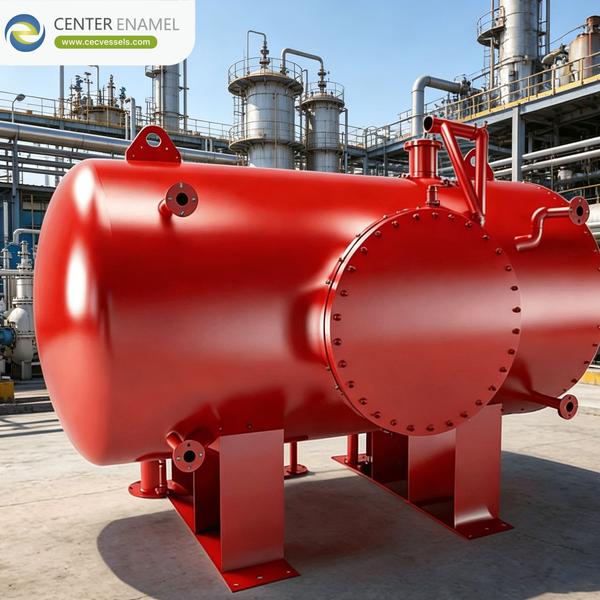
Gas and liquid mixtures can be separated using gas-liquid separators, demisters, and suitable coalescing equipment. For example, a separator in a natural gas processing system removes entrained liquid droplets from a gas stream. Its performance depends on gas and liquid flow rates, operating pressure, fluid density, droplet size, and vessel geometry.
Immiscible liquids, such as oil and water, can be separated through gravity settling, decantation, or coalescence. Industrial oil-water separators use differences in density and droplet behavior to separate the two liquid phases. Separation efficiency depends on oil density, water density, viscosity, droplet size, temperature, and hydraulic loading.
Suspended solids and liquids can be separated using filtration, sedimentation, centrifugation, or flotation. For example, a filtration system can remove suspended particles from a process liquid when the filter medium and operating conditions are appropriate. Particle size, solids concentration, viscosity, and filtration pressure difference influence equipment selection.
Dissolved solids and liquids can be separated using evaporation, crystallization, membrane processes, or other suitable methods. An industrial evaporator removes part of the solvent to concentrate a solution, while crystallization promotes the formation of solid crystals from a supersaturated solution.
Components of liquid mixtures can be separated through distillation or solvent extraction when their volatility, phase behavior, or affinity for different solvents provides a suitable separation basis. These methods are commonly used in solvent recovery, petrochemical processing, and chemical manufacturing.
What Are the Main Types of Chemical Separation Processes?
Different separation methods rely on different mechanisms. Selecting the correct process requires identifying the physical or chemical property that distinguishes the target component from the rest of the mixture.
1. Gas-Liquid Separation
Gas-liquid separation removes liquid droplets or bulk liquid from a gas stream, or separates gas from a liquid stream. The process commonly uses gravity, changes in flow direction, inertial impaction, or specialized internals to promote phase disengagement.
For example, a natural gas processing system may use a vertical or horizontal separator to remove condensed liquids before the gas enters downstream equipment. A preliminary sizing calculation must consider gas and liquid flow rates at operating conditions, pressure, temperature, fluid densities, and expected droplet sizes.
Typical equipment includes gas-liquid separators, pressure vessels, knockout drums, demisters, and separator skids. The appropriate configuration depends on the required separation efficiency, available installation space, and process conditions.
2. Oil-Water Separation
Oil-water separation removes one liquid phase from another when the liquids are immiscible or only partially miscible under the operating conditions. Gravity separation relies on density differences, while coalescence encourages small dispersed droplets to combine into larger droplets that can separate more readily.
For example, an oil-water separator treating wastewater may require evaluation of the inlet flow rate, oil concentration, water temperature, oil density, and droplet-size distribution. Smaller droplets generally require more time or additional separation mechanisms than larger droplets under otherwise comparable conditions.
Typical equipment includes oil-water separators, coalescing separators, settling vessels, and industrial separation tanks. Stable emulsions may require additional treatment, such as chemical demulsification or specialized separation technology, depending on the fluid system.
3. Solid-Liquid Separation
Solid-liquid separation removes suspended particles from a liquid by exploiting differences in particle size, density, settling behavior, or interaction with a filter medium.
Sedimentation allows particles to settle under gravity, while filtration retains particles on or within a porous medium. Centrifugation uses centrifugal acceleration to enhance separation when gravity settling alone is insufficient for the required duty.
For example, a process treating a liquid containing suspended solids may require a solids concentration measurement, particle-size distribution, liquid viscosity, and target outlet solids content before the equipment is selected.
Typical equipment includes industrial filters, filter presses, sedimentation tanks, clarifiers, and centrifuges. Filtration is generally suitable for suspended particles but does not directly remove substances that are completely dissolved in the liquid unless an additional treatment mechanism is used.
4. Distillation and Fractionation
Distillation separates components of a liquid mixture according to differences in volatility and vapor-liquid equilibrium. Heating generates vapor enriched in more volatile components, while condensation produces a liquid product with a different composition from the original feed.
For example, solvent recovery may use a distillation column to separate a solvent from less volatile components. The appropriate operating pressure, reflux ratio, feed rate, and number of theoretical separation stages depend on the mixture and the required product purity.
Typical equipment includes distillation columns, fractionation towers, reboilers, condensers, and reflux systems. Distillation is widely used in chemical manufacturing, petrochemical processing, and solvent recovery when the components have suitable volatility differences.
5. Evaporation and Concentration
Evaporation separates a volatile solvent from a solution to increase the concentration of nonvolatile components. Unlike distillation, which commonly aims to separate multiple volatile components, evaporation is frequently used to concentrate a liquid product or recover a solvent stream.
For example, an industrial evaporator processing 1,000 kilograms of feed per hour with 10% nonvolatile solids receives 100 kilograms of solids per hour. If the target product contains 25% solids by mass and solids losses are negligible, the product flow is approximately 400 kilograms per hour. The remaining 600 kilograms per hour is the theoretical solvent removal rate, subject to the feed and product mass-balance assumptions.
Typical equipment includes single-effect evaporators, multiple-effect evaporators, falling-film evaporators, forced-circulation evaporators, and mechanical vapor recompression (MVR) evaporators. Equipment selection depends on feed viscosity, heat sensitivity, boiling-point elevation, fouling tendency, required concentration, and energy consumption.
6. Crystallization
Crystallization separates a dissolved substance from a solution by forming solid crystals when the solution becomes supersaturated. Supersaturation may be achieved through cooling, solvent evaporation, changes in composition, or a chemical reaction that produces a less soluble compound.
For example, a crystallization process may cool a solution from 60°C to 25°C to reduce solubility and promote crystal formation. These temperatures are illustrative; the actual operating range must be determined from the substance's solubility curve, solution composition, and desired crystal properties.
Typical equipment includes crystallization reactors, cooling crystallizers, evaporative crystallizers, and crystallization vessels. Important design parameters include solubility, supersaturation, nucleation rate, crystal growth, mixing intensity, residence time, and product crystal-size distribution.
7. Adsorption
Adsorption separates selected components from a gas or liquid by allowing them to accumulate on the surface of a solid adsorbent. Common adsorbents include activated carbon, silica gel, and molecular sieves, selected according to the target compounds and operating conditions.
For example, activated carbon can remove certain organic contaminants from water, while molecular sieves can selectively remove moisture from compatible gas streams. Performance depends on adsorbent properties, feed concentration, temperature, pressure where relevant, flow rate, and adsorption capacity.
Typical equipment includes adsorption towers, fixed-bed adsorbers, activated carbon vessels, and pressure swing adsorption (PSA) systems. Adsorbent regeneration, breakthrough time, pressure drop, and cycle duration are important considerations in system design.
8. Solvent Extraction
Solvent extraction transfers a target component from one liquid phase into another solvent based on differences in solubility or chemical affinity. The two phases must form a suitable separation system under the selected operating conditions.
For example, a chemical process may use an organic solvent to extract a target compound from an aqueous feed. The required solvent-to-feed ratio depends on the distribution coefficient, extraction stages, phase equilibrium, and target recovery.
Typical equipment includes liquid-liquid extraction vessels, mixer-settlers, extraction columns, and solvent recovery systems. The selected solvent should be evaluated for selectivity, phase separation, chemical compatibility, recovery requirements, and suitability for the intended process.
9. Membrane Separation
Membrane separation uses a selective membrane to allow certain components to pass through more readily than others. Depending on the technology, separation may rely on particle size, molecular size, solubility, diffusivity, or pressure-driven transport.
For example, reverse osmosis can separate water from many dissolved salts, while ultrafiltration can retain suspended particles and selected macromolecules. These methods are not interchangeable because their separation characteristics and operating requirements differ.
Typical equipment includes microfiltration systems, ultrafiltration units, nanofiltration systems, and reverse osmosis equipment. Important parameters include feed composition, membrane selectivity, transmembrane pressure, recovery rate, temperature, fouling tendency, and required permeate quality.
Which Separation Method Is Best for Different Mixtures?
The most suitable separation technology depends on the mixture being treated and the required product specifications. The following examples illustrate common engineering choices rather than universal prescriptions.
Gas containing liquid droplets: Gas-liquid separation is often suitable when the objective is to remove entrained liquid from a gas stream. A separator vessel with appropriate internals may be used, with final sizing based on gas flow, liquid loading, pressure, and separation requirements.
Oil mixed with water: Gravity separation or coalescence may be appropriate when the liquids can form distinct phases. Stable emulsions may require additional treatment, so the oil concentration, droplet size, and emulsion characteristics should be evaluated before selecting the equipment.
Suspended solids in water: Filtration, sedimentation, or centrifugation may be suitable depending on particle size, density, solids loading, and target water quality. A completely dissolved salt generally requires a different separation mechanism.
Dissolved solids in a solution: Evaporation can concentrate the solution, while crystallization can recover a solid product when the solubility conditions are appropriate. The choice depends on whether the objective is solvent removal, solid recovery, or both.
Two or more volatile liquid components: Distillation may be appropriate when volatility differences allow the components to be separated to the required purity. The required column configuration depends on vapor-liquid equilibrium, feed composition, and operating conditions.
A selected compound in a liquid mixture: Solvent extraction may be useful when a suitable solvent provides favorable selectivity and phase separation. Adsorption may be an alternative for compatible compounds and adsorbents.
What Factors Affect Chemical Separation Efficiency?
Separation efficiency depends on the properties of the feed, the operating conditions, the equipment configuration, and the required outlet quality. The same separation method can produce different results when these parameters change.
1. Feed Composition and Concentration
Feed composition determines the quantity of each component entering the system and influences the separation mechanism. For example, an inlet stream containing 5% suspended solids by mass presents a different solids-handling duty from a stream containing 0.5% suspended solids, even when both streams have the same total flow rate.
Engineers should establish the feed flow rate, component concentrations, phase distribution, and expected variations before sizing the separation equipment.
2. Temperature and Pressure
Temperature affects viscosity, vapor pressure, solubility, reaction equilibria, and phase behavior. Pressure is particularly important for gas processing, pressure-dependent adsorption, and vapor-liquid separation.
For example, changing the operating temperature can alter the viscosity of an oil-water mixture and affect droplet separation. In evaporation and distillation, temperature and pressure influence vaporization behavior and energy requirements.
The operating conditions should be selected according to the mixture's properties, equipment design limits, and required separation performance.
3. Flow Rate and Residence Time
Flow rate determines how much material enters the equipment over a given period, while residence time describes how long material remains available for separation. In gravity separators and settling vessels, insufficient residence time may reduce the opportunity for droplets or particles to separate.
For a preliminary liquid-holding calculation, a flow rate of 6 cubic meters per hour and a target residence time of 10 minutes correspond to a theoretical working volume of 1 cubic meter. The final design must account for flow distribution, internal geometry, operating levels, and the separation mechanism.
4. Particle or Droplet Size
Particle and droplet sizes influence settling, filtration, coalescence, and membrane separation. Larger oil droplets generally separate more readily by gravity than smaller droplets under otherwise comparable conditions. Fine particles may require a smaller-pore filter medium or additional treatment.
For example, a process handling particles in the 10 to 50 micrometer range may require a different filtration configuration from a process containing particles larger than 100 micrometers. These ranges are illustrative; actual selection depends on particle properties, filter performance, and target outlet quality.
5. Product Purity and Recovery Rate
Product purity


