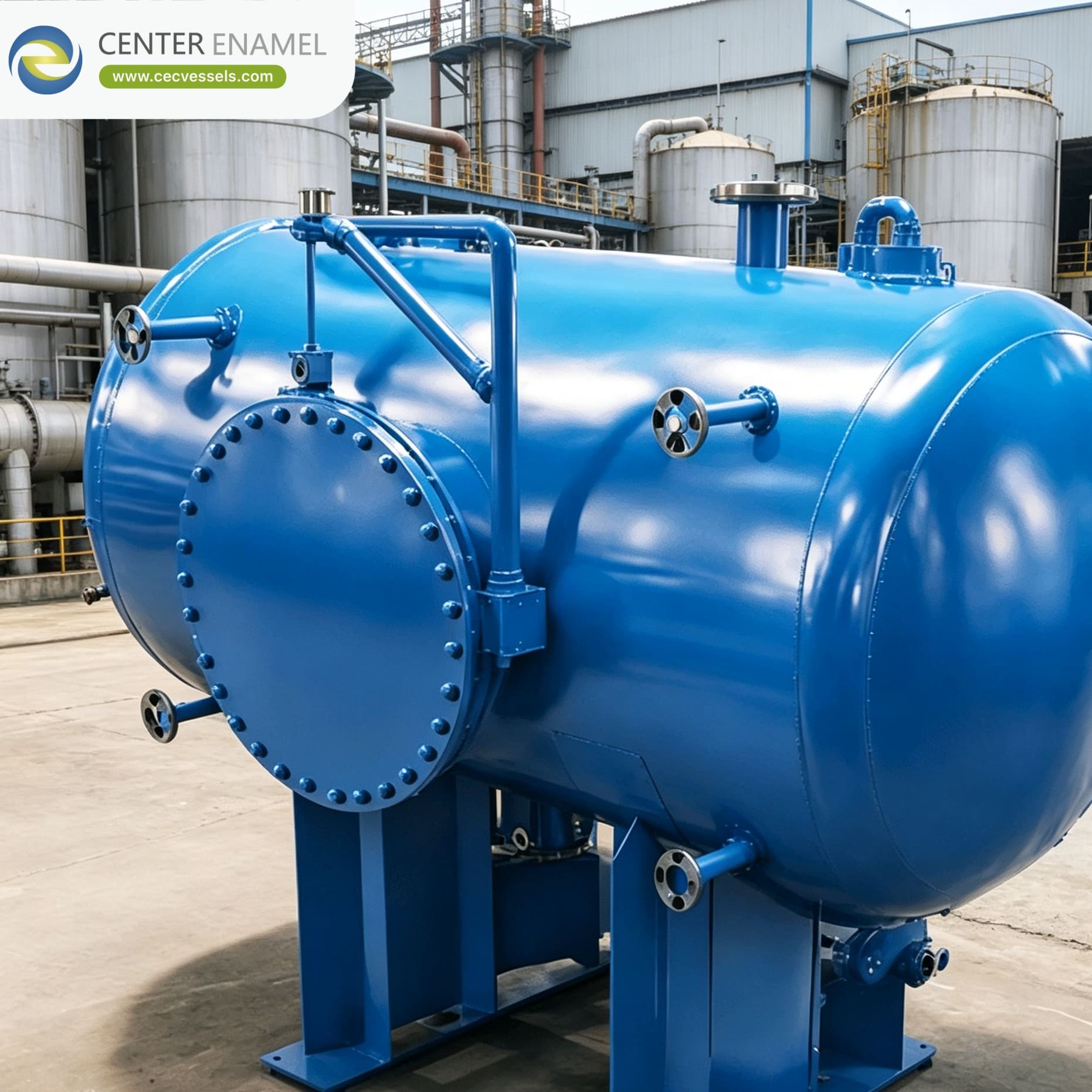
What Does Reaction Vessel Mean?
A reaction vesselis a container designed to hold materials while a chemical, physical, or biological process takes place under controlled conditions. It provides a suitable environment for combining ingredients, managing temperature, mixing substances, and monitoring reaction progress. Reaction vesselsare widely used in chemical manufacturing, pharmaceutical production, food processing, biotechnology, and other industrial applications. Their designs vary according to the materials being processed, the reaction requirements, and the desired production capacity. Understanding the meaning of a reaction vessel helps manufacturers identify the appropriate equipment for their processes and improve production consistency. What Is the Purpose of a Reaction Vessel?The primary purpose of a reaction vesselis to provide a controlled space where materials can interact and undergo a desired transformation. Depending on the application, the process may involve chemical synthesis, dissolution, crystallization, polymerization, fermentation, or material blending. A reaction vessel can perform several important functions during production. Holding process materials:The vessel contains raw materials, solvents, catalysts, intermediates, or other ingredients throughout the processing stage. Mixing ingredients:An agitator or other mixing mechanism helps distribute materials and improve contact between different components. Controlling temperature:Heating and cooling systems help maintain the temperature required for a specific process. Supporting reaction monitoring:Sensors and instruments measure relevant parameters, such as temperature, liquid level, agitation speed, and pH. Facilitating material transfer:Inlet and outlet connections allow ingredients to enter the vessel and processed materials to move to the next production stage. These functions can be integrated into a single vessel or combined with auxiliary equipment to form a complete processing system. How Does a Reaction Vessel Work?The operation of a reaction vesseldepends on the type of process and the equipment configuration. In general, the vessel receives the required materials, maintains suitable operating conditions, and provides an environment for the intended reaction or processing activity. A typical batch reaction process involves several stages. 1. Material LoadingRaw materials are introduced into the vessel through designated inlets or charging connections. The ingredients may include liquids, powders, solvents, or other process materials, depending on the application. The loading sequence and ingredient quantities are determined by the production procedure. Accurate material measurement helps maintain consistency between batches. 2. Mixing and Material DistributionOnce the materials are loaded, an agitator may be used to mix the contents. The impeller moves the materials throughout the vessel, promoting uniform distribution and improving contact between ingredients. The required mixing speed and agitator design depend on the viscosity, density, and composition of the materials. Some processes require gentle blending, while others need more intensive mixing. 3. Temperature RegulationMany reactions require a specific temperature range. A reaction vesselmay therefore incorporate a heating jacket, cooling jacket, internal coil, or another heat transfer arrangement. The heating system supplies thermal energy when the process requires warming. The cooling system removes heat when temperature reduction is necessary. Temperature sensors can transmit measurements to a control system, allowing operators to monitor conditions and adjust the heating or cooling output. 4. Reaction or ProcessingAfter the required operating conditions have been established, the materials undergo the intended reaction or processing stage. Depending on the application, this may involve chemical conversion, dissolution, crystallization, or another transformation. Operators or automated systems monitor the relevant process parameters to maintain the conditions specified by the production procedure. 5. Discharge and CleaningWhen the process is complete, the finished material is transferred through an outlet to a storage tank, filtration unit, filling system, or subsequent production stage. The vessel is then cleaned according to the requirements of the application. Appropriate cleaning procedures help prepare the equipment for the next production cycle. Main Components of a Reaction VesselA reaction vesselconsists of several components that work together to support material processing and process control. The exact configuration depends on the intended application. Vessel BodyThe vessel body provides the main enclosure for the process materials. It can be cylindrical or feature another suitable geometry according to the required capacity, mixing arrangement, and manufacturing specifications. The vessel's working volume should account for the quantity of material being processed and the space needed for effective mixing or other process operations. Agitator and Mixing SystemThe agitator is responsible for moving and mixing the vessel contents. Common configurations include anchor, turbine, paddle, and propeller agitators. Each design provides different flow characteristics. Anchor agitators are often suitable for viscous materials, while turbine impellers can support effective mixing in various liquid systems. Heating and Cooling SystemA heating or cooling system regulates the temperature of the vessel contents. Common options include external jackets, internal coils, electric heating elements, and circulating heat transfer media. The appropriate arrangement depends on the required temperature range, heat transfer rate, and process characteristics. Instrumentation and Control SystemInstruments help monitor and regulate the vessel's operating conditions. Depending on the process, these may include temperature sensors, pressure indicators, liquid-level instruments, pH sensors, and speed controllers. Automated controls can coordinate different equipment functions and help maintain repeatable operating conditions. Inlet and Outlet ConnectionsInlet connections introduce raw materials, process liquids, or other ingredients into the vessel. Outlet connections allow processed materials to be discharged. Additional connections may be provided for sampling, cleaning, instrument installation, or auxiliary equipment integration. Different Types of Reaction VesselsDifferent manufacturing processes require different vessel designs. The most suitable type depends on how the materials are processed and how the production system operates. Batch Reaction VesselA batch reaction vesselprocesses a defined quantity of material during each production cycle. The ingredients are loaded, processed, and discharged before the next batch begins. This design is commonly used in specialty chemicals, pharmaceuticals, resins, and other industries that require flexible production schedules or different product formulations. Continuous Reaction VesselA continuous reaction vessel receives incoming materials and discharges processed products during normal operation. It is suitable for processes that require steady production and consistent material flow. Continuous systems are often used in large-scale chemical manufacturing and selected polymer production applications. Jacketed Reaction VesselA jacketed reaction vesselincorporates an external chamber around part or all of the vessel body. A heating or cooling medium circulates through the jacket to regulate the temperature of the process materials. This configuration is frequently used in chemical synthesis, resin production, food processing, and pharmaceutical manufacturing. Stainless Steel Reaction VesselA stainless steel reaction vessel uses stainless steel for its body and, where appropriate, its process-contact components. Stainless steel is widely selected for its durability, cleanability, and suitability for many industrial applications. The material grade should be selected according to the process media, cleaning requirements, and intended operating conditions. Glass-Lined Reaction VesselA glass-lined reaction vessel features a metal shell with a glass coating on the internal surface. It is used in applications where the chemical compatibility and surface characteristics of the lining suit the process materials. Glass-lined vessels are commonly found in specialty chemical and pharmaceutical production. Industrial Applications of Reaction VesselsReaction vesselsare essential across numerous industries because they provide a controlled environment for processing materials. Chemical manufacturing:Reaction vessels support chemical synthesis, neutralization, polymerization, and resin production. Pharmaceutical production:They are used for ingredient preparation, chemical reactions, formulation, and intermediate processing. Food processing:Suitable vessels support blending, dissolution, heating, and the preparation of liquid food products. Biotechnology:Specialized vessels provide controlled environments for fermentation and other biological processes. Petrochemical production:Reaction vessels are used in selected chemical conversion and material processing operations. Environmental engineering:Specialized reactor systems support biological treatment and other processes involving water and wastewater. Each application requires equipment designed around its specific materials, process conditions, production scale, and quality requirements. How to Choose the Right Reaction VesselSelecting a suitable reaction vesselbegins with understanding the process and its technical requirements. Material properties:Evaluate the viscosity, density, chemical composition, and temperature sensitivity of the materials. Working capacity:Determine the required batch volume or continuous processing capacity. Mixing requirements:Select an agitator that matches the materials and desired mixing performance. Temperature control:Identify the required heating and cooling methods and the temperature range needed for the process. Construction materials:Choose a vessel material compatible with the process media and cleaning procedures. Automation:Determine which instruments and controls are necessary to monitor and manage the process. Maintenance and cleaning:Consider vessel accessibility, surface finish, drainage, and cleaning procedures. Evaluating these factors helps manufacturers select equipment that meets production needs and supports consistent operation. Understanding the Value of Reaction Vessels in Modern ManufacturingA reaction vesselis more than a container. It is an important part of an industrial processing system that brings together material containment, mixing, temperature regulation, and process monitoring. From batch chemical production to pharmaceutical formulation and biological processing, the correct vessel design helps manufacturers maintain suitable operating conditions and achieve repeatable results. By understanding the vessel's purpose, components, operating principles, and available configurations, businesses can make more informed equipment decisions. Selecting a reaction vesselthat matches the production process provides a practical foundation for efficient material handling, consistent product quality, and reliable long-term manufacturing operations.
|