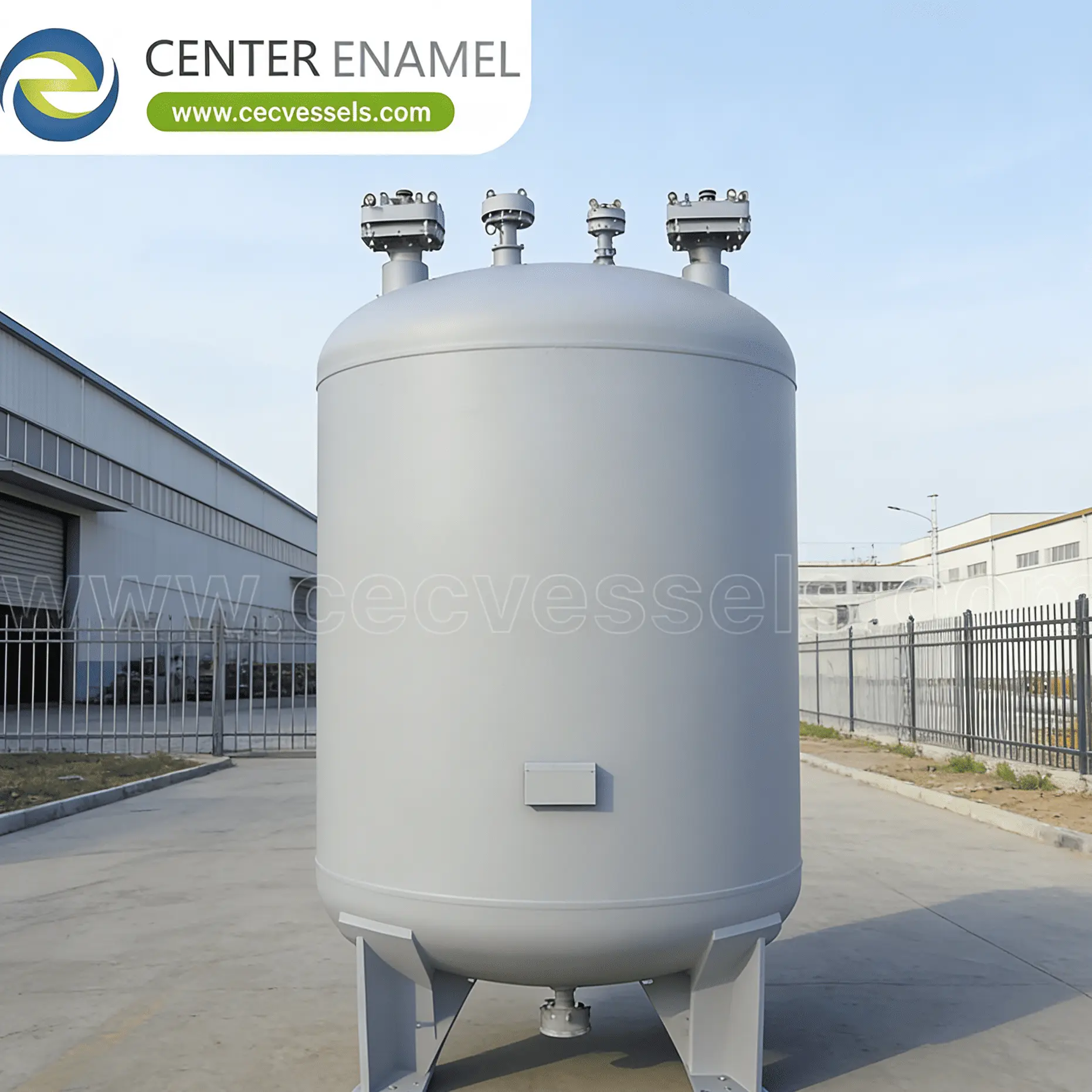
What Is a Crystallization Reactor?
Crystallization stands as one of the most fundamental and enduring separation and purification techniques utilized across modern chemical engineering, pharmaceuticals, biotechnology, and materials science. At the very heart of this technological domain lies the crystallization reactor, a specialized piece of equipment engineered to facilitate the transition of solute molecules from a liquid phase into an organized, solid crystal lattice. Unlike conventional chemical reactors where the primary objective is chemical synthesis or molecular transformation through bond cleavage and formation, a crystallization reactor focuses primarily on physical phase change, thermodynamic equilibrium management, and particle engineering. Through meticulous regulation of thermal and compositional environments, these reactors enable manufacturers to harvest high-purity chemical substances, active pharmaceutical ingredients, specialty polymers, and advanced electronic materials with exceptional consistency.
Fundamental Principles of Crystallization
To comprehend the functionality of a crystallization reactor, one must first examine the underlying thermodynamic and kinetic principles governing crystal formation. Crystallization fundamentally occurs in two primary stages: nucleation and crystal growth. Nucleation represents the initial formation of a minute crystalline phase from a supersaturated solution, which can occur either spontaneously (homogeneous nucleation) or through the introduction of foreign particles, existing crystal fragments, or active surfaces (heterogeneous nucleation). Once stable nuclei are established, crystal growth takes over as surrounding solute molecules diffuse through the liquid medium and attach themselves to the active lattice sites of the growing crystal faces.
Supersaturation serves as the driving force for both nucleation and crystal growth. In a crystallization reactor, supersaturation is achieved through various physical methods, such as cooling the solution to decrease solute solubility, evaporating the solvent to concentrate the solution, or introducing a miscible non-solvent to alter the chemical potential of the liquid mixture. Maintaining precise control over the supersaturation level is critical; excessive supersaturation triggers rapid, uncontrolled secondary nucleation, resulting in fine, needle-like crystals with poor filtration characteristics and high impurity entrapment. Conversely, insufficient supersaturation leads to sluggish growth rates and economically unviable production cycles. Therefore, modern crystallization reactors integrate sophisticated monitoring systems to maintain supersaturation within an optimal metastable zone.
Core Concepts in Crystallization Reactor Design
Crystallization reactor design is a multidisciplinary engineering task that merges thermodynamics, fluid dynamics, heat transfer, and mass transfer principles. A well-designed crystallization reactor must provide uniform temperature distribution, controlled agitation, and precise residence time distribution to ensure that every particle within the vessel experiences identical growth conditions.
The geometrical configuration of the reactor vessel significantly influences flow patterns and shear stress. Cylindrical vessels equipped with specialized draft tubes and impeller systems are frequently employed to promote smooth axial and radial circulation. Heat transfer surfaces, whether integrated as internal cooling coils or external jackets, must be carefully dimensioned to prevent localized over-cooling or hot spots, which can cause fouling and encrustation on reactor walls. Furthermore, internal baffles are often incorporated to eliminate undesirable vortex formation and ensure homogeneous suspension of growing crystals throughout the liquid volume.
Key Components of a Crystallization Reactor System
A complete crystallization reactor system comprises several interconnected mechanical, thermal, and analytical subsystems working in seamless harmony. The primary vessel serves as the reaction and crystallization chamber, typically constructed from high-grade stainless steel, glass-lined carbon steel, or specialized corrosion-resistant alloys depending on the chemical nature of the process fluids.
Agitation assemblies represent another critical component. Unlike standard mixing tanks, crystallization reactors utilize low-shear impellers—such as pitched-blade turbines, helical ribbon mixers, or specialized marine propellers—designed to keep crystals suspended without imparting excessive mechanical impact that could fracture delicate crystal structures. Particle attrition and breakage must be minimized to preserve the desired particle size distribution and morphological integrity.
Temperature control units, including chillers, heat exchangers, and automated thermal fluid circulation loops, dictate the cooling rate profile. Because crystallization kinetics are exponentially dependent on temperature, thermal stability within fractions of a degree is paramount. Additionally, feed addition systems, seed loading ports, and automated discharge valves ensure smooth, continuous or semi-batch operational sequences.
Types of Crystallization Reactors
Industrial processes employ diverse reactor configurations tailored to specific chemical systems and production scales. Batch crystallizers are the most common for fine chemicals and pharmaceuticals. In a batch setup, raw materials are dissolved at elevated temperatures and subsequently cooled according to a predefined temperature profile. Batch reactors offer exceptional operational flexibility, allowing manufacturers to produce multiple product grades within the same equipment footprint.
Continuous crystallizers, on the other hand, are designed for large-scale, steady-state production where composition, temperature, and crystal slurry density remain constant over extended operational periods. Forced circulation evaporative crystallizers and draft tube baffle crystallizers are classic examples of continuous systems utilized in bulk chemical manufacturing, such as the production of inorganic salts, fertilizers, and petrochemical intermediates. These units maximize energy efficiency and throughput consistency.
Cooling crystallization reactors rely strictly on thermal reduction to decrease solubility, making them ideal for temperature-sensitive compounds. Evaporative crystallization reactors combine heat addition and vacuum application to remove solvent, driving supersaturation through concentration. Reaction crystallization (or precipitation) reactors involve the simultaneous chemical reaction of two liquid or gaseous feeds to form an insoluble product that immediately crystallizes out of solution, as seen in the synthesis of specialized pigments and fine ceramic precursors.
Operational Mechanisms and Control Parameters
Achieving superior product quality within a crystallization reactor requires rigorous management of several key operational parameters. Temperature profiling is arguably the most influential variable. By implementing programmable logic controllers (PLCs) and distributed control systems (DCS), operators can execute precise cooling trajectories—ranging from linear cooling to optimized non-linear cooling curves that maintain constant supersaturation throughout the batch cycle.
Seeding strategy represents another pivotal operational technique. Introducing carefully sized seed crystals into the metastable zone at the precise moment of supersaturation eliminates random nucleation variability. Seeding dictates the final median particle size, narrows the particle size distribution, and prevents the formation of agglomerates or ultrafine particles.
Agitation intensity must be dynamically managed as the crystal slurry density increases over time. As solids accumulate within the reactor, the apparent viscosity of the fluid changes, requiring intelligent motor speed modulation to maintain optimal suspension without introducing excessive thermal friction or mechanical shear.
Industrial Applications Across Sectors
Crystallization reactors play an irreplaceable role across a broad spectrum of industrial landscapes. In the pharmaceutical industry, active pharmaceutical ingredients (APIs) must meet stringent purity, polymorphism, and bioavailability standards. Crystallization reactors ensure that drug substances crystallize into the precise thermodynamically stable polymorph required for human metabolism and shelf-life stability.
The fine chemical and specialty material sectors rely heavily on these reactors to produce high-purity electronic chemicals, battery-grade metal precursors, catalysts, and optical materials. Even in food and beverage processing, crystallization reactors are utilized for refining sugars, purifying organic acids, and extracting high-value nutritional compounds.
Advantages of Modern Crystallization Reactor Design
Recent innovations in crystallization reactor design have delivered substantial operational benefits to modern manufacturing facilities. Advanced computational fluid dynamics (CFD) modeling allows engineers to simulate flow patterns, thermal gradients, and local supersaturation profiles prior to physical fabrication, eliminating costly trial-and-error prototyping.
Modern reactors also emphasize enhanced energy recovery, closed-loop automation, and clean-in-place (CIP) compatibility. Automated optical particle size analyzers integrated directly into the reactor loop provide real-time chord length distribution data, enabling closed-loop feedback control that dynamically adjusts cooling rates and agitation speeds to counteract process disturbances. These technological refinements translate directly into higher product yields, reduced energy consumption, superior batch-to-batch reproducibility, and minimized waste generation.
Advanced Thermodynamic Considerations in Crystallization Engineering A deeper exploration of crystallization reactor technology necessitates an examination of phase equilibria and phase diagrams. Solubility data serve as the baseline blueprint for any crystallization process. Understanding the precise boundary between unsaturated, metastable, and labile zones enables chemical engineers to design robust thermal cycles. In a cooling crystallization reactor, the solubility curve dictates the exact temperature threshold at which solute molecules begin to precipitate. By plotting the operational trajectory on a temperature-solubility coordinate system, operators can visualize the degree of supersaturation generated at any given moment. This thermodynamic clarity prevents sudden excursions into the labile zone, which would otherwise trigger spontaneous, uncontrollable nucleation and yield substandard particulate profiles.
Mass Transfer and Solute Diffusion Dynamics
Beyond macroscopic thermodynamics, micro-level mass transfer phenomena dictate the ultimate perfection of crystal lattices. As a crystal grows within a reactor vessel, solute molecules dissolved in the liquid phase must migrate across a stagnant hydrodynamic boundary layer surrounding the crystal face. The rate of mass transfer through this boundary layer is directly influenced by the fluid velocity, kinematic viscosity, and local turbulence intensity generated by the reactor impeller. If mass transfer is too slow relative to surface integration kinetics, growth becomes diffusion-controlled, often leading to dendritic growth or inclusion entrapment. Conversely, when surface integration is the rate-limiting step, smooth, well-faceted crystals develop. Modern crystallization reactor design optimizes internal fluid dynamics to strike a harmonious balance between convective mass transfer and surface reaction kinetics.
Scale-Up Methodologies and Geometric Simplicity
Transitioning a crystallization process from laboratory-scale bench units to pilot plants and full-scale industrial production reactors presents unique engineering tasks that require meticulous mathematical modeling. Geometric similitude—maintaining constant ratios between vessel diameter, impeller diameter, liquid height, and baffle dimensions—serves as the traditional baseline for scale-up. However, maintaining identical hydrodynamic and thermal profiles across vastly different volumetric scales is exceptionally complex. Power input per unit volume, tip speed of the impeller, and heat transfer area per unit mass change non-linearly with scale. To overcome these scaling discrepancies, modern engineering teams utilize dimensionless numbers, such as the Reynolds number for fluid flow regime characterization and the Nusselt number for heat transfer efficiency, ensuring predictable and reproducible crystal growth behavior regardless of reactor capacity.
Automation, Sensors, and Process Analytical Technology
The integration of Process Analytical Technology (PAT) has revolutionized the operation of contemporary crystallization reactors. Historically, operators relied on offline sampling and laboratory microscopy to determine crystal size and morphology, a method fraught with sampling delays and statistical variance. Today, advanced inline and online analytical tools are directly coupled with the reactor vessel. Focused beam reflectance measurement (FBRM) probes provide real-time particle chord length distribution data, while particle vision and measurement (PVM) cameras capture high-resolution microscopic images of crystals as they nucleate, grow, or agglomerate within the slurry. Coupled with spectroscopic sensors that monitor solute concentration in real time, these analytical tools feed continuous data streams into automated control loops. This closed-loop architecture enables the reactor system to self-correct, dynamically adjusting cooling rates or feeding rates to counteract minor process fluctuations and maintain optimal crystal quality throughout the entire production run.
Energy Efficiency and Sustainability in Reactor Engineering
Sustainability and environmental stewardship have emerged as primary drivers in modern chemical and pharmaceutical manufacturing. Crystallization reactors contribute significantly to overall plant energy efficiency when engineered with advanced thermal integration. By incorporating multi-stage heat recovery systems, mechanical vapor recompression in evaporative configurations, and closed-loop cooling water circuits, manufacturing facilities can drastically reduce thermal energy consumption. Furthermore, optimizing crystallization yields reduces the concentration of valuable solutes in mother liquor waste streams, minimizing downstream separation burdens and chemical waste generation. The ability to achieve high single-pass recovery rates underscores the economic and ecological value of well-designed crystallization processes.
Polymorphic Control and Crystal Habit Optimization
In the production of active pharmaceutical ingredients and specialty organic chemicals, molecular structure alone does not dictate therapeutic or functional efficacy. Many compounds exhibit polymorphism—the ability of a chemical substance to crystallize into multiple distinct crystal lattice arrangements, or polymorphs, each possessing unique physical properties such as solubility, melting point, dissolution rate, and bio-availability. A crystallization reactor acts as a precise environmental chamber capable of steering crystallization pathways toward the desired polymorph. By carefully controlling seeding protocols, solvent selection, agitation intensity, and temperature cooling trajectories, manufacturers ensure that only the thermodynamically or kinetically favored polymorph precipitates. Additionally, crystal habit—the external shape of the crystal, such as needles, plates, prisms, or cubes—is heavily influenced by reactor conditions. Controlling habit is essential for downstream processing steps like filtration, drying, and powder flowability, ensuring seamless tablet manufacturing and formulation stability.
Future Horizons in Crystallization Reactor Technology
Looking toward the future, the evolution of crystallization reactor design continues to accelerate through the convergence of artificial intelligence, machine learning, and advanced materials science. Predictive modeling algorithms trained on historical batch data can now forecast crystal size distributions and optimize cooling trajectories prior to physical execution, minimizing experimental trial phases. Furthermore, continuous flow crystallization platforms, microfluidic reactor arrays, and intensified reactive crystallization systems are gaining prominence, offering unprecedented control over micromixing and thermal transfer. These technological strides reinforce the pivotal position of crystallization reactors as sophisticated instruments of modern precision manufacturing, driving innovation across diverse scientific and industrial disciplines.
The crystallization reactor remains an indispensable cornerstone of advanced chemical engineering and particulate science. By harmonizing thermodynamic principles, precise thermal management, gentle mechanical agitation, and sophisticated automation, these specialized vessels empower industries to convert crude chemical solutions into highly refined, perfectly structured crystalline products. As industrial demands for material purity and particle engineering continue to escalate, ongoing innovations in crystallization reactor design will undoubtedly shape the future of sustainable, high-efficiency manufacturing.
|