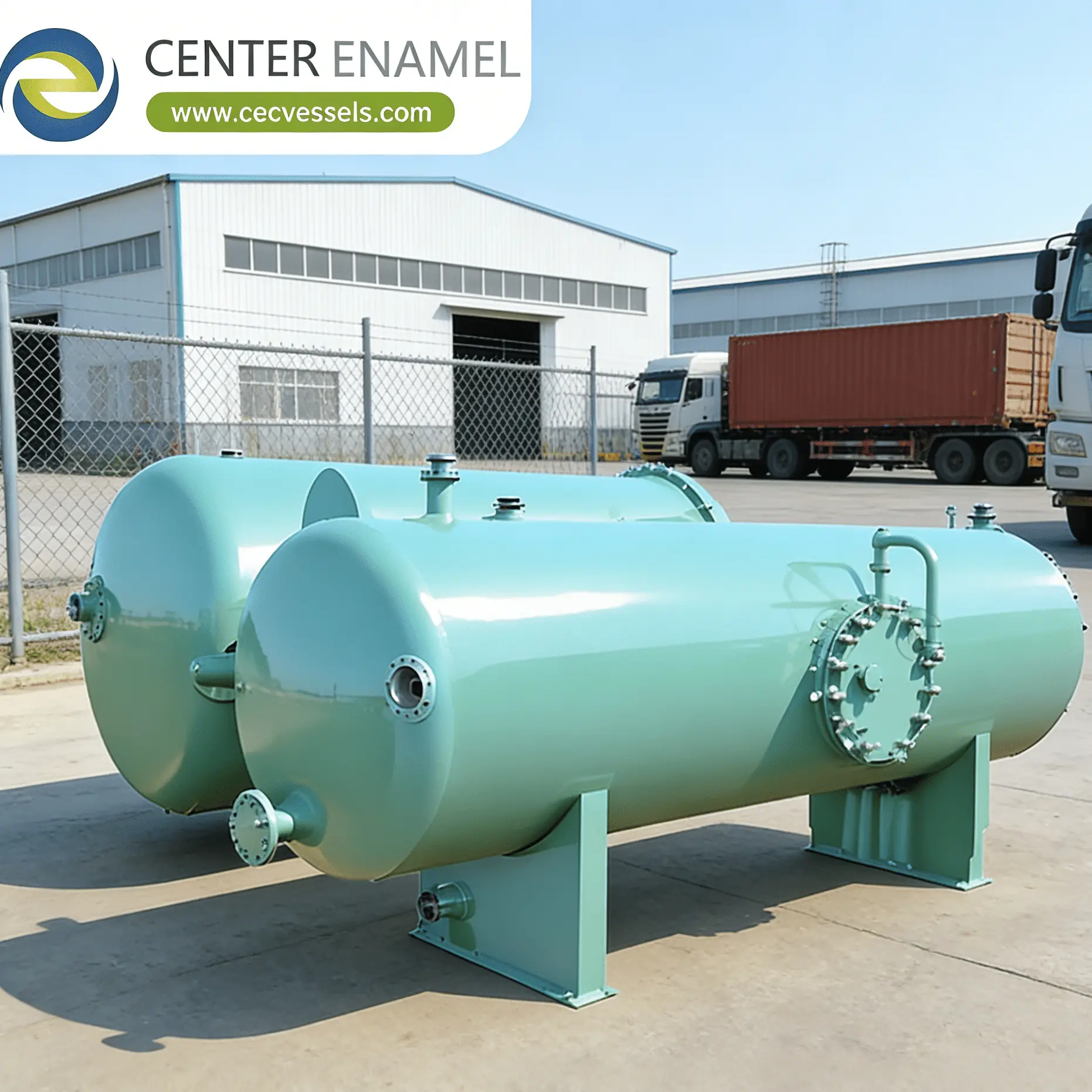
What Is a Fixed-Bed Reactor
A fixed bed reactor is a type of chemical reactor in which solid catalyst particles are packed inside a vessel and remain stationary during operation. Reactants flow through the packed material, contacting the catalyst surface as the chemical reaction takes place. Also called a packed bed reactor, this configuration is widely used for catalytic gas-phase and liquid-phase processes. Its relatively straightforward structure, continuous operation, and effective contact between reactants and catalyst make it an important reactor configuration in chemical processing. What Is a Fixed-Bed Reactor?A fixed bed reactor is a reactor that contains a stationary bed of solid particles, usually catalyst pellets, through which a gas or liquid reactant flows. The word "fixed" refers to the fact that the solid material remains in a fixed position rather than being suspended or continuously circulated. A typical fixed bed reactor consists of a cylindrical vessel or tube, an inlet and outlet, a catalyst support system, a packed catalyst bed, and components for controlling or monitoring operating conditions. Depending on the reaction, the reactor may also include heating or cooling equipment. The catalyst can be supplied in different physical forms, including pellets, spheres, cylinders, extrudates, rings, or other structured shapes. The selected catalyst shape and particle size influence how the fluid moves through the bed and how effectively the reactants contact the active surface. In many applications, inert materials are placed around the catalyst bed. These materials can help distribute the feed, support the catalyst, and create more uniform flow entering the reaction zone. NPTEL describes a typical fixed bed reactor as a cylindrical vessel containing catalyst pellets, with support screens and inert ceramic material used for catalyst support and feed distribution. How Does a Fixed Bed Reactor Work?The operating principle of a fixed bed reactor is relatively simple. First, the reactant enters the reactor through the inlet. The feed then passes through the stationary catalyst bed. As the fluid moves through the spaces between catalyst particles, the reactants come into contact with the catalyst surface. The catalyst provides active sites that facilitate the chemical reaction. Depending on the process, the reaction may involve gas-solid, liquid-solid, or other heterogeneous reaction systems. As the fluid travels through the reactor, the concentration of reactants generally decreases while the concentration of products increases. The composition therefore changes along the length of the catalyst bed. The catalyst itself normally remains inside the reactor while the reaction mixture flows through it. This is one of the main differences between fixed bed reactors and reactor systems in which catalyst particles are continuously circulated or suspended. For gas-phase reactions, downward flow is commonly used, although the appropriate flow direction depends on the process and reactor design. Liquid-phase fixed bed reactors may also use upward flow to maintain effective wetting of the catalyst bed. Main Components of a Fixed Bed ReactorAlthough fixed bed reactors can be designed in many configurations, several components are commonly found in the system. Reactor VesselThe reactor vessel provides the main enclosure for the reaction process. It is generally cylindrical and can be arranged vertically or horizontally depending on the application. The vessel must accommodate the catalyst volume, fluid flow path, support structures, and necessary connections for feed, product, heating, cooling, instrumentation, and maintenance. Catalyst BedThe catalyst bed is the central functional component of a fixed bed reactor. It contains the solid catalyst particles that remain stationary during operation. The bed dimensions and catalyst loading determine the available reaction volume and the contact area between the process fluid and catalyst. Catalyst SupportA support grid, screen, plate, or similar structure is normally installed beneath the catalyst bed. Its function is to hold the catalyst particles in place while allowing the process fluid to pass through the reactor. Proper support design helps maintain the intended arrangement of the catalyst and allows the product stream to leave the reactor. Feed Distribution SystemUniform feed distribution is important because the process fluid should contact the catalyst bed as evenly as practical. Inert packing or distribution components can be used near the reactor inlet to help spread the incoming flow across the available cross-sectional area. This allows more effective use of the catalyst bed. Heating and Cooling SystemSome chemical reactions require controlled heat addition or removal. Fixed bed reactors can therefore be equipped with external heating systems, jackets, heating furnaces, internal heat-transfer surfaces, or other thermal control arrangements. Fixed bed reactors may operate under adiabatic or isothermal conditions depending on the reaction and process requirements. Outlet SystemThe outlet collects the reaction mixture after it passes through the catalyst bed. Additional downstream equipment may be connected to the reactor for cooling, condensation, separation, purification, or product collection. Fixed Bed Reactor CatalystCatalyst selection is one of the most important aspects of fixed bed reactor design. A catalyst accelerates the desired chemical reaction without being consumed in the overall reaction. Because the catalyst remains inside the reactor, the process fluid can continuously pass through the same catalyst bed. Catalysts can be manufactured from different active materials and supports depending on the reaction. Common catalyst forms include pellets, spheres, tablets, extrudates, and structured materials. Catalyst particle size affects several aspects of reactor operation. Smaller particles provide a larger surface area for a given catalyst volume and can improve contact between the fluid and catalyst. Larger particles can provide different flow characteristics and may be selected according to the process requirements. The catalyst's internal pore structure is also important. Reactants must move from the bulk fluid to the catalyst surface and, where applicable, diffuse into the pores before reaching active sites. The overall reactor performance therefore depends not only on the chemical reaction itself but also on mass transfer and diffusion within the catalyst particles. Flow Through a Fixed BedFluid movement through the catalyst bed is an important part of fixed bed reactor operation. A packed catalyst bed contains solid particles as well as open spaces, known as voids. The process fluid travels through these spaces as it moves from the reactor inlet to the outlet. The bed geometry, catalyst particle size, packing arrangement, fluid velocity, viscosity, and density all influence the flow characteristics. In an idealized model, the reactor can exhibit behavior similar to plug flow, where fluid elements move through the reactor with limited axial mixing. This makes fixed bed reactors useful for processes where conversion changes progressively along the reactor length. Actual reactors are more complex than an ideal plug-flow model. Fluid distribution, dispersion, catalyst properties, and heat and mass transfer can all influence reactor performance. For engineering design, these factors are considered when determining the required catalyst volume, reactor dimensions, feed rate, and operating conditions. Fixed Bed Reactor Temperature ControlTemperature is an important operating parameter because reaction rates are generally affected by temperature. Some fixed bed reactors are designed to operate approximately under isothermal conditions, while others allow the temperature to change along the catalyst bed. The appropriate approach depends on the reaction characteristics and process objectives. For reactions requiring heat input, the reactor may be surrounded by a heating system or equipped with heat-transfer surfaces. For reactions that release heat, cooling arrangements may be incorporated into the reactor design. In larger industrial systems, multiple catalyst beds can also be arranged in series with heat-transfer equipment between stages. This allows the process temperature to be adjusted between reaction zones. ScienceDirect describes fixed bed configurations that can operate in either adiabatic or isothermal modes, with jackets or coils used when heat exchange is required. Types of Fixed Bed ReactorsFixed bed reactors can be classified according to their geometry, flow arrangement, catalyst configuration, and heat management method. Vertical Fixed Bed ReactorA vertical fixed bed reactor is one of the most common configurations. The catalyst bed is arranged vertically inside a cylindrical vessel, with the process fluid flowing upward or downward. This design can provide a compact arrangement and convenient catalyst loading and unloading. Horizontal Fixed Bed ReactorA horizontal fixed bed reactor places the catalyst bed along a horizontal reactor body. This configuration can be suitable for particular thermal processing and laboratory applications. Tubular Fixed Bed ReactorA tubular fixed bed reactor uses one or more tubes filled with catalyst. Multiple tubes can be installed within a common reactor shell when a large catalyst volume or improved heat transfer arrangement is required. Multi-Bed Fixed Bed ReactorA multi-bed design contains several catalyst beds arranged in series. Heat exchangers, cooling zones, or other process equipment may be installed between the beds. This arrangement gives engineers greater control over the reaction environment and can be used when the reaction requires staged temperature management. Fixed Bed Reactor vs Fluidized Bed ReactorFixed bed reactors and fluidized bed reactors both use solid particles, but the movement of those particles is fundamentally different. In a fixed bed reactor, the catalyst remains stationary. The process fluid moves through the spaces between the particles. In a fluidized bed reactor, the upward flow of fluid suspends and moves the solid particles. This creates a highly mixed system with different heat and mass transfer characteristics. The stationary catalyst arrangement of fixed bed reactors makes them particularly attractive when continuous contact between a process stream and a reusable solid catalyst is desired. Fluidized bed reactors may be selected when strong mixing, continuous circulation of solids, or specific heat-transfer characteristics are important. Therefore, choosing between a fixed bed reactor and a fluidized bed reactor depends on the reaction, catalyst properties, feed characteristics, heat-transfer requirements, and desired process configuration. Fixed Bed Reactor vs Tubular ReactorThe terms fixed bed reactor and tubular reactor can sometimes cause confusion because many fixed bed reactors have a tubular geometry. A tubular reactor describes the physical form and flow arrangement of the reactor, while a fixed bed reactor describes the presence of a stationary packed solid bed. A tubular reactor may operate without a solid catalyst. A fixed bed reactor, on the other hand, generally contains a stationary solid material, particularly when it is used as a catalytic reactor. For example, a tube filled with catalyst pellets can be considered both a tubular reactor and a fixed bed reactor. The two terms therefore describe different aspects of the equipment. Applications of Fixed Bed ReactorsFixed bed reactors are used across many areas of chemical and process engineering. Chemical ProductionFixed bed reactors are widely used for catalytic reactions involved in the production of chemicals and intermediates. Their continuous-flow configuration allows reactants to pass through a stationary catalyst bed over extended operating periods. Petrochemical ProcessingPetrochemical processes make extensive use of solid catalysts. Fixed bed configurations can provide controlled contact between hydrocarbon streams and catalyst materials. Hydrogen and Syngas ProductionCatalytic processes for hydrogen and syngas production can use fixed bed reactor configurations. Steam reforming and related catalytic reactions are examples of processes where reactants pass through a stationary catalyst bed. Biodiesel ProductionFixed bed reactors can also be used in biodiesel-related processes. In certain systems, oils and alcohols pass through a column containing a heterogeneous catalyst, allowing the reaction to take place without continuously separating the catalyst from the product stream. Environmental ProcessingCatalytic fixed bed systems can be applied to gas treatment and other environmental processes. The catalyst provides active surfaces where target compounds can undergo chemical transformation. Biomass ConversionFixed bed configurations are also used for thermochemical conversion of biomass and other carbon-containing feedstocks. Depending on the reactor arrangement, the process can generate products such as gas, liquid fractions, and solid carbonaceous materials. Fixed Bed Reactor Design ConsiderationsDesigning a fixed bed reactor requires consideration of both reaction and equipment characteristics. Catalyst VolumeThe required catalyst volume depends on reaction kinetics, feed rate, desired conversion, catalyst activity, and residence time. Reactor DiameterThe reactor diameter influences the cross-sectional area available for fluid flow. It must be selected together with the feed flow rate and catalyst properties to achieve appropriate flow conditions. Bed HeightBed height determines the length of the reaction zone. A longer catalyst bed can provide additional catalyst volume and contact time, depending on the process. Catalyst Particle SizeParticle size affects catalyst surface area, internal diffusion, fluid flow, and overall reactor performance. Engineers therefore select particle dimensions based on the reaction and process requirements. TemperatureThe reactor temperature must be selected according to the reaction kinetics and catalyst characteristics. Heating and cooling systems may be incorporated when thermal control is required. Flow DistributionUniform flow through the catalyst bed helps make effective use of the available catalyst. Feed distribution equipment and appropriate reactor geometry are therefore important design considerations. Materials of ConstructionThe reactor material must be compatible with the process fluid, catalyst, temperature, and operating environment. Common construction materials may include carbon steel, stainless steel, or other specialized alloys depending on the application. Advantages of Fixed Bed ReactorsFixed bed reactors offer several practical advantages. First, their basic construction is relatively straightforward. A typical system consists of a vessel, catalyst bed, support structure, inlet, and outlet, with additional thermal and control equipment added according to process requirements. Second, the stationary catalyst allows continuous operation without continuously circulating catalyst particles through the process. Third, fixed bed reactors can provide effective contact between the reactant stream and catalyst. This makes them suitable for many heterogeneous catalytic reactions. Fourth, the reactor can be designed in different configurations. Vertical vessels, horizontal vessels, tubular systems, and multi-bed arrangements can all be developed according to process requirements. Finally, fixed bed systems can be scaled from laboratory equipment to large industrial process units by adjusting reactor dimensions, catalyst volume, flow rate, and heat-transfer arrangements. Fixed Bed Reactor Operation and MaintenanceDuring operation, process engineers generally monitor parameters such as feed flow rate, temperature, composition, reactor inlet and outlet conditions, and product quality. Catalyst condition is also important. Over time, catalyst activity may change because of normal process operation, deposits, chemical changes, or other factors. Depending on the catalyst and process, the bed may be regenerated or replaced after a defined operating period. Catalyst loading is normally performed carefully to maintain an even bed structure. The distribution of particles can affect fluid flow and reaction performance. Routine inspection can include checking vessel components, catalyst support structures, inlet distributors, outlet systems, instrumentation, and heat-transfer equipment. Why Are Fixed Bed Reactors Widely Used?The popularity of fixed bed reactors comes from the combination of a simple physical concept and broad process applicability. A stationary catalyst bed provides a convenient way to maintain a large amount of solid catalyst inside a reactor while allowing gas or liquid reactants to flow continuously through the system. The reactor can also be adapted to many different catalytic processes. Engineers can change the catalyst, bed dimensions, reactor geometry, temperature-control method, and flow arrangement to match specific process requirements. Research and industrial references describe fixed or packed bed reactors as an important configuration for solid-catalyst reactions, particularly in gas-phase chemical processing. A fixed bed reactor is a chemical reactor containing a stationary packed bed of solid material, most commonly catalyst particles. Reactants flow through the bed and contact the catalyst, allowing the desired chemical transformation to occur. The basic structure includes a reactor vessel, catalyst bed, support system, feed distributor, and product outlet, with heating or cooling equipment added when required. Fixed bed reactors can be designed as vertical, horizontal, tubular, or multi-bed systems. Because of their continuous operation, stationary catalyst arrangement, flexible configuration, and suitability for many heterogeneous catalytic reactions, fixed bed reactors remain an important technology in chemical, petrochemical, energy, biomass, and environmental processing. Understanding the relationship between catalyst properties, fluid flow, reactor geometry, reaction kinetics, and temperature control is essential when selecting and designing a fixed bed reactor for a particular application.
|