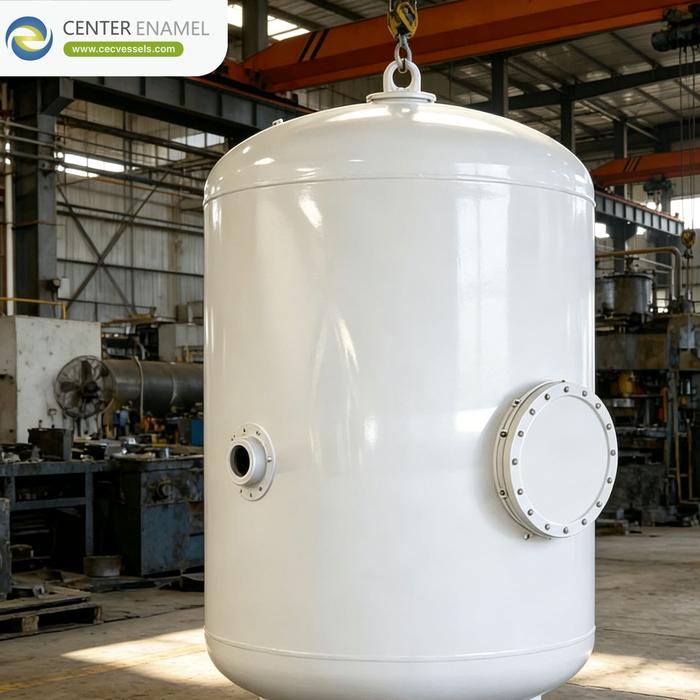
A full vacuum pressure vessel is a vessel designed to withstand the external pressure created when the pressure inside the vessel approaches zero absolute pressure. Under full vacuum conditions, the internal pressure is approximately 0 psia (0 kPa absolute), while the vessel may be exposed to atmospheric pressure on the outside. Unlike vessels designed mainly for internal pressure, full vacuum vessels must be designed carefully to resist external-pressure instability, buckling, and structural deformation.
Understanding full vacuum pressure vessels requires looking at what full vacuum means, how external pressure affects vessel walls, which materials are commonly used, and how the vessel is designed for vacuum service.
What Does Full Vacuum Mean?
Full vacuum refers to a condition where the absolute pressure inside a vessel approaches zero. At sea level, atmospheric pressure outside the vessel is approximately 14.7 psi absolute (101.3 kPa). Therefore, a vessel operating under full vacuum can experience an external-to-internal pressure difference of approximately 14.7 psi at sea-level atmospheric conditions.
The term full vacuum does not mean that the vessel contains absolutely no gas under every practical operating condition. Instead, it describes a very low internal absolute pressure approaching a theoretical perfect vacuum.
For example, if a vessel has an internal pressure of approximately 0 psia and the surrounding atmospheric pressure is approximately 14.7 psia, the vessel wall experiences a significant external pressure differential.
This distinction is important when selecting a vacuum pressure vessel, because external pressure can affect the structural stability of the vessel differently from internal pressure.
How Does a Full Vacuum Pressure Vessel Work?
A full vacuum pressure vessel works by maintaining a controlled low-pressure environment inside the vessel while its shell and structural components resist the pressure acting from outside.
A vacuum system typically removes gases from the vessel until the required internal pressure is reached. A vacuum pump, vacuum ejector, condenser, or other vacuum-generation equipment may be connected to the vessel depending on the process.
When the internal pressure decreases, atmospheric pressure outside the vessel becomes relatively greater. The vessel therefore needs sufficient structural stability to maintain its shape.
The main components of a vacuum vessel can include the shell, heads, nozzles, supports, flanges, manways, reinforcement components, vacuum connections, and process fittings. The configuration depends on the operating conditions and application.
Why Does External Pressure Matter for Full Vacuum Service?
The primary structural consideration for a full vacuum vessel is external pressure.
When a vessel operates under internal pressure, the pressure generally acts outward against the vessel wall. When the same vessel is subjected to vacuum internally, atmospheric pressure acts inward on the shell.
This inward loading can cause buckling or sudden deformation if the shell does not have sufficient structural stability.
The resistance of a vessel to external pressure depends on several factors, including:
Vessel diameter
Shell thickness
Shell length
Material properties
Head geometry
Stiffening rings
Support configuration
Operating temperature
Vacuum level
Fabrication tolerances
A large-diameter, thin-wall vessel can be more sensitive to external-pressure instability than a smaller or thicker vessel. Consequently, simply increasing the internal-pressure rating of a vessel does not automatically make it suitable for full vacuum operation.
How Are Full Vacuum Pressure Vessels Designed?
The design of a full vacuum pressure vessel focuses on preventing structural instability under external pressure.
Engineers evaluate the vessel geometry, material, thickness, unsupported shell length, head configuration, and reinforcement requirements. Depending on the vessel dimensions and operating conditions, stiffening rings or other structural reinforcement may be incorporated into the design.
The design process generally considers:
Design Pressure: The vessel must be evaluated for the specified vacuum condition, which may approach 0 psia internal pressure for full vacuum service.
External Pressure: The pressure difference between the inside and outside of the vessel is a major design consideration.
Shell Geometry: Diameter, length, thickness, and shape influence the vessel's resistance to buckling.
Head Design: Elliptical, torispherical, hemispherical, or other head configurations may be selected according to the application and design requirements.
Stiffening: Reinforcement rings can increase resistance to external-pressure buckling in suitable vessel configurations.
Temperature: Material strength and allowable stresses can change with operating temperature, so temperature must be included in the design evaluation.
Fabrication: Weld quality, dimensional tolerances, ovality, and local discontinuities can influence structural performance under vacuum.
For vessels manufactured according to applicable pressure-vessel standards, the design should be verified using the requirements of the relevant code and the specified operating conditions.
What Materials Are Used for Full Vacuum Pressure Vessels?
Common full vacuum pressure vessel materials include carbon steel, stainless steel, and other alloys selected according to process requirements.
Stainless steel is frequently used when corrosion resistance, cleanliness, or compatibility with chemical and food-processing applications is important. Grades such as 304 stainless steel and 316 stainless steel may be considered depending on the process medium and environmental conditions.
Carbon steel can be suitable for applications where the process medium and operating environment allow its use.
Material selection should consider corrosion resistance, temperature, mechanical properties, process compatibility, fabrication requirements, and applicable design standards.
The material alone does not determine whether a vessel is suitable for full vacuum service. Vessel geometry and structural design are equally important, particularly because external-pressure stability is strongly influenced by shell dimensions and configuration.
What Is the Difference Between a Vacuum Vessel and a Pressure Vessel?
A vacuum vessel is designed to operate with pressure inside the vessel lower than the surrounding pressure. A conventional pressure vessel is generally associated with containing internal pressure that is higher than the surrounding environment.
The loading conditions are therefore different.
A pressure vessel primarily needs to resist forces acting outward from internal pressure. A full vacuum vessel needs to resist external pressure acting inward toward the vessel interior.
Some vessels can be designed for both internal pressure and full vacuum conditions. Such vessels require evaluation for both loading cases, because the most demanding structural condition may differ depending on the vessel geometry and operating conditions.
This is why a standard pressure-rated vessel should not automatically be assumed to be suitable for full vacuum service.
What Causes Vacuum Collapse in a Vessel?
Vacuum collapse occurs when a vessel loses structural stability under external pressure and its shell deforms or buckles.
Several factors can contribute to vacuum collapse:
Insufficient shell thickness
Excessive unsupported shell length
Large vessel diameter
Inadequate stiffening
Improper vacuum design
Excessive external pressure
Elevated operating temperature
Manufacturing deviations
Local shell deformation
Incorrectly specified operating conditions
A vessel can therefore fail under external pressure even when the absolute pressure difference appears relatively moderate. The critical issue is often structural stability rather than material strength alone.
Proper vacuum vessel design evaluates the vessel against external-pressure buckling rather than relying only on tensile strength calculations.
Where Are Full Vacuum Pressure Vessels Used?
Full vacuum pressure vessels are used in industrial processes where low internal pressure is required or where vacuum conditions can occur during operation, cleaning, cooling, condensation, or process evacuation.
Typical applications include:
Chemical processing
Pharmaceutical processing
Food and beverage processing
Evaporation systems
Distillation systems
Vacuum drying
Solvent recovery
Chemical separation
Industrial mixing
Storage and process systems
Heat treatment and thermal processing
For example, an evaporator vessel may operate under reduced pressure to lower the boiling temperature of a process liquid. A vacuum reactor may use reduced pressure as part of the reaction or processing system. In these cases, the vessel must be designed according to the actual vacuum operating condition.
What Is a Full Vacuum Rated Vessel?
A full vacuum rated vessel is a vessel specifically designed and verified to withstand the specified external-pressure condition corresponding to full vacuum service.
At sea-level atmospheric pressure, full vacuum represents an external pressure differential of approximately 101.3 kPa or 14.7 psi when the internal pressure approaches 0 absolute pressure.
However, the required design is not determined by this pressure value alone. Vessel diameter, shell length, thickness, material, temperature, head configuration, reinforcement, and fabrication tolerances all influence the vessel's external-pressure capacity.
For this reason, a full vacuum rating should be based on engineering calculations and the applicable vessel design standard rather than simply assigning a pressure value to the vessel.
Can a Pressure Vessel Handle Full Vacuum?
A pressure vessel can handle full vacuum only when its design and construction have been specifically evaluated for the applicable external-pressure condition.
A vessel designed solely for internal pressure may not have sufficient resistance to external-pressure buckling. The same vessel may therefore require additional shell thickness, shorter unsupported lengths, stiffening rings, modified head geometry, or other design changes to operate safely under full vacuum.
When a vessel will experience both positive internal pressure and vacuum, both operating conditions should be included in the engineering design.
Full Vacuum Pressure Vessel Design Considerations
The main full vacuum pressure vessel design considerations include:
Vacuum Level: Define whether the vessel requires partial vacuum or full vacuum capability.
External Pressure: Establish the maximum pressure differential expected during operation.
Vessel Dimensions: Diameter and unsupported shell length have a significant influence on external-pressure stability.
Wall Thickness: Shell thickness must be selected according to the design calculation and applicable code requirements.
Stiffening Rings: Reinforcement may be required for vessels with long or large-diameter cylindrical shells.
Operating Temperature: Temperature affects material properties and allowable design conditions.
Process Connections: Nozzles, manways, openings, and attachments should be evaluated as part of the overall vessel design.
Support Structure: Legs, skirts, saddles, and other supports must accommodate the vessel configuration and operating loads.
Fabrication Quality: Dimensional accuracy, welding, ovality, and local imperfections can influence vacuum stability.
These factors should be considered together rather than treating vacuum resistance as a simple wall-thickness requirement.
Full Vacuum Pressure Vessel Manufacturer Selection
When selecting a full vacuum pressure vessel manufacturer, buyers should evaluate the manufacturer's engineering capabilities, fabrication experience, material options, quality control, and ability to design vessels for external-pressure conditions.
Important technical information to provide to the manufacturer can include:
Providing accurate process data allows the manufacturer to evaluate the vessel for the actual operating conditions rather than designing from incomplete assumptions.
Center Enamel provides industrial process equipment and vessel solutions designed around application-specific requirements. Full vacuum capability can be incorporated into the engineering considerations when the process requires a vessel to operate under significant external pressure.
Frequently Asked Questions About Full Vacuum Pressure Vessels
What pressure is considered full vacuum?
Full vacuum is approximately 0 psia absolute pressure. At sea level, this creates an external pressure difference of approximately 14.7 psi or 101.3 kPa across the vessel wall.
Is full vacuum the same as zero pressure?
Full vacuum is approximately zero absolute pressure, but pressure terminology matters. Zero absolute pressure represents an idealized vacuum condition, while gauge-pressure measurements use atmospheric pressure as their reference.
Why can a vessel collapse under vacuum?
A vessel can collapse under vacuum because external atmospheric pressure can cause shell buckling when the vessel does not have sufficient structural stability.
Does a thicker vessel always provide better vacuum resistance?
Increasing shell thickness can improve resistance to external pressure, but vacuum resistance depends on the entire vessel geometry and design. Diameter, unsupported length, stiffening, head design, material, temperature, and fabrication tolerances also affect stability.
Can stainless steel vessels operate under full vacuum?
Yes. Stainless steel vacuum vessels can be designed for full vacuum service when the material, dimensions, geometry, temperature, and external-pressure requirements are properly evaluated.
What is the main difference between internal pressure and full vacuum design?
The key difference is the direction of the pressure loading. Internal pressure acts outward, while vacuum conditions cause external pressure to act inward. Full vacuum design therefore places particular emphasis on resistance to buckling and structural instability.
What information is needed to design a full vacuum vessel?
Important information includes the vacuum level, internal pressure, vessel dimensions, operating temperature, process medium, material, vessel configuration, connections, support arrangement, and applicable design standard.
Choosing the Right Full Vacuum Pressure Vessel
A full vacuum pressure vessel is more than a conventional pressure vessel operated at reduced pressure. It is a vessel specifically designed to maintain structural stability when internal pressure approaches zero absolute pressure and external pressure acts on the shell.
The most important considerations include vacuum level, external pressure, vessel geometry, wall thickness, material, temperature, stiffening, head configuration, and applicable design standards. By evaluating these factors together, engineers can develop a vessel configuration suited to the required vacuum process.
For industrial applications involving vacuum vessels, vacuum reactors, evaporators, separation equipment, and process vessels, working with an experienced manufacturer can help align the vessel design with actual process conditions and project requirements.


