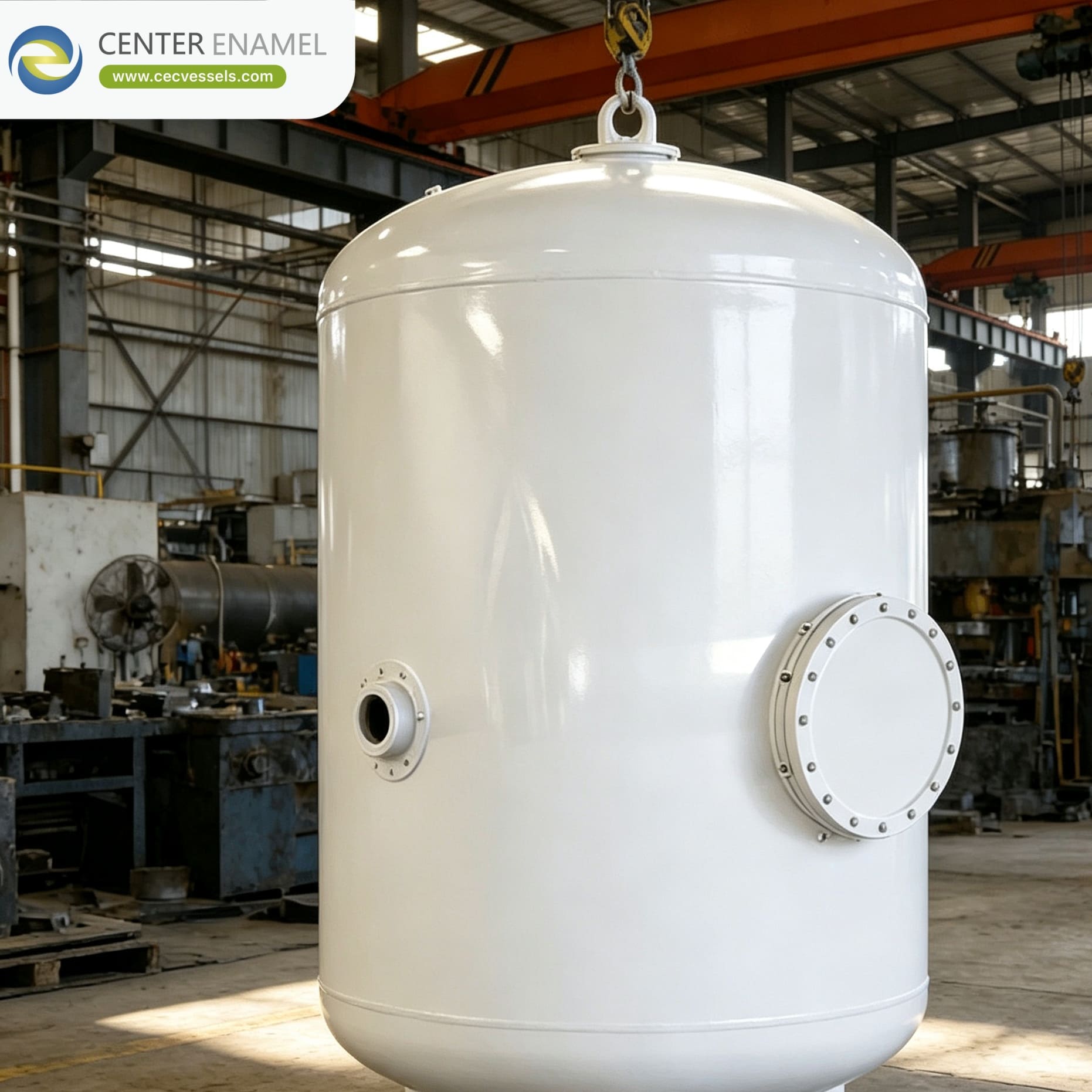
What Is a Reaction Vessel? Design, Jacket Types, Agitators & Uses
A Reaction Vesselis an industrial container designed to carry out chemical reactions under controlled temperature and mixing conditions. It is commonly used in chemical, pharmaceutical, food processing, and specialty chemical manufacturing. Also known as a Reactor Vessel, this equipment combines a vessel body, heating or cooling jacket, agitator, and control instruments to provide a suitable environment for chemical reactions. Depending on production requirements, reaction vessels can be customized in different capacities, materials, structures, and configurations to handle various liquid, solid, and gas-liquid reaction processes. How Does a Reaction Vessel Work?A Reaction Vesselworks by combining material feeding, mixing, temperature control, and chemical reaction operations in one integrated system. A typical batch reaction process involves the following steps:
lMaterial Charging:Raw materials, solvents, and other ingredients are introduced into the vessel through charging nozzles or manholes. lMixing:The agitator starts rotating to distribute the materials evenly and promote contact between different components. lHeating or Cooling:Steam, hot water, thermal oil, or cooling water circulates through the jacket to regulate the internal temperature. lChemical Reaction:The materials react under the selected operating conditions while the control system monitors important process parameters. lProduct Discharge:After the reaction is completed, the finished material is discharged through the bottom outlet or transfer pipeline. lCleaning:The vessel is cleaned manually or through a Clean-in-Place (CIP) system before the next production batch.
This operating process allows manufacturers to maintain consistent mixing and temperature conditions throughout production. What Are the Main Components of a Reaction Vessel?An industrial Reactor Vesselconsists of several essential components that work together to support chemical processing.
The configuration of each component depends on the reaction process, material properties, production capacity, and equipment specifications. What Are the Different Types of Reaction Vessel Jackets?The jacket is an important part of a jacketed reaction vesselbecause it provides the heat transfer surface required for heating and cooling. Different jacket structures are available to accommodate different production requirements. 1. Full JacketA full jacketconsists of an outer shell surrounding the main vessel body. The space between the two walls allows heating or cooling media to circulate. Common heat transfer media include:
lSteam lHot water lCooling water lThermal oil lGlycol solutions
Full jackets provide a relatively large heat transfer area and are widely used in general chemical processing and batch production. 2. Half-Pipe JacketA half-pipe jacket, also called a limpet coil jacket, consists of half-pipe sections welded spirally around the outside of the vessel. The design creates dedicated channels for heating or cooling fluids. Its relatively narrow flow passages help improve fluid velocity and heat transfer performance. Half-pipe jackets are commonly selected for applications requiring specific thermal fluid circulation and customized heating or cooling arrangements. 3. Dimple JacketA dimple jacketis constructed using a formed metal sheet with regularly distributed dimples welded to the vessel surface. The dimples maintain the spacing between the jacket sheet and vessel wall while creating fluid flow channels. Its lightweight construction and relatively uniform distribution of heating or cooling media make it suitable for various industrial tanks and reaction vessels. 4. Internal CoilAn internal coilconsists of a spiral or serpentine tube installed inside the reaction vessel. Heating or cooling fluid flows through the coil and exchanges heat directly with the surrounding process material. Internal coils provide additional heat transfer area and can be combined with an external jacket according to process requirements. What Types of Agitators Are Used in Reaction Vessels?The agitator is another essential component of a Reaction Vessel. It maintains material circulation, improves mixing uniformity, and supports heat transfer throughout the reaction process. Different agitators are selected according to material viscosity, mixing requirements, and production characteristics.
For materials with changing viscosity during reactions, the agitator design should consider the full range of process conditions. What Materials Are Used to Manufacture Reaction Vessels?The material selection of a Reactor Vesseldirectly affects its service life, corrosion resistance, and compatibility with the processed materials. Common manufacturing materials include:
lStainless Steel 304:Suitable for many general industrial mixing and reaction applications. lStainless Steel 316L:Commonly used in chemical and pharmaceutical processes requiring improved corrosion resistance and cleanable surfaces. lCarbon Steel:Used for applications involving compatible non-corrosive materials. lDuplex Stainless Steel:Selected for applications requiring specific mechanical and corrosion-resistant properties. lHastelloy Alloys:Used for certain chemical processes involving more demanding material compatibility requirements. lGlass-Lined Steel:Provides a glass-coated internal surface for applications requiring chemical resistance.
The final material should be selected according to chemical composition, operating temperature, cleaning requirements, and applicable manufacturing standards. What Are the Industrial Applications of Reaction Vessels?Reaction Vesselsare widely used in industrial manufacturing because they provide controlled mixing, heating, cooling, and reaction processing. Chemical IndustryChemical manufacturers use reaction vessels for chemical synthesis, polymerization, neutralization, esterification, and other chemical reactions. They can be configured with different agitators and jacket structures to accommodate specific production processes. Pharmaceutical IndustryIn pharmaceutical manufacturing, Reactor Vesselsare used for API synthesis, intermediate production, crystallization, and formulation processes. Stainless steel 316L construction, polished internal surfaces, and CIP-compatible designs are common requirements for pharmaceutical applications. Food and Beverage IndustryReaction vessels are used for preparing syrups, blending ingredients, processing liquid products, and carrying out temperature-controlled production operations. Sanitary construction and suitable cleaning arrangements help maintain product consistency. Petrochemical IndustryIn petrochemical production, reaction vessels support resin manufacturing, polymerization, chemical blending, and other process operations. Equipment configuration depends on the characteristics of the raw materials and the required reaction conditions. New Energy and Battery MaterialsReaction vessels are also used in battery material manufacturing for slurry preparation, chemical synthesis, material mixing, and other production processes. Temperature control and mixing uniformity are important factors in maintaining consistent material quality. How to Choose the Right Reaction Vessel?Selecting a suitable Reaction Vesselrequires consideration of several technical and operational factors. The following points should be evaluated before equipment design and manufacturing:
lProduction Capacity:Determine the required working volume and batch size. lMaterial Characteristics:Identify the viscosity, density, chemical composition, and physical properties of the processed materials. lOperating Temperature:Define the required heating and cooling temperature range. lJacket Configuration:Select a full jacket, half-pipe jacket, dimple jacket, or internal coil according to heat transfer requirements. lAgitator Design:Choose an appropriate agitator based on material viscosity and mixing objectives. lConstruction Material:Select stainless steel, carbon steel, or special alloys according to material compatibility. lControl System:Determine the required temperature monitoring, speed adjustment, and automated operating functions. lCleaning Requirements:Consider internal surface finishing, bottom discharge design, and CIP arrangements.
A customized design based on actual process parameters helps ensure that the reaction vessel matches the production line. Frequently Asked Questions About Reaction VesselsQ1: What is the difference between a reaction vessel and a reactor vessel? The terms Reaction Vesseland Reactor Vesselare generally used interchangeably in industrial manufacturing. Both refer to equipment designed to contain and support chemical reactions. Reactor often describes the complete processing unit, including its agitator and auxiliary equipment. Q2: What is the purpose of a jacket in a reaction vessel? The jacket provides a circulation space for heating or cooling media. It transfers thermal energy through the vessel wall to maintain the required process temperature. Q3: Which agitator is best for a reaction vessel? The selection depends on material viscosity and mixing requirements. Anchor agitators are suitable for viscous materials, turbine agitators support dispersion, and propeller agitators are commonly used for low-viscosity liquids. Q4: What is the most common material for reaction vessels? Stainless steel 304 and 316L are widely used. The appropriate material depends on chemical compatibility, corrosion resistance, operating temperature, and production requirements. Q5: Can reaction vessels be customized? Yes. Industrial reaction vessels can be customized in capacity, vessel dimensions, jacket structure, agitator type, material, nozzle arrangement, and control system according to specific process requirements. Q6: What industries commonly use reactor vessels? Major application industries include chemical manufacturing, pharmaceuticals, food and beverage processing, petrochemicals, cosmetics, and battery material production. Customized Reaction Vessel Solutions for Industrial ProductionA well-designed Reaction Vesselintegrates material containment, temperature control, and efficient mixing into one processing unit. Its jacket configuration, agitator selection, construction material, and internal structure all influence overall production performance. For industrial manufacturers, selecting the right Reactor Vesselmeans matching equipment specifications with actual process requirements. Customized reaction vessels can support different production capacities and applications across chemical, pharmaceutical, food processing, and new energy industries.
|