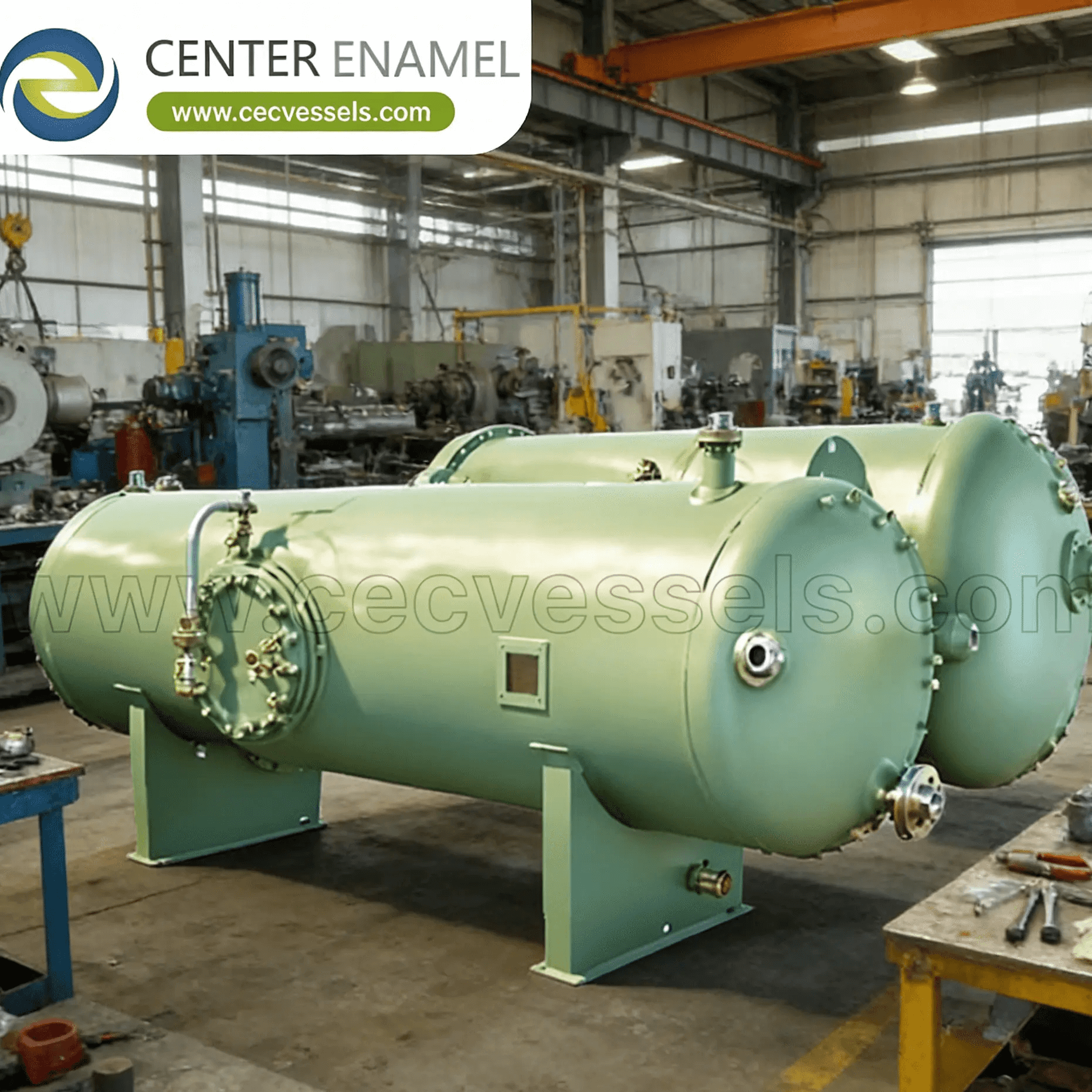
What Is a Reactor in the Petrochemical Industry?
In modern petrochemical refining and chemical synthesis, a chemical reactor serves as the core processing vessel where raw hydrocarbon feedstocks undergo molecular transformation. Selecting the proper vessel geometry, mixing dynamic, and thermal management system is essential for maintaining uniform chemical yields and process efficiency. Partnering with a skilled Petrochemical Industry Reactor Manufacturer allows plant engineering teams to deploy custom-engineered reaction systems designed for continuous production loops. Sourcing these specialized process vessels from a premier China Petrochemical Industry Reactor Manufacturer ensures full compliance with international fabrication codes and strict manufacturing standards. To support global energy and material infrastructure, Center Enamel designs and constructs custom-built pressure vessels, specialized process chambers, and durable containment hardware engineered for long-term operational performance.
Central Role of Reactors in Petrochemical ManufacturingWithin modern petrochemical processing complexes, specialized reactors function as the primary units for synthesizing basic building blocks into high-value chemical products. Rather than serving as static holding vessels, petrochemical reactors dynamically manage temperature, residence time, and fluid circulation to optimize reaction kinetics across liquid, gaseous, and multi-phase fluid streams.
The primary thermodynamic and mechanical objective of these specialized reaction enclosures is to maintain a controlled fluid environment that promotes chemical bonding while preventing unwanted side reactions. By maintaining precise control over internal mixing, heat exchange, and reactant contact rates, the vessel ensures consistent molecular conversions and high purity in downstream streams.
Properly engineered internal mixing impellers, flow distribution trays, and surface finishes prevent fluid stagnant zones and local hot spots. This steady mechanical performance reduces byproduct formation, lowers energy consumption during heating or cooling cycles, and supports continuous processing across the plant network.
Core Physical Principles of Petrochemical Reactor OperationTo understand how a petrochemical reactor functions, it is necessary to examine the primary physical mechanisms that govern reaction performance within the vessel chamber:
1. Reaction Kinetics and Residence Time ControlChemical conversion rates depend on the duration that reactant molecules remain inside the vessel under favorable reaction conditions. Petrochemical reactors are engineered to provide precise fluid residence times, ensuring complete molecular conversion before the product stream exits the chamber.
2. Thermal Balance and Heat Transfer EfficiencyChemical reactions in petrochemical processing often release or absorb significant thermal energy. Maintaining a steady reaction rate requires continuous temperature regulation via dimple jackets, half-pipe coils, or internal heat exchange tubes. Effective thermal control prevents localized overheating, protects product purity, and maintains stable operating conditions.
3. Mass Transfer and Fluid MixingFor multi-phase reactions involving gas-liquid or liquid-solid mixtures, mass transfer rates between phases limit overall conversion speed. High-efficiency mixing assemblies, internal baffles, and fluid distribution grids break up gas bubbles and disperse solid catalysts, maximizing interfacial contact area throughout the liquid volume.
Dominant Types of Reactors Used in the Petrochemical IndustryPetrochemical equipment fabricators build several distinct reactor configurations, each tailored to specific fluid kinetics, phase interactions, and operational workflows:
1. Continuous Stirred-Tank Reactors (CSTR)CSTR configurations are widely deployed in liquid-phase petrochemical synthesis where continuous feed and discharge streams maintain a constant fluid level inside the vessel. High-efficiency mechanical agitators keep the reaction mass thoroughly mixed, providing uniform fluid composition and temperature throughout the chamber.
2. Plug Flow and Tubular Reactors (PFR)In a plug flow reactor, fluid passes through continuous cylindrical channels with minimal back-mixing along the flow path. As reactants travel through the tube length, chemical conversion progresses steadily from inlet to outlet. PFR designs offer high heat-transfer surface area relative to fluid volume, making them ideal for continuous gas-phase cracking and oxidation processes.
3. Fixed-Bed Catalytic ReactorsWhen converting hydrocarbon gas or liquid streams using solid heterogeneous catalysts, fixed-bed reactors are heavily utilized. The fluid stream passes through stationary beds of porous catalyst pellets, facilitating molecular rearrangement without requiring downstream catalyst separation equipment.
4. Fluidized-Bed ReactorsFluidized-bed reactors suspend fine catalyst particles in an upward-flowing gas stream, creating a dynamic fluid-like mixture. This configuration provides exceptional fluid contact and rapid heat transfer rates, making it well-suited for high-tonnage olefin synthesis and catalytic cracking.
Petrochemical Reactor Selection MatrixTo assist facility design engineers and procurement teams in selecting the optimal equipment configuration for specific process chemistry, the following table compares the primary reactor configurations used across the petrochemical sector:
Key Structural Sub-Components of Petrochemical ReactorsAn industrial-grade petrochemical reactor manufactured by an elite equipment builder is an assembly of precision-machined sub-components designed for strict operational reliability and chemical containment:
Heavy Vessel Casing Shell: The main protective outer container fabricated from thick, certified steel plates with verified full-penetration welds.
External Thermal Jackets: Dimple jackets, half-pipe limpet coils, or conventional shell jackets welded around the outer wall to circulate steam or thermal fluids for temperature regulation.
Agitation Drive Assemblies: Heavy-duty top-entry or bottom-entry drive shafts equipped with pitched-blade, turbine, or anchor impellers to deliver required shear rates.
Mechanical Shaft Seals: High-performance double mechanical seals engineered to prevent fluid leakage around rotating drive shafts under continuous service.
Internal Baffle Networks: Vertical baffle plates welded to the interior wall to disrupt rotational swirling and promote top-to-bottom axial mixing.
Polished Charging Ports and Nozzles: Heavy-duty flanged ports with smooth internal radii engineered to allow secure connection to transfer piping, instrument probes, and reagent feeds.
Flush Discharge Valve Assemblies: Bottom outlet valves designed to fit flush with the inner shell curve, eliminating stagnant dead zones at the base of the vessel.
Material Science and Advanced Surface ProtectionsThe service longevity and operational reliability of a petrochemical reactor depend on the structural materials and protective surface treatments selected during manufacturing. Petrochemical feedstocks and intermediate streams frequently carry organic acids, dissolved gases, and corrosive catalysts that can degrade bare steel surfaces over time.
For standard utility loops and non-corrosive hydrocarbons, high-strength carbon steels like Q345R or SA516 Grade 70 provide a durable structural frame. To protect internal surfaces against oxidation and moisture exposure, vessel walls receive specialized protective linings, such as thick-film chemical-resistant epoxy coatings, which form a smooth barrier that prevents rust.
When handling aggressive chemical mixtures, sour water, or high-purity chemical intermediates, engineers specify premium stainless steel alloys such as 304L or 316L, or high-nickel alloys like Hastelloy. The molybdenum content in 316L stainless steel provides native resistance against localized pitting and chemical attack, ensuring structural integrity over decades of continuous service.
Manufacturing Excellence and Quality Assurance by Center EnamelCenter Enamel has earned a prominent position in the international industrial equipment market by expanding its core capabilities from advanced material engineering into comprehensive process vessel, storage shell, and reactor fabrication. Operating as a reliable Pressure Vessel Manufacturer, the company integrates custom engineering design, state-of-the-art production infrastructure, and strict quality control systems to deliver reliable hardware worldwide. A major technical advantage of Center Enamel is its deep knowledge of protective surface engineering and metallurgy. For fluid containment systems handling challenging chemical solutions, utility water, or corrosive process streams, the company utilizes high-grade stainless steel alloys alongside proprietary protective lining technologies. These specialized surface barriers chemically bond the structural strength of steel with the inert resistance of glass coatings, creating an impermeable interior surface that shields the structure from continuous chemical exposure.
In addition, Center Enamel utilizes advanced engineering tools, such as Finite Element Analysis and Computational Fluid Dynamics, to evaluate fluid behavior, stress distributions, and thermal profiles inside the vessel shell before production begins. This detailed simulation process ensures that internal baffles, mixing impellers, and fluid nozzles are fully optimized to deliver maximum reaction efficiency and long-term structural stability.
Regulatory Certification Codes and Construction StandardsTo ensure that industrial chemical reactors and process vessels operate safely throughout their lifecycle, all engineering and manufacturing stages must conform to recognized national and international design codes. ASME Boiler and Pressure Vessel Code (Section VIII)The ASME code is a globally recognized standard for pressurized equipment and process containers. Section VIII sets clear engineering formulas for calculating minimum shell thicknesses, nozzle reinforcement zones, and structural load margins. Compliance with ASME standards confirms that a manufacturer maintains material traceability, uses certified welding procedures, and performs thorough non-destructive testing on critical welds.
GB/T 150.1-150.4-2024This newly updated national standard for metal pressure vessels in China provides modern guidelines regarding finite element stress analysis, advanced material classifications, and automated testing methods. Adherence to GB/T 150.1-150.4-2024 ensures full compliance with domestic regulatory frameworks and guarantees dependable performance in industrial utility grids.
BS EN 13445This European standard governs the design, production, and testing of unfired pressure vessels across international markets. It emphasizes detailed stress analysis techniques, helping design engineers optimize material consumption while ensuring high fatigue resistance under long-term operational loading cycles. Strategic Integration with Secondary Process SystemsHigh-efficiency petrochemical reactors operate as central process nodes within broader plant layouts. Center Enamel designs and constructs a wide variety of supporting pressure vessels and process equipment to create unified, high-efficiency processing loops:
Steam Distribution Cylinders: Organizing and directing bulk steam supplies from main boilers to reactor heating jackets, reboilers, and preheating systems across the facility.
Condensate Recovery Tanks: Accumulating hot purified water and condensed steam from thermal cycles, enabling immediate heat recovery to minimize plant fuel consumption.
Coalescing Phase Separators: Extracting moisture, grease, and suspended droplets from fuel gas lines or compressed air loops to keep heat transfer surfaces completely clean.
Water Treatment Resin and Adsorption Tanks: Purifying incoming utility water and treating process water streams to prevent scale accumulation inside thermal jackets.
Procurement Guidelines for Engineering Procurement TeamsSourcing heavy industrial reactors requires procurement managers and plant design teams to balance initial capital investment with long-term operational efficiency and equipment longevity. Evaluating a potential manufacturing partner involves reviewing their technical design capabilities, production infrastructure, and international project track record.
The procurement process begins with a comprehensive review of feed characteristics and operating parameters. Sourcing teams must provide accurate data regarding fluid viscosity profiles, reaction heat generation, operating temperature ranges, mixing intensity requirements, and fluid corrosiveness. Providing detailed process parameters allows the equipment manufacturer to select the ideal internal geometry, mixing assembly, thermal jacket style, and surface metallurgy to prevent operational issues in the field. Global Industry Trends and Future OutlookThe global petrochemical industry is entering a transformative period focused on sustainable manufacturing, automated process control, and high-efficiency plant designs. Chemical manufacturing facilities are increasingly adopting custom-engineered process units that reduce energy consumption, minimize byproduct formation, and optimize fluid dynamics within smaller physical footprints.
To meet these changing global market requirements, leading equipment manufacturers in China have upgraded their production facilities with modern manufacturing technology. Automated laser cutting systems, robotic welding stations, and non-destructive digital testing laboratories ensure high precision during vessel fabrication. This computerized manufacturing workflow guarantees that custom-built reactor components accurately match original digital design models.
The next technological advance involves integrating real-time digital monitoring sensors directly into the vessel shell and agitator assemblies. Built-in electronic sensor arrays can monitor internal liquid levels, mixing torque, heat flux rates, and surface conditions continuously, transmitting performance data directly into central SCADA systems. This real-time visibility allows operators to optimize reaction yields, maintain uniform chemical quality, and schedule preventive maintenance without interrupting continuous facility operations.
In conclusion, establishing a reliable petrochemical facility requires working with an experienced manufacturer that combines material science expertise, advanced fabrication capabilities, and strict compliance with international engineering codes. Sourcing specialized process hardware built to high quality standards ensures long-term operational security, high reaction efficiency, and stable processing performance. Center Enamel remains dedicated to supporting global industrial infrastructure by fabricating high-performance process hardware that meets rigorous technical specifications worldwide.
|