What Is A Reactor In Water Treatment?
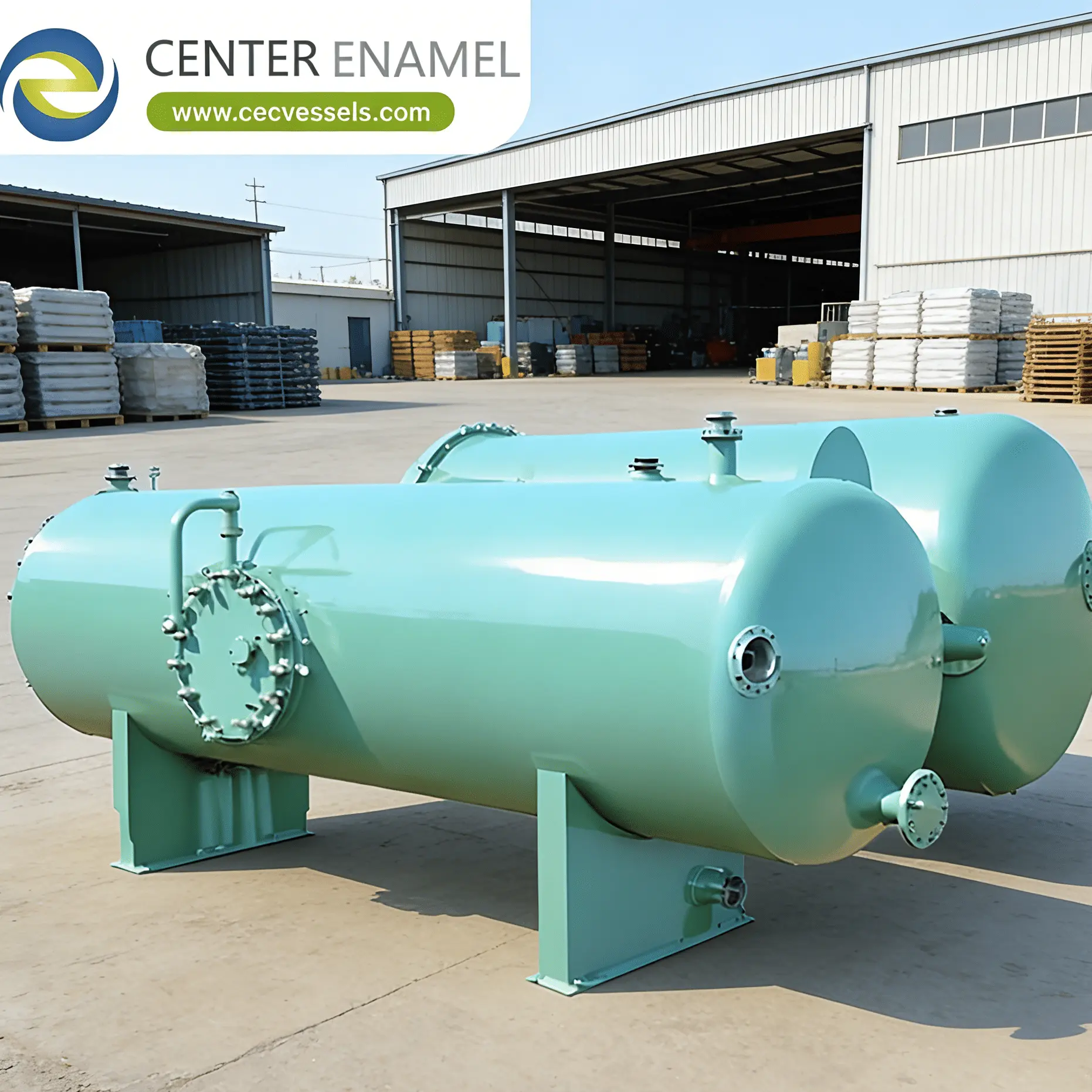
In the modern environmental engineering sector, municipal utility networks, and large-scale industrial processing complexes, the management and purification of wastewater streams represent an essential requirement. A premium process vessel operates as a central containment loop where contaminated fluid matrices experience multi-phase separation, chemical neutralization, or intensive biological transformations. Because modern environmental regulations demand high standards of fluid purity before discharge, understanding what is a reactor in water treatment reveals a sophisticated field of engineering dedicated to resource recovery and clean water production. As an experienced Water Treatment Reactor Manufacturer, Center Enamel develops high-performance fluid treatment units, industrial storage systems, and customized chemical reactors tailored for diverse facility layouts. By adhering to strict international engineering codes including the ASME BPVC, BS EN 13445, and GB/T 150.1-150.4-2024, these heavy-duty units ensure excellent structural integrity and reliable material compatibility for global industrial partners.
The Foundational Role of a Reactor in Water TreatmentTo appreciate the importance of these specialized process units, it is necessary to examine how a water treatment reactor differs from a standard storage tank. While a basic tank simply holds or stores a static volume of water, a reactor is actively designed to facilitate and accelerate physical, chemical, or biological transformations inside its structural shell.
As a prominent provider of China Water Treatment Reactor Manufacturer technology, Center Enamel structures its fabrication methodologies around these dynamic processing requirements. Inside a water treatment reactor, raw influent containing suspended solids, dissolved organic carbon, and chemical impurities undergoes controlled interactions. The vessel wall provides a stable structural boundary, isolating the multi-phase processing broth from the outside environment and allowing internal thermal regulation systems, gas injection manifolds, and high-torque mixing assemblies to operate uniformly, maximizing contaminant removal rates.
Core Classifications of Water Treatment ReactorsEnvironmental processing facilities deploy distinct reactor architectures depending on whether the target contaminant requires chemical breakdown or biological digestion:
1. Activated Sludge Reactors (ASR) and Aerobic BioreactorsBiological wastewater purification relies heavily on micro-organisms to consume and stabilize dissolved organic pollutants. Activated Sludge Reactors represent the most widely utilized biological treatment technology in modern municipal and industrial plants. In these systems, wastewater is continuously mixed with a concentrated suspension of active bacteria, forming a complex biological matrix known as mixed liquor. Air or purified oxygen is continuously injected through fine-bubble diffusion grids at the base of the vertical shell to maintain an optimal dissolved oxygen profile. This steady oxygen supply allows aerobic bacteria to rapidly oxidize organic carbon compounds, transforming dissolved pollutants into stable biomass solids that can be easily separated downstream.
2. Anaerobic Digestor ReactorsFor heavy industrial effluents, agricultural processing slurry, and concentrated municipal sludge, facilities utilize anaerobic digestor reactors. Unlike aerobic systems, these massive cylindrical vessels are sealed completely to eliminate any presence of oxygen. Specialized anaerobic bacteria thrive in this enclosed environment, breaking down complex organic molecules through a multi-stage biochemical sequence including hydrolysis, acidogenesis, and methanogenesis. A primary benefit of this reactor configuration is the generation of biogas, which can be captured from the vessel head and utilized as a renewable energy source to power plant utilities.
3. Chemical Precipitation and Neutralization VesselsWhen wastewater streams contain dissolved heavy metals, complex industrial minerals, or extreme pH imbalances, biological treatment alone is insufficient. Plants deploy chemical reactors where specific neutralizing agents or coagulants are introduced under active mechanical agitation. The high-torque mixing blades ensure rapid material dispersion, causing dissolved metal ions to react chemically and form insoluble mineral precipitates. These fine solids aggregate into larger flocs that settle smoothly to the bottom discharge nozzle for mechanical removal.
4. Advanced Oxidation Reactors (AOR)For highly persistent chemical toxins, pharmaceutical residues, and complex industrial dyes that resist standard biological digestion, facilities deploy advanced oxidation units. These systems introduce strong oxidizing agents, such as ozone or hydrogen peroxide, often combined with ultraviolet (UV) radiation or specialized solid catalysts. The intensive molecular interactions within the reactor shell generate highly reactive hydroxyl radicals that break down complex organic toxins into harmless elements like carbon steel compounds, water molecules, and simple salts.
Mechanical Components of Advanced Water Treatment ReactorsEvery industrial fluid process unit produced by Center Enamel is a precision-fabricated asset built for long-term service, featuring specialized components designed to optimize fluid dynamics and operational longevity:
Heavy-Duty Cylindrical Shells: The primary fluid containment hull, constructed from rolled carbon steel or stainless steel plates joined with full-penetration automated welds verified by radiographic testing.
Formed Curved End Cover Heads: Forged ellipsoidal or torispherical dished covers that cap the cylindrical body, engineered to distribute internal stress profiles uniformly in strict accordance with GB/T 150.1-150.4-2024 specifications.
Thermal Regulation Jackets: External dimple sheets or half-pipe channels wrapped around the primary shell perimeter to circulate warm water or utility steam to maintain optimal bacterial incubation temperatures.
Internal Gas Distribution Manifolds: Comprehensive networks of perforated pipes or fine-bubble diffusers installed at the base of the shell to ensure uniform oxygen or gas distribution throughout the fluid column.
High-Torque Mixing and Agitator Assemblies: Vertical shaft systems equipped with custom paddles or hydrofoil impellers designed to maintain active suspension of biological solids without destroying delicate bacterial flocs.
Internal Structural Fluid Baffles: Vertical steel plates positioned along the inner shell perimeter to disrupt circular liquid rotation, eliminate fluid dead zones, and maximize mass transfer rates.
Vortex Breakers: Specialized structural caps placed over bottom discharge nozzles to ensure smooth fluid dynamics during liquid removal, preventing gas entrainment in downstream pump lines.
The Crucial Role of Material Selection in ManufacturingThe long-term reliability and service lifespan of a Water Treatment Reactor depend fundamentally on the metallurgy and protective coatings chosen for its construction. Because wastewater streams often contain volatile organic acids, aggressive chlorides, and gritty suspended solids, selecting the ideal material configuration is an essential engineering milestone.
High-strength carbon steel grades, such as SA516 Grade 70 or Q345R, serve as the foundational material for bulk municipal reactors due to their excellent structural toughness and cost-efficiency. When handling aggressive industrial chemical runoff, engineers specify premium stainless steel alloys like 316L, which provide superior resistance against localized chemical degradation. Furthermore, combining the mechanical strength of steel with advanced non-metallic protective barriers represents a major technical advantage. Center Enamel specializes in advanced protective surfaces, including Glass-Fused-to-Steel (GFS) and advanced enamel coatings, which fuse the mechanical strength of steel with the exceptional chemical inertness of glass, creating an interior boundary that remains completely unaffected by corrosive landfill leachate and aggressive industrial effluents over multiple decades of service.
Integration within Industrial Process NetworksIndustrial water treatment reactors do not operate as isolated hardware; they serve as central processing nodes within comprehensive engineering and energy management layouts. Center Enamel provides a comprehensive range of equipment that works in tandem with these units:
Steam Distribution Cylinders: Organizing and directing high-temperature steam lines from primary boilers to various reactor jackets or preheating exchangers across the facility.
Condensate Tanks: Collecting hot purified water and process fluids discharged from thermal steam heating loops for recycling, supporting overall facility resource conservation.
Tube Heat Exchangers: Adjusting the temperature of incoming fluid streams before they enter a biological reactor nozzle, optimizing bacterial growth conditions and preventing thermal shock.
Coalescing Fluid Separators: Purifying auxiliary fluids, compressed air streams, and cooling water loops to prevent grease or organic oils from coating heat transfer surfaces, preserving thermal conductivity.
Resin Tanks and Fiber Adsorption Tanks: Providing advanced upstream water treatment to ensure that utility cooling water loops remain entirely free of scale-forming minerals.
Engineering Design Standards and Global ComplianceThe reliability of a high-performance environmental reactor network is guaranteed by strict adherence to international fabrication codes, which define the exact design rules and quality verification protocols required for structural safety.
ASME Boiler and Pressure Vessel Code (BPVC)The ASME Section VIII is the premier global standard for pressure equipment manufacturing. It defines the exact mathematical equations for material selection, maximum allowable stress limits, wall thicknesses, and structural reinforcement for vessels handling volatile fluids under thermal loads. As a certified manufacturer, Center Enamel ensures that its reactor shells are designed with full safety coefficients for long-term operational security.
GB/T 150.1-150.4-2024The GB/T 150 series is the national standard for metal pressure vessels in China. The 2024 update represents the latest advancements in structural finite element analysis, automated welding metrics, and modern steel grade certifications. Adhering to these updated standards guarantees that vessels are optimized for modern industrial facilities and domestic project compliance.
BS EN 13445For the European market, BS EN 13445 outlines harmonized rules for unfired pressure vessels, placing a significant emphasis on material fatigue analysis and advanced non-destructive testing regimes to ensure long-term structural security under cyclic production demands.
Our high-performance pressure vessels serve a vast industrial landscape, from petroleum refining and chemical processing to food, dairy, and brewing. We deliver precision-engineered solutions for pharmaceuticals, power generation, and wastewater treatment, ensuring compliance with the world’s most stringent safety codes. Our systems are designed for peak efficiency and longevity, empowering global partners to excel in even the most challenging environments.
1. Chemical Industry Project lProject Location: Hubei, China lPressure Vessels: Resin tanks, Coalescing oil separators, Fiber adsorption tanks, Compressed air storage tanks, Condensate tanks, and Steam distribution cylinders lMaterial: Stainless Steel and Carbon Steel. lDesign Standards: GB/T 150 (Pressure Vessels) lApplication: Integrated chemical fluid processing, separation, and steam distribution for chemical plants
2. Seawater Desalination Project lProject Location: Malta lPressure Vessels: Concentrated Sulfuric Acid Storage Tanks (Vertical layout) lMaterial: Carbon Steel lDesign Standards: EN 13445 lApplication: Storage of 98% concentrated sulfuric acid.
3. Waste-to-Energy Incineration Project lProject Location: Hebei, China lPressure Vessels: Large-scale Landfill Leachate Storage and Treatment Tanks (2 Sets) lMaterial: Carbon Steel lDesign Standards: GB 50341-2003 and GB 50128-2005. lApplication: Wastewater Treatment
4. Aquaculture Wastewater Treatment Project lProject Location: Sichuan, China lPressure Vessels: Vertical Wastewater Treatment Vessels (Φ 6×16.5 m (h) 1 set; Φ 7.6×16.5 m (h) 1 set) lMaterial: Carbon Steel lDesign Standards: National standard for vertical cylindrical storage tanks. lApplication: Aquaculture Wastewater Treatment
The Center Enamel Manufacturing AdvantageChoosing Center Enamel as your production partner means connecting with an industry leader in technical innovation, advanced engineering, and top-tier industrial fabrication across all vessel classifications. Advanced Computational EngineeringOur team utilizes Finite Element Analysis (FEA) and Computational Fluid Dynamics (CFD) to digitally simulate exactly how complex wastewater fluids, air bubbles, and chemical nutrients move inside our reactor shells. This allows us to optimize nozzle locations, diffuser grids, and jacket geometries before physical production begins.
Precision Fabrication and Automated WeldingWe operate a state-of-the-art manufacturing facility equipped with automated plate rolling lines, heavy-duty CNC machining setups, and advanced automated welding networks. This commitment to precision minimizes manual variation, accelerates production timelines, and guarantees that every weld profile complies with the strict quality standards of international engineering codes.
Turnkey Manufacturing ManagementFrom initial metallurgical verification and certified weld qualifications to complete non-destructive evaluation, post-weld heat treatment, and final hydrostatic verification, Center Enamel manages the entire fabrication sequence under one roof. This comprehensive oversight ensures elite structural reliability, seamless system integration, and long-term operational success for our global industrial partners.
Summary of Environmental Supply ExcellenceIn conclusion, analyzing what is a reactor in water treatment highlights a critical technical reality where environmental science intersects directly with advanced structural engineering. Sourcing specialized equipment that matches your facility's specific volumetric flow rates, chemical mass differentials, and biological processing profiles represents the ultimate strategy for ensuring processing consistency, plant safety, and continuous production reliability. The total manufacturing throughput, purification efficiency, site safety, and operational longevity of an environmental facility depend fundamentally on the precision, material execution, and structural reliability of its underlying process containment assets. By designing and building these critical units in absolute accordance with rigorous international benchmarks like the ASME code, European EN rules, and the updated GB/T 150.1-150.4-2024 national specifications, Center Enamel consistently delivers high-performance processing equipment that maximizes purification yields, lowers facility operating costs, and ensures long-term operational success for our global industrial partners.
Looking for a reliable pressure vessel partner? From complex chemical systems to large-scale environmental projects, we turn your requirements into high-performance reality. Submit your design parameters or project specs now, and we will have a dedicated engineer reach out to you as soon as possible to discuss the next steps. |