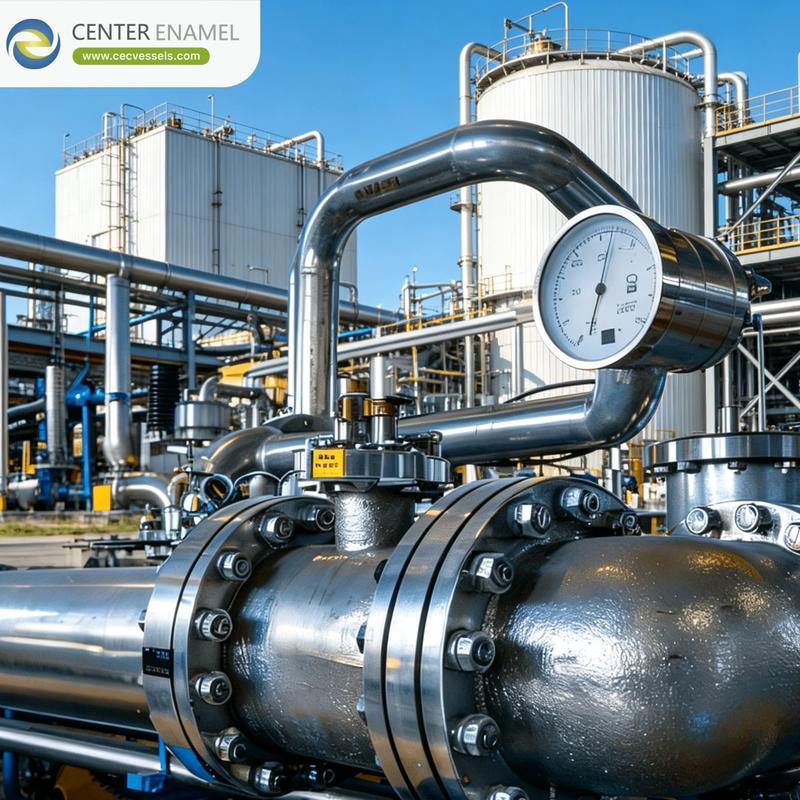
A resin reactor is an industrial vessel used to manufacture synthetic resins through controlled chemical reactions involving monomers, reactants, catalysts, solvents, or additives. Depending on the resin formulation and production method, it may incorporate an agitator, a heating or cooling jacket, temperature monitoring, feed connections, a condenser, and a controlled discharge system. Its design must match the resin chemistry, material viscosity, heat-transfer requirements, and production capacity.
What Is a Resin Reactor Used For?
A resin reactor supports the chemical reactions required to produce resins with specific molecular structures, viscosity, solids content, and performance characteristics. Unlike a vessel designed only for storage or blending, a resin reactor must maintain suitable reaction conditions throughout the production cycle.
Common applications include epoxy resin production, polyester resin synthesis, phenolic resin manufacturing, alkyd resin production, and selected acrylic resin processes. Each application has different requirements for reactant feeding, temperature control, mixing, reaction time, and final product properties.
For example, an epoxy resin reactor may be designed for controlled reactant addition and heat removal during resin synthesis. A polyester resin reactor may require sustained heating, effective mixing, and vapor removal as the reaction progresses. A phenolic resin reactor may need precise temperature management and suitable materials of construction according to the formulation.
The required equipment configuration depends on the chemistry and operating procedure. Not every resin reactor needs the same agitator, condenser, jacket arrangement, or auxiliary equipment.
How Does a Resin Reactor Work?
Resin manufacturing commonly involves several stages. The exact sequence varies with the resin type, formulation, and production method.
1. Raw Material Charging
The operator introduces specified raw materials into the reactor according to the production recipe. These materials may include monomers, reactants, solvents, catalysts, and additives. The charging system must support accurate dosing and compatibility with the materials being handled.
2. Mixing and Initial Heating
The agitator distributes the ingredients and helps establish a uniform mixture. If the recipe requires heating, a jacket or internal coil transfers heat from the selected heating medium to the batch. The heating rate must follow the process requirements rather than a universal temperature schedule.
3. Controlled Chemical Reaction
During the reaction stage, the reactor maintains the specified operating conditions, including temperature, agitation, and reaction time. Some formulations require staged reactant addition, while others require reflux, condensation, or removal of reaction by-products. Monitoring temperature and other relevant process variables helps operators assess whether the batch is progressing according to the production procedure.
4. Cooling and Product Adjustment
After the required reaction endpoint is reached, the batch may be cooled to a suitable temperature. Depending on the formulation, operators may then adjust viscosity, add approved ingredients, or prepare the resin for discharge. Cooling requirements depend on the product properties and the next production step.
5. Discharge and Cleaning
The finished resin is transferred to a storage tank, intermediate vessel, or downstream processing system. Discharge arrangements must account for the resin's viscosity and temperature. After production, the reactor is cleaned using a method compatible with the resin chemistry and equipment materials.
What Are the Main Components of a Resin Reactor?
The components of an industrial resin reactor are selected according to the required process conditions.
Reactor vessel: The main chamber contains the reacting materials. Its capacity and geometry depend on batch size, working volume, mixing requirements, and the space needed for vapor handling or other internals.
Agitator and impeller: The agitation system circulates the batch, distributes ingredients, and supports heat and mass transfer. Impeller type, shaft configuration, rotational speed, and drive torque must match the material properties and operating stages.
Heating and cooling jacket or internal coil: These components transfer heat into or out of the batch. A jacket may provide heating and cooling through a suitable circulating medium, while an internal coil can provide additional heat-transfer area when required by the design.
Temperature and process instruments: Temperature sensors, control systems, and other specified instruments help maintain the operating conditions. Depending on the process, additional measurements may include pressure, liquid level, or reaction-related variables.
Feed and discharge connections: These connections support raw material charging, product transfer, sampling, and auxiliary process operations. Their size and arrangement should reflect the materials' flow characteristics and the production sequence.
Sealing and vapor-handling systems: Shaft seals and vessel connections help maintain containment. Where the formulation generates vapors or requires reflux, the design may include a condenser, vent arrangement, or other suitable vapor-handling equipment.
How Do You Select a Resin Reactor for Different Resins?
Selecting a resin manufacturing reactor requires more than matching the vessel volume to the expected production quantity. The reactor should be designed around the formulation, reaction behavior, material properties, and operating procedure.
Resin Chemistry and Reaction Requirements
Different resins follow different reaction pathways. Epoxy, polyester, phenolic, and alkyd resin processes may require different combinations of temperature control, reactant feeding, vapor management, and reaction monitoring. The equipment specification should identify the actual resin chemistry and the process steps before the reactor configuration is finalized.
Viscosity and Agitator Selection
Viscosity can change considerably during resin production. A batch may begin as a relatively low-viscosity liquid and become much thicker as the reaction progresses.
A propeller agitator is generally suited to relatively low-viscosity liquids requiring circulation. A turbine agitator can support mixing and dispersion where its flow characteristics match the process. An anchor agitator is often considered for more viscous materials because it moves material near the vessel wall. A helical ribbon agitator may be appropriate for very viscous products when the vessel geometry and process requirements support its use.
These are selection guidelines, not universal rules. Final selection should consider viscosity across the entire batch cycle, required mixing performance, heat-transfer needs, and drive torque.
Heating and Cooling Capacity
Reaction heat, heating rate, cooling time, batch volume, and heat-transfer properties all influence jacket or coil design. A process that releases significant heat may require sufficient cooling capacity and a suitable control strategy. A process requiring extended heating may need a different heat-transfer arrangement.
The equipment supplier should evaluate the process temperature range, heating and cooling media, available heat-transfer area, and expected operating cycle before confirming the design.
Materials, Sealing, and Cleaning
Materials of construction should be compatible with the reactants, solvents, catalysts, cleaning agents, and intended operating conditions. Stainless steel may be suitable for some formulations, while other chemical systems may require different materials or protective measures. Material selection should be based on documented compatibility rather than a general assumption that one material suits every resin.
Seal selection should account for the process fluid, operating temperature, shaft arrangement, and containment requirements. Cleaning access and the ability to remove residual resin are also important, particularly when the reactor handles multiple formulations.
Production Capacity and Automation
Reactor capacity should reflect the required batch volume, working-volume allowance, reaction duration, and production schedule. The specification should also define the required level of automation, dosing accuracy, temperature control, data recording, and integration with upstream or downstream equipment.
What Is the Difference Between a Resin Reactor and a Mixing Tank?
A resin reactor and a mixing tank may both contain an agitator, but their primary functions differ.
| Feature | Resin Reactor | Mixing Tank |
|---|
| Main purpose | Conduct and control chemical reactions | Blend, dilute, or homogenize materials |
| Temperature control | Often designed around reaction heating and cooling requirements | May provide temperature control when needed |
| Process monitoring | May require reaction-specific monitoring and control | Usually focuses on mixing and transfer requirements |
| Auxiliary equipment | May include controlled feed systems, condensers, or reaction-related connections | Commonly includes basic mixing and transfer connections |
| Design basis | Resin chemistry, reaction behavior, viscosity, and heat removal | Blending objective, fluid properties, and required mixing performance |
A mixing tank can be suitable for preparing a resin blend, diluting a finished resin, or combining additives. However, when a process requires a controlled chemical reaction, reaction-specific temperature management, staged feeding, or vapor handling, a purpose-designed resin reactor may be more appropriate. Some equipment can perform both functions when its design supports the full process.
What Factors Affect Resin Reactor Performance?
Resin reactor performance depends on the interaction between mixing, heat transfer, reaction control, and equipment configuration.
Mixing performance affects ingredient distribution and temperature uniformity. Inadequate mixing can contribute to uneven reaction conditions, while excessive agitation may be unnecessary or unsuitable for certain formulations.
Heat-transfer performance affects how efficiently the batch reaches and maintains its target temperature. Viscosity changes, fouling, jacket configuration, and the properties of the heating or cooling medium can influence heat transfer.
Process control helps maintain the specified operating procedure. Appropriate monitoring and control of temperature, feed rate, agitation, and reaction time can improve batch consistency.
Equipment compatibility affects service life and product quality. The vessel, seals, agitator, and auxiliary systems must suit the actual materials and cleaning procedure.
Frequently Asked Questions About Resin Reactors
What types of resin can a resin reactor produce?
Depending on its design and process specification, a resin reactor may be used for epoxy, polyester, phenolic, alkyd, and selected acrylic resin production. Each resin type may require different reaction conditions and equipment configurations.
Why is temperature control important in resin production?
Temperature influences reaction rate, viscosity development, and final product properties. Suitable heating and cooling capacity helps maintain the operating conditions specified by the resin formulation.
Which agitator is best for a high-viscosity resin?
Anchor and helical ribbon agitators are commonly considered for high-viscosity materials. The final choice depends on viscosity throughout the batch, vessel geometry, mixing objectives, heat-transfer requirements, and required drive torque.
Does every resin reactor need a heating and cooling jacket?
No. A jacket is common when controlled heating or cooling is required, but the appropriate arrangement depends on the process. Some designs may use internal coils or other heat-transfer systems, depending on the required duty and vessel configuration.
What information is needed to specify a resin reactor?
Important information includes the resin type and formulation, batch size, raw material properties, viscosity range, operating temperature, reaction procedure, heating and cooling requirements, materials compatibility, and desired automation level. Process drawings or an existing equipment specification can also help define the design.
Choosing the Right Resin Reactor for Your Production Process
The right industrial resin reactor is one designed around the actual resin chemistry, batch sequence, viscosity profile, heat-transfer duty, and production target. Vessel capacity alone is not enough to determine suitability. A complete specification should address the agitator, heating and cooling arrangement, instrumentation, materials of construction, sealing, cleaning, and auxiliary equipment.
For manufacturers planning a new resin production line or upgrading existing equipment, defining these process requirements early helps establish a more appropriate reactor configuration and supports consistent production.


