What Is A Separator In Well Testing?
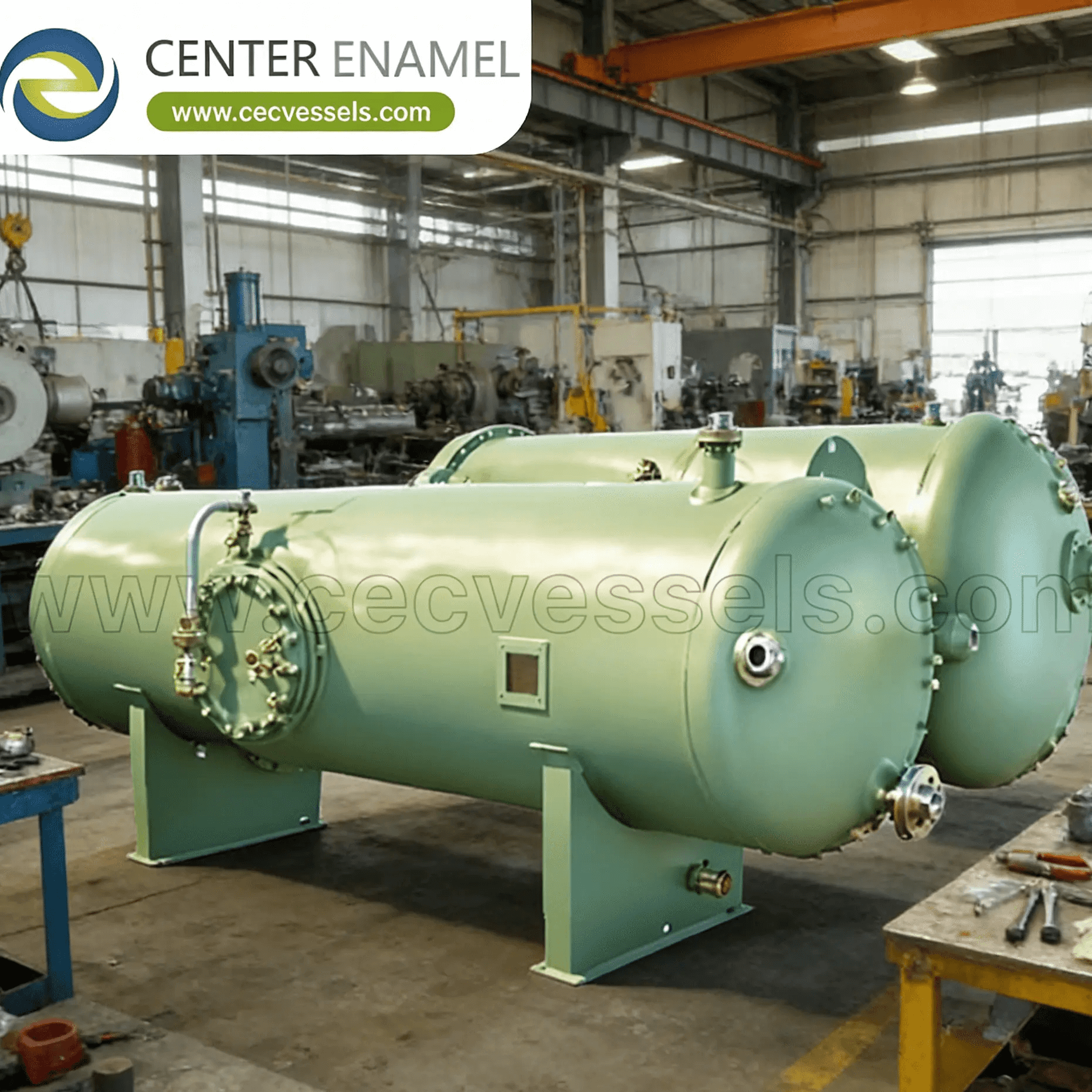
In downstream resource management, reservoir evaluation, and fluid chemical processing, quantifying the exact production capacity of a newly drilled well is a core operational milestone. A separator in well testing is a highly specialized process vessel engineered to split the complex, multi-phase effluent stream coming directly from the wellbore into independent fractions of liquid hydrocarbon, gas, and water. Isolating these distinct phases allows field engineers to perform precise volumetric measurements, analyze fluid chemistry, and assess reservoir performance metrics with high accuracy. As an established Well Testing Separator Manufacturer, Center Enamel develops high-performance separation containment and fluid processing systems optimized for modern exploration grids. By adhering to international engineering codes like the ASME BPVC, BS EN 13445, and GB/T 150.1-150.4-2024, these heavy-duty vessels ensure excellent structural integrity and consistent performance for global industrial partners.
The Fundamental Purpose of Well Test Separation ProcessesTo fully evaluate what a well testing separator achieves, one must analyze the raw composition of fluids exiting a reservoir formation. The production stream is a highly turbulent mixture where gaseous hydrocarbons, liquid crude oil, and aqueous brine coexist in a single flowing matrix.
As a leading provider of China Well Testing Separator Manufacturer technology, Center Enamel focuses on developing vessels that organize this complex multi-phase stream into measurable fluid paths. A well testing separator provides a stable environment that slows down fluid velocities, allowing gravity, buoyancy, and mechanical internals to segregate the components based on their different physical densities. By performing this extraction right at the testing site, operators can measure the exact gas-to-oil ratio and water-cut percentage, providing critical data for long-term field development plans and production equipment sizing.
Primary Architectural Layouts of Well Testing SeparatorsIndustrial testing networks select and deploy specific geometric configurations of separators based on the expected fluid proportions, space constraints, and settlement times of the target formation:
Horizontal Well Testing SeparatorsThis represents the most common configuration for standard exploration tasks. The horizontal cylinder provides a large liquid surface area and an extended horizontal fluid travel path. This geometry maximizes the retention time of the liquid phases, allowing fine water droplets to separate from the crude oil matrix efficiently. Horizontal units are highly favored because their low center of gravity simplifies transportation and installation on mobile testing skids.
Vertical Well Testing SeparatorsFor exploration zones that produce high volumes of gas relative to liquid fractions, a vertical orientation is deployed. The vertical column offers a tall gas separation section, allowing liquid mist to fall back down against the upward flow of gas. This layout occupies a very small physical footprint, making it ideal for offshore testing platforms or tight terrestrial well pads where structural deck space is restricted.
Two-Phase versus Three-Phase Testing ConfigurationsWell validation programs use different internal separation mechanisms depending on the level of fluid detail required by reservoir engineers:
Two-Phase Separation SystemsA two-phase testing separator splits the incoming reservoir fluid into total gas and total liquid fractions. The gas ascends through upper mist extraction grids, while the combined oil and water mixture collects at the base of the vessel to be discharged through a single liquid line. This configuration is widely utilized for preliminary production checks or when testing wells known to produce dry gas or water-free hydrocarbons.
Three-Phase Separation SystemsFor comprehensive reservoir profiling, a three-phase well testing separator is required. This configuration splits the fluid stream into three distinct components: gas, liquid hydrocarbon, and free water. The internal shell cavity incorporates specialized weir plates and collection compartments that isolate the lower water layer from the upper floating oil layer, allowing independent metering lines to record the exact flow rates of all three individual phases simultaneously.
Technical Dimensions of Well Test Vessel EngineeringDesigning a durable, high-efficiency well testing separator requires a precise evaluation of several overlapping mechanical, thermal, and chemical design variables:
Advanced Fluid Dynamics and Surge Management: Well testing streams frequently exhibit slugging behavior, where large, erratic bursts of liquid alternate with high-velocity gas pockets. The separator structure must incorporate robust internal momentum deflector plates directly behind the inlet nozzle to absorb this mechanical impact and smooth out fluid velocities instantly.
Precision Metallurgy and Chemical Integrity: Reservoir fluids can carry highly aggressive chemical agents, including saline formation water, organic acids, and sulfur derivatives. Selecting the correct metallurgy—such as premium 316L stainless steel, high-grade carbon steel with heavy corrosion allowances, or specialized duplex alloys—is essential to prevent chemical pitting and preserve structural boundaries.
Accurate Metering Optimization: To ensure the separation process supports precise data collection, the fluid discharge nozzles must deliver stable, non-turbulent liquid and gas streams into downstream flow meters, such as vortex, turbine, or coriolis meters.
Mechanical Components of Advanced Well Testing SeparatorsEvery processing unit produced by Center Enamel is a precision-manufactured pressure vessel built for long-term service, featuring specialized components to optimize multi-phase fluid isolation:
Vessel Shell and Curved Heads: The main structural containment body, fabricated from thick steel plates in strict compliance with GB/T 150.1-150.4-2024 standards.
Inlet Momentum Deflectors: Diverter plates or cyclonic inlets that rapidly decrease the velocity of incoming fluids, forcing bulk liquids to drop instantly while allowing gases to separate upward.
Perforated Distribution Baffles: Internal transverse plates with engineered hole patterns designed to smooth out fluid turbulence and organize liquid fractions into a steady, uniform laminar flow path.
Internal Oil Weirs: Vertical steel barrier plates positioned inside three-phase shells that allow the lighter oil layer to overflow into a dedicated compartment while trapping the heavier water layer behind.
Wire-Mesh Demister Pads: Dense, woven stainless steel mesh screens positioned near the upper gas exit nozzle to capture fine entrained liquid mist from escaping with the gas stream, preserving gas purity.
Thick CNC-Machined Flanges: Robust forged steel rings that form completely leak-proof bolted connections for vessel covers and instrument ports.
Vortex Breakers: Specialized structural caps placed over bottom discharge nozzles to ensure smooth fluid dynamics during liquid removal, preventing gas entrainment.
Diverse Industrial Applications Beyond Exploration PadsThe requirement for durable, high-efficiency well testing separators, multi-phase isolation systems, and fluid treatment containment spans across a wide array of global processing sectors served by Center Enamel:
Upstream Hydrocarbon Exploration: Evaluating newly drilled onshore and offshore wildcat wells to determine economic viability and reservoir boundaries.
Chemical Synthesis and Processing Skids: Managing product purification cycles inside closed-loop chemical networks to isolate processed liquids from volatile solvent vapors.
Industrial Thermal and Phase Management: Operating in close sequence with high-temperature distillation columns, shell and tube heat exchangers, and industrial condensers to regulate fluid phase transitions.
Environmental Wastewater Treatment Infrastructure: Implementing advanced horizontal and vertical separation vessels to treat industrial landfill leachate and clean complex factory runoff water.
Factory Utility Control Networks: Operating steam distribution cylinders and condensate tanks to organize high-temperature utility lines across industrial complexes.
Large-Scale Industrial Aquaculture Support: Fabricating vertical clarification tanks and multi-stage biological containment units to maintain strict water quality standards for aquatic habitats.
Integration within Industrial Process NetworksWell testing separators operate as central fluid purification nodes within comprehensive processing and evaluation layouts. Center Enamel provides a comprehensive range of equipment that works in tandem with these units:
Steam Distribution Cylinders: Organizing and directing high-temperature steam lines used to power upstream process heaters or glycol preheating units.
Condensate Tanks: Collecting hot purified water and process fluids discharged from thermal heating jackets for recycling, supporting overall facility resource conservation.
Tube Heat Exchangers: Adjusting the temperature of viscous reservoir fluids before they enter the primary separator inlet nozzle, optimizing density differentials for rapid phase splitting.
Coalescing Oil Separators: Purifying auxiliary fluids and utility water loops to remove grease, trace oils, or organic residues, preserving environmental compliance metrics.
Resin Tanks and Fiber Adsorption Tanks: Providing advanced upstream water treatment to ensure that utility cooling water loops remain entirely free of scale-forming minerals.
Engineering Design Standards and Global ComplianceThe reliability of a high-performance well testing separator is guaranteed by strict adherence to international fabrication codes. Center Enamel ensures that every phase of manufacturing complies with the exact regulatory benchmarks required by the target market.
ASME Boiler and Pressure Vessel Code (BPVC)The ASME Section VIII is the premier global standard for pressure equipment manufacturing. It defines the exact mathematical equations for material selection, wall thicknesses, and structural reinforcement for vessels handling volatile fluids under thermal loads. As a certified manufacturer, Center Enamel ensures that its separator shells are designed with full safety coefficients for long-term operational security.
GB/T 150.1-150.4-2024The GB/T 150 series is the national standard for metal pressure vessels in China. The 2024 update represents the latest advancements in structural finite element analysis, automated welding metrics, and modern steel grade certifications. Adhering to these updated standards guarantees that vessels are optimized for modern industrial facilities and domestic project compliance.
BS EN 13445For the European market, BS EN 13445 outlines harmonized rules for unfired pressure vessels, placing a significant emphasis on material fatigue analysis and advanced non-destructive testing regimes to ensure long-term structural security under cyclic production demands.
Our high-performance pressure vessels serve a vast industrial landscape, from petroleum refining and chemical processing to food, dairy, and brewing. We deliver precision-engineered solutions for pharmaceuticals, power generation, and wastewater treatment, ensuring compliance with the world’s most stringent safety codes. Our systems are designed for peak efficiency and longevity, empowering global partners to excel in even the most challenging environments.
1. Chemical Industry Project lProject Location: Hubei, China lPressure Vessels: Resin tanks, Coalescing oil separators, Fiber adsorption tanks, Compressed air storage tanks, Condensate tanks, and Steam distribution cylinders lMaterial: Stainless Steel and Carbon Steel. lDesign Standards: GB/T 150 (Pressure Vessels) lApplication: Integrated chemical fluid processing, separation, and steam distribution for chemical plants
2. Seawater Desalination Project lProject Location: Malta lPressure Vessels: Concentrated Sulfuric Acid Storage Tanks (Vertical layout) lMaterial: Carbon Steel lDesign Standards: EN 13445 lApplication: Storage of 98% concentrated sulfuric acid.
3. Waste-to-Energy Incineration Project lProject Location: Hebei, China lPressure Vessels: Large-scale Landfill Leachate Storage and Treatment Tanks (2 Sets) lMaterial: Carbon Steel lDesign Standards: GB 50341-2003 and GB 50128-2005. lApplication: Wastewater Treatment
4. Aquaculture Wastewater Treatment Project lProject Location: Sichuan, China lPressure Vessels: Vertical Wastewater Treatment Vessels (Φ 6×16.5 m (h) 1 set; Φ 7.6×16.5 m (h) 1 set) lMaterial: Carbon Steel lDesign Standards: National standard for vertical cylindrical storage tanks. lApplication: Aquaculture Wastewater Treatment
Maintenance Strategies for Testing Vessel LongevityTo ensure a well testing separator continues to operate at peak chemical and mechanical efficiency, regular maintenance and operational verification are essential:
Demister Pad Inspection and Cleaning: Periodically checking the upper mesh extractors to remove mineral scales, carbon crusts, or particulate buildup that can obstruct vapor pathways and cause liquid carryover.
Internal Packing NDT Evaluations: Verifying the structural integrity of internal distribution trays, support grids, and weir plates using non-destructive testing (NDT) to ensure thermal cycles or transport vibration have not caused warping.
Shell Thickness Ultrasonic Profiling: Regularly measuring the wall thickness of the vessel shell using ultrasonic gauges, particularly around the liquid-vapor interface zone, to monitor potential corrosion rates.
Safety Relief Valve Calibration: Regularly testing the pressure relief valves attached to the vessel shell to ensure they are set to the correct discharge profile, protecting the structural integrity of the overall processing system.
The Center Enamel Manufacturing AdvantageChoosing Center Enamel as your China Well Testing Separator Manufacturer partner means connecting with an industry leader in technical innovation, advanced engineering, and top-tier industrial fabrication across all fluid classifications.
Advanced Automated InfrastructureOur production facility features modern computer-controlled automated welding systems, precision CNC edge beveling centers, and automated plate rolling machines. This structural commitment to advanced manufacturing minimizes manual errors, speeds up production lead times, and ensures complete consistency across large equipment orders.
Turnkey Production ManagementFrom initial computational finite element layout design and metallurgical material sourcing to complete non-destructive X-ray verification, stress-relieving thermal processing, and global freight logistical management, Center Enamel oversees the entire production chain under one single roof. This comprehensive quality oversight ensures elite structural reliability, seamless field piping integration, and long-term operational success for our global industrial processing partners.
Summary of Well Testing Separation ExcellenceIn conclusion, a separator in well testing represents a critical piece of technology where accurate reservoir engineering intersects with high-performance pressure vessel design. The precision of fluid data collection, the operational reliability of downstream flow lines, and the resource efficiency of the exploration pad depend fundamentally on the mechanical structural integrity and internal design of these separation columns. By engineering and fabricating these critical containment vessels in absolute compliance with international benchmarks like the ASME code and the updated GB/T 150.1-150.4-2024 standards, Center Enamel delivers high-performance processing equipment that maximizes phase separation yields, lowers long-term operational costs, and provides durable structural performance for our global industrial partners.
Let’s build a safer, more efficient future together. If you have an upcoming project that demands high-durability pressure vessels, we are here to help. Please send your requirements to our team, and our technical experts will connect with you promptly to ensure your project meets the highest industrial standards.
|