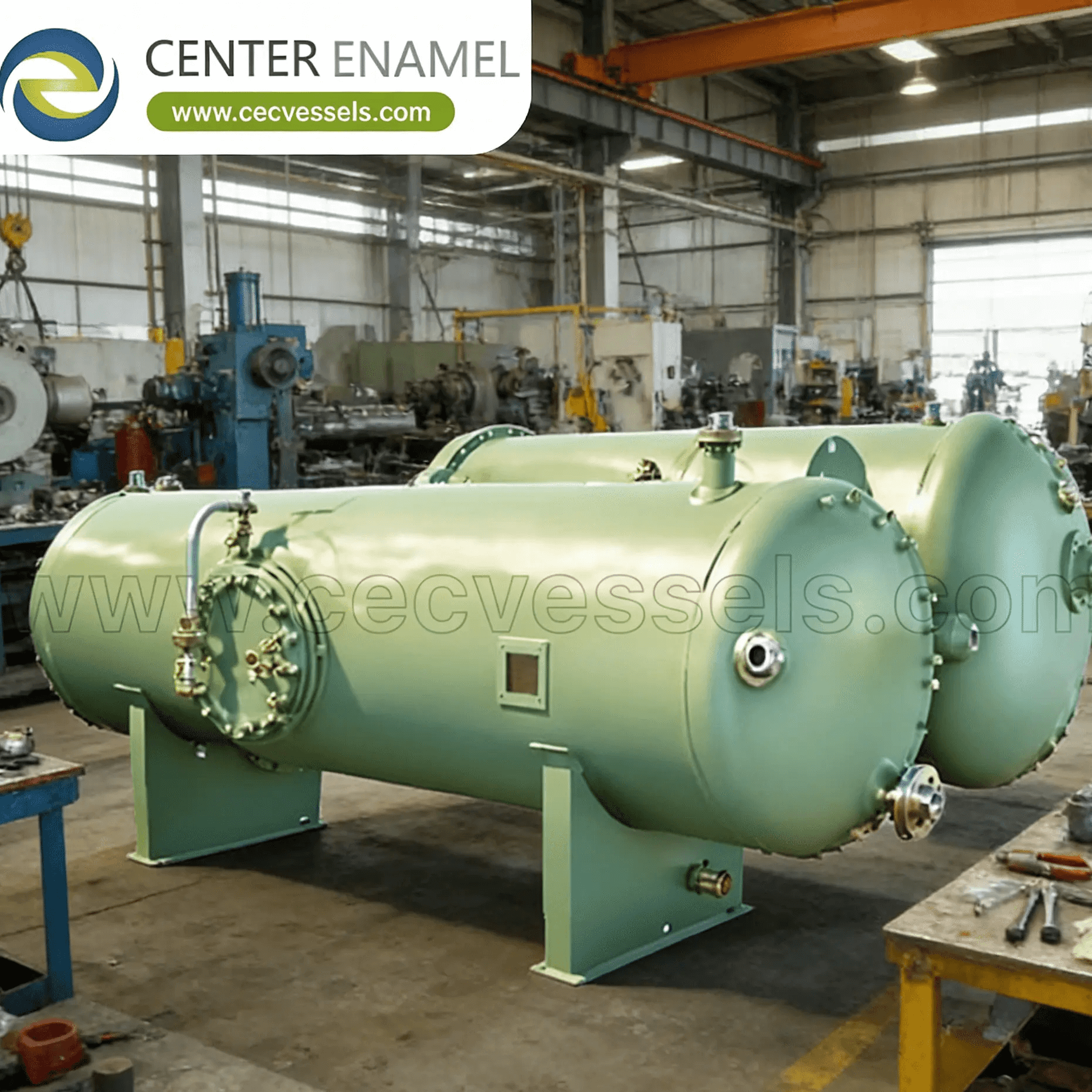
What Is a Stirred Reactor and How Is It Used in Chemical Processing?
A Stirred Reactor is a process vessel designed to perform chemical reactions while continuously mixing the contents with a mechanical agitator. The agitator creates controlled circulation inside the vessel, helping distribute raw materials, improve heat transfer, and maintain a more uniform process condition. Stirred reactors are widely used for batch and continuous processing. Depending on the production process, the reactor can be equipped with a heating or cooling jacket, internal coil, agitator, mechanical seal, feed ports, discharge outlet, temperature sensors, and automated control instruments. The main purpose of a stirred reactor is not simply to contain materials. Its vessel structure and agitation system work together to provide controlled mixing and reaction conditions. The mixing pattern, agitation speed, temperature, residence time, and feed rate can be adjusted according to the characteristics of the process. Stirred reactors are commonly found in chemical processing, pharmaceutical manufacturing, food production, polymer and resin production, biotechnology, cosmetics, and environmental applications. As a professional Stirred Reactor Manufacturer, Center Enamel provides customized reactor solutions based on process requirements, working volume, material characteristics, mixing requirements, temperature conditions, and production capacity. How Does a Stirred Reactor Work?The working principle of a stirred reactor centers on mechanical agitation. Raw materials are first introduced into the reactor through one or more feed connections. Once the required amount of material has entered the vessel, the agitator begins rotating at a selected speed. The rotating impeller transfers mechanical energy to the process material. This creates circulation throughout the reactor and promotes contact between different components. In a liquid-liquid process, agitation can improve dispersion between two liquids. In a solid-liquid process, it can help maintain solid particles throughout the working volume. For viscous materials, an appropriate agitator can create stronger wall-side and bulk circulation. Temperature can be controlled simultaneously through a jacket or internal heat-transfer coil. A heating medium such as hot water, steam, or thermal oil can be circulated through the jacket when the process requires heating. Cooling water or another cooling medium can be used when heat needs to be removed. During the reaction, sensors monitor parameters such as temperature, agitation speed, liquid level, and other process conditions. The control system can adjust operating parameters according to the production recipe. Once the reaction reaches the required endpoint, the finished material is discharged through the designated outlet. Depending on the production process, the reactor can then be cleaned and prepared for the next batch. Main Components of a Stirred ReactorA stirred reactor consists of several systems that work together to provide controlled processing. Reactor VesselThe vessel is the main chamber where materials are mixed and processed. Its volume can be selected according to the required batch size and working capacity. The vessel may be manufactured from stainless steel, carbon steel, or other suitable materials. Material selection depends on the processed medium, temperature, cleaning requirements, and chemical compatibility. For food, pharmaceutical, and many specialty chemical applications, stainless steel is commonly selected because of its clean surface characteristics and corrosion resistance. AgitatorThe agitator is the central working component of a stirred reactor. It generates the circulation needed to distribute materials throughout the vessel. Different impeller designs provide different flow patterns. Propeller agitators can generate strong axial circulation for liquid blending, while turbine impellers are suitable for a variety of liquid mixing and dispersion processes. Anchor agitators are often considered for viscous products because they promote circulation near the vessel wall. Other customized designs can be selected according to the viscosity, solid content, and mixing objective. The agitator shaft is connected to a motor and gearbox. The required motor power and rotation speed depend on vessel volume, material viscosity, impeller geometry, and desired mixing intensity. Heating and Cooling JacketA jacket surrounding the reactor provides indirect temperature control. Heating media can circulate through the jacket to raise the material temperature. Cooling media can be introduced to remove heat and maintain the required process temperature. The jacket configuration can be designed according to the required heat-transfer area and production conditions. For larger heat-transfer requirements, internal coils may also be incorporated. Mechanical SealThe mechanical seal is installed around the agitator shaft where it passes through the reactor cover. It helps maintain the closed process environment while allowing the shaft to rotate. The seal type and material can be selected according to the process medium, temperature, cleaning method, and operating requirements. Reactor Cover and NozzlesThe top cover can include feed nozzles, inspection openings, instrument connections, agitator mounting points, and other process connections. The nozzle arrangement is customized according to the production system. Additional connections can be provided for sensors, sampling, cleaning systems, condensers, or other auxiliary equipment. InstrumentationTemperature sensors, level instruments, speed controls, flow meters, and other instruments can be integrated into the reactor. For automated production lines, the stirred reactor can be connected to a PLC or other control system. This allows operators to monitor and adjust key process parameters during the production cycle. What Are the Types of Stirred Reactors?Stirred reactors can be classified according to operation mode, agitator configuration, vessel structure, and application. Batch Stirred ReactorA batch stirred reactor processes a defined quantity of raw materials during each production cycle. Materials are charged into the vessel, mixed and processed for a specified period, and then discharged when the required process conditions are reached. Batch reactors are widely used for specialty chemicals, pharmaceutical intermediates, resins, coatings, food ingredients, and products manufactured in different formulations. Their flexible operating sequence makes them suitable for production where recipes or material quantities change between batches. Continuous Stirred ReactorA continuous stirred reactor, often referred to as a CSTR, continuously receives feed material while processed material leaves the vessel through a controlled outlet. The agitator maintains mixing throughout the working volume. Continuous operation is commonly used when stable feed conditions and consistent production rates are required. CSTR systems can be used in chemical processing, biochemical production, wastewater treatment, and other continuous industrial processes. Jacketed Stirred ReactorA jacketed stirred reactor combines mechanical agitation with integrated temperature control. The jacket allows heating or cooling media to circulate around the vessel. This configuration is suitable for reactions and formulations where temperature directly affects reaction rate, viscosity, solubility, or product quality. Vacuum Stirred ReactorA vacuum stirred reactor combines agitation with controlled vacuum operation. It can be used when the process involves solvent removal, concentration, degassing, or evaporation. A condenser and receiver can be connected to recover vapors generated during processing. High-Shear Stirred ReactorSome processes require stronger dispersion or emulsification. High-shear mixing equipment can be incorporated into the reactor to produce more intensive local mixing. Such configurations are commonly used for emulsions, dispersions, coatings, cosmetics, and specialty formulations. How Is a Stirred Reactor Used in Chemical Processing?Stirred reactors are particularly important in chemical processing because many reactions require consistent contact between different materials. Chemical SynthesisDuring chemical synthesis, raw materials must remain in suitable contact for the required reaction time. The agitator promotes circulation and distributes the reactants throughout the vessel. Temperature control can be used simultaneously to establish the required reaction conditions. Applications include specialty chemicals, intermediates, additives, coatings, and chemical formulations. NeutralizationNeutralization processes involve controlled mixing between acidic and alkaline materials. The agitator distributes the added material throughout the reactor, helping maintain consistent composition. Temperature monitoring can be integrated into the process when the reaction requires thermal control. Polymer and Resin ProductionStirred reactors are commonly used in resin and polymer manufacturing. The agitator keeps the material moving as viscosity changes during processing. A jacket can provide controlled heating or cooling, while the reactor can be equipped with suitable feeding, sampling, and discharge systems. Different agitator configurations can be selected depending on the viscosity and production stage. Dissolution and BlendingA stirred reactor can also function as a controlled mixing vessel for dissolving powders or blending liquid components. The agitator creates circulation that brings different ingredients into contact. Heating may be used to improve dissolution or reduce viscosity. Suspension ProcessingFor processes involving solid particles suspended in a liquid, agitation can help maintain a more uniform distribution. Impeller design, rotation speed, vessel geometry, and liquid level all influence the suspension performance. ExtractionStirred reactors can be used for solid-liquid or liquid-liquid extraction processes. The agitator increases contact between the phases, while temperature can be controlled according to the extraction requirements. Stirred Reactor Applications Across IndustriesChemical IndustryChemical plants use stirred reactors for synthesis, blending, neutralization, formulation, extraction, and concentration. The reactor can be integrated with pumps, heat exchangers, condensers, storage tanks, and other process equipment to form a complete production system. Pharmaceutical IndustryIn pharmaceutical production, stirred reactors can be used for formulation, synthesis, dissolution, extraction, and intermediate processing. Stainless steel construction and customized surface finishing can be selected according to production and cleaning requirements. The reactor can also be equipped with sanitary connections, sampling ports, controlled feeding systems, and automated instrumentation. Food and Beverage IndustryStirred reactors can process syrups, sauces, concentrates, flavoring products, food ingredients, and other formulated materials. Agitation promotes uniform blending, while jacketed temperature control supports heating and cooling during production. Cosmetics IndustryCreams, lotions, gels, emulsions, and other personal-care formulations can be processed using stirred reactor systems. The agitation system can be selected according to product viscosity, while vacuum operation can be added when air removal or controlled concentration is required. BiotechnologyStirred reactors are also used for biological and biochemical processing. In these applications, mixing helps distribute nutrients, maintain temperature uniformity, and support controlled process conditions. Depending on the process, the reactor may be configured as a fermentation or bioprocess vessel. Environmental ApplicationsSome environmental treatment processes use stirred reactors to provide controlled contact between wastewater and treatment media or chemicals. The reactor can be integrated into chemical dosing, neutralization, conditioning, or other treatment stages. What Factors Should Be Considered When Selecting a Stirred Reactor?Selecting a suitable stirred reactor requires consideration of both the vessel and the mixing system. Working volume:The reactor should provide sufficient effective volume for the intended batch or continuous process. Material properties:Viscosity, density, solids content, corrosiveness, and temperature characteristics influence the vessel material and agitator configuration. Mixing requirements:The desired flow pattern and mixing intensity determine the impeller type, diameter, rotation speed, and motor capacity. Heat-transfer requirements:Heating or cooling duty determines the jacket area, heat-transfer medium, and potential need for internal coils. Operating mode:Batch and continuous processes require different reactor configurations, feed arrangements, and discharge systems. Material selection:Stainless steel, carbon steel, and other alloys can be considered according to chemical compatibility and production requirements. Automation:Instrumentation and control systems can be selected according to the required level of process monitoring and automatic operation. Stirred Reactor Manufacturing ProcessA reliable manufacturing process is essential for producing a reactor with accurate dimensions and consistent performance. At Center Enamel, manufacturing begins with engineering drawings and technical specifications. Materials are checked before fabrication to verify grade, dimensions, and applicable material documentation. Steel plates are cut and formed according to the approved design. Shell sections, heads, nozzles, supports, and other components are then prepared for assembly. Welding is completed according to qualified welding procedures. The reactor shell and associated components are assembled with controlled dimensions and alignment. After welding, the vessel is inspected according to the applicable project requirements. Non-destructive testing methods can be applied to selected welds, while dimensional inspections verify the accuracy of the completed structure. The agitator, shaft, mechanical seal, jacket, internal components, nozzles, and other accessories are installed during the assembly stage. Surface treatment is then completed according to the selected material and application. Stainless steel surfaces can receive appropriate finishing and cleaning, while carbon steel equipment can be prepared and coated according to the specified coating system. Before delivery, the completed reactor undergoes final inspection and functional verification. The inspection records and relevant manufacturing documentation are prepared for project handover. Center Enamel as a Stirred Reactor ManufacturerCenter Enamel provides customized stirred reactor solutions for chemical processing and other industrial applications. As a Stirred Reactor Manufacturer, the company can customize vessel volume, materials, agitator configuration, heating and cooling systems, nozzles, mechanical seals, instrumentation, and auxiliary equipment according to the production process. The engineering process begins with evaluating the customer's process parameters. These can include material viscosity, density, solids content, working volume, temperature range, mixing objective, batch time, heat-transfer requirement, and discharge method. Based on the process data, the engineering team develops the reactor configuration and selects suitable components. The vessel can then be manufactured according to the approved technical specifications and applicable standards. For customers seeking a China Stirred Reactor Manufacturer, Center Enamel offers integrated engineering and manufacturing services for chemical, pharmaceutical, food, resin, cosmetic, biotechnology, and environmental applications. Chemical Industry Project in Hubei, ChinaCenter Enamel has supplied customized process equipment for a chemical industry project in Hubei, China. The project included resin tanks, coalescing oil separators, fiber adsorption tanks, compressed air storage tanks, condensate tanks, and steam distribution equipment. The equipment was manufactured using stainless steel and carbon steel according to the specific requirements of the chemical processing system. The project demonstrates the importance of customized process equipment in an integrated chemical production environment. Different vessels and process units were configured according to their respective functions, including reaction-related processing, separation, storage, adsorption, condensate collection, and steam distribution. For stirred reactor applications, similar engineering principles can be applied to coordinate the vessel, agitator, heating or cooling system, instrumentation, and supporting process equipment as an integrated solution. Why Choose Center Enamel for Stirred Reactor Manufacturing?Center Enamel combines engineering design, vessel fabrication, component integration, inspection, and project support to provide customized stirred reactor solutions. The company can adapt reactor designs to different production processes rather than relying on a single standard configuration. This allows the vessel, agitator, heat-transfer system, instrumentation, and auxiliary components to be matched with the actual process requirements. The engineering team can support projects involving chemical synthesis, resin production, pharmaceutical processing, food production, cosmetics, biotechnology, and environmental applications. From initial technical communication and equipment design to manufacturing, inspection, delivery, and project support, Center Enamel provides an integrated service for industrial reactor projects. ConclusionA Stirred Reactor is a versatile process vessel that combines controlled agitation with reaction, blending, heating, cooling, dissolution, extraction, and other processing functions. The agitator is the core component that creates material circulation, while the vessel, jacket, instrumentation, and auxiliary systems provide the conditions required for consistent processing. The correct reactor configuration depends on material properties, working volume, mixing requirements, temperature conditions, operating mode, and production objectives. Batch stirred reactors, continuous stirred reactors, jacketed reactors, vacuum stirred reactors, and customized mixing systems can therefore serve different industrial processes. As an experienced Stirred Reactor Manufacturer, Center Enamel provides customized equipment based on specific process requirements. For customers looking for a China Stirred Reactor Manufacturer, the company can support the complete process from engineering design and material selection to fabrication, inspection, and delivery.
|