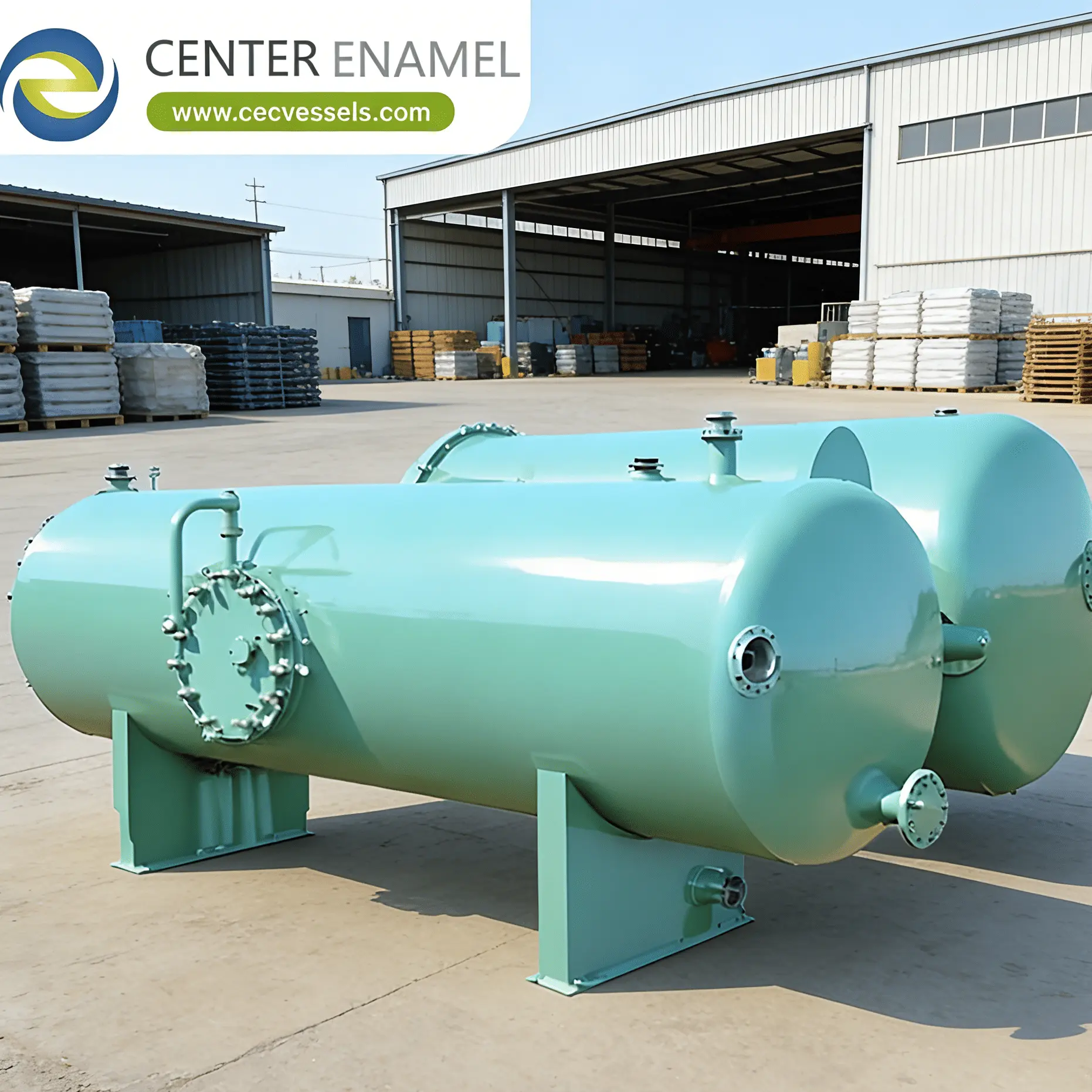
What Is a Stirred Reactor
A stirred reactor is a process vessel equipped with a mechanical stirring system that mixes materials inside the tank while a reaction or other processing operation takes place. Stirred reactors are widely used in chemical processing, biotechnology, food production, wastewater treatment, and other industries where uniform mixing and controlled processing conditions are important. The basic concept is simple: materials are introduced into a tank, an agitator creates movement within the contents, and the resulting circulation promotes contact between different components. Depending on the process, a stirred reactor can operate in batch, fed-batch, or continuous mode. How Does a Stirred Reactor Work?A stirred reactor generally consists of a vessel, agitator, motor, shaft, and impeller. Additional components may include baffles, heating or cooling jackets, internal coils, sensors, feed connections, sampling ports, and discharge outlets. The motor drives the shaft, which rotates the impeller inside the vessel. As the impeller turns, it creates fluid circulation and distributes materials throughout the tank. This mixing helps maintain a relatively uniform composition and temperature within the working volume. The reactor can also be designed for different processing requirements. For example, an impeller may be selected to provide axial circulation, radial circulation, or a combination of both. The vessel geometry and agitator arrangement are selected according to liquid properties, viscosity, solids content, gas requirements, and reaction characteristics. Stirred tank reactors can also incorporate heat transfer equipment. A jacket surrounding the vessel or coils installed inside the tank can provide heating or cooling. This allows the process temperature to be adjusted according to the requirements of the reaction or biological process. Siemens describes stirred tank reactors as systems in which reactants and catalysts are mixed inside the vessel, with temperature control commonly achieved through a reactor jacket. What Are the Main Components of a Stirred Tank Reactor?The vessel is the main body of the reactor and provides the space where mixing and processing occur. It can be manufactured from materials selected according to the process and product requirements. The agitator system is responsible for creating movement inside the vessel. It normally includes an electric motor, gearbox when required, shaft, and impeller. Different impeller designs can generate different circulation patterns and mixing characteristics. Baffles are vertical plates installed along the vessel wall in many stirred tank reactors. They help improve circulation and reduce excessive rotational movement of the liquid. Heating and cooling systems are another important part of many stirred reactors. Jackets and internal coils can transfer heat between the reactor contents and a suitable heat-transfer medium. Instrumentation can include temperature sensors, pH sensors, level instruments, pressure indicators, flow meters, and other monitoring devices. These instruments help operators maintain consistent process conditions. What Types of Stirred Reactors Are Available?Stirred reactors can be classified according to their operating mode and application. A batch stirred reactor is filled with selected materials before the reaction begins. The contents remain in the vessel for a specified processing period, after which the product is removed. Batch operation is particularly useful for products made in different grades, formulations, or production lots. A continuous stirred tank reactor, commonly called a CSTR, continuously receives feed while processed material leaves the vessel. Under steady operating conditions, the reactor contents are well mixed and the outlet composition is related to the conditions inside the tank. The University of Michigan describes CSTRs as continuous systems in which reactants are introduced while products are continuously removed. A fed-batch stirred reactor combines characteristics of batch and continuous operation. One or more materials can be added gradually during processing while the main contents remain inside the vessel. This arrangement provides useful control over feed rates and process progression. Stirred reactors can also be configured for multiphase processes. Gas, liquid, and solid materials may be processed together when suitable agitation and internal components are provided. ScienceDirect notes that stirred tanks commonly use impellers, baffles, spargers, coils, and other internals depending on the process. Why Is Mixing Important in a Stirred Reactor?Mixing is the defining function of a stirred reactor. When several components are introduced into a vessel, effective agitation helps distribute them throughout the working volume. For chemical reactions, mixing can improve contact between reactants and support more consistent reaction conditions. For heat-sensitive processes, circulation helps distribute heat throughout the liquid. For systems containing suspended solids, suitable agitation can help maintain an even distribution of particles. Mixing can also support gas-liquid processing by dispersing gas into the liquid phase. In biological applications, agitation can help distribute nutrients and maintain consistent conditions throughout the reactor. The exact mixing performance depends on the impeller type, rotational speed, tank dimensions, liquid properties, and internal arrangement. Therefore, agitator selection is an important part of stirred tank reactor design. How Are Stirred Reactors Used in Industry?Stirred reactors have broad industrial applications because their operating conditions and internal configurations can be adapted to different processes. In chemical manufacturing, stirred tank reactors can be used for synthesis, neutralization, polymerization, crystallization, blending, and other chemical operations. Liquid-liquid reactions and suspension processes can also be carried out in suitable stirred systems. ScienceDirect identifies stirred tanks as widely used reactor configurations and notes their applications in homogeneous and multiphase processing. In biotechnology, stirred tank bioreactors are widely used for fermentation and cell culture. The basic design combines a vessel with a stirrer and can be equipped with systems for temperature, pH, dissolved oxygen, feeding, and sampling. In wastewater treatment, continuously stirred reactors can support biological and chemical treatment processes that require controlled residence time and consistent mixing. In food processing, stirred vessels can be used for fermentation, enzyme processing, blending, and other liquid-based operations. Stirred reactors are also used in pharmaceutical manufacturing, where controlled mixing and repeatable processing conditions are important for producing consistent batches. What Factors Should Be Considered When Selecting a Stirred Reactor?Selecting a stirred reactor starts with understanding the process requirements. Important factors include working volume, liquid viscosity, density, solids concentration, reaction time, mixing requirements, heat-transfer needs, and operating mode. The impeller should be selected according to the required circulation pattern and material properties. Low-viscosity liquids may use propeller or turbine-style impellers, while more viscous materials may require anchor or other specialized designs. Tank geometry also affects reactor performance. The vessel diameter, liquid height, bottom shape, baffle arrangement, and impeller position all influence circulation inside the tank. Material selection is equally important. Stainless steel, carbon steel, glass-lined materials, and other construction options may be considered depending on chemical compatibility, temperature requirements, cleanliness requirements, and product characteristics. For industrial applications, the reactor may also be integrated with pumps, heat exchangers, dosing systems, filtration equipment, control systems, or downstream processing units. What Is the Difference Between a Stirred Reactor and a Stirred Tank Reactor?The terms stirred reactor and stirred tank reactor are often used interchangeably, although their usage can depend on the industry and application. A stirred tank reactor specifically emphasizes the tank-shaped vessel and its mechanical agitation system. The term stirred reactor is broader and can describe reactor systems in which mixing is achieved through a stirring mechanism. In industrial chemical engineering, stirred tank reactor and STR are commonly used to describe a vessel with an agitator and associated process equipment. Continuous versions are generally called continuous stirred tank reactors or CSTRs. The central principle remains the same: mechanical agitation creates circulation and mixing within the reactor, allowing materials to interact under controlled process conditions. What Are the Advantages of Stirred Reactors?Stirred reactors are valued for their versatility and adaptability. Their agitation systems can be configured for different liquid properties, reaction types, and production requirements. They can operate in batch, fed-batch, or continuous modes. This allows manufacturers to select an operating method that matches their production process. Another important benefit is controllable mixing. Impeller type, speed, position, and vessel configuration can be adjusted to achieve the desired circulation pattern. Stirred reactors can also integrate heating and cooling systems, instrumentation, feeding systems, and other process equipment. This makes them suitable for complete and highly controlled processing systems. Their broad application range has made stirred tank reactors an established choice across chemical, pharmaceutical, food, biotechnology, environmental, and other industrial sectors. How Does Center Enamel Support Stirred Reactor Applications?Center Enamel provides customized industrial process equipment designed around specific production requirements. For stirred reactor projects, reactor configuration can be considered according to working volume, material characteristics, agitation requirements, heat-transfer requirements, and process conditions. A suitable stirred reactor design can combine the vessel, agitator, heating or cooling system, instrumentation, and process connections into an integrated solution. The configuration can also be adapted for different production scales and operating modes. By considering the reactor as part of the complete process system, manufacturers can develop equipment that supports stable mixing, efficient material contact, temperature management, and consistent production. Where Are Stirred Tank Reactors Used?Stirred tank reactors are used across many industrial fields because they provide flexible mixing and process control. Typical applications include chemical synthesis, pharmaceutical processing, fermentation, biotechnology, food production, wastewater treatment, polymer processing, crystallization, and specialty chemical manufacturing. Their ability to combine agitation, heat transfer, feeding, monitoring, and controlled residence time makes them suitable for both laboratory development and industrial production. Understanding the Role of Stirred ReactorsA stirred reactor is fundamentally a vessel designed to provide controlled mixing during a reaction or processing operation. Its main components include the tank, agitator, shaft, impeller, and supporting process systems. The flexibility of stirred reactors allows them to operate in batch, fed-batch, and continuous configurations. With appropriate impeller selection, vessel design, temperature control, and instrumentation, stirred tank reactors can support a wide range of industrial processes. For manufacturers evaluating reactor equipment, understanding the relationship between mixing, vessel geometry, material properties, heat transfer, and operating mode is essential for selecting an appropriate stirred reactor solution.
|