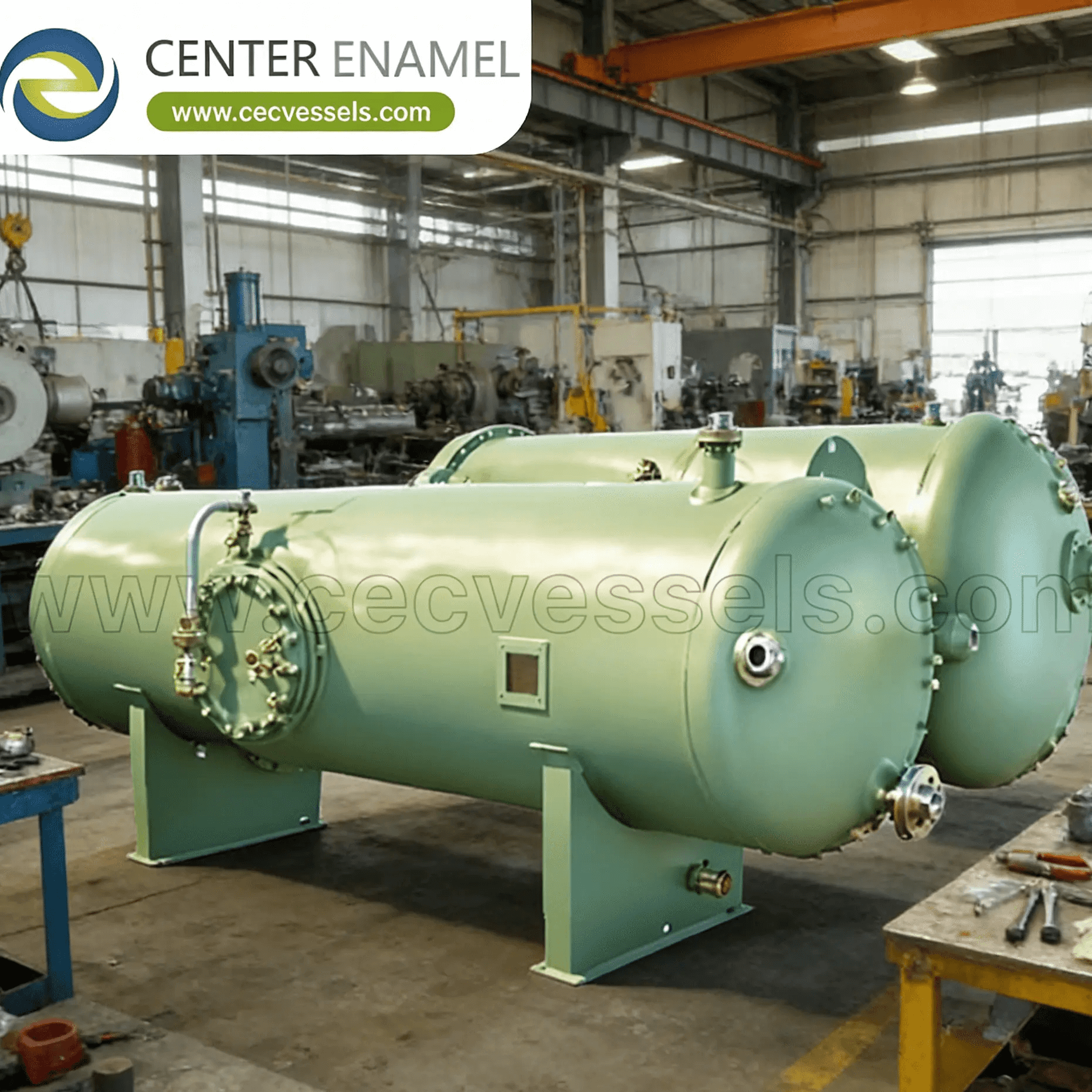
What Is a Tubular Reactor? Definition and Applications
A tubular reactor is a continuous-flow reactor in which reactants enter one end of a tube, react as they move through the reactor, and leave as products at the other end. It is also commonly called a tubular flow reactor or tube reactor. Tubular reactors are widely used in chemical, petrochemical, pharmaceutical, polymer, food, and other process industries. Their long tubular structure allows reaction conditions to change progressively along the reactor length, making them suitable for continuous production and processes that benefit from plug flow characteristics.
How Does a Tubular Reactor Work? The basic operating principle of a tubular reactor is continuous material flow. One or more reactants are continuously fed into the reactor inlet. As the materials travel through the tube, chemical reactions take place along the flow path. The resulting products are then continuously discharged from the outlet. Unlike a batch reactor, which processes a fixed quantity of material during each production cycle, a tubular reactor can operate continuously. This makes it suitable for production processes that require a steady feed and product stream. In an ideal tubular flow reactor, the fluid moves through the reactor with limited axial mixing. The concentration of reactants gradually changes from the inlet to the outlet as the reaction progresses. Temperature can also vary along the reactor depending on the reaction and heat transfer arrangement. For this reason, tubular reactors are often associated with plug flow reactors, or PFRs. In practice, the actual flow pattern depends on reactor geometry, fluid properties, flow conditions, and internal configuration.
Main Structure of a Tubular Reactor
A tubular reactor usually consists of a long cylindrical tube with an inlet and outlet. Depending on the process requirements, additional components can be incorporated into the reactor system.
The main components may include: Reactor tube The reactor tube provides the main reaction space. Its diameter and length are selected according to the required reaction volume, flow rate, residence time, and process conditions. Inlet and outlet connections The inlet introduces feed materials into the reactor, while the outlet continuously removes the reaction products. Multiple feed points can also be used when reactants need to be introduced at different locations. Heating or cooling system Some reactions require temperature control during continuous operation. A tubular reactor can be combined with a jacket, heating medium, cooling medium, or external heat exchanger to control the temperature along the reactor. Catalyst section For catalytic processes, the tube can contain a fixed catalyst bed or other catalytic materials. Reactants pass through the catalyst zone and react on the catalyst surface. Instrumentation Temperature, flow, pressure, level, and other process parameters can be monitored using suitable instruments. Automated control systems can be integrated to maintain stable process operation.
Types of Tubular Reactors
Tubular reactors can be designed in different configurations according to the reaction characteristics and production requirements.
Single-Tube Reactor A single-tube reactor uses one continuous reaction tube. It has a relatively simple structure and can be used for laboratory, pilot-scale, and industrial processes depending on its size.
Multitubular Reactor A multitubular reactor contains multiple parallel tubes installed within a common structure. This configuration increases the available reaction area while allowing heat transfer through the tube walls. Multitubular designs are commonly used when temperature control and heat transfer are important parts of the process.
Packed-Bed Tubular Reactor A packed-bed tubular reactor contains catalyst particles or other solid materials inside the tube. The feed flows through the packed material while the desired reaction takes place. This design is widely used for heterogeneous catalytic reactions in chemical processing.
Coil Tubular Reactor A coil tubular reactor uses a tube arranged in a spiral or coiled configuration. The compact arrangement provides a long reaction path within a relatively small installation area. Coiled reactors can be used for continuous chemical production, heat-sensitive processes, and applications requiring controlled residence time.
Tubular Reactor vs. CSTR
Tubular reactors and continuous stirred-tank reactors, or CSTRs, are both continuous reactors, but their flow patterns are different. A tubular reactor generally allows reactants to move progressively from the inlet to the outlet. Concentration and temperature may therefore change along the reactor length. A CSTR uses mechanical or other forms of mixing to maintain a relatively uniform composition throughout the reactor vessel. The choice between these reactor types depends on reaction kinetics, residence time requirements, mixing requirements, heat transfer, feed characteristics, and production capacity. For reactions that benefit from gradual changes in concentration along the flow path, a tubular flow reactor can be an effective configuration.
Industrial Applications of Tubular Reactors
Tubular reactors are used across many industrial sectors because they can provide continuous and controlled reaction processing. Chemical Manufacturing Chemical manufacturers use tubular reactors for continuous production of various organic and inorganic chemicals. They can be designed for liquid-phase, gas-phase, or multiphase reactions. Petrochemical Processing Tubular reactors are widely associated with petrochemical processing. They can be used for processes such as hydrocarbon conversion, oxidation, hydrogenation, and other continuous chemical reactions. Polymer Production Some polymerization processes can be performed in tubular reactors. The continuous flow arrangement allows reaction conditions to be controlled along the reactor length, which can support consistent polymer production. Pharmaceutical Manufacturing Tubular flow reactors can be used in pharmaceutical and fine chemical production, particularly for continuous synthesis. They can provide controlled residence time and allow reaction stages to be integrated into continuous processing systems. Food and Biochemical Processing Certain food, biochemical, and fermentation-related reactions can use tubular reactor configurations when continuous flow and defined residence time are required. Specialty Chemical Production Tubular reactors are also suitable for specialty chemicals where accurate control of feed rate, reaction time, temperature, and material flow is required.
Advantages of Tubular Reactors
Tubular reactors offer several features that make them attractive for continuous industrial processing. Continuous production Materials can be continuously fed into the reactor and products can be continuously discharged, reducing the need for repeated batch loading and unloading. Efficient use of reactor volume The tubular configuration provides a long reaction path within a relatively compact structure. This can support efficient use of the available reactor volume. Controlled residence time The combination of reactor volume and flow rate determines the approximate residence time of materials inside the reactor. This provides an important parameter for reaction process design. Good plug flow characteristics Under suitable operating conditions, tubular reactors can approach plug flow behavior. This allows reactant concentration to change progressively along the reactor length. Flexible heat transfer Tubular reactors can be designed with external heating or cooling systems, and multitubular configurations can provide a large heat transfer area. Easy integration into continuous processes A tubular flow reactor can be connected with pumps, heat exchangers, separators, mixers, and other process equipment to form an integrated continuous production system.
Key Factors in Tubular Reactor Design
The design of tubular reactors depends on the characteristics of the reaction and the required production capacity. Important factors include reactor volume, tube diameter, tube length, flow rate, residence time, reaction kinetics, material properties, heat transfer requirements, catalyst type, and construction materials. The reactor material should also be selected according to the chemical properties and operating temperature of the process. Stainless steel, carbon steel, nickel alloys, glass-lined materials, and other engineering materials may be considered depending on the application. For larger production systems, engineers may use multiple tubes, multiple reaction zones, staged feed injection, or integrated heating and cooling sections to achieve the required process performance.
A tubular reactor is a continuous-flow reactor that uses a tube as the main reaction space. Reactants continuously move through the reactor while the chemical reaction progresses along the flow path. Tubular reactors can be configured as single-tube, multitubular, packed-bed, or coiled systems.
Because of their continuous operation, controlled residence time, flexible heat transfer options, and suitability for plug flow processes, tubular reactors are widely used in chemical manufacturing, petrochemical processing, polymer production, pharmaceutical synthesis, food processing, and specialty chemical production.
For each application, the tubular reactor design should be matched with the reaction kinetics, feed characteristics, production capacity, residence time, temperature requirements, catalyst system, and material selection to achieve the desired process performance.
|