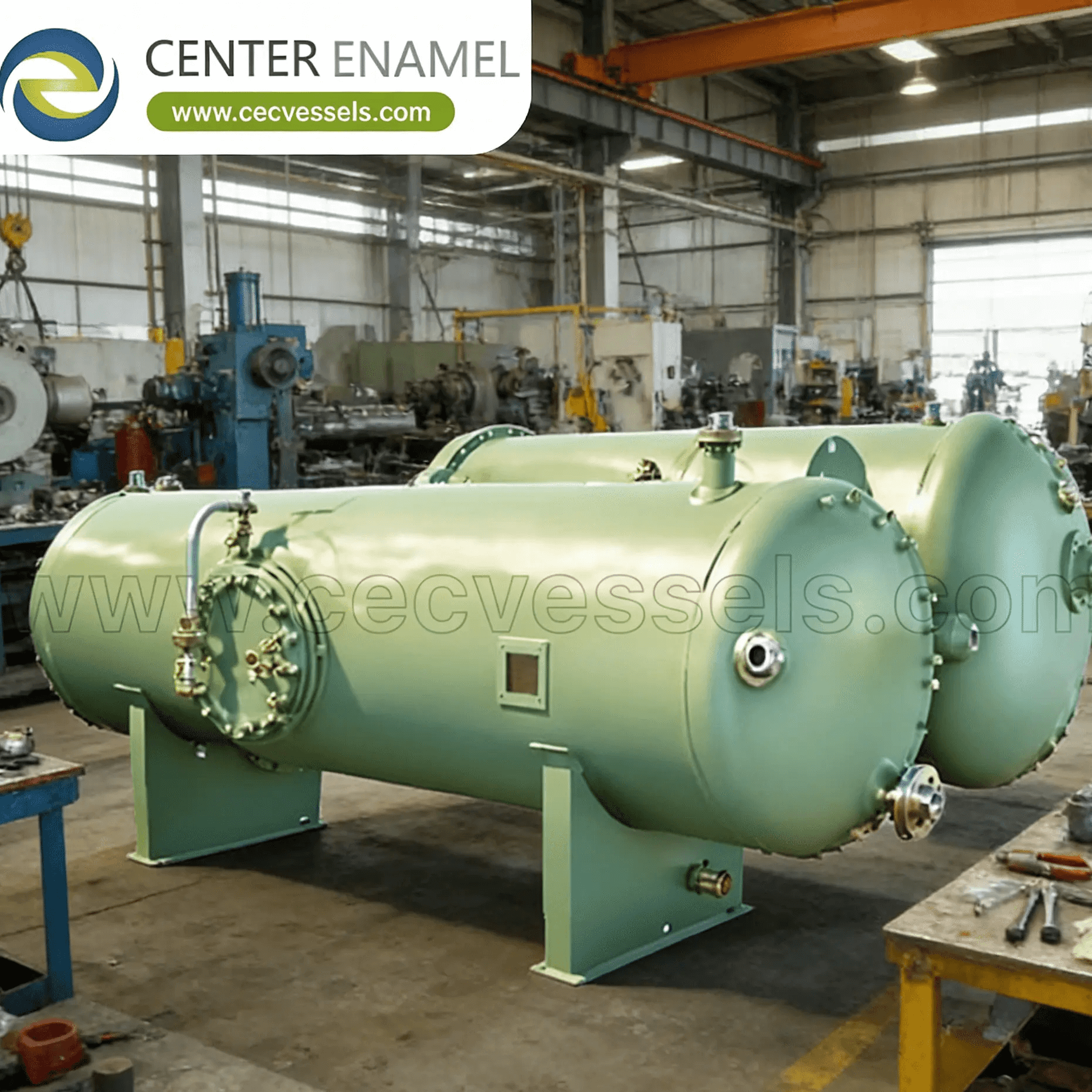
What Is An Example Of A Condenser?
In modern chemical refining, downstream pharmaceutical synthesis, and heavy industrial utility networks, managing phase transitions is a critical operational milestone. A condenser is a highly specialized heat transfer vessel engineered to cool a gaseous substance, causing it to undergo a physical phase change and revert into its liquid state. This rapid thermal conversion is achieved by extracting the latent heat of vaporization from the hot vapor and transferring it across a conductive metal barrier to a circulating cooling medium, such as utility water, glycol, or ambient air currents. As an established Condenser Manufacturer, Center Enamel develops high-performance thermal containment and fluid processing solutions optimized for global factory layouts. By adhering to international engineering codes including the ASME BPVC, BS EN 13445, and GB/T 150.1-150.4-2024, these heavy-duty vessels ensure structural integrity and consistent performance for global industrial partners.
The Fundamental Mechanism of Phase CondensationThe continuous operation of an industrial condenser relies on basic thermodynamic principles, specifically the controlled manipulation of thermal energy and volumetric phase change. When volatile processing compounds are heated inside upstream reactors or distillation columns, they vaporize into high-energy gaseous streams.
As a leading provider of China Condenser Manufacturer technology, Center Enamel constructs specialized containment equipment designed to intercept these hot vapor streams. As the gas enters the condenser chamber, it passes across a dense matrix of chilled tubes or metal plates. The massive temperature differential forces the gas molecules to lose their latent kinetic energy, instantly condensing into liquid droplets that collect at the base of the vessel shell. This continuous phase extraction allows manufacturing facilities to reclaim expensive chemical solvents, maintain steady vacuum profiles, and recycle pure water back into factory loops.
Primary Industrial Examples of CondensersIndustrial manufacturing operations select and configure specific types of condensers based on fluid chemistry, target condensation rates, and available utility profiles: 1. Shell and Tube CondensersThis configuration represents the standard for heavy-duty chemical and petroleum refining complexes. The mechanical design features a large outer cylindrical shell enclosing a matrix of parallel internal tubes. In a typical horizontal shell and tube configuration, hot chemical vapors enter the shell cavity through top header nozzles and expand across the external walls of the tubes, guided by internal baffles. Simultaneously, cold utility cooling water flows continuously through the inside of the tubes, absorbing the thermal energy and causing the liquefied condensate to drain out through the bottom port.
2. Plate CondensersFor specialized skids or facility layouts where physical floor space is restricted, welded or gasketed plate condensers are deployed. These units utilize a series of thin, corrugated metal plates stacked together to form alternating, independent fluid channels. The corrugated profiles induce localized fluid turbulence even at low flow velocities, maximizing the heat transfer coefficient within a very compact footprint, which significantly reduces the total material weight of the cooling assembly.
3. Air-Cooled Condensers (Fin-Fan Condensers)In geographic regions where utility cooling water is scarce or heavily regulated by local environmental protection codes, factories utilize air-cooled arrays. The hot process vapors pass through long banks of horizontally arranged finned tubes while massive automated mechanical fans force ambient air currents across the external fins, driving the physical transition entirely through air convection without consuming water resources.
Engineering Dimensions of Condenser DesignDesigning a durable, high-efficiency industrial condenser requires a precise evaluation of several overlapping mechanical, thermal, and chemical design variables:
Vapor Velocity and Flow Optimization: Entering gases occupy a much larger physical volume than their resulting liquid phase. The condenser inlet nozzles and internal vapor distribution headers must be carefully sized to accommodate high volumetric velocities without creating restrictive bottlenecks, ensuring smooth fluid transitions.
Fluid Chemistry and Advanced Metallurgy: As chemical vapors condense, they can form highly aggressive corrosive mixtures, especially if trace moisture, organic acids, or sulfur derivatives are present. Selecting the correct metallurgy—such as premium 316L stainless steel, high-grade carbon steel, or advanced duplex alloys—is essential to prevent chemical pitting, minimize structural stress, and preserve vessel integrity over decades of continuous exposure.
Non-Condensable Gas Removal: Industrial vapor streams often carry trace amounts of air, nitrogen, or other non-condensable gases. If left unmanaged, these gases will form an insulating blanket around the cooling tubes, dropping the heat transfer efficiency. Condensers must incorporate targeted vent ports or vacuum pump attachments near the cold end of the shell to continuously remove these gas fractions.
Mechanical Components of Advanced Condensation VesselsEvery industrial unit produced by Center Enamel is a precision-manufactured pressure vessel built for long-term service, featuring specialized components to optimize fluid management:
Vessel Shell and Channel Heads: The primary structural containment boundary, fabricated from premium steel plates in strict compliance with GB/T 150.1-150.4-2024 standards.
High-Conductivity Tube Bundles: High-surface-area tube matrices optimized to facilitate rapid, barrier-free energy transfer between separate fluid streams.
Thick CNC-Machined Tubesheets: Heavy steel circular plates that securely anchor the ends of the tubes, forming a reliable mechanical seal that prevents fluid cross-contamination.
Segmented Fluid Baffles and Support Plates: Internal plates positioned inside the shell to structurally support the tubes and force the shell-side fluid into a turbulent, zigzag flow path, maximizing thermal efficiency.
Vapor Distribution Impingement Plates: Sacrificial metal plates placed directly beneath the primary inlet nozzle to absorb the kinetic impact of incoming gases, protecting the underlying tube bundle from physical wear.
Integrated Gasket and Sealing Rings: Advanced multi-layer seals positioned between the channel head and the tubesheet to maintain complete containment separation between the separate channels.
Vortex Breakers: Specialized structural caps placed over bottom condensate discharge nozzles to ensure smooth fluid dynamics during liquid removal, preventing gas entrainment in downstream pump lines.
Diverse Industrial Applications of Condenser TechnologyThe requirement for durable, high-efficiency condensers and auxiliary fluid containment spans across a wide array of global sectors served by Center Enamel:
Petrochemical and Refinery Fractional Systems: Functioning as overhead condensers on distillation columns to liquefy volatile hydrocarbon fractions, converting them into commercial fuels and chemical feedstocks.
Specialty Chemical and Solvent Recovery Skids: Reclaiming expensive organic solvents, alcohols, and chemical intermediates from the exhaust lines of jacketed reactors, minimizing resource waste.
Industrial Utility Power Infrastructure: Condensing low-pressure exhaust steam exiting electricity-generating turbines back into high-purity water, which is then routed directly back to the primary boiler feedwater loop.
Environmental Wastewater Treatment: Implementing advanced horizontal and vertical separation vessels to treat industrial landfill leachate and clean complex factory runoff water.
Factory Utility Control Networks: Operating steam distribution cylinders and condensate tanks to organize high-temperature utility lines across industrial complexes.
Large-Scale Industrial Aquaculture Support: Fabricating vertical clarification tanks and multi-stage biological containment units to maintain strict water quality standards.
Integration within Industrial Process NetworksIndustrial condensers operate as central thermal management hubs within comprehensive processing and energy networks. Center Enamel provides a comprehensive range of equipment that works in tandem with these units:
Steam Distribution Cylinders: Organizing and directing high-temperature steam lines used to heat raw chemical feedstocks before they undergo distillation and subsequent condensation loops.
Condensate Tanks: Collecting hot purified water and process fluids discharged from condenser bases or steam loops for recycling, supporting overall facility resource conservation.
Multi-Phase Separators: Working immediately downstream of process loops to separate liquefied chemical products from remaining non-condensable fuel gases and process water.
Coalescing Oil Separators: Purifying auxiliary fluids and cooling water streams to prevent grease or organic oils from coating heat transfer surfaces, preserving thermal conductivity.
Resin Tanks and Fiber Adsorption Tanks: Providing advanced upstream and downstream fluid treatment to ensure utility loops remain entirely free of scale-forming minerals.
Engineering Design Standards and Global ComplianceThe reliability of a high-performance industrial condenser is guaranteed by strict adherence to international fabrication codes. Center Enamel ensures that every phase of manufacturing complies with the exact regulatory benchmarks required by the target market.
ASME Boiler and Pressure Vessel Code (BPVC)The ASME Section VIII is the premier global standard for pressure equipment manufacturing. It defines the exact mathematical equations for material selection, wall thicknesses, and structural reinforcement for vessels handling volatile fluids under thermal loads. As a certified manufacturer, Center Enamel ensures that its condenser shells are designed with full safety coefficients for long-term operational security.
GB/T 150.1-150.4-2024The GB/T 150 series is the national standard for metal pressure vessels in China. The 2024 update represents the latest advancements in structural finite element analysis, automated welding metrics, and modern steel grade certifications. Adhering to these updated standards guarantees that vessels are optimized for modern industrial facilities and domestic project compliance.
BS EN 13445For the European market, BS EN 13445 outlines harmonized rules for unfired pressure vessels, placing a significant emphasis on material fatigue analysis and advanced non-destructive testing regimes to ensure long-term structural security under cyclic production demands.
Our high-performance pressure vessels serve a vast industrial landscape, from petroleum refining and chemical processing to food, dairy, and brewing. We deliver precision-engineered solutions for pharmaceuticals, power generation, and wastewater treatment, ensuring compliance with the world’s most stringent safety codes. Our systems are designed for peak efficiency and longevity, empowering global partners to excel in even the most challenging environments.
1. Chemical Industry Project lProject Location: Hubei, China lPressure Vessels: Resin tanks, Coalescing oil separators, Fiber adsorption tanks, Compressed air storage tanks, Condensate tanks, and Steam distribution cylinders lMaterial: Stainless Steel and Carbon Steel. lDesign Standards: GB/T 150 (Pressure Vessels) lApplication: Integrated chemical fluid processing, separation, and steam distribution for chemical plants
2. Seawater Desalination Project lProject Location: Malta lPressure Vessels: Concentrated Sulfuric Acid Storage Tanks (Vertical layout) lMaterial: Carbon Steel lDesign Standards: EN 13445 lApplication: Storage of 98% concentrated sulfuric acid.
3. Waste-to-Energy Incineration Project lProject Location: Hebei, China lPressure Vessels: Large-scale Landfill Leachate Storage and Treatment Tanks (2 Sets) lMaterial: Carbon Steel lDesign Standards: GB 50341-2003 and GB 50128-2005. lApplication: Wastewater Treatment
4. Aquaculture Wastewater Treatment Project lProject Location: Sichuan, China lPressure Vessels: Vertical Wastewater Treatment Vessels (Φ 6×16.5 m (h) 1 set; Φ 7.6×16.5 m (h) 1 set) lMaterial: Carbon Steel lDesign Standards: National standard for vertical cylindrical storage tanks. lApplication: Aquaculture Wastewater Treatment
Maintenance Strategies for Condenser Vessel LongevityTo ensure an industrial condenser continues to operate at peak thermal and phase-change efficiency, regular maintenance and operational verification are essential:
Tube Bundle Inspection and Descaling: Periodically flushing the utility water side of the tubes using targeted chemical agents or high-pressure water jets to dissolve mineral scales, algae, or rust deposits, restoring pristine thermal conductivity.
Vapor-Side Backflushing and Degreasing: Regularly cleaning the shell-side vapor channels to remove any accumulated carbon deposits, heavy hydrocarbon residues, or grease films that could form a thermal barrier on the outer tube walls.
Tubesheet Weld NDT Inspections: Checking the tube-to-tubesheet expanded or welded joints using non-destructive testing (NDT), such as dye penetrant testing or eddy current testing, to ensure no process vapor is leaking into the cooling utility loop.
Safety Relief Valve Calibration: Regularly testing the pressure relief valves attached to the vessel shell to ensure they are set to the correct discharge profile, protecting the structural integrity of the overall processing system.
The Center Enamel Manufacturing AdvantageChoosing Center Enamel as your China Condenser Manufacturer partner means connecting with an industry leader in technical innovation, advanced engineering, and top-tier industrial fabrication across all fluid classifications.
Advanced Computational EngineeringOur team utilizes Finite Element Analysis (FEA) and Computational Fluid Dynamics (CFD) to digitally simulate exactly how complex process vapors and cooling utilities move inside the condenser shell and interact with tube bundles and internal components. This allows us to optimize tube layouts, nozzle locations, and baffle configurations before physical production begins.
Precision Fabrication and Automated WeldingWe operate a state-of-the-art manufacturing facility equipped with automated plate rolling lines, heavy-duty CNC machining setups, and advanced automated welding networks. This commitment to precision minimizes manual variation, accelerates production timelines, and guarantees that every weld profile complies with the strict quality standards of GB/T 150-2024 and ASME codes.
Turnkey Manufacturing ManagementFrom initial material inspection and certified weld qualifications to complete non-destructive X-ray testing, post-weld heat treatment, and final hydrostatic verification, Center Enamel manages the entire fabrication sequence under one roof. This comprehensive oversight ensures elite structural reliability, seamless system integration, and long-term operational success for our global industrial partners.
Summary of Condensation ExcellenceIn conclusion, examining an example of a condenser reveals an indispensable technology within modern industrial processing, serving as a primary mechanism for phase regulation, product collection, and resource conservation. Whether configured as a heavy-duty shell and tube setup, a space-saving plate array, or an eco-friendly air-cooled layout, the thermal efficiency, operational safety, and resource utility of a facility depend completely on the design and structural execution of its condenser vessels. By engineering and fabricating these critical units in absolute compliance with international benchmarks like the ASME code and the updated GB/T 150.1-150.4-2024 standards, Center Enamel delivers high-performance processing equipment that maximizes phase transitions, decreases operational costs, and provides durable structural performance for our global industrial partners.
|