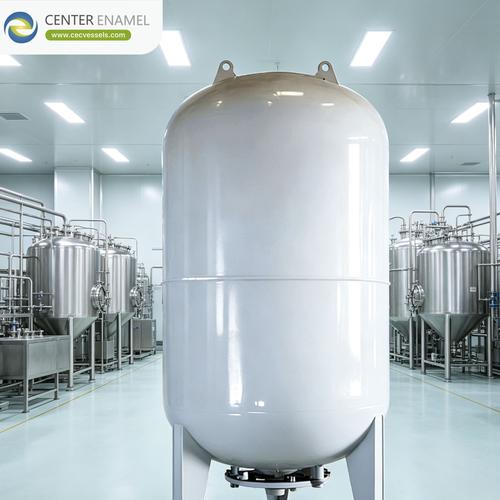
An industrial condenser is heat-transfer equipment that removes heat from a vapor so that it changes into liquid. It is used in processes such as distillation, solvent recovery, chemical manufacturing, and industrial cooling. Condenser performance depends on vapor properties, cooling-medium conditions, heat-transfer area, operating pressure, and the required condensation duty.
Industrial condensers are designed for different process conditions. A shell-and-tube condenser may suit many industrial vapor streams, a plate condenser may provide compact heat transfer for compatible services, and an air-cooled condenser may be appropriate when cooling water is limited or unavailable. Selecting the right design requires evaluating the process stream, heat load, material compatibility, and operating requirements.
What Is an Industrial Condenser?
An industrial condenser transfers heat from a vapor to a cooling medium, allowing the vapor to condense into liquid. The cooling medium may be water, another circulating liquid, or ambient air, depending on the condenser design and process requirements.
Condensation releases latent heat as vapor changes phase. The condenser must remove this heat, along with any additional sensible heat that must be removed to reach the required outlet condition.
In chemical plants, condensers can recover valuable solvents, cool process vapors, support distillation, and return condensed liquid to a process vessel. In industrial cooling systems, they can reject heat from a refrigerant or another working fluid. The exact function depends on the process configuration.
How Does an Industrial Condenser Work?
An industrial condensation process involves vapor entering the condenser, transferring heat through a heat-transfer surface, and leaving as liquid, a partially condensed stream, or a mixture of liquid and uncondensed vapor.
1. Vapor Enters the Condenser
The incoming stream may contain a single condensable vapor, several vapor components, or a mixture of condensable vapor and non-condensable gases. Its temperature, pressure, composition, flow rate, and degree of superheat affect the required condenser design.
For mixed vapor streams, condensation behavior depends on the composition and vapor-liquid equilibrium. The outlet may therefore contain both condensed liquid and remaining vapor.
2. Heat Transfers to the Cooling Medium
The vapor transfers heat through a heat-transfer surface to the cooling medium. The cooling medium absorbs the released heat and leaves at a higher temperature when it is being heated by the process stream.
The available heat-transfer area, temperature difference, fluid properties, flow distribution, and surface condition all influence the rate of heat transfer. Fouling or poor flow distribution can reduce the effective thermal performance.
3. Vapor Condenses into Liquid
When the vapor loses sufficient heat under the prevailing pressure and composition conditions, part or all of the condensable vapor changes into liquid. For a pure substance at a given pressure, condensation occurs around its saturation temperature. Mixtures may condense over a temperature range.
Some processes require complete condensation, while others need only partial condensation to separate selected components or control downstream process conditions.
4. Condensate and Remaining Gas Are Discharged
The condensed liquid is collected and discharged through an appropriately designed outlet. Depending on the process, it may return to a distillation column, flow into a receiver, enter a solvent recovery system, or move to another processing stage.
If non-condensable gases are present, the equipment and connected system must provide a suitable route for their removal. Accumulated non-condensable gases can reduce effective heat transfer and interfere with condensation.
What Are the Main Types of Industrial Condensers?
Industrial condensers are classified by their construction, cooling method, and process application. The appropriate type depends on the vapor properties, heat duty, available utilities, pressure requirements, maintenance needs, and materials compatibility.
Shell-and-Tube Condenser
A shell-and-tube condenser contains a bundle of tubes enclosed within a shell. One fluid flows through the tubes while the other flows on the shell side. The vapor condenses on the selected side as heat passes through the tube walls to the cooling medium.
This design is widely used in chemical processing, petroleum refining, solvent recovery, and other industrial services. Its suitability depends on the stream arrangement, heat-transfer duty, pressure and temperature conditions, fouling tendency, and cleaning requirements.
Plate Condenser
A plate condenser uses a series of plates to provide heat-transfer surfaces between process vapor and the cooling medium. Its compact construction can offer high heat-transfer performance within a relatively small footprint.
Plate designs may be appropriate for compatible fluids and operating conditions where compactness and thermal efficiency are important. Gasket compatibility, pressure and temperature limits, fluid cleanliness, and maintenance requirements must be checked before selection. Not every plate heat exchanger is suitable for every condensing service.
Air-Cooled Condenser
An air-cooled condenser rejects heat directly to ambient air, typically using finned tubes and fans to increase heat transfer. It can reduce dependence on cooling water and may be useful at sites where water availability is limited.
Its performance depends on ambient air temperature, airflow, fin and tube design, process conditions, and seasonal variations. Higher ambient temperatures can reduce the available temperature difference, so the required condensing conditions must be assessed against the site's climate and operating range.
Water-Cooled Condenser
A water-cooled condenser uses circulating water or another suitable liquid as the cooling medium. Water-cooled systems can provide effective heat rejection when a reliable cooling-water supply and appropriate water treatment are available.
Design considerations include cooling-water inlet temperature, allowable outlet temperature, water quality, fouling, corrosion, and the cooling system's capacity. The specific condenser construction may be shell-and-tube, plate-type, or another suitable arrangement.
How Do You Select an Industrial Condenser?
Selecting an industrial condenser requires defining the process duty before deciding on the equipment type or size. The following factors are important during preliminary engineering and equipment specification.
Condenser Duty and Vapor Flow Rate
The condensation duty is the amount of heat that the condenser must remove per unit time. It depends on the vapor flow rate, vapor composition, inlet condition, required outlet condition, and phase-change behavior.
For preliminary estimates, the heat load may include both sensible cooling and latent heat released during condensation. Where mixtures are involved, phase equilibrium and composition changes may need to be included in the calculation.
The required heat-transfer area cannot be reliably determined from vapor flow rate alone. Engineers also need thermal properties, operating pressure, cooling-medium conditions, the expected overall heat-transfer coefficient, and an appropriate design allowance.
Inlet Pressure and Temperature
The inlet pressure and temperature influence the vapor's condensation conditions. Pressure changes can alter saturation temperature and the amount of cooling required, while the inlet temperature determines whether the vapor requires initial sensible cooling before condensation begins.
The design should account for the expected operating range rather than only a single nominal condition. Startup, turndown, seasonal changes, and variations in process load may also affect condenser performance.
Cooling-Medium Conditions
The cooling medium must be able to absorb the required heat while maintaining the specified outlet condition. Important inputs include the cooling-medium type, inlet temperature, flow rate, allowable outlet temperature, and utility availability.
Water-cooled equipment may be suitable where cooling water is readily available. Air-cooled equipment may be preferable when water consumption must be reduced, although its performance is more sensitive to ambient temperature. Other cooling media may be selected for specialized processes.
Condensable Vapor and Non-Condensable Gas Content
A stream containing non-condensable gases behaves differently from a stream consisting entirely of condensable vapor. Non-condensable gases can accumulate near heat-transfer surfaces and create additional resistance to heat transfer.
The vapor composition, gas fraction, and required venting arrangement should therefore be identified during design. For solvent recovery and chemical processing, the process specification should also address condensate composition and the desired recovery level.
Materials and Corrosion Resistance
The condenser's materials must be compatible with the vapor, condensate, cooling medium, cleaning chemicals, and operating conditions. Material selection should consider corrosion mechanisms, temperature, pressure, and contamination limits.
Stainless steel, carbon steel, and other alloys may be appropriate for different services. No single material is suitable for all industrial condensers, and selection should be based on documented process requirements.
Fouling, Cleaning, and Maintenance
Fouling can develop when deposits accumulate on heat-transfer surfaces. Depending on the stream, deposits may include solids, polymerized materials, scale, or other process contaminants.
The condenser specification should identify the fouling tendency and required cleaning method. Tube-side access, removable bundles, plate accessibility, and provisions for inspection may influence the most practical design for long-term operation.
What Is the Difference Between a Condenser and a Heat Exchanger?
A heat exchanger transfers heat between two or more fluids, while a condenser is designed specifically to remove heat from a vapor so that it condenses into liquid. A condenser is therefore a type of heat exchanger, but not every heat exchanger performs condensation.
A sensible-cooling heat exchanger may reduce a fluid's temperature without changing its phase. A condenser must account for the heat released during condensation as well as any sensible cooling required by the process.
| Feature | Industrial Condenser | General Heat Exchanger |
|---|
| Primary function | Condenses vapor by removing heat | Transfers heat between process streams |
| Phase change | Usually involves vapor-to-liquid condensation | May operate without a phase change |
| Main thermal consideration | Latent heat, vapor conditions, and condensate behavior | Depends on the specified heating or cooling duty |
| Typical applications | Distillation, solvent recovery, vapor condensation | Feed preheating, cooling, heating, and heat recovery |
| Outlet condition | Condensate, or a mixture of liquid and uncondensed vapor | Heated or cooled fluid, depending on the duty |
In practice, the equipment name depends on its primary process duty. A shell-and-tube unit may be used as a condenser in one service and as a sensible heat exchanger in another.
Where Are Industrial Condensers Used?
Chemical Manufacturing
In chemical plants, industrial condensers remove heat from reaction vapors, recover condensable materials, and control vapor flow between process stages. The required configuration depends on the reaction chemistry, vapor composition, and downstream separation requirements.
Solvent Recovery
A solvent recovery condenser cools solvent-containing vapor to recover liquid solvent for collection, reuse, or further purification. Recovery performance depends on solvent properties, vapor concentration, cooling conditions, system pressure, and the presence of non-condensable gases.
When several volatile components are present, the condensate may require additional separation before it can be reused. Condenser design should therefore align with the intended recovery target rather than assume that all incoming vapor will become a single pure liquid.
Distillation Systems
In distillation, an overhead condenser removes heat from vapor leaving the column. The condensed liquid may be collected as product, returned as reflux, or divided between these streams.
The required condenser duty depends on the vapor flow, composition, pressure, and reflux requirements. Condenser performance influences the operation of the wider distillation system, but column separation and condenser heat transfer are distinct design tasks.
Petroleum Refining
Refineries use condensers in applications such as fractionation, vapor recovery, and selected process cooling duties. The equipment must suit the hydrocarbon composition, operating conditions, and any corrosive or fouling components present in the stream.
The specific duty determines whether a shell-and-tube, air-cooled, or other condenser arrangement is appropriate. The design should also consider the relationship between condenser operation and connected process equipment.
Industrial Cooling and Refrigeration
In refrigeration and process cooling systems, a condenser rejects heat from the refrigerant or working fluid. The refrigerant typically enters as vapor and leaves as liquid or a liquid-dominant stream, depending on the system design and operating conditions.
The required condenser performance depends on the refrigeration load, refrigerant properties, heat-rejection medium, and operating conditions. An air-cooled and a water-cooled condenser may perform the same general function but have different utility and environmental requirements.
Frequently Asked Questions About Industrial Condensers
What information is needed to size an industrial condenser?
Key inputs include vapor flow rate and composition, inlet pressure and temperature, required outlet condition, cooling-medium type and inlet temperature, allowable cooling-medium outlet temperature, and expected fouling behavior. Engineers may also need operating-range data, pressure-drop limits, materials requirements, and condensate recovery objectives.
Why does an industrial condenser perform below its expected capacity?
Potential causes include insufficient cooling-medium flow, higher-than-expected inlet temperatures, fouling, non-condensable gas accumulation, flow maldistribution, or operating conditions that differ from the design basis. Troubleshooting should compare actual process data with the original thermal and hydraulic design assumptions.
How do non-condensable gases affect condenser performance?
Non-condensable gases can form a resistance layer near the heat-transfer surface and reduce the effective condensation rate. A suitable venting or gas-removal arrangement may be needed, depending on the process and the gas composition.
Is a shell-and-tube condenser better than an air-cooled condenser?
Neither type is universally better. Shell-and-tube condensers can suit services with an available liquid cooling medium, while air-cooled condensers can reduce cooling-water demand. The appropriate choice depends on heat duty, ambient conditions, utility availability, maintenance needs, and process requirements.
Can an industrial condenser recover solvents?
Yes. A solvent recovery condenser cools solvent-containing vapor so that condensable components can be collected as liquid. The achievable recovery depends on the solvent properties, vapor composition, operating pressure, cooling conditions, and the required product specification.
What is the difference between a condenser and a cooler?
A condenser is designed to condense vapor into liquid. A cooler generally reduces the temperature of a process stream and may operate without a phase change. Some equipment can perform both cooling and condensation duties when designed for the relevant operating conditions.
Selecting an Industrial Condenser for Reliable Process Performance
The right industrial condenser should be selected according to the vapor composition, condensation duty, operating pressure, cooling-medium conditions, materials compatibility, and maintenance requirements. The equipment type is only one part of the selection process; reliable performance also depends on proper thermal design, condensate drainage, and management of non-condensable gases.
For chemical manufacturers, refinery operators, and solvent recovery projects, a clear process specification helps engineers evaluate condenser configuration and estimate the required heat-transfer area. Actual dimensions and performance should be confirmed through application-specific thermal and mechanical design.


