What Is Latex Chemical Used For?
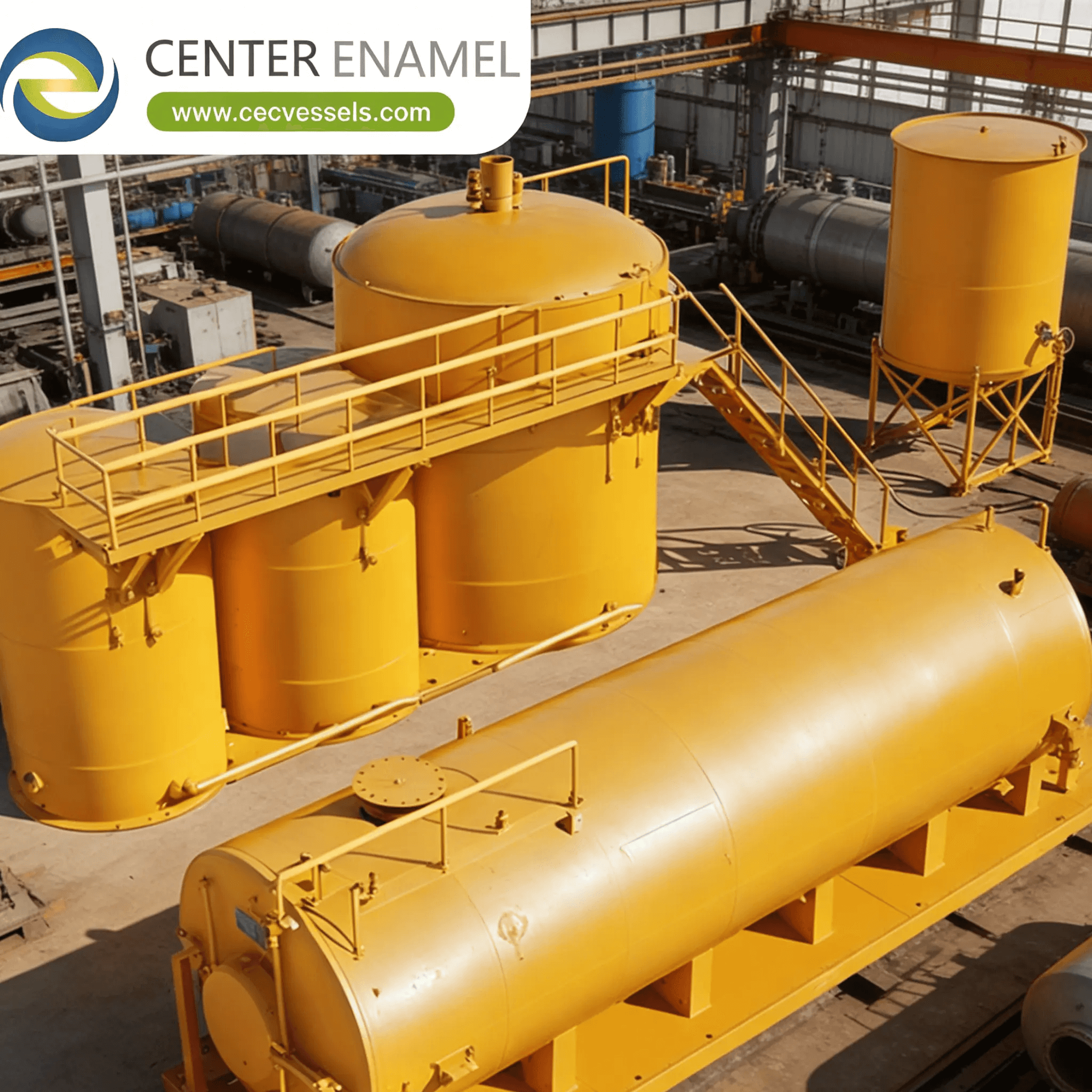
In modern chemical manufacturing, downstream polymer synthesis, and industrial materials engineering, managing specialized fluid emulsion systems is a fundamental operational requirement. A latex chemical is a stable aqueous dispersion of polymer microparticles widely utilized to manufacture high-performance coatings, resilient adhesives, construction additives, and molded synthetic rubber goods. The continuous formulation and polymerization of these intricate liquid compounds take place within a specialized latex reactor, which is a precision-engineered process vessel built to maintain complete thermodynamic balance and uniform fluid velocities. As an established Latex Reactor Manufacturer, Center Enamel develops elite-tier thermal containment and chemical processing systems optimized for global factory layouts. By adhering to strict international engineering codes including the ASME BPVC, BS EN 13445, and GB/T 150.1-150.4-2024, these heavy-duty processing vessels ensure structural integrity and consistent performance for global industrial partners.
The Chemical Foundation and Industrial Value of Latex DerivativesTo fully evaluate what latex chemicals are used for, one must examine the unique physical advantages that synthetic polymer emulsions provide to modern manufacturing chains. In its basic state, industrial latex is not a single chemical agent but a sophisticated emulsion consisting of synthetic rubber or plastic polymers suspended in an advanced aqueous matrix.
As a leading provider of China Latex Reactor Manufacturer technology, Center Enamel designs containment equipment that optimizes this delicate polymerization environment. When monomers like styrene, butadiene, or acrylic acid undergo emulsion polymerization inside the vessel shell, they form a liquid that flows easily, carries uniform material properties, and remains entirely free of volatile organic solvents. This eco-friendly water-based structure allows global factories to apply smooth protective films, develop durable structural bonds, and produce precise consumer goods efficiently, making latex chemistry a cornerstone of sustainable product manufacturing across the global factory complex.
Primary Industrial Applications of Latex ChemicalsIndustrial manufacturing operations utilize synthetic latex chemicals across several diverse commercial sectors, selecting specific polymer formulas to match field performance requirements:
1. Advanced Protective Coatings and PaintsThe architectural paint and decorative coatings sector represents one of the largest consumers of latex chemicals. Synthetic acrylic and vinyl acetate latices serve as the primary binding agents in water-based paints. When the paint is applied to a building wall or product surface, the water phase gradually evaporates, forcing the suspended polymer spheres to deform and fuse together into a continuous, weather-resistant plastic film that provides exceptional color retention and surface adhesion. 2. High-Performance Adhesives and Industrial GluesLatex formulations are highly valued in the packaging, wood processing, and footwear industries due to their exceptional bonding strength. Synthetic latices can be modified with tackifying resins to create quick-drying adhesives that form strong structural bonds with porous surfaces like paperboard, textiles, and wood panels without emitting harmful chemical vapors during the drying phase. 3. Construction and Concrete ModifiersIn modern civil engineering, latex chemicals are added directly to raw concrete and mortar mixtures. The polymer particles interlock within the concrete matrix as it cures, sealing microscopic pores and increasing the flexibility and moisture resistance of the final structural foundation. 4. Dipped Goods and Sanitary Medical ProductsThe manufacturing of medical examination gloves, sanitary barriers, and elastic bands relies heavily on dipping molds into liquid nitrile or chloroprene latex compounds, which undergo vulcanization to create uniform, puncture-resistant elastomeric barriers.
Technical Challenges in Latex Reactor EngineeringDesigning a durable, high-efficiency latex reactor requires a precise evaluation of several overlapping mechanical, thermal, and fluid variables:
Viscosity Control and Fluid Dynamics: As the polymerization reaction progresses inside the vessel shell, the liquid mixture undergoes a dramatic change in viscosity, shifting from a thin monomer fluid into a thick, sticky polymer emulsion. The reactor must incorporate advanced multi-stage mixing impellers, such as anchor or helical ribbons, to maintain constant fluid movement and prevent the polymer from sticking to the cold steel walls.
Exothermic Heat Dissipation: The synthesis of latex chemicals releases a massive amount of thermal energy. If this heat is not removed instantly, the internal temperature will rise rapidly, causing the latex emulsion to coagulate and turn into a solid block of waste plastic inside the vessel. Reactor designs must maximize the surface area of cooling jackets to maintain steady heat transfer rates.
Prevention of Shear Degradation: While intense mixing is necessary to distribute thermal loads, excessive mechanical shear force can rupture the thin surfactant layers surrounding individual latex particles, leading to premature clotting and system destabilization.
Mechanical Components of Advanced Latex ReactorsEvery processing unit produced by Center Enamel is a precision-manufactured containment vessel built for long-term chemical service, featuring specialized components to optimize emulsion management:
Vessel Shell and Dished Heads: The primary structural containment boundary, fabricated from premium stainless steel with ultra-smooth internal surfaces in strict compliance with GB/T 150.1-150.4-2024 standards.
Multi-Zone Cooling and Heating Jackets: External dimple jackets or half-pipe channels welded to the outer shell wall to circulate chilled utility water or heating steam, ensuring micro-level temperature regulation.
Custom Agitator Impeller Arrays: Tailored mixing shafts equipped with combination impellers designed to drive both vertical and radial fluid flow patterns without causing extreme local shear stress.
Internal Fluid Baffles: Vertical plates arranged along the inner perimeter of the shell to alter fluid pathways, eliminate vortexing, and maximize heat transfer coefficients along the jacket boundary.
Aseptic Mechanical Shaft Seals: Advanced multi-stage liquid-lubricated or dry gas seals surrounding the rotating mixer shaft to maintain complete sterile containment during high-speed rotation.
Precision CIP Spray Balls: Retractable or stationary fluid distribution nozzles positioned inside the upper dished head to facilitate complete, automated cleaning of internal walls between production batches.
Vortex Breakers: Specialized structural caps placed over bottom discharge nozzles to ensure smooth fluid dynamics during liquid removal and product harvesting.
Diverse Chemical System Infrastructure Served by Center EnamelThe requirement for durable pressure vessels, chemical containment, and fluid treatment loops spans across a wide array of global sectors served by Center Enamel:
Polymer and Resin Processing Factories: Supplying specialized jacketed reactors, blending columns, and monomer storage bladders to manufacture acrylic, epoxy, and alkyd compounds.
Petrochemical and Refining Complexes: Operating multi-phase separation vessels, shell and tube heat exchangers, and product coolers to isolate volatile hydrocarbon fractions.
Industrial Utility and Thermal Networks: Utilizing steam distribution cylinders, condensate tanks, and air receivers to organize high-temperature steam utility lines across industrial factory grids.
Environmental Wastewater Treatment Infrastructure: Implementing advanced horizontal and vertical separation vessels to treat industrial landfill leachate and clean oily factory runoff water.
Large-Scale Industrial Aquaculture Support: Fabricating vertical clarification tanks and multi-stage biological containment units to maintain strict water quality standards for aquatic habitats.
Integration within Industrial Process NetworksLatex reactors operate as central chemical processing nodes within comprehensive processing and utility networks. Center Enamel provides a comprehensive range of equipment that works in tandem with these units:
Steam Distribution Cylinders: Organizing and directing high-temperature steam lines used to heat raw monomer feeds or provide initial thermal ignition to reactor jackets.
Condensate Tanks: Collecting hot purified water and process fluids discharged from thermal heating loops for recycling, supporting overall facility resource conservation.
Tube Heat Exchangers: Adjusting the temperature of raw chemical feedstocks before they enter the primary reactor inlet nozzle, minimizing thermal shock inside the vessel shell.
Coalescing Oil Separators: Purifying auxiliary compressed air streams and cooling water loops to prevent grease or organic oils from building up on heat transfer surfaces.
Resin Tanks and Fiber Adsorption Tanks: Providing advanced upstream water treatment to ensure that utility cooling water loops remain entirely free of scale-forming minerals.
Engineering Design Standards and Global ComplianceThe reliability of a high-performance chemical reactor is guaranteed by strict adherence to international fabrication codes. Center Enamel ensures that every phase of manufacturing complies with the exact regulatory benchmarks required by the target market.
ASME Boiler and Pressure Vessel Code (BPVC)The ASME Section VIII is the premier global standard for pressure equipment manufacturing. It defines the exact mathematical equations for material selection, wall thicknesses, and structural reinforcement for vessels handling volatile fluids under thermal loads. As a certified manufacturer, Center Enamel ensures that its reactor shells are designed with full safety coefficients for long-term operational security.
GB/T 150.1-150.4-2024The GB/T 150 series is the national standard for metal pressure vessels in China. The 2024 update represents the latest advancements in structural finite element analysis, automated welding metrics, and modern steel grade certifications. Adhering to these updated standards guarantees that vessels are optimized for modern industrial facilities and domestic project compliance.
BS EN 13445For the European market, BS EN 13445 outlines harmonized rules for unfired pressure vessels, placing a significant emphasis on material fatigue analysis and advanced non-destructive testing regimes to ensure long-term structural security under cyclic production demands.
Our high-performance pressure vessels serve a vast industrial landscape, from petroleum refining and chemical processing to food, dairy, and brewing. We deliver precision-engineered solutions for pharmaceuticals, power generation, and wastewater treatment, ensuring compliance with the world’s most stringent safety codes. Our systems are designed for peak efficiency and longevity, empowering global partners to excel in even the most challenging environments.
1. Chemical Industry Project lProject Location: Hubei, China lPressure Vessels: Resin tanks, Coalescing oil separators, Fiber adsorption tanks, Compressed air storage tanks, Condensate tanks, and Steam distribution cylinders lMaterial: Stainless Steel and Carbon Steel. lDesign Standards: GB/T 150 (Pressure Vessels) lApplication: Integrated chemical fluid processing, separation, and steam distribution for chemical plants
2. Seawater Desalination Project lProject Location: Malta lPressure Vessels: Concentrated Sulfuric Acid Storage Tanks (Vertical layout) lMaterial: Carbon Steel lDesign Standards: EN 13445 lApplication: Storage of 98% concentrated sulfuric acid.
3. Waste-to-Energy Incineration Project lProject Location: Hebei, China lPressure Vessels: Large-scale Landfill Leachate Storage and Treatment Tanks (2 Sets) lMaterial: Carbon Steel lDesign Standards: GB 50341-2003 and GB 50128-2005. lApplication: Wastewater Treatment
4. Aquaculture Wastewater Treatment Project lProject Location: Sichuan, China lPressure Vessels: Vertical Wastewater Treatment Vessels (Φ 6×16.5 m (h) 1 set; Φ 7.6×16.5 m (h) 1 set) lMaterial: Carbon Steel lDesign Standards: National standard for vertical cylindrical storage tanks. lApplication: Aquaculture Wastewater Treatment
Maintenance Strategies for Chemical Reactor LongevityTo ensure an industrial latex reactor continues to operate at peak chemical and mechanical efficiency, regular maintenance and operational verification are essential:
Jacket Descaling and Flush Operations: Periodically flushing the external cooling jackets with chemical descaling agents to remove mineral deposits and rust scales, restoring pristine thermal conductivity for accurate temperature regulation.
Mechanical Seal Verification and Replacement: Regularly checking the integrity of mechanical shaft seals and nozzle gaskets to ensure no microscopic pathway exists for external airborne contaminants to breach the reaction boundary.
Internal Surface Electropolish Evaluation: Inspecting the internal steel surface finish during scheduled maintenance turnarounds to ensure no localized corrosion or polymer crust buildup has altered the smooth, cleanable profile.
Safety Relief Valve Calibration: Regularly testing the pressure relief valves attached to the vessel shell to ensure they are set to the correct discharge profile, protecting the structural integrity of the overall processing system.
The Center Enamel Manufacturing AdvantageChoosing Center Enamel as your China Latex Reactor Manufacturer partner means connecting with an industry leader in technical innovation, advanced engineering, and top-tier industrial fabrication across all vessel classifications.
Advanced Computational EngineeringOur team utilizes Finite Element Analysis (FEA) and Computational Fluid Dynamics (CFD) to digitally simulate exactly how complex polymer emulsions, gas bubbles, and thermal utilities move inside the reactor shell and interact with internal impellers. This allows us to optimize nozzle locations, impeller configurations, and jacket geometries before physical production begins.
Precision Fabrication and Quality ControlWe operate a state-of-the-art manufacturing facility equipped with automated plate rolling lines, heavy-duty CNC machining setups, and advanced automated welding networks. This commitment to precision minimizes manual variation, accelerates production timelines, and guarantees that every weld profile complies with the strict quality standards of GB/T 150-2024 and ASME codes.
Turnkey Manufacturing ManagementFrom initial metallurgical verification and certified weld qualifications to complete non-destructive evaluation, post-weld heat treatment, and final hydrostatic verification, Center Enamel manages the entire fabrication sequence under one roof. This comprehensive oversight ensures elite structural reliability, seamless system integration, and long-term operational success for our global industrial partners.
Summary of Chemical Reactor ExcellenceIn conclusion, exploring what latex chemicals are used for highlights an advanced manufacturing sector where precise chemical emulsion engineering intersects directly with high-performance pressure vessel design. The overall production yield, polymer quality, and operational safety of a resin or coatings manufacturing complex depend fundamentally on the mechanical configuration and structural execution of its underlying latex reactors and auxiliary thermal management networks. By designing and building these critical units in absolute compliance with international benchmarks like the ASME code and the updated GB/T 150.1-150.4-2024 standards, Center Enamel delivers high-performance processing equipment that maximizes energy recovery, decreases operational costs, and provides durable structural performance for our global industrial partners.
Looking for a reliable pressure vessel partner? From complex chemical systems to large-scale environmental projects, we turn your requirements into high-performance reality. Submit your design parameters or project specs now, and we will have a dedicated engineer reach out to you as soon as possible to discuss the next steps.
|