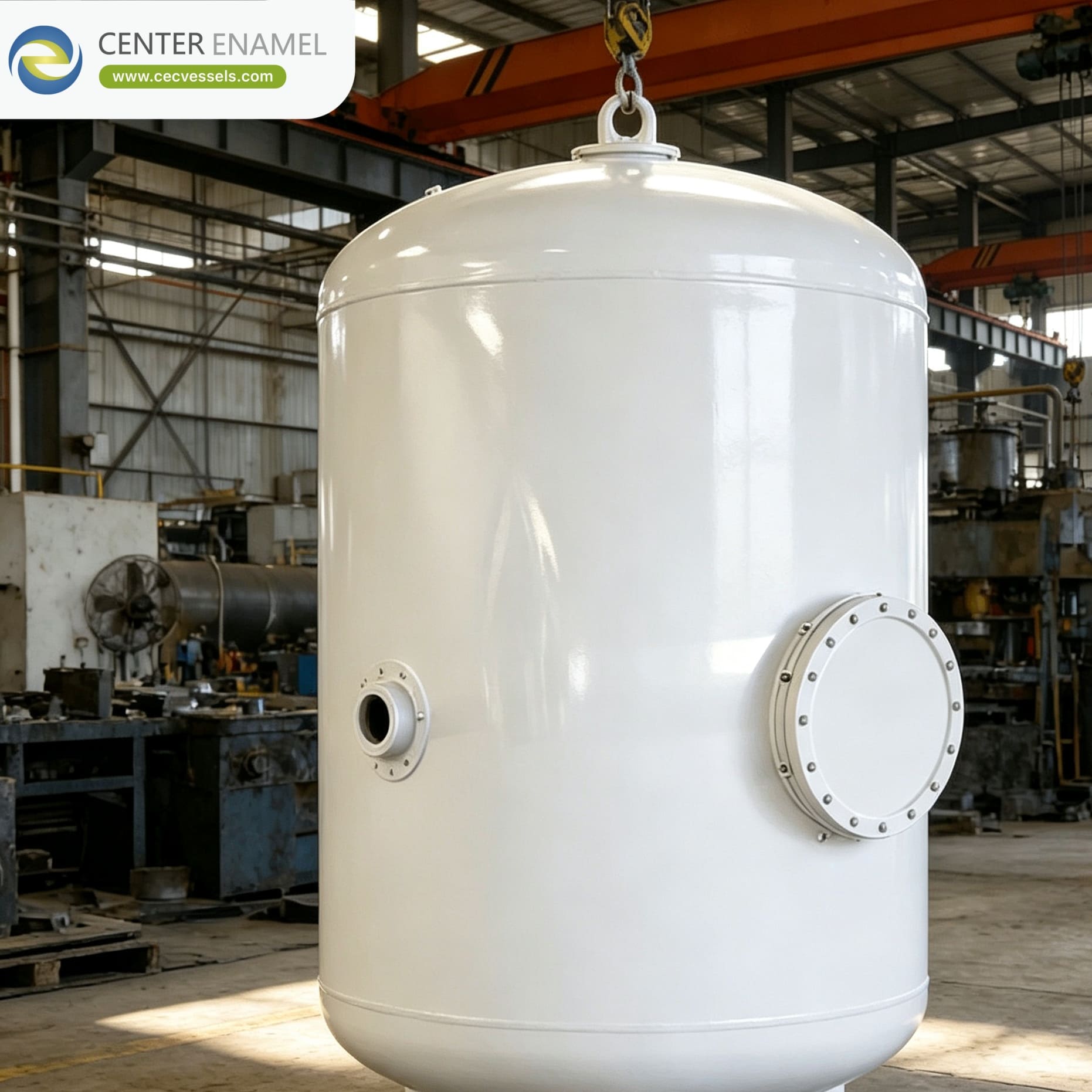
What Is Liquid Column Separation?
Column Separationis a process in which components within a mixture are separated inside a vertical column through controlled mass transfer, phase contact, or differences in physical and chemical properties. The term can describe several separation technologies, depending on the phases involved and the separation mechanism. In liquid processing, columns can be used for Liquid Column Separation, liquid-liquid extraction, absorption, stripping, distillation, and other mass-transfer operations. For liquid-liquid extraction, two immiscible or partially miscible liquid phases are brought into contact. A selected component distributes preferentially between the two phases, allowing it to be transferred from one liquid to another. Industrial extraction columns commonly operate with countercurrent flow, where the two liquid phases move in opposite directions through the column. The column provides a controlled environment for this contact, while internal components can increase the available interfacial area and improve mass transfer. How Does Liquid Column Separation Work?The basic principle of Liquid Column Separationis controlled interaction between phases. In a typical liquid-liquid extraction column, a feed liquid enters one part of the column while a suitable solvent enters from another location. The two phases move through the column and come into contact. One phase is normally dispersed into the other as droplets. This creates an interface between the two liquids. A target component can then move across this interface according to its distribution between the two phases. The liquid phases continue moving through the column until they reach their respective outlets. The phase containing a greater concentration of the extracted component is commonly called the extract, while the remaining feed-rich phase is called the raffinate. Countercurrent operation provides repeated contact between the phases. As the two liquids travel in opposite directions, the concentration difference can be maintained along the column, supporting continuous mass transfer. Liquid-liquid extraction is specifically based on the unequal distribution of a solute between two immiscible liquids. The Principle of Column SeparationColumn Separationrelies on differences in how components behave between phases. For liquid-liquid extraction, the important property is the distribution or partition of a solute between two liquid phases. A solvent is selected because the target component has a greater affinity for that solvent than for the original feed phase. When the two liquids come into contact, the target component transfers toward the phase in which it is more soluble. This process can be repeated throughout a column. Instead of performing the separation in one single contact step, the column provides a series of contacts along its height. The effectiveness of the process depends on the available interfacial area, phase flow rates, residence time, physical properties, and equilibrium relationship between the components. Liquid extraction is therefore different from distillation. Distillation primarily uses differences in volatility, while liquid extraction uses differences in solubility or distribution between liquid phases. What Is a Liquid-Liquid Extraction Column?A liquid-liquid extraction columnis a vertical vessel designed to provide continuous contact between two liquid phases. One liquid generally acts as the feed or carrier phase, while the second liquid acts as the extraction solvent. The two phases are selected so that the target component preferentially moves into the desired phase. The column may contain trays, packing, rotating elements, or other internal components that promote dispersion and mass transfer. In many industrial applications, the two phases flow countercurrently. The lighter phase may travel upward while the heavier phase moves downward, although the exact arrangement depends on the process and equipment configuration. The extracted component becomes concentrated in the extract stream, while the raffinate contains a reduced concentration of that component. Main Components of a Liquid Separation ColumnA Liquid Column Separationsystem normally consists of a column shell and several internal and external components. Column ShellThe column shell provides the main separation space. Its diameter is related to the flow rates and physical properties of the liquid phases, while the height is associated with the required contact area and mass-transfer performance. The shell may include feed nozzles, solvent connections, extract and raffinate outlets, instrumentation connections, supports, manways, and internal support structures. Feed DistributorA feed distributor introduces a liquid phase into the active separation section. Uniform distribution helps ensure that the liquid makes effective use of the available column cross-section and internal contact area. Packing or TraysPacking or trays create contact between the liquid phases. Packed columns use random or structured packing to provide a large surface area. Tray columns use horizontal plates to create individual contact stages. The selection depends on the liquid properties, flow rates, required separation, column diameter, and process configuration. Liquid Collectors and RedistributorsCollectors can gather liquid from one section of a column before directing it to another section. Redistributors can then spread the liquid evenly across the next section of packing. These components are particularly relevant to taller packed columns where maintaining good liquid distribution is important. Phase Outlet SystemThe column includes separate outlets for the two liquid phases. The outlet arrangement depends on which phase is lighter and which phase is heavier. Interface control can be incorporated to maintain the desired relationship between the phases at the separation section. Types of Liquid Column Separation EquipmentDifferent columnscan be used for liquid-phase separation depending on the required mass-transfer mechanism. Packed ColumnsPacked columns contain specially designed packing materials that provide a large surface area for liquid-liquid contact. The two phases flow through the packing, with one phase commonly dispersed through the other. Droplet formation and movement provide the interface required for mass transfer. Random packing consists of individual elements placed throughout the column, while structured packing uses an organized arrangement of corrugated sheets or other geometric structures. Packed columns are widely considered for continuous extraction and other liquid-phase mass-transfer processes. Tray ColumnsTray columns use a series of horizontal contact stages. Liquid passes across each tray while the second phase moves through openings or designated flow paths. Repeated contact occurs from tray to tray. Each tray can provide a distinct mass-transfer stage, allowing the overall separation to be related to the number and efficiency of the stages. Spray ColumnsA spray column uses nozzles or similar devices to disperse one liquid into another. The dispersed droplets provide the contact area needed for mass transfer as they travel through the continuous phase. Spray columns have a relatively simple internal configuration and can be considered for applications where the liquid properties and required contact arrangement are suitable. Pulsed ColumnsA pulsed column introduces periodic movement into the liquid phases. The pulsation promotes droplet formation and phase dispersion, increasing the contact between the two liquids. Pulsed extraction columns are one established form of column contactor used in liquid-liquid processing. Mechanically Agitated ColumnsMechanically agitated columns contain rotating internal elements. Rotating discs, paddles, or other devices can disperse one phase into the other and create additional interfacial area. These systems can be selected when mechanical mixing is useful for achieving the desired mass-transfer performance. Countercurrent Liquid Column SeparationCountercurrent flow is an important operating arrangement for Column Separation. In countercurrent operation, the two liquid phases move in opposite directions. For example, the lighter phase can move upward while the heavier phase moves downward. This arrangement allows fresh or relatively concentrated solvent to contact liquid containing a higher concentration of the target component at different positions along the column. The concentration difference between the phases provides the driving force for mass transfer. As the phases travel through the column, the target component gradually transfers toward the preferred phase. Industrial liquid-liquid extractors commonly use continuous countercurrent flow because it provides repeated phase contact within a single column. Importance of Mass TransferMass transfer is the central mechanism in Liquid Column Separation. When two liquid phases come into contact, molecules of the target component move across the interface according to the concentration and equilibrium relationships between the phases. The available interfacial area has a direct influence on the opportunity for mass transfer. Smaller dispersed droplets can provide greater surface area per unit volume, while packing and mechanical devices can help maintain phase contact. The overall transfer process can be considered in several steps:
lMovement of the target component through the bulk liquid phase. lTransfer toward the liquid-liquid interface. lMovement across the interface. lDistribution into the receiving liquid phase. lMovement of the transferred component away from the interface.
Column design aims to provide sufficient contact and flow conditions for these steps to occur effectively. Factors Affecting Liquid Column SeparationSeveral parameters should be considered when designing a liquid liquid separation column. Density DifferenceThe density difference between the two liquid phases affects their movement through the column. The lighter phase generally tends to move upward, while the heavier phase tends to move downward. This density relationship is important when determining which phase should be dispersed and how the column should be configured. ViscosityLiquid viscosity influences droplet formation, phase movement, and mass transfer. Higher-viscosity liquids generally behave differently from low-viscosity liquids during dispersion and circulation. Therefore, the viscosity of both phases should be considered when selecting the column internals and operating conditions. Interfacial TensionInterfacial tension influences the formation and behavior of droplets. It affects the size of the dispersed phase and therefore the available interfacial area for mass transfer. The relationship between density, viscosity, interfacial tension, and flow conditions is important in extraction column design. Flow Rate RatioThe ratio between the flow rates of the two liquid phases affects the internal hydrodynamics of the column. The solvent-to-feed ratio is also directly related to the amount of solvent available to transfer the target component. Residence TimeThe liquid phases require sufficient contact time to allow the desired mass transfer to take place. Column height, liquid flow rate, phase holdup, and internal configuration all contribute to the residence time within the active section. Designing of Liquid Separation ColumnsDesigning of liquid separation columnsbegins with defining the separation objective and understanding the properties of the feed and solvent. The target component, feed composition, solvent characteristics, flow rates, equilibrium data, and desired product composition should be established before selecting the equipment configuration. Column DiameterColumn diameter is primarily associated with the flow rates and phase velocities. The selected diameter should provide sufficient cross-sectional area for the two liquid phases to move through the column while maintaining the desired dispersion and contact conditions. Column HeightColumn height is related to the required number of theoretical stages or the required mass-transfer height. For packed columns, concepts such as height equivalent to a theoretical stage, or HETS, can be used to relate column height to separation performance. Number of StagesThe required number of equilibrium stages depends on the desired degree of separation and the equilibrium relationship between the two phases. Tray columns provide discrete stages, while packed columns provide continuous mass-transfer contact. Process calculations can determine the theoretical requirement before engineers convert it into a practical column height or tray count. Internal SelectionThe selection of column internals should match the liquid properties and process requirements. Packing can provide continuous contact, while trays can create staged contact. Pulsation and mechanical agitation can also be considered when additional phase dispersion is required. The internal design should promote effective contact while allowing the two phases to move continuously toward their respective outlets. Liquid Column Separation vs. Other Separation MethodsColumn Separationis one of several technologies available for processing liquid mixtures. Distillation separates components primarily through differences in volatility and uses vapor-liquid contact. Liquid-liquid extraction uses a solvent to selectively transfer a component between two liquid phases. Gravity separation relies mainly on density differences between immiscible liquids. Coalescence systems promote the combination of small droplets into larger droplets that can then separate more readily. The appropriate technology depends on the physical properties of the mixture and the desired separation mechanism. Industrial liquid-liquid separation can include gravity separators, coalescing equipment, extraction columns, and other specialized systems. Applications of Liquid Column SeparationLiquid Column Separationhas applications across multiple industrial sectors. Chemical ProcessingChemical plants can use liquid-liquid extraction columns to recover valuable components, transfer compounds between phases, and purify process streams. Pharmaceutical ProcessingExtraction columns can be used for transferring selected compounds between liquid phases during pharmaceutical processing and downstream purification. HydrometallurgyLiquid-liquid extraction is widely associated with hydrometallurgical processes. A selected metal-containing component can be transferred from an aqueous phase into an organic solvent phase for subsequent processing. Food ProcessingLiquid extraction can be applied to selected food and natural-product processing operations where a target component has a suitable distribution between two liquid phases. Solvent RecoveryExtraction columns can also be integrated with solvent recovery systems. The extract stream can be processed further to recover the solvent and concentrate the desired component. Selecting the Right Column Separation SystemSelecting the right columnsstarts with understanding the separation mechanism. If the process depends on selective solubility between two liquid phases, a liquid-liquid extraction column can provide continuous contact and countercurrent operation. The feed and solvent properties should then be evaluated, including density, viscosity, interfacial tension, mutual solubility, flow rate, and equilibrium behavior. The next step is selecting the internal configuration. Packed, tray, spray, pulsed, and mechanically agitated columns each provide different approaches to liquid-liquid contact. Column diameter, height, phase flow direction, internal distribution, and outlet configuration should then be determined according to the process requirements. The Role of Liquid Column Separation in Industrial ProcessingLiquid Column Separationprovides a controlled method for transferring selected components between liquid phases. By combining countercurrent flow with effective phase contact, an extraction column can continuously separate and concentrate target components. The performance of the system depends on the interaction between the column shell, internal components, liquid properties, flow rates, phase equilibrium, and mass-transfer area. Packed, tray, spray, pulsed, and mechanically agitated columns provide different approaches to achieving the required liquid-liquid contact. The most suitable configuration depends on the specific process and separation objective. For industrial applications, a properly designed Column Separationsystem can be integrated with mixers, separators, evaporators, distillation columns, heat exchangers, and solvent recovery equipment. This allows liquid-phase separation to become part of a complete process system for chemical manufacturing, pharmaceutical processing, hydrometallurgy, food processing, and solvent recovery.
|