E-mail: cecvessels@gmail.com

What Is Pressure Vessel Manufacturing? Process and Key Steps

0920 (25).jpeg


Pressure vessel manufacturing is the engineering and fabrication process used to produce vessels designed to contain gases or liquids under specified operating conditions. It includes design calculations, material selection, cutting, forming, welding, inspection, testing, and final documentation. Each stage contributes to the vessel's dimensional accuracy, structural integrity, and suitability for its intended industrial application.

What Is Pressure Vessel Manufacturing?

Pressure vessel manufacturing transforms engineering specifications and raw materials into a completed industrial vessel. Depending on the application, the finished equipment may be used for storage, chemical reactions, heat transfer, gas-liquid separation, or other process operations.

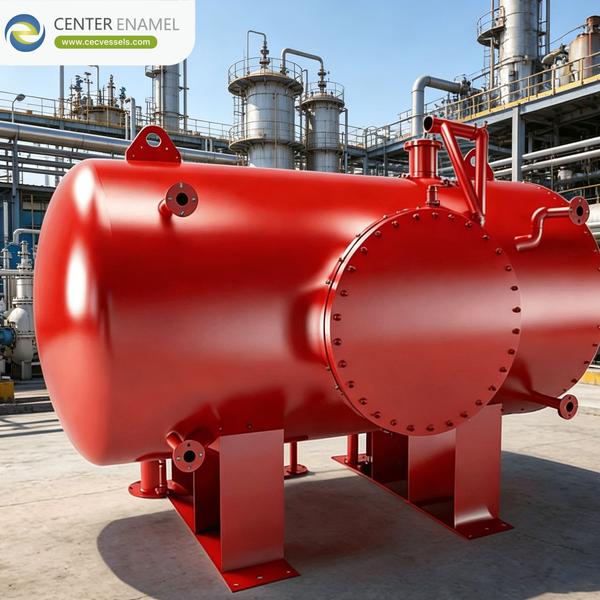
A typical pressure vessel consists of a cylindrical shell or another engineered body, formed heads, nozzles, flanges, supports, and other components. Its configuration depends on the working medium, design conditions, capacity, temperature, corrosion characteristics, and installation requirements.

Manufacturing requirements are established during the engineering stage. For applicable vessels, the ASME Boiler and Pressure Vessel Code (BPVC), Section VIII provides requirements covering design, materials, fabrication, inspection, testing, and certification. The governing code and applicable edition should be confirmed for each project. [1]

What Are the Main Steps in Pressure Vessel Manufacturing?

The manufacturing process generally follows a sequence of engineering, fabrication, quality verification, and final acceptance activities. The exact workflow varies according to vessel geometry, material, size, and project specifications.

1. Engineering Design and Specification Review

Manufacturing begins with a detailed review of the customer's technical requirements. Engineers establish the vessel's configuration and determine the principal design parameters before fabrication starts.

Typical design inputs include:

  • Design and operating conditions: The specified temperature, pressure, and process conditions.

  • Vessel capacity and dimensions: The required volume, shell diameter, length, and overall arrangement.

  • Material requirements: The specified base metal, corrosion allowance, and material compatibility.

  • Connections and accessories: Nozzles, manways, flanges, instruments, and internal components.

  • Applicable standards: The governing design code, inspection requirements, and project documentation.

  • Installation conditions: Foundation arrangement, support configuration, lifting points, and access requirements.

Engineers prepare or approve drawings, calculations, material specifications, and fabrication documents. A complete design review helps align manufacturing activities with the intended process duty.

2. Material Selection and Incoming Inspection

Material selection affects the vessel's strength, corrosion resistance, service life, and fabrication requirements.

Common material options include carbon steel, stainless steel, and selected alloy steels. The appropriate grade depends on the process medium, operating temperature, corrosion characteristics, and applicable design requirements.

Before fabrication, the manufacturing team checks incoming materials against approved specifications. Typical activities include:

  • Reviewing material test certificates and purchasing records.

  • Verifying material grades and dimensions.

  • Inspecting plates, pipes, flanges, and other components for visible defects.

  • Confirming material identification and traceability.

  • Performing additional material verification when required by the project.

Material traceability links each material to its relevant inspection records and manufacturing documentation. This supports quality verification throughout fabrication. [1]

3. Plate Cutting and Edge Preparation

After material acceptance, steel plates and other components are marked and cut according to approved fabrication drawings.

Depending on material type, thickness, geometry, and required accuracy, manufacturers may use plasma cutting, oxy-fuel cutting, laser cutting, or mechanical cutting methods.

The cut edges are then prepared for welding. This may involve beveling, machining, grinding, and cleaning to achieve the specified joint geometry.

Accurate cutting and edge preparation help maintain dimensional consistency and provide suitable conditions for subsequent welding operations.

4. Shell Rolling and Head Forming

The vessel shell is commonly manufactured by rolling flat plate into a cylindrical section. Forming equipment applies controlled force to achieve the specified radius and geometry.

The vessel heads are manufactured separately using suitable forming methods. Depending on the design, these may include pressing, spinning, or other approved forming processes.

Common head configurations include:

  • Ellipsoidal heads: Curved heads with an elliptical profile.

  • Torispherical heads: Heads formed with a crown radius and a knuckle radius.

  • Hemispherical heads: Heads with a hemispherical profile.

  • Flat heads: Flat closures used where permitted by the design requirements.

After forming, the components are checked for dimensions, geometry, and specified thickness. The shell sections and heads are then prepared for assembly.

5. Fit-Up and Welding

Welding is a central stage in pressure vessel fabrication. Shell sections, heads, nozzles, reinforcement pads, and other components are aligned and assembled according to approved drawings.

The fabrication team verifies joint alignment, root gaps, component orientation, and dimensional tolerances before welding.

Common welding processes include:

  • Submerged Arc Welding (SAW): Frequently used for suitable longitudinal and circumferential shell seams.

  • Gas Tungsten Arc Welding (GTAW): Often selected for controlled welding of suitable materials and joint configurations.

  • Gas Metal Arc Welding (GMAW): Used for a range of fabrication applications.

  • Shielded Metal Arc Welding (SMAW): Used for various joints and fabrication conditions.

The selected process depends on the base material, joint design, thickness, welding position, and approved procedure.

Welding should follow the applicable Welding Procedure Specification (WPS) and qualification requirements. Where required, welder or welding-operator qualifications and supporting records must be maintained in accordance with the governing code and project specifications. [1]

6. Installation of Nozzles and Internal Components

After the main shell assembly has been completed, the manufacturer installs the specified connections and additional components.

These may include inlet and outlet nozzles, manways, instrument connections, internal supports, baffles, distributors, and other process-specific parts.

Nozzle position and orientation are important because they determine how the vessel connects to piping and auxiliary equipment. Internal components must also be positioned according to the approved design.

Dimensional inspections help confirm that the fabricated vessel matches the drawings and that the required interfaces are correctly located.

7. Heat Treatment When Required

Some pressure vessel designs and materials require post-weld heat treatment or other controlled thermal processing.

Post-weld heat treatment (PWHT) may be specified to achieve particular metallurgical or mechanical properties and to reduce residual stresses associated with welding. Whether it is required depends on factors such as material, thickness, welding procedure, service conditions, and applicable code provisions.

When heat treatment is specified, the process should follow an approved procedure. Temperature records, holding times, heating and cooling conditions, and other required information are documented for verification.

Not every pressure vessel requires PWHT. The applicable design code and approved engineering documents determine the requirements for each vessel.

8. Non-Destructive Examination and Quality Inspection

Non-destructive examination (NDE) is used to evaluate welds or materials without damaging the component being examined.

The methods selected depend on the joint type, material, design requirements, and inspection plan.

Inspection MethodTypical Purpose
Radiographic Testing (RT)Examines welds for certain internal discontinuities using radiation-based imaging.
Ultrasonic Testing (UT)Uses sound waves to evaluate internal material conditions and weld integrity.
Magnetic Particle Testing (MT)Detects surface and near-surface discontinuities in suitable ferromagnetic materials.
Liquid Penetrant Testing (PT)Identifies surface-breaking discontinuities in suitable nonporous materials.
Visual Testing (VT)Checks visible weld conditions, surface appearance, and workmanship.

Not every vessel requires every inspection method. The examination extent, acceptance criteria, personnel qualifications, and documentation should follow the applicable code and project requirements. ASME BPVC addresses relevant fabrication, examination, and inspection provisions. [1]

9. Pressure Testing and Final Inspection

After the required fabrication and inspections are completed, the vessel undergoes the specified testing and final verification activities.

A hydrostatic test uses a liquid test medium, typically water when appropriate, to evaluate the vessel's integrity under the conditions prescribed by the governing requirements. A pneumatic test may be permitted for certain applications when the relevant code and engineering requirements are satisfied.

The test method, test conditions, instrumentation, acceptance criteria, and records must be established before testing begins. Testing should be conducted according to an approved procedure by qualified personnel.

Final inspection may include dimensional checks, review of inspection reports, confirmation of installed components, verification of nameplate information, and completion of required documentation.

10. Surface Treatment, Packaging, and Delivery

Following acceptance, the vessel receives the specified surface treatment and preparation for shipment.

Depending on the material and application, this may include surface cleaning, painting, coating, passivation, or other specified finishing operations.

Before delivery, the manufacturer verifies that the required project records are complete. These may include:

  • Approved drawings and design documents.

  • Material certificates and traceability records.

  • Welding and heat-treatment records, where applicable.

  • NDE reports and inspection results.

  • Pressure-test records.

  • Final inspection documents and nameplate details.

  • Applicable code certification documents, when required and authorized.

The vessel is then prepared for transportation in accordance with its dimensions, weight, lifting requirements, and destination conditions.

What Factors Affect Pressure Vessel Manufacturing?

Several technical and project factors influence the manufacturing method, schedule, and cost.

  • Material grade: Different materials require different cutting, forming, welding, and finishing procedures.

  • Vessel dimensions: Large shells, thick components, and complex geometries may require specialized fabrication equipment.

  • Design conditions: Specified operating and design conditions influence calculations, component thicknesses, and fabrication requirements.

  • Welding requirements: Joint configurations, welding procedures, and inspection scope affect fabrication planning.

  • Corrosion characteristics: The process medium determines material compatibility and any specified corrosion allowance or protective treatment.

  • Inspection scope: Required examination methods and testing affect quality-control planning.

  • Applicable codes: Code requirements influence design documentation, fabrication controls, examination, testing, and certification.

  • Delivery requirements: Packaging, transportation, installation interfaces, and documentation deadlines influence the project schedule.

Reviewing these factors during the quotation and engineering stages helps establish realistic technical specifications and a clear manufacturing plan.

Which Industries Use Manufactured Pressure Vessels?

Pressure vessels serve a wide range of industrial processes. Their design and internal configuration vary according to the function they perform.

Chemical Processing

Chemical plants use reactors and other process vessels for mixing, reaction, storage, and controlled material processing. Material selection and internal configuration depend on the chemicals involved and the required process conditions.

Oil and Gas

Oil and gas facilities use separators, gas-treatment vessels, and storage or process equipment to handle and condition production streams.

Energy and Power Generation

Pressure vessels are used in selected steam, thermal, and auxiliary process systems. Their design must match the applicable operating conditions and governing requirements.

Pharmaceutical and Food Processing

Depending on the application, vessels may be designed for hygienic service, controlled mixing, thermal processing, or storage. Material finish, cleanability, and process compatibility are important design considerations.

Water and Environmental Treatment

Industrial treatment facilities use vessels for filtration, separation, treatment, and other process operations. The required materials and configuration depend on the treatment medium and operating conditions.

Frequently Asked Questions About Pressure Vessel Manufacturing

How long does pressure vessel manufacturing take?

The manufacturing schedule depends on design complexity, material availability, vessel dimensions, fabrication workload, welding requirements, inspection scope, and delivery arrangements. A reliable schedule can be established after the technical specifications and quality requirements have been reviewed.

Which materials are commonly used for pressure vessels?

Common options include carbon steel, stainless steel, and selected alloy steels. The final choice depends on mechanical requirements, corrosion resistance, operating temperature, process-fluid compatibility, and the applicable design code.

What is the difference between pressure vessel manufacturing and fabrication?

Pressure vessel manufacturing describes the overall process, including engineering, procurement, fabrication, inspection, testing, and documentation. Pressure vessel fabrication generally refers to the physical operations used to form, assemble, and weld the vessel and its components.

Is ASME certification required for every pressure vessel?

Not every vessel is subject to the same certification requirements. Requirements depend on the destination market, applicable regulations, vessel service, project specifications, and the certification scope required by the customer. ASME certification applies to eligible manufacturers and products within the relevant program and scope. [2]

What documents should a pressure vessel manufacturer provide?

Depending on the project, the documentation package may include drawings, calculations, material certificates, welding records, NDE reports, heat-treatment records, pressure-test results, inspection documents, and applicable certification records.

What should customers provide when requesting a pressure vessel quotation?

Customers should provide the intended application, required capacity, design and operating conditions, process-fluid information, material preferences, applicable standards, connection requirements, installation location, and expected delivery schedule. Available drawings or technical specifications can help the manufacturer evaluate the project more accurately.

Choosing a Manufacturing Partner for Your Project

Pressure vessel manufacturing requires coordination between engineering, material control, forming, welding, inspection, testing, and documentation. The manufacturing process should be planned around the vessel's intended service and the requirements established in the approved technical specifications.

When evaluating a manufacturing partner, customers should review relevant project experience, engineering capabilities, material traceability procedures, welding qualifications, inspection arrangements, applicable certifications, and documentation practices. Clear communication during the specification and design stages helps align the finished vessel with the requirements of the industrial process.


Application
Petrochemical industry
Biopharmaceuticals
Food And Beverages
Environmental Protection Industry
About Us
Certifications
Our Service
Project Reference
China Pressure Vessels Manufacturer since 2008. Copyright © 2025 - 2026. All Rights Reserved
China's Smart Manufacturer Of Industrial Containers And Process Equipment