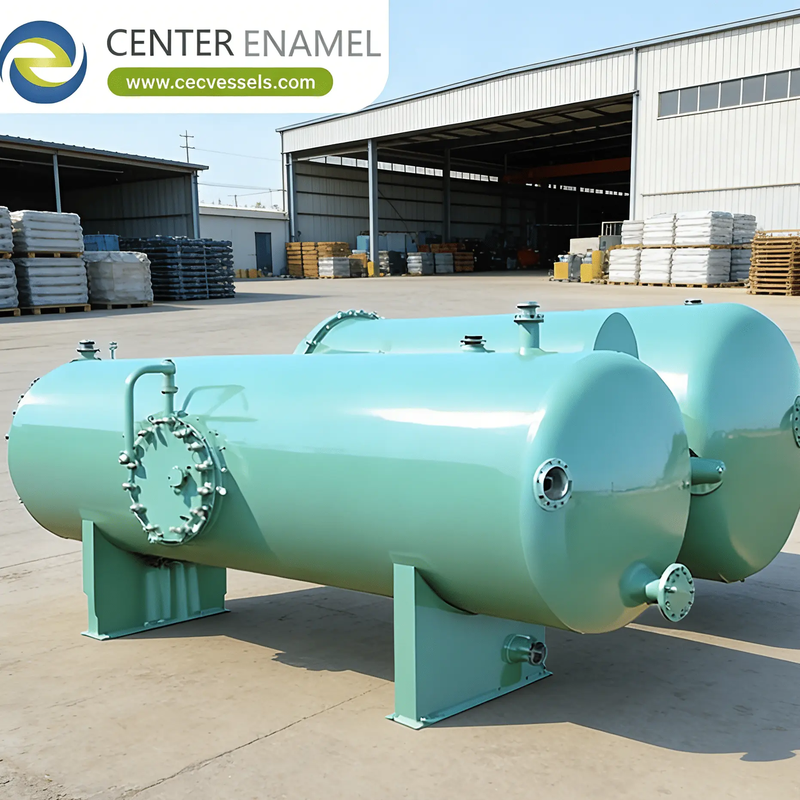
A separator is industrial equipment used to separate a mixture into two or more phases or components based on differences in physical properties such as density, particle size, phase state, or momentum. Depending on the process, a separator can divide gas from liquid, oil from water, liquid from solids, or other immiscible phases.
Separators are widely used in oil and gas production, petrochemical processing, chemical manufacturing, water treatment, food and beverage production, pharmaceutical processing, and other industries where mixed process streams must be separated before further treatment.
In industrial applications, a separator is often designed as a separator vessel or process vessel. Its configuration, internal components, operating conditions, and capacity depend on the characteristics of the incoming fluid and the required separation performance.
What Is a Separator?
A separator is a vessel or piece of process equipment designed to separate different phases or components from a mixed stream.
The separation process normally takes advantage of physical differences between the materials being processed. For example, gas is much less dense than most liquids, allowing gas to rise while liquid settles. Similarly, when two immiscible liquids such as oil and water enter a separator, their different densities allow them to form separate layers.
In many industrial separator vessels, the incoming stream enters through an inlet nozzle and passes through an inlet device that reduces velocity and turbulence. The vessel then provides sufficient residence time for the phases to disengage.
Depending on the application, additional internal components such as baffles, weirs, mist eliminators, vane packs, or coalescing devices can improve separation performance.
The term “separator” is therefore a broad equipment category rather than a single standardized vessel design.
What Is a Separator Used For?
The primary purpose of a separator is to divide a mixed process stream into individual phases so that each phase can be processed, transported, recovered, stored, recycled, or discharged separately.
Common separator applications include:
Separating gas from liquid
Separating oil from water
Separating gas, oil, and water
Removing liquid droplets from gas
Removing suspended solids from liquids
Removing free water from hydrocarbon streams
Recovering valuable process materials
Protecting downstream pumps, compressors, heat exchangers, and other equipment
Preparing process streams for further treatment
For example, in oil and gas production, a separator can divide a wellstream into gas, crude oil, and produced water. In chemical processing, a separator can divide immiscible liquid phases or remove entrained liquid from a gas stream.
The specific separator used depends on the number of phases, flow rate, fluid properties, operating pressure, operating temperature, and required separation efficiency.
How Does a Separator Work?
Most separator vessels use a combination of gravity separation, momentum changes, residence time, and mechanical separation components.
When a mixed stream enters the separator, the inlet device reduces the momentum of the incoming fluid and distributes the flow inside the vessel. This initial change in velocity helps larger liquid droplets or solid particles separate from the main stream.
The vessel then provides a relatively calm environment where the different phases can move according to their physical properties.
In a typical gas-liquid separator, gas rises toward the upper part of the vessel while liquid collects in the lower section. A mist eliminator may be installed near the gas outlet to capture small liquid droplets carried by the gas.
For a three-phase separator, the liquid portion can further separate into oil and water. The heavier water settles below the lighter oil, while gas occupies the upper section.
The basic separation sequence can therefore be summarized as:
Mixed stream → Inlet distribution → Momentum reduction → Phase disengagement → Droplet or particle removal → Separate outlets
The actual process can be more complex when the fluids contain emulsions, fine particles, foam, or very small droplets.
What Are the Main Types of Separators?
Separators can be classified according to the number of phases being separated, the separation mechanism, or the physical configuration of the vessel.
Two-Phase Separator
A two-phase separator separates an incoming stream into two primary phases, most commonly gas and liquid.
For example, a gas-liquid separator can remove liquid hydrocarbons, condensate, or water from a gas stream. The separated gas exits through the upper outlet while the liquid is collected and discharged from the lower part of the vessel.
Two-phase separators are commonly used in gas processing, oil and gas production, chemical plants, compressor stations, and other process systems.
Three-Phase Separator
A three-phase separator is designed to separate three phases, typically gas, oil, and water.
After entering the vessel, the gas separates from the liquid because of the difference in density. The remaining liquid phases can then separate into lighter oil and heavier water.
Internal components such as weir plates, baffles, level-control systems, and coalescing devices can be used to control the oil-water interface and improve separation.
Three-phase separators are widely used in oil and gas production and other processes where gas and two immiscible liquid phases must be handled simultaneously.
Gas-Liquid Separator
A gas-liquid separator removes liquid droplets from a gas stream or separates gas from a bulk liquid phase.
Applications include:
Gas-liquid separators may also be referred to as knockout drums, scrubbers, or other names depending on their specific function and configuration.
Liquid-Liquid Separator
A liquid-liquid separator is designed to separate two immiscible liquids with different densities.
Oil and water separation is one of the most common examples. After entering the vessel, the heavier liquid moves toward the bottom while the lighter liquid forms a layer above it.
Liquid-liquid separators are used in oil and gas, chemical processing, wastewater treatment, refinery operations, and other industrial processes.
Solid-Liquid Separator
A solid-liquid separator removes suspended or settled solid particles from a liquid stream.
The separation can be based on gravity, filtration, centrifugal force, or other mechanisms depending on particle size and process requirements.
Solid-liquid separation is commonly required in wastewater treatment, mining, chemical processing, food processing, and industrial water management.
What Are the Main Separator Vessel Configurations?
Separator vessels are commonly manufactured in horizontal and vertical configurations. Spherical designs may also be used for certain specialized applications.
Horizontal Separator
A horizontal separator is a cylindrical vessel installed horizontally.
The longer vessel length provides a large separation area and allows the liquid phase to remain inside the vessel for sufficient residence time. This configuration is often suitable for applications involving relatively high liquid volumes or where liquid-liquid separation is important.
Horizontal separators can also provide convenient access for inspection and maintenance.
Vertical Separator
A vertical separator is a cylindrical vessel installed vertically.
Vertical separators generally require less floor space than horizontal vessels, making them useful where the available installation area is limited.
The vertical configuration can also be suitable for applications involving higher liquid loads, gas-liquid separation, or streams containing solids that need to collect at the bottom of the vessel.
Spherical Separator
Spherical separators have a compact vessel geometry and can provide favorable pressure containment characteristics.
They are less common than horizontal and vertical separators in many modern process applications but may be selected for particular process or space requirements.
The choice between horizontal, vertical, and spherical configurations should be based on the process conditions rather than vessel shape alone.
What Are the Main Components Inside a Separator?
The internal design of a separator has a major influence on separation performance.
Common separator internals include:
Inlet Device
The inlet device receives the incoming process stream and reduces its velocity and momentum. It can help distribute the flow and initiate the separation process.
Baffles
Baffles help control internal flow patterns and reduce turbulence. They can also help maintain stable liquid levels and improve phase separation.
Mist Eliminator
A mist eliminator removes fine liquid droplets carried by the gas stream before the gas exits the separator.
Wire mesh pads and vane-type mist eliminators are common examples.
Weir Plate
A weir plate is commonly used in three-phase separators to control the liquid level and maintain the interface between two liquid phases.
Coalescer
A coalescing device encourages small droplets to combine into larger droplets. Larger droplets can separate more easily under gravity.
Liquid Collection Section
The lower portion of a separator vessel provides space for separated liquid or solids to collect before they are removed from the vessel.
The exact internal arrangement depends on the separation duty, process fluid, flow rate, and required performance.
Where Are Separators Used?
Separators are used across a wide range of industries.
Oil and Gas Industry
Oil and gas is one of the most important applications for separator vessels.
At the wellhead and production facilities, raw wellstreams can contain natural gas, crude oil, produced water, condensate, and sometimes solid particles.
A separator can divide these phases before the individual streams are sent to further processing, measurement, storage, or transportation.
Two-phase and three-phase separators are both commonly used depending on the production stream.
Petrochemical and Refining
Refineries and petrochemical plants use separators to remove gas, liquid hydrocarbons, water, condensate, and other phases from process streams.
Proper separation can help maintain process stability and reduce the amount of unwanted material entering downstream equipment.
Chemical Processing
Chemical plants frequently handle mixtures containing multiple phases.
Separators can be used for gas-liquid separation, liquid-liquid separation, solvent recovery, phase disengagement, and removal of entrained droplets.
The separator design must be matched to the chemical composition, density, viscosity, temperature, and flow characteristics of the process stream.
Water and Wastewater Treatment
Separators can remove oil, grease, suspended solids, or other phases from wastewater.
Oil-water separators and other liquid separation equipment can help prepare wastewater for subsequent treatment stages or recovery processes.
Food and Beverage Processing
Separation equipment is also used in food and beverage processing for applications involving liquids, solids, and suspended materials.
The appropriate equipment depends on the product characteristics, hygiene requirements, throughput, and required separation quality.
Pharmaceutical and Biopharmaceutical Processing
Separators are used in pharmaceutical and biopharmaceutical processes where controlled phase or particle separation is required.
For these applications, equipment selection may need to consider sanitary design, cleanability, material compatibility, and process control.
What Factors Affect Separator Performance?
Separator performance depends on more than vessel size.
Important factors include:
Fluid Density
The difference in density between phases strongly affects gravity separation. A larger density difference generally makes phase disengagement easier.
Viscosity
Higher viscosity can slow droplet movement and make separation more difficult. Process temperature can therefore influence separation performance when viscosity changes significantly with temperature.
Flow Rate
Higher flow rates can increase internal velocity and turbulence. If the vessel is undersized for the required flow rate, separation efficiency can decrease.
Droplet or Particle Size
Large liquid droplets and solid particles generally separate more easily than very small droplets or particles.
When fine droplets need to be removed, internal devices such as mist eliminators or coalescers may be required.
Residence Time
The separator must provide sufficient residence time for the phases to disengage.
The required residence time depends on the fluid properties, flow regime, droplet size, and separation target.
Pressure and Temperature
Operating pressure and temperature affect fluid density, viscosity, gas-liquid equilibrium, and other properties that influence separator performance.
Separator Internals
Properly selected internal components can improve flow distribution, reduce turbulence, remove fine droplets, and maintain stable liquid interfaces.
How Do You Choose the Right Separator?
Selecting a separator should begin with the actual process conditions rather than simply choosing a standard vessel size.
Key information normally includes:
Process medium
Number of phases
Gas, liquid, and solid composition
Flow rate
Operating pressure
Design pressure
Operating temperature
Design temperature
Fluid density
Fluid viscosity
Required separation efficiency
Expected droplet or particle size
Solids content
Available installation space
Required vessel orientation
Material compatibility
Applicable design and inspection standards
For example, a two-phase gas-liquid application may require a different separator configuration from a three-phase oil-gas-water application.
Likewise, a process with high liquid volume may favor a different vessel arrangement from a gas-dominated process installed in a space-constrained facility.
Proper separator sizing and internal design should therefore be based on process engineering calculations and project-specific requirements.
Why Is a Separator Important in Industrial Processing?
A separator is often one of the first pieces of equipment used to condition a mixed process stream.
Effective separation can help:
Protect downstream equipment
Improve process stability
Reduce unwanted liquid carryover
Recover valuable process materials
Improve product quality
Reduce downstream treatment loads
Support reliable fluid measurement
Prepare individual phases for storage or transportation
In oil and gas production, for example, separating gas, oil, and water at an early stage can simplify subsequent processing.
In chemical and industrial processes, removing an unwanted phase can protect pumps, compressors, heat exchangers, pipelines, and other equipment.
The role of a separator is therefore not simply to “split” a mixture. It is to provide controlled phase separation that supports the performance of the entire process system.
Separator Vessel Manufacturer
For industrial applications, separator vessels should be designed according to the specific process duty rather than treated as a one-size-fits-all product.
Center Enamel provides industrial pressure vessels and separation equipment for different process applications. Separator vessel configurations can be developed according to the required separation duty, vessel capacity, operating conditions, materials, internal components, and applicable project standards.
Depending on the application, separator systems can be configured for two-phase or three-phase separation and can incorporate suitable inlet devices, baffles, mist eliminators, weirs, coalescing components, and other internal equipment.
If you are looking for a separator vessel for oil and gas, petrochemical, chemical, environmental, or other industrial applications, the process conditions should be confirmed before determining the final vessel configuration.
Contact Center Enamel to discuss your separator vessel requirements and obtain a suitable engineering solution.


