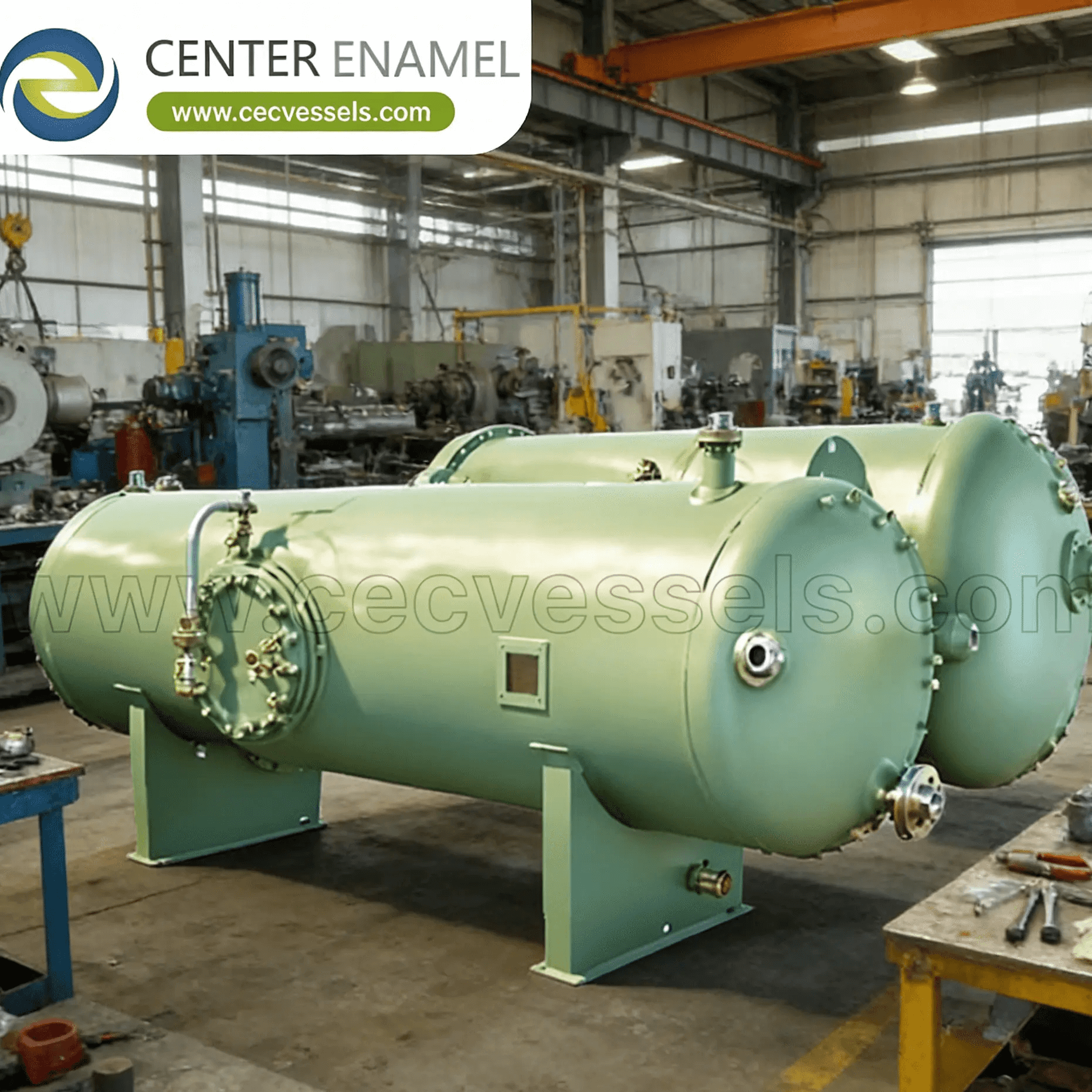
What Is The Best Heat Exchanger For A Boiler?
A boiler is a fundamental industrial thermal system designed to generate steam or hot water by transferring energy from fuel combustion or electrical elements into a working fluid. At the very center of this process is the boiler heat exchanger, the critical component responsible for directing the movement of thermal energy from the hot exhaust gases into the water stream. Choosing the right configuration and material for this component directly impacts the fuel efficiency and operational lifespan of the entire heating system. As an experienced Boiler Heat Exchanger Manufacturer, Center Enamel develops high-performance vessel networks optimized for stable industrial and commercial thermal cycles. By adhering to international engineering codes like ASME BPVC, BS EN 13445, and GB/T 150.1-150.4-2024, these vessels ensure structural integrity and consistent performance for global industrial partners.
The Crucial Role of the Heat Exchanger in Boiler Systems
To determine what constitutes the best heat exchanger configuration, one must understand how it operates within the broader boiler assembly. The primary task is to absorb as much sensible and latent heat from the combustion zone as possible before the exhaust gases are discharged through the flue stack. As a leading provider of China Boiler Heat Exchanger Manufacturer technology, Center Enamel focus is on eliminating thermal bottlenecks. A poorly configured exchanger allows valuable energy to escape into the atmosphere, increasing fuel consumption. The ideal system must balance optimal fluid dynamics, maximum surface area contact, and exceptional material durability to handle continuous thermal cycling without losing structural integrity or experiencing localized breakdown.
Key Structural Configurations for Boiler Energy Recovery
Industrial heating projects utilize several distinct structural configurations of heat exchangers within the vessel shell to balance thermal performance and structural demands. 1. Shell and Tube Heat ExchangersThis is the traditional workhorse for large-scale industrial steam boilers. Water circulates inside a massive bundle of parallel tubes while hot combustion gases pass around the exterior within the shell, or vice versa in firetube setups. Center Enamel designs these units with heavy-duty walls that provide exceptional mechanical stability, making them highly suitable for continuous, un-interrupted factory operations. 2. U-Tube Heat ExchangersA specialized variation of the shell and tube design where the internal tubes are bent into a U-shape and anchored to a single tubesheet. The primary benefit of this layout is that the entire tube bundle can expand and contract freely within the vessel shell in response to intense temperature variations, entirely avoiding the mechanical stresses associated with differential thermal expansion. 3. Plate Heat ExchangersPlate exchangers utilize a series of thin, corrugated metal plates packed together to form alternating channels for the hot gas and cold water. This layout delivers an incredibly high heat transfer coefficient within a compact physical footprint. It is frequently utilized as an external economizer to preheat boiler feedwater using residual stack energy.
Material Science: Finding the Best Metal for Longevity
The choice of material is arguably the most critical factor when selecting the best heat exchanger for a boiler project. The metal must possess high thermal conductivity while remaining stable against oxidation and chemical scale formation. Stainless Steel (Grade 316 and 316L)Stainless steel is widely recognized as one of the best materials for commercial and industrial boiler applications. Grade 316 contains molybdenum, which provides exceptional resistance to pitting and chemical corrosion caused by dissolved minerals in the feedwater. Its high strength allows for thinner tube walls, which partially offsets the lower thermal conductivity of steel relative to copper or aluminum. Furthermore, stainless steel is ideal for modern condensing boilers where the flue gases are cooled below the dew point, resulting in the formation of acidic condensate that would quickly destroy lesser metals. Cast Iron and Carbon SteelCarbon steel is commonly used in large industrial firetube boilers due to its excellent structural load capabilities and lower raw material costs. While it provides solid thermal performance, it requires strict water treatment management to prevent dissolved oxygen from causing uniform rust and scaling across the inner vessel shell. Aluminum AlloysSome compact residential or light commercial boilers utilize cast aluminum heat exchangers due to the superb thermal conductivity of the metal, which allows for immediate heat transfer. However, aluminum requires very strict control over the pH levels of the system water, as it can experience rapid chemical degradation if the fluid becomes too acidic or alkaline.
Evaluating the Best Choice for Different Projects
Ultimately, there is no single best heat exchanger for every scenario; the optimal choice depends heavily on the specific operational profile of your facility:
For High-Volume Industrial Steam Production: A heavy-duty carbon steel or stainless steel shell and tube exchanger is the industry standard due to its immense volumetric capacity and structural stability.
For Modern Condensing Boilers: A stainless steel (Grade 316) matrix is undeniably the best choice, as it can withstand the corrosive environment created by acidic flue condensate while capturing latent heat to achieve fuel efficiency ratings above ninety percent.
For Systems with Frequent Thermal Swings: A U-tube heat exchanger configuration is highly recommended, as its single-tubesheet design prevents mechanical joint fatigue caused by rapid heating and cooling cycles.
For Space-Constrained Utility Rooms: A compact plate heat exchanger or an integrated economizer provides the maximum energy recovery per square meter of floor space.
Mechanical Components of Advanced Boiler Exchangers
Every Boiler Heat Exchanger produced by Center Enamel is a precision-engineered unit built for continuous heavy-duty industrial service:
Vessel Shell and Heads: The primary containment structure, manufactured from premium carbon steel or high-temperature alloys according to GB/T 150.1-150.4-2024 standards.
Extended Surface Finned Tubes: Tubes equipped with external spiral fins to compensate for the low heat transfer coefficient of gases by expanding the active surface area exposed to the exhaust.
Thick Tubesheets: Heavy, CNC-machined plates that secure the tube ends and form a perfect mechanical barrier preventing cross-contamination between the flue gas and water loops.
Internal Baffles and Deflectors: Metal plates arranged inside the shell to guide the hot exhaust gases into a turbulent cross-flow pattern, maximizing the energy absorption rate.
Condensate Drainage Ports: Integrated channels at the bottom of the shell designed to continuously evacuate fluid accumulation in condensing models.
Reinforced Connection Nozzles: Precision ports designed to handle steady volumetric flow rates and facilitate secure piping integration with external pump skids.
Diverse Industrial ApplicationsThe requirement for durable and highly efficient boiler thermal recovery technology is universal across a wide array of global sectors served by Center Enamel:
District and Commercial Heating: Supplying steady hot water loops for large-scale institutional complexes and residential networks.
Chemical and Petrochemical Processing: Providing critical preheating solutions for process fluids and boiler feeds to reduce total utility energy inputs.
Power Generation Facilities: Reclaiming residual thermal energy from gas turbine exhausts to feed steam generation cycles in combined-cycle power plants.
Environmental Wastewater Management: Implementing external heat exchangers to heat industrial landfill leachate before secondary biological treatment.
Food and Beverage Production: Supplying sanitary steam and hot water loops for industrial pasteurization, brewing, and clean-in-place (CIP) operations.
Large-Scale Industrial Aquaculture: Maintaining precise water temperature profiles in closed-loop water recirculation systems to preserve sensitive aquatic populations.
Integration within Industrial Process NetworksBoiler heat exchangers operate as critical energy-saving nodes within comprehensive fluid and thermal management networks. Center Enamel provides a comprehensive range of equipment that works in tandem with these units:
Steam Distribution Cylinders: Organizing and directing the steam output generated by the boiler network to various process vessels throughout the facility.
Condensate Tanks: Collecting hot purified water returned from separate thermal loops for recycling back into the boiler exchanger, preserving valuable water and thermal energy.
Phase Separators: Working in sequence with the boiler cycle to isolate steam from liquid water fractions, ensuring dry steam enters the generation lines.
Coalescing Oil Separators: Purifying auxiliary fluids and cooling water to prevent grease or organic oils from building up on the outer surfaces of the tube bundle, which would degrade thermal conductivity.
Resin Tanks and Fiber Adsorption Tanks: Providing advanced water treatment to ensure that the feedwater entering the boiler tubes is completely free of scale-forming minerals and hardness.
Engineering Design Standards and Global Compliance
The reliability of a boiler heat exchanger is guaranteed by strict adherence to international fabrication codes. Center Enamel ensures that every component is built to the highest performance benchmarks.
ASME Boiler and Pressure Vessel Code (BPVC)The ASME code is the global benchmark for pressure equipment. Section IV covers the rules for heating boilers, while Section VIII provides the exact equations for material selection, wall thicknesses, and structural reinforcement for secondary heat exchangers and economizers. As a certified manufacturer, Center Enamel ensures that its thermal vessels are designed with full structural margins for long-term operational security.
GB/T 150.1-150.4-2024The GB/T 150 series is the national standard for metal pressure vessels in China. The 2024 update represents the latest advancements in structural analysis, welding technology, and material science. Adhering to these standards ensures that our products are optimized for modern industrial requirements and domestic project compliance.
BS EN 13445For the European market, BS EN 13445 provides harmonized rules for unfired pressure vessels, placing a heavy emphasis on material fatigue and stress analysis to ensure the heat exchanger remains reliable throughout decades of continuous thermal loading.
Our high-performance pressure vessels serve a vast industrial landscape, from petroleum refining and chemical processing to food, dairy, and brewing. We deliver precision-engineered solutions for pharmaceuticals, power generation, and wastewater treatment, ensuring compliance with the world’s most stringent safety codes. Our systems are designed for peak efficiency and longevity, empowering global partners to excel in even the most challenging environments.
1. Chemical Industry Project lProject Location: Hubei, China lPressure Vessels: Resin tanks, Coalescing oil separators, Fiber adsorption tanks, Compressed air storage tanks, Condensate tanks, and Steam distribution cylinders lMaterial: Stainless Steel and Carbon Steel. lDesign Standards: GB/T 150 (Pressure Vessels) lApplication: Integrated chemical fluid processing, separation, and steam distribution for chemical plants
2. Seawater Desalination Project lProject Location: Malta lPressure Vessels: Concentrated Sulfuric Acid Storage Tanks (Vertical layout) lMaterial: Carbon Steel lDesign Standards: EN 13445 lApplication: Storage of 98% concentrated sulfuric acid.
3. Waste-to-Energy Incineration Project lProject Location: Hebei, China lPressure Vessels: Large-scale Landfill Leachate Storage and Treatment Tanks (2 Sets) lMaterial: Carbon Steel lDesign Standards: GB 50341-2003 and GB 50128-2005. lApplication: Wastewater Treatment
4. Aquaculture Wastewater Treatment Project lProject Location: Sichuan, China lPressure Vessels: Vertical Wastewater Treatment Vessels (Φ 6×16.5 m (h) 1 set; Φ 7.6×16.5 m (h) 1 set) lMaterial: Carbon Steel lDesign Standards: National standard for vertical cylindrical storage tanks. lApplication: Aquaculture Wastewater Treatment
Maintenance for Sustained Boiler EfficiencyTo ensure a boiler heat exchanger continues to operate at peak thermal efficiency, regular maintenance and operational verification are essential. For ASME-certified vessels, requirements typically include:
Feedwater Treatment and De-aeration: Continuously monitoring water chemistry to eliminate minerals and dissolved gases before they can form an insulating scale layer or cause oxygen pitting inside the tubes.
Soot Blowing and Flue Cleaning: Periodically removing ash, soot, or combustion particulates from the gas-side surfaces of the tubes to prevent the accumulation of foulants that block heat transfer.
Tubesheet Joint Inspections: Checking the tube-to-tubesheet expanded or welded joints using non-destructive testing (NDT) to ensure no water is leaking into the combustion chamber or flue duct.
Safety Valve Calibration: Regularly testing the pressure relief valves attached to the vessel shell to ensure they are set to the correct discharge pressure, protecting the structural integrity of the overall heating system.
The Center Enamel Manufacturing AdvantageChoosing Center Enamel as your China Boiler Heat Exchanger partner means partnering with a leader in technical innovation and quality fabrication. Advanced Computational EngineeringOur team utilizes Finite Element Analysis (FEA) and Computational Fluid Dynamics (CFD) to simulate exactly how hot combustion gases and water streams will move inside the shell, interact with the tube walls, and transfer energy. This allows us to optimize the tube configurations and fin spacings before manufacturing begins. Precision Fabrication and Automated WeldingWe utilize automated welding lines and CNC machining for plate rolling, head forming, tubesheet drilling, and nozzle placement. This commitment to precision ensures that our vessels meet the strict inspection criteria of GB/T 150-2024 and ASME codes. Comprehensive Quality AssuranceEvery boiler heat exchanger unit produced by Center Enamel undergoes a battery of tests, including radiographic inspection of weld seams and multi-stage hydrostatic and pneumatic testing, to verify its structural integrity and leak-proof performance before global shipment. Summary of Boiler Thermal ExcellenceIn conclusion, identifying the best heat exchanger for a boiler requires a careful evaluation of your specific processing goals, temperature ranges, and fluid characteristics. By selecting high-grade materials like stainless steel and optimizing internal tube geometries, facilities can significantly increase fuel efficiency, lower emissions, and extend the lifespan of their utility network. By adhering to international design standards like ASME BPVC and the updated GB/T 150.1-150.4-2024, Center Enamel delivers high-performance solutions that offer both operational efficiency and long-term durability. Our focus on quality materials, advanced engineering, and rigorous testing ensures that our products support the long-term success of our global partners.
Looking for a reliable pressure vessel partner? From complex chemical systems to large-scale environmental projects, we turn your requirements into high-performance reality. Submit your design parameters or project specs now, and we will have a dedicated engineer reach out to you as soon as possible to discuss the next steps. |