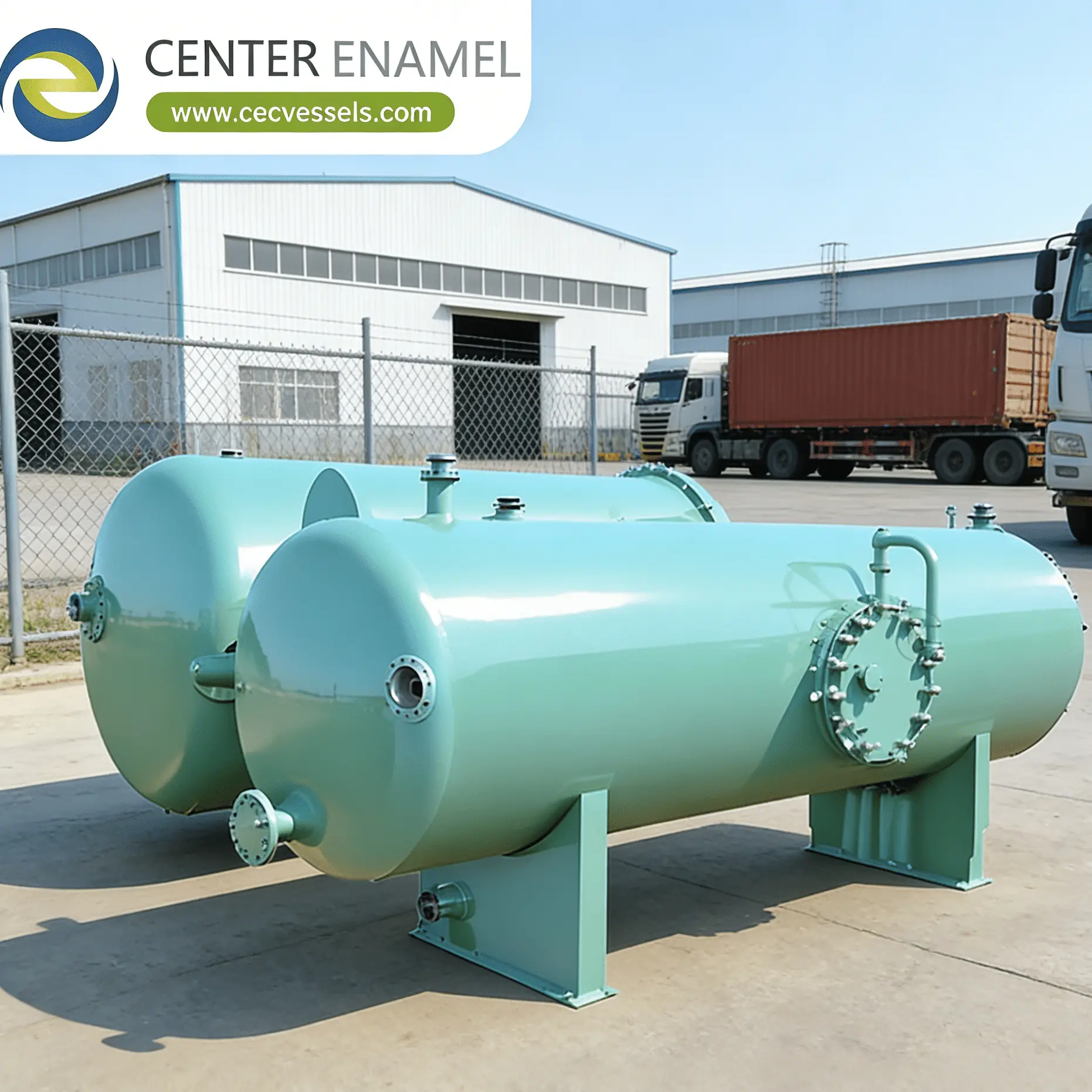
What Is the Function of a Separator?
A separator is process equipment designed to divide a mixture into two or more components or phases. The definition of separator can vary according to the industry, but its main function is to separate substances based on differences in physical properties such as density, particle size, phase, or viscosity. Separators are widely used in chemical processing, food and beverage production, oil and gas processing, pharmaceuticals, wastewater treatment, and many other industrial applications. Depending on the process, a separator can divide gas from liquid, liquid from liquid, or solids from liquids. What Is the Definition of a Separator? The definition of separator refers to equipment or a device used to separate components of a mixture into individual streams. Separation can occur through physical principles such as gravity, centrifugal force, filtration, sedimentation, or differences in density. In industrial processing, a separator receives a mixed feed and creates separate outlet streams. The separated materials can then be collected, processed further, recycled, or sent to downstream equipment. For example, a gas-liquid separator can remove liquid droplets from a gas stream. A liquid-liquid separator can divide two immiscible liquids according to their density differences. A solid-liquid separator can remove suspended particles from a liquid. Therefore, the specific function of a separator depends on the composition of the feed and the separation objective. How Does a Separator Work? The operating principle of a separator depends on the type of mixture and the separation technology used. For many industrial separators, the process begins when a mixed stream enters the equipment. The separator creates suitable conditions for the different components to move independently. Gravity separators use differences in density. When a mixture remains inside the vessel for a sufficient period, heavier components move downward while lighter components move upward. Centrifugal separators use rotational movement to increase the separation effect. The rotation causes components with different densities to move differently, allowing them to be collected separately. Other separators use filtration, coalescence, membranes, or mechanical internals to achieve the required separation. Industrial separators can therefore use one separation mechanism or combine several mechanisms in a single system. What Are the Main Functions of a Separator? The primary function of a separator is to divide a mixture into different components. However, separators can perform several specific functions within an industrial process. One important function is phase separation. A separator can divide gas and liquid phases or separate two different liquid phases. Another function is solids removal. A separator can remove suspended solids, particles, or other unwanted materials from a liquid stream. Separators can also support product recovery. Valuable components can be separated from a process stream and returned to production. Another important function is feed preparation. Before a fluid enters a reactor, heat exchanger, compressor, evaporator, or other process unit, unwanted phases or particles may need to be removed. Separators can therefore play an important role in maintaining the required composition and condition of process streams. What Is a Gas-Liquid Separator? A gas-liquid separator is designed to separate gas from liquid in a mixed process stream. When a gas and liquid mixture enters the separator, the flow is distributed inside the vessel. Larger liquid droplets can settle due to gravity while the gas moves toward the gas outlet. Some gas-liquid separators contain internal devices such as mesh pads, vane packs, or other mist elimination components. These devices help remove smaller liquid droplets that remain suspended in the gas. The separated liquid collects in the lower part of the vessel and can be discharged through a dedicated outlet. Gas-liquid separators are commonly used in chemical plants, refineries, natural gas processing facilities, refrigeration systems, and other industrial applications. What Is a Liquid-Liquid Separator? A liquid-liquid separator is used to divide two liquids that have different physical properties. A common example is the separation of oil and water. When the two liquids are immiscible and have different densities, gravity can cause them to form separate layers. The heavier liquid settles toward the bottom, while the lighter liquid remains above it. The separator can then remove each phase through a separate outlet. Liquid-liquid separators are used in oil processing, wastewater treatment, chemical production, and other applications where two liquid phases need to be separated. The design of the separator depends on factors such as liquid density, viscosity, flow rate, temperature, and the required separation performance. What Is a Solid-Liquid Separator? A solid-liquid separator separates suspended or settled solids from a liquid stream. The separation method can include filtration, sedimentation, centrifugal separation, or other mechanical processes. For example, industrial wastewater may contain suspended solids that need to be removed before further treatment. A solid-liquid separator can reduce the concentration of solids and produce a cleaner liquid stream. Solid-liquid separation is also common in food processing, pharmaceutical manufacturing, chemical production, mining, and environmental treatment. Depending on the application, the separated solids may be collected for disposal, recycling, or additional processing. What Is a Centrifugal Separator? A centrifugal separator uses centrifugal force to separate components with different densities. The feed enters a rotating separation chamber or bowl. The rotational movement causes denser materials to move outward while lighter materials remain closer to the center. Centrifugal separation can provide faster separation than simple gravity settling in certain applications. Centrifugal separators are used for liquid-liquid separation, liquid-solid separation, and other industrial separation processes. According to Flottweg, separators are commonly used for continuous separation of liquid mixtures and for separating solids from liquids when the liquid phase has a relatively low solids content. Centrifugal separators can use centrifugal force to accelerate the separation process. What Are Gravity Separators Used For? Gravity separators use natural differences in density to separate components. The mixture enters a chamber or vessel where the flow velocity is reduced. This creates an environment where heavier components can settle and lighter components can rise. Gravity separation is a simple and widely used principle. It can be applied to gas-liquid separation, liquid-liquid separation, and solid-liquid separation. A gravity separator may be designed as a vertical or horizontal vessel depending on the process requirements. The effectiveness of gravity separation depends on factors such as density difference, particle or droplet size, viscosity, flow conditions, and residence time. What Is the Difference Between a Separator and a Filter? A separator and a filter can both remove unwanted components from a process stream, but they normally use different mechanisms. A filter typically uses a porous medium to retain particles while allowing the desired fluid to pass through. The filter medium can be made from materials such as metal, fabric, polymer, ceramic, or other suitable materials. A separator generally uses differences in physical properties or phase behavior to divide a mixture. It may use gravity, centrifugal force, inertial effects, coalescence, or other physical mechanisms. For example, a gas-liquid separator can remove liquid droplets from gas without using a conventional porous filter medium. In some industrial systems, separators and filters can be installed together to achieve different stages of separation. What Are the Main Types of Industrial Separators? Industrial separators can be classified according to the materials being separated and the operating principle. Gas-liquid separators divide gas from liquid. Liquid-liquid separators divide two liquid phases. Solid-liquid separators remove solids from liquids. Three-phase separators can divide gas, oil, and water or other combinations of three phases. Centrifugal separators use rotational movement to accelerate separation. Gravity separators rely primarily on density differences and settling. Cyclone separators use a rotating flow pattern to separate particles or droplets from gas or liquid streams. The appropriate type depends on the process requirements and the characteristics of the feed mixture. Where Are Separators Used? Separators are used in a wide range of industrial sectors. In the chemical industry, separators can divide reaction products, remove unwanted phases, and prepare process streams for downstream equipment. In petrochemical and oil processing, separators can divide gas, oil, and water and support the treatment of process streams. In natural gas processing, gas-liquid separators can remove condensed liquids and other entrained materials from gas streams. In wastewater treatment, separators can remove oil, grease, suspended solids, and other materials. In the food and beverage industry, separation equipment can be used for clarification, liquid purification, and product recovery. In pharmaceutical manufacturing, separators can support the purification and processing of liquid products. In environmental applications, separators can help prepare wastewater and industrial fluids for additional treatment processes. Why Is a Separator Important in Industrial Processing? A separator provides a controlled method for dividing mixed process streams. Many industrial processes involve several components that must be handled separately. If gas, liquid, or solid phases need to follow different processing routes, a separator can divide the stream before it reaches the next process stage. Separators can also contribute to product recovery. Instead of allowing useful materials to leave the process with another stream, the appropriate separator can recover and redirect them. Another important function is process stream preparation. Removing unwanted liquid from gas, solids from liquid, or one liquid phase from another can help create a feed stream with properties suitable for downstream equipment. How Is a Separator Selected for an Industrial Application? Selecting a separator requires an understanding of the process and the materials involved. The composition of the feed is one of the first factors to consider. Engineers need to determine whether the process involves gas and liquid, two liquids, solids and liquids, or three separate phases. Flow rate is also important because it affects the size and internal configuration of the equipment. The density and viscosity of each component influence the separation behavior. A greater density difference may make gravity separation easier, while small density differences may require another separation mechanism. Particle or droplet size is another important factor. Larger droplets or particles are generally easier to separate through gravity, while smaller particles may require centrifugal force, filtration, coalescence, or specialized internal components. Operating temperature, material compatibility, residence time, available installation space, outlet requirements, and applicable design standards should also be considered. What Role Does a Separator Play in Process Equipment Systems? A separator often works together with other process equipment rather than operating independently. For example, a separator can be installed upstream of a heat exchanger to remove unwanted liquid or solids from a process stream. It can also be connected to a reactor, evaporator, compressor, condenser, or storage system. In a chemical process, a separator may receive the output of a reactor and divide the resulting phases before they continue to different processing units. In an evaporation system, a separator can divide vapor and concentrated liquid so that each stream can be processed separately. This integration allows the separator to become part of a complete process system designed around specific production requirements. How Does Center EnamelManufacture Separators? Center Enamelprovides customized process vessels and separation equipment for industrial applications. Its equipment can be designed according to process requirements, material specifications, operating conditions, capacity requirements, and applicable engineering standards. As a manufacturer of industrial process equipment, Center Enamelfocuses on vessel design, fabrication, installation, and related engineering services. Separator systems can be configured for different separation duties, including gas-liquid separation and other industrial process applications. The equipment configuration can include suitable vessel dimensions, nozzles, internal components, outlets, instrumentation connections, and other features required by the project. Understanding the Function of a Separator The definition of separator is broadly related to equipment that divides a mixture into separate components or phases. Its function can include gas-liquid separation, liquid-liquid separation, solid-liquid separation, or three-phase separation. Depending on the process, separators can use gravity, centrifugal force, filtration, coalescence, inertial effects, or combinations of these principles. The selection of equipment depends on the properties of the feed stream, required separation performance, flow rate, temperature, materials, and downstream process requirements. For chemical, petrochemical, environmental, pharmaceutical, food processing, and other industries, the separator serves as an important connection between different stages of production. A properly designed separator can help create suitable process streams for subsequent equipment and support efficient recovery and handling of different components.
|