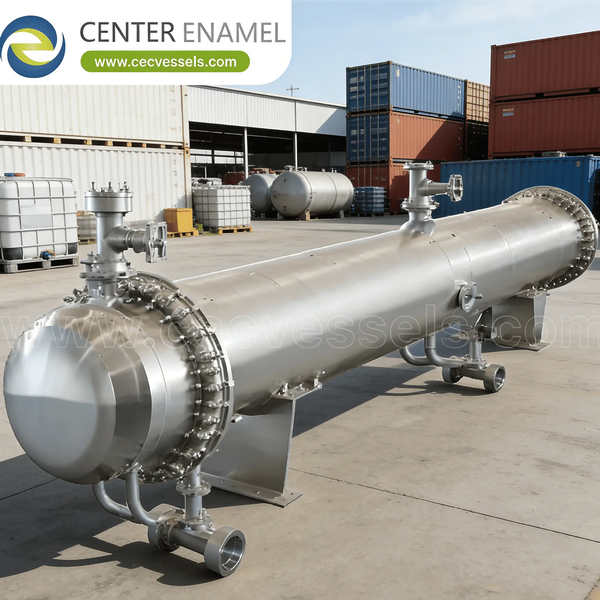
A phase separator is an industrial process vessel used to separate a mixed fluid stream into gas, liquid, and/or solid phases. Its main functions include gas-liquid separation, liquid-liquid separation, solid-liquid separation, and removal of entrained droplets or particles to improve process quality and protect downstream equipment.
What Is a Phase Separator?
A phase separator is a separation vessel designed to divide a mixed process stream into two or more phases according to differences in physical properties such as density, momentum, phase behavior, and droplet or particle size.
Depending on the process, a phase separator may separate gas from liquid, one liquid from another immiscible liquid, or suspended solids from a liquid. A three-phase separator can separate gas, oil, and water within the same vessel.
Phase separators are used in chemical processing, petrochemical production, oil and gas processing, wastewater treatment, power generation, food processing, and other industrial applications where different phases must be removed before the process stream moves to the next stage.
What Is the Main Function of a Phase Separator?
The main function of a phase separator is to reduce the amount of unwanted material carried from one phase into another. For example, a gas-liquid separator removes liquid droplets from a gas stream, while an oil-water separator separates immiscible liquids according to their density difference.
A phase separator can perform several functions:
Separate gas from liquid
Separate oil from water
Remove suspended solids from liquids
Collect separated liquid in a dedicated section
Reduce entrained droplets in gas outlets
Improve the quality of downstream process streams
Protect pumps, compressors, heat exchangers, filters, and other equipment
Provide controlled outlets for the separated phases
The exact separation performance depends on process conditions such as fluid density, viscosity, flow rate, temperature, droplet size, particle concentration, residence time, and internal flow distribution.
How Does a Phase Separator Work?
A phase separator works by reducing or redirecting the velocity of an incoming mixed stream so that different phases can separate through gravity, inertia, centrifugal action, coalescence, or a combination of these mechanisms.
When the process stream enters the vessel, an inlet device may distribute the flow and reduce its momentum. Heavier liquid droplets or particles can then move downward into the liquid collection section, while lighter gas or liquid phases move toward their respective outlets.
For gas-liquid separation, internal baffles or a demister pad can help remove entrained liquid droplets from the gas stream. Coalescing devices allow smaller droplets to combine into larger droplets that are easier to separate by gravity.
The basic separation sequence is:
Mixed fluid enters the separator.
Inlet devices reduce flow momentum and distribute the stream.
Different phases begin to separate according to their physical properties.
Heavy liquid or solid material collects in the lower section.
Gas or lighter liquid moves toward the upper or designated outlet.
Internal devices remove remaining entrained droplets when required.
Each separated phase leaves through its designated outlet.
How Does a Phase Separator Separate Gas and Liquid?
A gas-liquid phase separator removes liquid droplets from a gas or vapor stream primarily by reducing flow velocity and using gravity, inertia, and coalescence.
When the gas-liquid mixture enters the vessel, larger liquid droplets lose momentum and fall into the liquid collection section. Smaller droplets may remain entrained in the gas stream, so a baffle, vane pack, wire mesh demister, or other mist eliminator can be installed to improve droplet removal.
The required internal arrangement depends on gas velocity, liquid loading, droplet size, fluid properties, and the required outlet quality. Industrial separator designs therefore need to be sized according to actual process conditions rather than using one universal separation efficiency value.
How Does a Phase Separator Separate Oil and Water?
An oil-water phase separator separates two immiscible liquids primarily by exploiting their density difference.
When the mixture enters the vessel, the heavier water phase moves toward the lower section while the lighter oil phase rises toward the upper section. With sufficient residence time and controlled flow conditions, the two liquid layers can form distinct zones.
A three-phase separator can combine this liquid-liquid separation with gas-liquid separation. In this configuration, gas leaves through the gas outlet, the lighter liquid leaves through one liquid outlet, and the heavier liquid leaves through another outlet.
The actual interface position depends on fluid density, flow rate, viscosity, temperature, vessel geometry, and the required separation performance.
How Does a Phase Separator Remove Solids?
A phase separator can remove relatively large suspended solids from a liquid when the solids have sufficient density and size to settle under the available flow conditions.
As the liquid velocity decreases inside the vessel, heavier particles can settle toward the bottom. The collected solids can then be removed through a drain or solids outlet.
Solid-liquid separation performance depends strongly on particle size, particle density, liquid viscosity, flow velocity, and residence time. Fine particles may require additional equipment such as filters, hydrocyclones, or other solids-removal systems rather than relying only on gravity separation.
What Are the Main Types of Phase Separators?
Phase separators can be classified according to the phases being separated and the separation mechanism used.
Gas-Liquid Separator
A gas-liquid separator removes liquid droplets from gas or vapor streams. It is commonly used upstream of compressors, heat exchangers, turbines, filters, and other process equipment that can be affected by liquid carryover.
Liquid-Liquid Separator
A liquid-liquid separator separates two immiscible liquids, such as oil and water. The separation normally relies on differences in density and sufficient residence time for the liquid phases to form separate layers.
Solid-Liquid Separator
A solid-liquid separator removes suspended solids from a liquid stream. Gravity settling can be effective for relatively large and dense particles, while finer particles may require additional separation technology.
Three-Phase Separator
A three-phase separator separates gas, a lighter liquid, and a heavier liquid in a single vessel. A common process arrangement is gas, oil, and water separation.
Three-phase separators require careful control of liquid levels and interfaces because the vessel must maintain separate flow paths for multiple phases.
What Are the Main Components of a Phase Separator?
The internal configuration of a phase separator depends on its application, but common components include:
Inlet Nozzle and Inlet Device
The inlet introduces the mixed stream into the vessel. An inlet device can reduce momentum, distribute the incoming flow, and limit excessive turbulence inside the separation zone.
Baffles
Baffles redirect the fluid and encourage separation by reducing direct carryover between phases. In gas-liquid service, baffles can also provide surfaces for liquid droplets to impinge and drain.
Demister Pad or Mist Eliminator
A demister pad removes fine liquid droplets from a gas stream. Wire mesh and vane-type mist eliminators are common options. Coalescence allows small droplets to combine into larger droplets that can separate more easily under gravity.
Liquid Collection Section
The lower part of a separator vessel provides space for separated liquid to accumulate. Its dimensions and operating level depend on the expected liquid flow rate and required residence time.
Gas and Liquid Outlets
Separate outlets allow the different phases to leave the vessel through controlled flow paths. A three-phase separator normally includes a gas outlet and two liquid outlets.
Drain and Inspection Connections
Drain connections allow accumulated liquid or solids to be removed. Depending on the vessel design and applicable requirements, inspection openings and other connections may also be provided.
What Factors Affect Phase Separator Efficiency?
Phase separator efficiency is determined by the interaction of vessel design and process conditions rather than by vessel size alone.
Important factors include:
Fluid density difference
Fluid viscosity
Gas and liquid flow rates
Droplet size distribution
Solid particle size and density
Operating temperature
Residence time
Inlet flow pattern
Internal baffle arrangement
Demister or mist eliminator design
Liquid level and interface control
Required outlet quality
For example, separator performance in gas-liquid service is affected by fluid velocity and flow pattern, while droplet size strongly influences how easily entrained liquid can be removed.
For this reason, separator sizing should be based on actual process data, including minimum, normal, and maximum flow conditions.
How Does a Phase Separator Protect Downstream Equipment?
A phase separator can protect downstream equipment by reducing the amount of unwanted liquid, gas, or solid material carried into subsequent process stages.
For example, removing liquid droplets from a gas stream can help protect compressors and other gas-handling equipment. Separators can also be installed upstream of filters to remove suspended liquid before filtration, helping reduce the liquid load on downstream components.
In steam, compressed-air, and gas systems, separator designs commonly use baffles to collect entrained liquid and provide a dedicated drainage path.
This makes phase separation an important step in maintaining stable operation and improving the reliability of connected process equipment.
Where Are Phase Separators Used?
Phase separators are used wherever a process stream contains multiple phases that need to be separated before further processing.
Typical applications include:
Oil and Gas Processing
Three-phase separators can separate gas, oil, and water from produced fluids before subsequent processing stages.
Chemical Processing
Phase separators can divide gas-liquid or liquid-liquid mixtures during chemical production and purification processes.
Petrochemical Processing
Separators can remove entrained liquids or separate process phases before streams enter heat exchangers, compressors, reactors, or other equipment.
Wastewater Treatment
Solid-liquid and liquid-liquid separation can be used to remove suspended material or separate different liquid phases during wastewater processing.
Power and Steam Systems
Moisture separators remove entrained water droplets from steam or compressed gas systems. Baffle-type and coalescence-type designs are commonly used for this purpose.
Phase Separator vs. Decanter: What Is the Difference?
A phase separator is a broad term for equipment designed to separate different phases from a mixed process stream. A decanter is a specific type of separation equipment generally used for liquid-liquid or solid-liquid separation based mainly on gravity.
A phase separator may handle gas-liquid, liquid-liquid, solid-liquid, or three-phase separation. A decanter is more commonly associated with settling and separation of liquid phases or solids from liquids.
The appropriate equipment depends on the number of phases, physical properties, flow rate, required separation efficiency, and process configuration.
What Should Be Considered When Designing a Phase Separator?
Phase separator design should begin with actual process conditions rather than vessel dimensions alone.
Key design data normally include:
Process fluid composition
Number of phases
Normal and maximum flow rates
Fluid density and viscosity
Operating temperature
Required separation performance
Expected droplet or particle size
Required residence time
Allowable outlet carryover
Vessel orientation
Internal separation devices
Material compatibility
Applicable design and fabrication standards
The vessel size, nozzle arrangement, inlet device, baffles, demister, liquid level controls, and outlet configuration should then be selected according to the process requirements.
For pressure-containing separator vessels, applicable codes and regulations should also be established during the engineering stage. For example, industrial separator products may be designed to applicable pressure-vessel requirements such as EN 13445 or ASME Section VIII, depending on the project and jurisdiction. Commercial separator examples demonstrate that design pressure, temperature, connection size, and certification requirements can vary substantially between applications.
Why Is Phase Separator Selection Important?
Correct phase separator selection determines how effectively a mixed stream can be divided before it reaches downstream equipment.
An undersized separator may provide insufficient residence time or excessive internal velocity, increasing the risk of phase carryover. An incorrectly selected mist eliminator or inlet device can also reduce separation performance.
A properly selected separator should therefore match the process flow rate, fluid properties, phase behavior, required outlet quality, operating conditions, and applicable design requirements.
Frequently Asked Questions About Phase Separators
What is the main function of a phase separator?
The main function of a phase separator is to separate a mixed process stream into individual phases such as gas, liquid, oil, water, or solids. The separation can improve stream quality, reduce unwanted carryover, and protect downstream process equipment.
How does a phase separator work?
A phase separator works by controlling the flow of a mixed stream and using physical differences such as density, momentum, droplet size, and particle size. Gravity, inertia, coalescence, centrifugal action, or combinations of these mechanisms can be used depending on the separator design.
What phases can a phase separator separate?
A phase separator can separate gas and liquid, two immiscible liquids such as oil and water, or solids from liquids. A three-phase separator can separate gas, a lighter liquid, and a heavier liquid in one vessel.
Can a phase separator separate gas, oil, and water?
Yes. A three-phase separator is specifically designed to separate gas, oil, and water. The gas normally moves toward the upper gas outlet, while the liquid phases form separate zones according to their density and are discharged through separate liquid outlets.
What affects phase separator efficiency?
Important factors include fluid density, viscosity, flow rate, temperature, droplet size, particle size, residence time, flow pattern, vessel geometry, and internal separation devices. Gas-liquid separator performance can also depend on fluid velocity and inlet conditions.
What is the difference between a phase separator and a decanter?
A phase separator is a general term for equipment that separates different phases from a mixed stream. A decanter is more specifically associated with gravity-based liquid-liquid or solid-liquid separation. The correct equipment depends on the process and physical properties of the stream.
What equipment is commonly installed inside a phase separator?
Common internal components include an inlet device, baffles, a demister pad or mist eliminator, liquid collection sections, level-control components, and dedicated gas, liquid, or solids outlets. The exact configuration depends on the application.
What industries use phase separators?
Phase separators are used in oil and gas, petrochemical processing, chemical manufacturing, wastewater treatment, power generation, steam systems, and other industries where mixed-phase process streams require separation.
Custom Phase Separator Solutions from Center Enamel
Center Enamel provides engineered phase separator and process vessel solutions for industrial applications. Separator design can be developed according to the required process conditions, including fluid type, flow rate, operating temperature, phase configuration, vessel dimensions, internal components, material requirements, and applicable design standards.
For a suitable phase separator solution, the key information normally includes the process medium, gas and liquid flow rates, operating temperature, operating conditions, required separation performance, and preferred vessel dimensions. Based on these parameters, the engineering team can evaluate the appropriate vessel configuration and internal separation system.
A phase separator is not simply a vessel for holding a mixed stream. Its primary role is to create controlled conditions in which different phases can separate efficiently before the process stream moves to the next stage.


