What Is The Method Of Separating Petroleum?
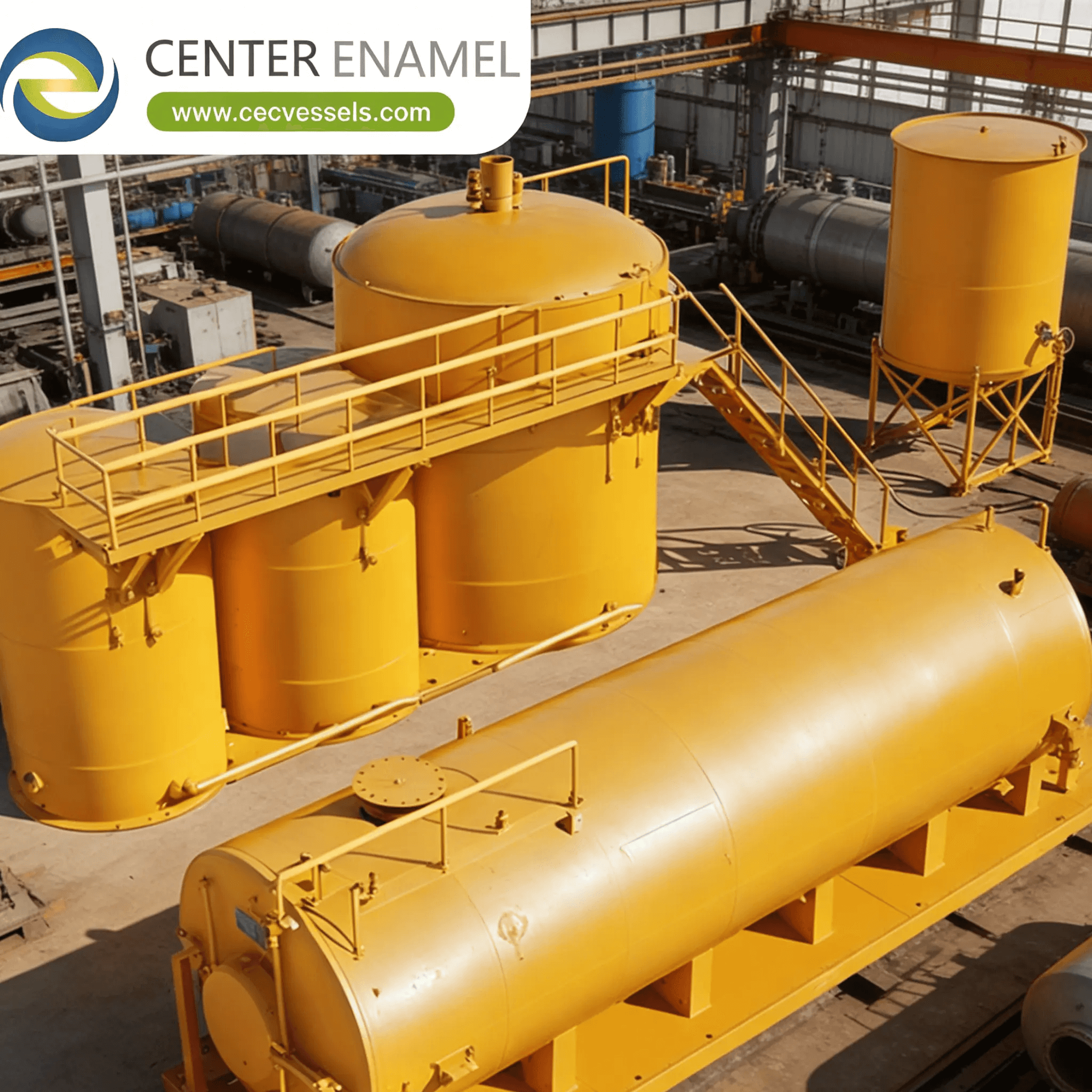
In the global energy sector, downstream petrochemical refining, and heavy manufacturing utility networks, transforming raw crude oil into usable commercial products is a primary operational milestone. The foundational method of separating petroleum relies on fractional distillation and physical multi-phase separation, which segregate complex hydrocarbon mixtures into distinct boiling-point fractions and pure fluid phases. This intricate chemical isolation takes place within tall distillation columns paired with a heavy-duty Petroleum Separator, which is a specialized process vessel built to maintain complete thermodynamic balance and steady fluid velocities. As an established Petroleum Separator Manufacturer, Center Enamel develops high-performance thermal containment and fluid processing solutions optimized for global refinery layouts. By adhering to international engineering codes including the ASME BPVC, BS EN 13445, and GB/T 150.1-150.4-2024, these heavy-duty vessels ensure structural integrity and consistent performance for global industrial partners.
The Chemical Foundation of Petroleum SeparationTo fully evaluate the method of separating petroleum, one must examine the molecular complexity of raw crude oil exiting underground extraction reservoirs. Crude oil is a thick, dark liquid consisting of thousands of different hydrocarbon compounds, ranging from light, highly volatile gases to heavy, viscous tars and asphalt polymers.
Because these individual compounds possess distinct molecular weights and cross-linked carbon chains, they also exhibit unique boiling point profiles. The primary method of separating petroleum capitalizes on these diverse boiling thresholds. When raw crude oil is subjected to managed thermal energy, the lighter hydrocarbon fractions with low boiling points vaporize first, while the heavier fractions with high boiling points remain in a liquid state. This physical characteristic allows industrial facilities to systematically separate the bulk crude mixture into specific commercial products, transforming an unusable natural resource into highly valuable fuels, lubricants, and chemical feedstocks.
The Fractional Distillation Process MethodThe primary industrial method of separating petroleum on a macro scale is fractional distillation, which continuously separates hydrocarbon components inside a massive vertical fractionating column:
1. Preheating and Vaporization InletThe separation sequence begins by pumping raw crude oil through long banks of automated preheating tubes and into a primary combustion furnace. The oil is heated to high thermal thresholds, causing the vast majority of the hydrocarbon molecules to flash instantly into a high-energy gaseous vapor mixture before being injected into the base section of the fractionating column.
2. Condensation Across Vertical Tray MatricesThe fractionating column contains dozens of horizontally arranged, perforated steel trays spaced evenly along its vertical height. The temperature inside the column is strictly regulated along a vertical gradient, being hottest at the absolute base and becoming progressively cooler toward the top dome. As the hot petroleum vapor rises through the tray perforations, it encounters cooler environments. When a specific hydrocarbon fraction reaches a tray where the temperature drops just below its boiling point, it condenses back into a liquid state, pooling on the tray surface.
3. Continuous Fraction HarvestingBecause different fractions condense at different heights along the column, refinery operators can continuously draw off distinct liquid streams from specific trays. The lightest fractions, such as liquefied petroleum gas and raw chemical naphtha, rise to the top dome without condensing. Medium-weight fractions, including commercial gasoline, aviation kerosene, and automotive diesel, condense in the middle zones. The heaviest fractions, such as heavy fuel oils and lubricating greases, do not vaporize at all and sink to the base of the tower as a thick residue.
Mechanical Phase Separation Methods via Petroleum SeparatorsImmediately upstream and downstream of the distillation column, physical multi-phase separation methods are deployed using targeted separation vessels to isolate mixed fluid streams exiting production lines:
1. Two-Phase Structural SeparationThis method isolates a mixed process stream into its distinct gas and liquid components. As the fluid enters the vessel shell, internal deflection plates slow the flow velocity, allowing light gas fractions to rise to the top vent while heavy liquids sink to the bottom discharge port.
2. Three-Phase Structural SeparationThis advanced method simultaneously splits a production stream into gas, liquid oil, and heavy process water. The separator utilizes extended retention volumes and internal skimming weirs to separate the fluids based on density differentials, allowing water to settle at the absolute bottom while clean oil forms an independent layer above it.
Key Technical Dimensions of Separation Vessel EngineeringDesigning a durable, high-efficiency petroleum separator requires a precise evaluation of several overlapping mechanical, thermal, and chemical design variables:
Fluid Retention Time Optimization: The separation of oil, gas, and water layers depends entirely on gravity settlement kinetics. Separation vessels must be meticulously calculated to provide sufficient volumetric retention space, ensuring that liquids remain inside the quiet chamber long enough for complete phase boundaries to form before reaching discharge valves.
Fluid Chemistry and Advanced Metallurgy: Process streams exiting extraction lines can carry aggressive chemical elements, including sulfur derivatives, organic acids, and dissolved salts. Selecting the correct metallurgy—such as premium 316L stainless steel, high-grade carbon steel with specialized corrosion allowances, or advanced duplex alloys—is essential to prevent chemical pitting and preserve structural boundaries.
Liquid Droplet Coalescence Management: Fine oil droplets suspended in water or water droplets entrained in gas phases can be difficult to separate by gravity alone. Separators incorporate internal coalescing packs and mesh pads to force tiny droplets to collide and form larger fractions, maximizing extraction efficiency.
Mechanical Components of Advanced Separation VesselsEvery industrial processing unit produced by Center Enamel is a precision-manufactured pressure vessel built for long-term service, featuring specialized components to optimize fluid management:
Vessel Shell and Curved Heads: The primary structural containment boundary, fabricated from thick carbon steel or stainless steel plates in strict compliance with GB/T 150.1-150.4-2024 standards.
Inlet Momentum Diffusers: Specialized internal plates positioned immediately behind the entry nozzle to rapidly decrease fluid velocity and distribute the flow stream uniformly.
Perforated Distribution Baffles: Transverse internal plates with engineered hole patterns designed to eliminate dead zones and maintain an absolute uniform laminar flow profile across the shell cavity.
Wire Mesh Mist Eliminators (Demister Pads): Dense matrices of woven metal wire positioned near the top gas vent nozzle to trap and coalesce fine liquid droplets entrained in the rising gas stream.
Adjustable Overflow Skimming Weirs: Precision-machined horizontal plates that cleanly isolate the floating oil blanket from the underlying water layer before harvesting.
Precision Process Connection Nozzles: Specially designed forged ports that accommodate high volumetric fluid velocities and ensure smooth integration with factory piping manifolds.
Vortex Breakers: Specialized structural caps placed over bottom discharge nozzles to ensure smooth fluid dynamics during liquid removal, preventing gas entrainment in downstream pump lines.
Diverse Industrial Applications of Petroleum Separation TechnologyThe requirement for durable, high-efficiency separators, thermal management loops, and structural fluid containment spans across a wide array of global sectors served by Center Enamel:
Upstream Oil and Gas Production Sites: Functioning as primary wellhead separators to split raw extracted fluids into transportable crude oil, natural gas, and disposal water.
Downstream Petrochemical Refining Networks: Operating as intermediate accumulator tanks, reflux drums, and product separators adjacent to primary fractionating columns.
Industrial Utility and Power Generation Complexes: Managing heavy fuel oil purification loops and lubricating oil reclamation systems for massive utility turbines.
Environmental Wastewater Treatment and Leachate Processing: Implementing advanced horizontal and vertical separation vessels to treat industrial landfill leachate and clean complex factory runoff water.
Factory Utility Control Networks: Operating steam distribution cylinders and condensate tanks to organize high-temperature utility lines across industrial complexes.
Large-Scale Industrial Aquaculture Support: Fabricating vertical clarification tanks and multi-stage biological containment units to maintain strict water quality standards.
Integration within Industrial Process NetworksIndustrial petroleum separators operate as central fluid purification nodes within comprehensive processing and energy networks. Center Enamel provides a comprehensive range of equipment that works in tandem with these units:
Steam Distribution Cylinders: Organizing and directing high-temperature steam lines used to heat heavy fuel oils inside separator jackets to lower fluid viscosity.
Condensate Tanks: Collecting hot purified water and process fluids discharged from thermal heating loops for recycling, supporting overall facility resource conservation.
Tube Heat Exchangers: Adjusting the temperature of incoming fluid streams before they enter the primary separator inlet nozzle, optimizing density differentials for rapid phase splitting.
Coalescing Oil Separators: Purifying auxiliary fluids, compressed air streams, and cooling water loops to prevent grease or organic oils from coating heat transfer surfaces.
Resin Tanks and Fiber Adsorption Tanks: Providing advanced upstream water treatment to ensure that utility cooling loops remain entirely free of scale-forming minerals.
Engineering Design Standards and Global ComplianceThe reliability of a high-performance industrial separator network is guaranteed by strict adherence to international fabrication codes. Center Enamel ensures that every phase of manufacturing complies with the exact regulatory benchmarks required by the target market.
ASME Boiler and Pressure Vessel Code (BPVC)The ASME Section VIII is the premier global standard for pressure equipment manufacturing. It defines the exact mathematical equations for material selection, wall thicknesses, and structural reinforcement for vessels handling volatile fluids under thermal loads. As a certified manufacturer, Center Enamel ensures that its separator shells are designed with full safety coefficients for long-term operational security.
GB/T 150.1-150.4-2024The GB/T 150 series is the national standard for metal pressure vessels in China. The 2024 update represents the latest advancements in structural finite element analysis, automated welding metrics, and modern steel grade certifications. Adhering to these updated standards guarantees that vessels are optimized for modern industrial facilities and domestic project compliance.
BS EN 13445For the European market, BS EN 13445 outlines harmonized rules for unfired pressure vessels, placing a significant emphasis on material fatigue analysis and advanced non-destructive testing regimes to ensure long-term structural security under cyclic production demands.
Our high-performance pressure vessels serve a vast industrial landscape, from petroleum refining and chemical processing to food, dairy, and brewing. We deliver precision-engineered solutions for pharmaceuticals, power generation, and wastewater treatment, ensuring compliance with the world’s most stringent safety codes. Our systems are designed for peak efficiency and longevity, empowering global partners to excel in even the most challenging environments.
1. Chemical Industry Project lProject Location: Hubei, China lPressure Vessels: Resin tanks, Coalescing oil separators, Fiber adsorption tanks, Compressed air storage tanks, Condensate tanks, and Steam distribution cylinders lMaterial: Stainless Steel and Carbon Steel. lDesign Standards: GB/T 150 (Pressure Vessels) lApplication: Integrated chemical fluid processing, separation, and steam distribution for chemical plants
2. Seawater Desalination Project lProject Location: Malta lPressure Vessels: Concentrated Sulfuric Acid Storage Tanks (Vertical layout) lMaterial: Carbon Steel lDesign Standards: EN 13445 lApplication: Storage of 98% concentrated sulfuric acid.
3. Waste-to-Energy Incineration Project lProject Location: Hebei, China lPressure Vessels: Large-scale Landfill Leachate Storage and Treatment Tanks (2 Sets) lMaterial: Carbon Steel lDesign Standards: GB 50341-2003 and GB 50128-2005. lApplication: Wastewater Treatment
4. Aquaculture Wastewater Treatment Project lProject Location: Sichuan, China lPressure Vessels: Vertical Wastewater Treatment Vessels (Φ 6×16.5 m (h) 1 set; Φ 7.6×16.5 m (h) 1 set) lMaterial: Carbon Steel lDesign Standards: National standard for vertical cylindrical storage tanks. lApplication: Aquaculture Wastewater Treatment
Maintenance Strategies for Separator Vessel LongevityTo ensure an industrial petroleum separator continues to operate at peak fluid-isolation and mechanical efficiency, regular maintenance and verification are essential:
Mist Eliminator Inspection and Cleaning: Periodically checking top demister pads to remove accumulated wax, carbon crusts, or chemical scale that could obstruct gas pathways.
Bottom Sediment Flushing: Regularly opening the base drain valves attached to sediment collection zones to flush away falling sand, silt, and rust solids, preventing packing.
Weld Seam NDT Inspections: Checking the structural integrity of longitudinal welds and nozzle attachments using non-destructive testing (NDT), such as radiographic X-ray or ultrasonic evaluation.
Safety Relief Valve Calibration: Regularly testing the pressure relief valves attached to the vessel cover to ensure they lift smoothly at the correct set point, protecting the structural integrity of the overall processing system.
The Center Enamel Manufacturing AdvantageChoosing Center Enamel as your China Petroleum Separator Manufacturer partner means connecting with an industry leader in technical innovation, advanced engineering, and top-tier industrial fabrication across all vessel classifications.
Advanced Computational EngineeringOur team utilizes Finite Element Analysis (FEA) and Computational Fluid Dynamics (CFD) to digitally simulate exactly how complex hydrocarbon matrices and gas-liquid streams move inside the separator shell and interact with internal baffles and weirs. This allows us to optimize internal layout configurations, nozzle locations, and plate angles before physical production begins.
Precision Fabrication and Quality ControlWe operate a state-of-the-art manufacturing facility equipped with automated plate rolling lines, heavy-duty CNC machining setups, and advanced automated welding networks. This commitment to precision minimizes manual variation, accelerates production timelines, and guarantees that every weld profile complies with the strict quality standards of GB/T 150-2024 and ASME codes.
Turnkey Manufacturing ManagementFrom initial metallurgical verification and certified weld qualifications to complete non-destructive evaluation, post-weld heat treatment, and final hydrostatic verification, Center Enamel manages the entire fabrication sequence under one roof. This comprehensive oversight ensures elite structural reliability, seamless system integration, and long-term operational success for our global industrial partners.
Summary of Petroleum Separation ExcellenceIn conclusion, exploring the method of separating petroleum reveals an advanced manufacturing sector where precise thermodynamic principles intersect directly with heavy-duty pressure vessel design. Whether achieving broad compound separation through macro-level fractional distillation columns or executing localized phase isolation via high-efficiency multi-phase separation tanks, the manufacturing yield, product purity, and environmental compliance of a refinery complex depend fundamentally on the engineering precision of its containment assets. By designing and building these critical units in absolute compliance with international benchmarks like the ASME code and the updated GB/T 150.1-150.4-2024 standards, Center Enamel delivers high-performance processing equipment that maximizes extraction yields, lowers long-term operational costs, and provides durable structural performance for our global industrial partners.
|