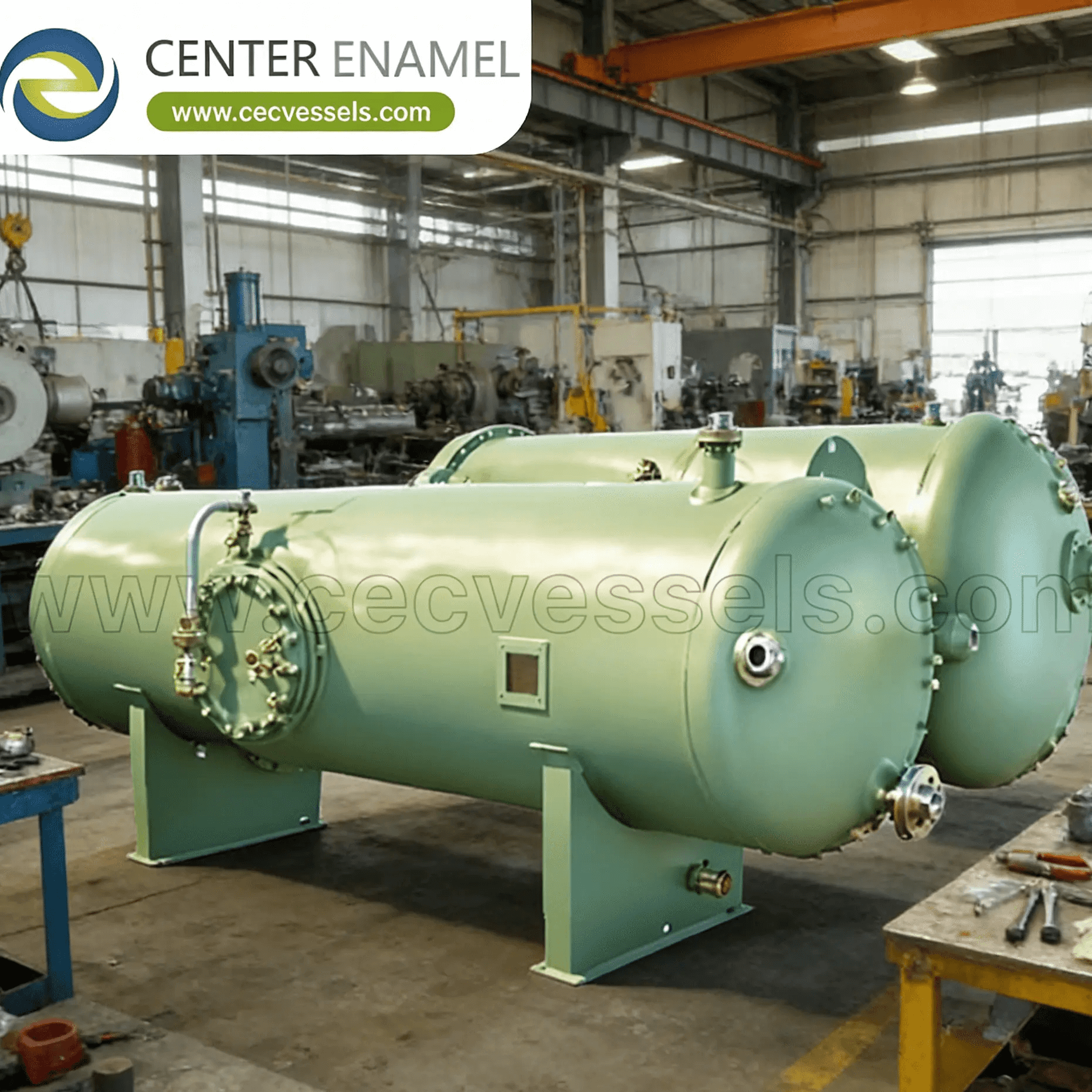
What Is The Process Of Separator Production?
In modern downstream petroleum refining, petrochemical manufacturing, and bulk fluid chemical processing, isolating multi-phase fluid streams into independent components is a core operational milestone. A production separator is a highly specialized pressure vessel engineered to split raw processing streams into separate liquid, gas, and aqueous fractions based on differential densities and mechanical fluid dynamics. The fabrication of these intricate containment units requires precision engineering, certified metallurgical forming, and rigorous quality validation sequences to ensure absolute field reliability. As an established Production Separator Manufacturer, Center Enamel develops high-performance separation vessels and fluid processing equipment optimized for global industrial infrastructures. By adhering to international engineering codes like the ASME BPVC, BS EN 13445, and GB/T 150.1-150.4-2024, these heavy-duty vessels ensure structural integrity and consistent performance for global industrial partners.
Phase 1: Advanced Engineering Design and Material SelectionThe process of separator production begins long before raw steel plates are cut. The foundational phase involves translating processing velocities, fluid densities, and target operational volumes into precise geometric specifications. As a leading provider of China Production Separator Manufacturer technology, Center Enamel utilizes advanced digital modeling techniques, including Finite Element Analysis (FEA) and Computational Fluid Dynamics (CFD). These digital tools allow engineering teams to simulate exactly how multi-phase fluids move inside the shell cavity, allowing for the precise placement of nozzle inlets and internal baffles. Metallurgical selection is executed simultaneously; depending on the fluid chemistry of the target facility, engineers select premium carbon steel plates, high-grade 316L stainless steel linings, or advanced duplex alloys to maximize the service life of the finished vessel shell.
Phase 2: Steel Plate Cutting and Shell FormingOnce design models are finalized and certified raw materials arrive at the state-of-the-art Center Enamel manufacturing complex, physical production commences: Precision Plate CuttingRaw steel plates undergo automated cutting via heavy-duty CNC plasma or laser cutting systems. This computer-controlled methodology ensures that the edges of the steel plates are cut with micrometric precision, preparing them perfectly for subsequent beveling and weld seam alignment.
Plate Rolling and Cylinder ShapingThe flat, cut steel plates are routed to heavy-duty hydraulic plate bending rollers. These machine lines gradually apply geometric force to roll the thick steel plates into perfect hollow cylinders, which will form the primary structural sections of the horizontal or vertical separator vessel body.
Formed Head FabricationThe curved end caps of the separator—typically torispherical, ellipsoidal, or hemispherical profiles—are hot-formed or cold-spun using specialized hydraulic presses. These geometric shapes are selected because they naturally distribute structural physical loads uniformly across the containment boundary.
Phase 3: Assembly Alignment and Structural WeldingWith the primary cylindrical shell sections and end heads formed, the component pieces are transferred to automated assembly stations for structural integration:
Longitudinal and Circumferential Alignment: The rolled steel cylinders are aligned on rotating turning rolls. Precision jigs ensure that the plate edges meet with zero misalignment, creating a straight, uniform structural column.
Automated Submerged Arc Welding (SAW): To guarantee dense weld profiles, the main structural longitudinal and circumferential seams are executed using advanced automated submerged arc welding systems. This method shields the molten weld pool from atmospheric gases, ensuring deep penetration, excellent grain structure, and high mechanical strength that complies with the rigid benchmarks of GB/T 150.1-150.4-2024 and ASME Section VIII.
Internal Overlay Cladding: If the production separator is designated for corrosive fluid processing, a automated weld overlay cladding system applies a continuous protective layer of high-grade stainless steel across the internal surfaces of the carbon steel shell.
Phase 4: Nozzle Attachment and Mechanical IntegrationA production separator requires numerous connection ports to link seamlessly with factory piping networks and utility conduits:
CNC Port MachiningSpecialized holes are cut into the rolled cylinder walls and dished heads using high-precision CNC hole-cutting equipment. These penetrations accommodate fluid inlet nozzles, liquid discharge lines, gas exit ports, and instrument connections.
Forged Nozzle WeldingThick, forged steel nozzle necks and connection flanges are aligned to the shell penetrations. Experienced, certified welders apply full-penetration structural welds, reinforcing the connection points with additional pad plates where calculated by engineering standards to prevent structural stress concentration.
Support Attachment InstallationHeavy structural steel support components—such as support saddles for horizontal production separators or vertical structural legs and skirts for vertical units—are welded to the base of the vessel shell, providing a stable geometric foundation for field installation.
Phase 5: Manufacturing and Installing Advanced Vessel InternalsThe true operational efficiency of a production separator depends heavily on its internal mechanical components, which are custom-fabricated and installed during this phase:
Inlet Momentum Deflectors: Diverter plates or cyclonic inlets positioned directly behind the main feed nozzle to rapidly decrease the velocity of incoming fluids, forcing bulk liquids to drop instantly while allowing gases to separate upward.
Perforated Distribution Baffles: Transverse internal plates with engineered hole patterns designed to smooth out fluid turbulence and organize liquid fractions into a steady, uniform laminar flow path across the length of the vessel shell.
Coalescing Plate Packs: Vertical stacks of closely spaced corrugated plates that force small, suspended oil or water droplets to collide and combine into larger droplets, accelerating density-driven phase isolation.
Wire-Mesh Demister Pads: Dense, woven stainless steel mesh screens positioned near the top vapor exit nozzle to capture fine entrained liquid mist from escaping with the gas stream, preserving gas purity.
Vortex Breakers: Specialized structural caps placed over bottom discharge nozzles to ensure smooth fluid dynamics during liquid removal, preventing gas entrainment.
Phase 6: Thermal Treatment and Surface RefinementFollowing the completion of all structural and structural component welding, the production separator undergoes rigorous thermal and surface processing:
Post-Weld Heat Treatment (PWHT)To eliminate any internal residual stresses locked into the steel plates during rolling and heavy welding cycles, the entire separator vessel is placed inside a computer-controlled thermal furnace. The vessel is slowly heated to a precise stress-relieving temperature, soaked for a calculated duration, and gradually cooled, restoring optimal material ductility across all weld zones.
Blast Cleaning and Surface PreparationThe outer skin of the vessel shell undergoes aggressive shot blasting or grit blasting to completely remove mill scale, weld spatter, and minor rust films. This process generates an optimal anchor profile on the raw steel plate.
Industrial Multi-Coat Coating SystemsPremium corrosion-resistant primer coatings, intermediate epoxies, and durable polyurethane topcoats are applied to the external surfaces using airless spray networks, providing a robust barrier against aggressive ambient environment exposure.
Phase 7: Rigorous Quality Assurance and Compliance ValidationEvery production separator produced by Center Enamel must pass a comprehensive battery of quality control assessments before receiving certified standard stamps:
Radiographic Non-Destructive Testing (NDT): Full X-ray evaluation is executed along the entire length of all longitudinal and circumferential structural weld seams to verify complete internal weld density, ensuring zero voids or cracks exist inside the steel joints.
Ultrasonic and Dye Penetrant Inspections: Nozzle attachment welds and support bracket junctions are assessed using ultrasonic testing and dye penetrant testing to confirm flawless exterior structural bond integrity.
Multi-Stage Hydrostatic Pressure Testing: The completed vessel shell is completely filled with treated water and pressurized significantly beyond its calculated continuous operational design benchmark, maintaining this hydraulic pressure to verify full leak-proof compliance.
Aseptic Laser Dimensional Profiling: Advanced laser measurement sensors scan the completed vessel geometry to guarantee that nozzle alignments, flange bolt patterns, and total vertical lengths comply exactly with the engineering blueprints.
Diverse Industrial Applications of Production SeparatorsThe requirement for durable and highly compliant production separation technology and auxiliary containment spans across a wide array of global sectors served by Center Enamel:
Petrochemical and Upstream Refining: Splitting raw oil fluids into clear streams of natural gas, stabilized crude oil, and produced water at regional gathering terminals.
Chemical Synthesis and Processing Skids: Managing product purification cycles inside closed-loop chemical networks to isolate processed liquids from volatile solvent vapors.
Industrial Thermal and Phase Management: Operating in close sequence with high-temperature distillation columns, shell and tube heat exchangers, and industrial condensers to regulate fluid phase transitions.
Environmental Wastewater Treatment Infrastructure: Implementing advanced horizontal and vertical separation vessels to treat industrial landfill leachate and clean complex factory runoff water.
Factory Utility Control Networks: Operating steam distribution cylinders and condensate tanks to organize high-temperature utility lines across industrial complexes.
Large-Scale Industrial Aquaculture Support: Fabricating vertical clarification tanks and multi-stage biological containment units to maintain strict water quality standards for aquatic habitats.
Integration within Industrial Process NetworksProduction separators operate as central fluid purification nodes within comprehensive processing and energy management layouts. Center Enamel provides a comprehensive range of equipment that works in tandem with these units:
Steam Distribution Cylinders: Organizing and directing high-temperature steam lines used to preheat viscous fluid lines or power upstream process heaters.
Condensate Tanks: Collecting hot purified water and process fluids discharged from thermal heating jackets for recycling, supporting overall facility resource conservation.
Tube Heat Exchangers: Adjusting the temperature of incoming fluid streams before they enter the primary separator inlet nozzle, optimizing density differentials for rapid phase splitting.
Coalescing Oil Separators: Purifying auxiliary fluids and utility water loops to remove grease, trace oils, or organic residues, preserving environmental compliance metrics.
Resin Tanks and Fiber Adsorption Tanks: Providing advanced upstream and downstream final purification to water lines discharged from process loops, ensuring complete mineral extraction.
Engineering Design Standards and Global ComplianceThe reliability of a high-performance production separator is guaranteed by strict adherence to international fabrication codes. Center Enamel ensures that every phase of manufacturing complies with the exact regulatory benchmarks required by the target market.
ASME Boiler and Pressure Vessel Code (BPVC)The ASME Section VIII is the premier global standard for pressure equipment manufacturing. It defines the exact mathematical equations for material selection, wall thicknesses, and structural reinforcement for vessels handling volatile fluids under thermal loads. As a certified manufacturer, Center Enamel ensures that its separator shells are designed with full safety coefficients for long-term operational security.
GB/T 150.1-150.4-2024The GB/T 150 series is the national standard for metal pressure vessels in China. The 2024 update represents the latest advancements in structural finite element analysis, automated welding metrics, and modern steel grade certifications. Adhering to these updated standards guarantees that vessels are optimized for modern industrial facilities and domestic project compliance.
BS EN 13445For the European market, BS EN 13445 outlines harmonized rules for unfired pressure vessels, placing a significant emphasis on material fatigue analysis and advanced non-destructive testing regimes to ensure long-term structural security under cyclic production demands.
Our high-performance pressure vessels serve a vast industrial landscape, from petroleum refining and chemical processing to food, dairy, and brewing. We deliver precision-engineered solutions for pharmaceuticals, power generation, and wastewater treatment, ensuring compliance with the world’s most stringent safety codes. Our systems are designed for peak efficiency and longevity, empowering global partners to excel in even the most challenging environments.
1. Chemical Industry Project lProject Location: Hubei, China lPressure Vessels: Resin tanks, Coalescing oil separators, Fiber adsorption tanks, Compressed air storage tanks, Condensate tanks, and Steam distribution cylinders lMaterial: Stainless Steel and Carbon Steel. lDesign Standards: GB/T 150 (Pressure Vessels) lApplication: Integrated chemical fluid processing, separation, and steam distribution for chemical plants
2. Seawater Desalination Project lProject Location: Malta lPressure Vessels: Concentrated Sulfuric Acid Storage Tanks (Vertical layout) lMaterial: Carbon Steel lDesign Standards: EN 13445 lApplication: Storage of 98% concentrated sulfuric acid.
3. Waste-to-Energy Incineration Project lProject Location: Hebei, China lPressure Vessels: Large-scale Landfill Leachate Storage and Treatment Tanks (2 Sets) lMaterial: Carbon Steel lDesign Standards: GB 50341-2003 and GB 50128-2005. lApplication: Wastewater Treatment
4. Aquaculture Wastewater Treatment Project lProject Location: Sichuan, China lPressure Vessels: Vertical Wastewater Treatment Vessels (Φ 6×16.5 m (h) 1 set; Φ 7.6×16.5 m (h) 1 set) lMaterial: Carbon Steel lDesign Standards: National standard for vertical cylindrical storage tanks. lApplication: Aquaculture Wastewater Treatment
The Center Enamel Manufacturing AdvantageChoosing Center Enamel as your China Production Separator Manufacturer partner means connecting with an industry leader in technical innovation, advanced engineering, and top-tier industrial fabrication across all vessel classifications.
Advanced Automated InfrastructureOur production facility features modern computer-controlled automated welding systems, precision CNC edge beveling centers, and automated plate rolling machines. This structural commitment to advanced manufacturing minimizes manual errors, speeds up production lead times, and ensures complete consistency across large equipment orders.
Turnkey Production ManagementFrom initial computational finite element layout design and metallurgical material sourcing to complete non-destructive X-ray verification, stress-relieving thermal processing, and global freight logistical management, Center Enamel oversees the entire production chain under one single roof. This comprehensive quality oversight ensures elite structural reliability, seamless field piping integration, and long-term operational success for our global industrial processing partners.
Summary of Production Separator Manufacturing ExcellenceIn conclusion, the process of separator production is an advanced manufacturing sequence where certified metallurgical processing principles interface directly with high-performance pressure vessel engineering. The continuous operational efficiency, multi-phase fluid throughput, and environmental compliance of a downstream factory fluid loop rely completely on the mechanical structural integrity and internal accuracy of its underlying production separator columns. By engineering and fabricating these critical containment vessels in absolute compliance with international benchmarks like the ASME code and the updated GB/T 150.1-150.4-2024 standards, Center Enamel delivers high-performance processing equipment that maximizes phase separation yields, lowers long-term operational costs, and provides durable structural performance for our global industrial partners.
Looking for a reliable pressure vessel partner? From complex chemical systems to large-scale environmental projects, we turn your requirements into high-performance reality. Submit your design parameters or project specs now, and we will have a dedicated engineer reach out to you as soon as possible to discuss the next steps.
|