The wet process of separator manufacturing is a microporous membrane production method that mixes a polyolefin polymer with a liquid solvent or pore-forming agent, forms a gel film by extrusion and phase separation, stretches the film, extracts the liquid phase, and heat-sets the resulting porous separator. It is widely used for polyethylene (PE) battery separators because it provides controlled pore structure, high mechanical strength, and consistent permeability.
What Is the Wet Process of Separator Manufacturing?
The wet process is a manufacturing technology for producing microporous polymer separators. In a typical battery-separator process, polyethylene (PE), including high-density polyethylene (HDPE) or ultra-high-molecular-weight polyethylene (UHMWPE), is combined with a liquid hydrocarbon such as paraffin oil, heated, extruded into a film, stretched, and then subjected to solvent extraction and drying. The extraction step removes the pore-forming liquid and leaves an interconnected microporous structure.
The term "wet process" describes the use of a liquid phase during pore formation. It should not be treated as a direct synonym for every phase-inversion mechanism or for thermally induced phase separation (TIPS). Depending on the polymer-solvent system and process design, pore formation can involve liquid-liquid phase separation, thermally induced phase separation, stretching-induced structural development, and subsequent extraction.
For lithium-ion battery separators, the wet process is particularly associated with polyethylene-based microporous membranes. The final separator must provide controlled porosity while maintaining mechanical strength, dimensional stability, electrolyte wettability, and appropriate ionic transport characteristics.
How Does the Wet Process of Separators Work?
The wet process converts a polymer-liquid mixture into a thin microporous membrane through a sequence of mixing, extrusion, stretching, extraction, drying, and heat setting.
A typical wet-process separator manufacturing flow is:
Polymer + pore-forming liquid → heated mixing → extrusion and casting → phase separation → machine-direction and transverse-direction stretching → liquid extraction → drying → heat setting → microporous separator
The exact temperatures, stretch ratios, film thicknesses, solvent systems, and residence times depend on the polymer grade, equipment configuration, separator design, and required final properties.
Step 1: Polymer and Liquid Mixing
In the first stage, polymer resin is combined with a liquid pore-forming agent. Polyethylene is commonly used for wet-process battery separators, while paraffin oil is a widely reported liquid component. The polymer and liquid are heated and mixed to obtain a uniform polymer-rich system suitable for subsequent film formation.
A typical production line may use a heated mixing vessel, feed system, agitator, temperature-control system, and transfer equipment. The mixing conditions influence polymer dissolution or dispersion, viscosity, composition uniformity, and the eventual pore structure.
For example, published separator-manufacturing examples use HDPE with paraffin oil and process the mixture through a twin-screw extruder. One reported formulation used 30 parts HDPE and 70 parts paraffin oil, although industrial formulations vary according to material and separator specifications.
Step 2: Extrusion and Film Casting
After mixing, the polymer-liquid composition is transferred to an extrusion system and formed into a continuous sheet through a die. A casting roll then cools and shapes the extruded material into a gel-like precursor film.
During cooling, the polymer-rich and liquid-rich phases develop within the material. This phase structure becomes an important precursor to the microporous network created during subsequent processing.
In one published example, an HDPE/paraffin-oil mixture was extruded through a 300 mm-wide T-die at approximately 200°C and cooled on a casting roll at approximately 40°C to produce a precursor sheet. These values are process-specific examples rather than universal operating parameters.
Step 3: Biaxial Stretching
The precursor film is stretched in the machine direction (MD) and transverse direction (TD). This biaxial stretching modifies the polymer morphology, increases molecular orientation, and helps develop the final microporous structure.
Machine-direction stretching is normally performed using roll-based stretching equipment, while transverse-direction stretching can be performed with a tenter system. Stretching temperature and draw ratio must be controlled because they directly affect film thickness, pore morphology, tensile strength, and dimensional stability.
Published examples have used MD and TD stretch ratios such as 6× and 7×, respectively, at temperatures around 110°C and 125°C. These figures demonstrate the type of process window used in research and industrial development; they should not be treated as fixed specifications for every wet-process separator.
Step 4: Liquid Extraction
After stretching, the separator precursor enters an extraction stage where the pore-forming liquid is removed from the polymer matrix. A volatile extraction solvent can dissolve and remove paraffin oil or another liquid component.
This extraction step is critical because removing the liquid phase leaves interconnected micropores throughout the polymer film. The extraction conditions influence residual solvent content, pore development, porosity, and final separator performance.
Industrial wet-process lines therefore require dedicated extraction tanks or extraction systems, solvent circulation equipment, filtration, temperature control, and solvent-recovery equipment.
Published manufacturing examples have used dichloromethane as an extraction solvent. One example immersed the stretched film at approximately 25°C for one minute before drying it at approximately 50°C. Actual extraction conditions vary with solvent, film thickness, composition, and production-line design.
Step 5: Drying and Solvent Removal
After extraction, the porous film is dried to remove the remaining extraction liquid from the membrane structure.
Controlled drying is important because excessive residual solvent can affect separator quality, while aggressive drying conditions can influence dimensional stability and film morphology. Industrial systems therefore control drying temperature, airflow, residence time, and solvent concentration.
The drying stage converts the extracted wet film into a stable microporous membrane that can proceed to thermal stabilization and final finishing.
Step 6: Heat Setting and Thermal Stabilization
The dried separator is heat-set to stabilize its dimensions and reduce internal stresses created during stretching.
Heat setting can involve controlled heating under tension, followed by transverse relaxation or other dimensional-stabilization steps. The exact conditions depend on the polymer and target separator properties.
For example, published PE separator processes have used heat-setting temperatures around 125–130°C after stretching and extraction. Such parameters are representative examples rather than universal production specifications.
What Equipment Is Used in the Wet Process?
Wet-process separator production combines polymer processing equipment with liquid-handling and solvent-recovery equipment.
Common equipment includes:
Heated mixing vessels
Polymer dissolution or blending systems
Twin-screw extruders
T-dies
Casting rolls
Machine-direction stretching units
Tenter stretching machines
Extraction tanks
Solvent circulation systems
Drying ovens
Heat-setting equipment
Distillation columns
Condensers
Solvent storage tanks
Pumps, filters, and heat exchangers
The equipment configuration depends on the separator material, production capacity, film width, solvent system, and required membrane properties.
What Is the Role of an Extraction Tank in Wet-Process Separator Manufacturing?
An extraction tank removes the liquid pore-forming agent from the stretched separator film. The film passes through an extraction medium that dissolves the retained liquid phase, allowing the liquid to be removed from the polymer matrix and creating the final microporous structure.
For industrial production, an extraction system may include the extraction vessel, solvent circulation loop, filtration system, temperature control, liquid-level control, and solvent-recovery equipment. Proper flow distribution helps maintain consistent extraction across the moving separator film.
For equipment manufacturers, extraction tanks are therefore an important part of the wet-process production line rather than simply auxiliary storage equipment.
What Is the Role of a Blending Vessel?
A blending vessel provides controlled mixing and thermal management for the polymer-liquid feed system.
The vessel must maintain consistent temperature and composition while handling a polymer-rich mixture whose viscosity can change significantly with temperature and concentration. Agitation, heating or cooling surfaces, material selection, nozzle arrangement, and discharge configuration can therefore influence process consistency.
For larger production systems, the blending vessel may operate continuously with extrusion and downstream film-forming equipment.
Why Is Solvent Recovery Important in the Wet Process?
Solvent recovery allows the liquid used during extraction to be separated, purified, and returned to the production process.
A typical recovery system may include distillation columns, reboilers, condensers, collection tanks, pumps, and heat exchangers. The separation conditions depend on the physical properties of the extraction solvent and the extracted liquid.
Solvent recovery can reduce liquid consumption and support continuous operation by returning recovered process liquids to the appropriate process loop.
What Are the Key Properties of a Wet-Process Separator?
The performance of a wet-process separator is determined by several interconnected material properties.
Porosity
Porosity describes the proportion of void volume within the separator. Controlled porosity provides pathways for electrolyte transport while maintaining the polymer framework.
Pore Size and Pore Distribution
Pore size and pore-size distribution influence electrolyte transport and separator performance. Wet processing is widely studied because it can produce relatively uniform microporous structures. Research comparing wet- and dry-process separators has reported differences in pore size distribution and morphology.
Thickness
Separator thickness affects ionic resistance, mechanical properties, and the amount of inactive material within a battery cell. Modern separator designs can use very thin polymer films, with some published examples producing porous supports below 10 μm.
Mechanical Strength
Tensile strength, puncture resistance, and dimensional stability are important properties because the separator must maintain its physical structure during cell assembly and operation.
Electrolyte Wettability
For lithium-ion battery separators, electrolyte wettability affects how effectively the separator can be impregnated with electrolyte and support ionic transport through its pore network.
Thermal and Dimensional Stability
The separator must retain its intended dimensions within the relevant operating and processing temperature ranges. Stretching, heat setting, polymer crystallinity, and separator architecture all influence dimensional behavior.
Wet Process vs. Dry Process for Separators
The wet and dry processes use different mechanisms to develop microporous structures.
The wet process generally combines a polyolefin with a liquid pore-forming component, followed by film formation, stretching, liquid extraction, drying, and heat setting. The dry process generally forms pores through controlled stretching and related morphology-development mechanisms without the same liquid extraction stage.
Wet processing is often selected when manufacturers require specific control of pore morphology, thickness, and mechanical properties. Dry processing can offer a simpler process route because it does not require the same extraction and solvent-recovery stages.
The appropriate technology depends on the polymer, separator architecture, production capacity, target properties, and equipment configuration.
What Materials Are Used in Wet-Process Separators?
Polyolefins are the principal polymer family associated with wet-process battery separators. Common materials include:
Liquid paraffin is a commonly reported pore-forming component in PE wet-process separator manufacturing. Hydrocarbon liquids and other process-specific solvent systems can also be used depending on the production technology.
The choice of polymer molecular weight, polymer concentration, liquid composition, additives, stretching conditions, and extraction conditions determines the final separator morphology and mechanical characteristics.
Applications of Wet-Process Separator Technology
Wet-process microporous membranes are particularly important in lithium-ion battery separator manufacturing.
Battery separators are positioned between the positive and negative electrodes to maintain physical separation while allowing ionic transport through the electrolyte-filled pores.
Wet-process separator technology is also relevant to microporous membrane development and other polymer-membrane applications where controlled pore morphology is required. However, the process parameters and material systems differ substantially between battery separators and other membrane technologies.
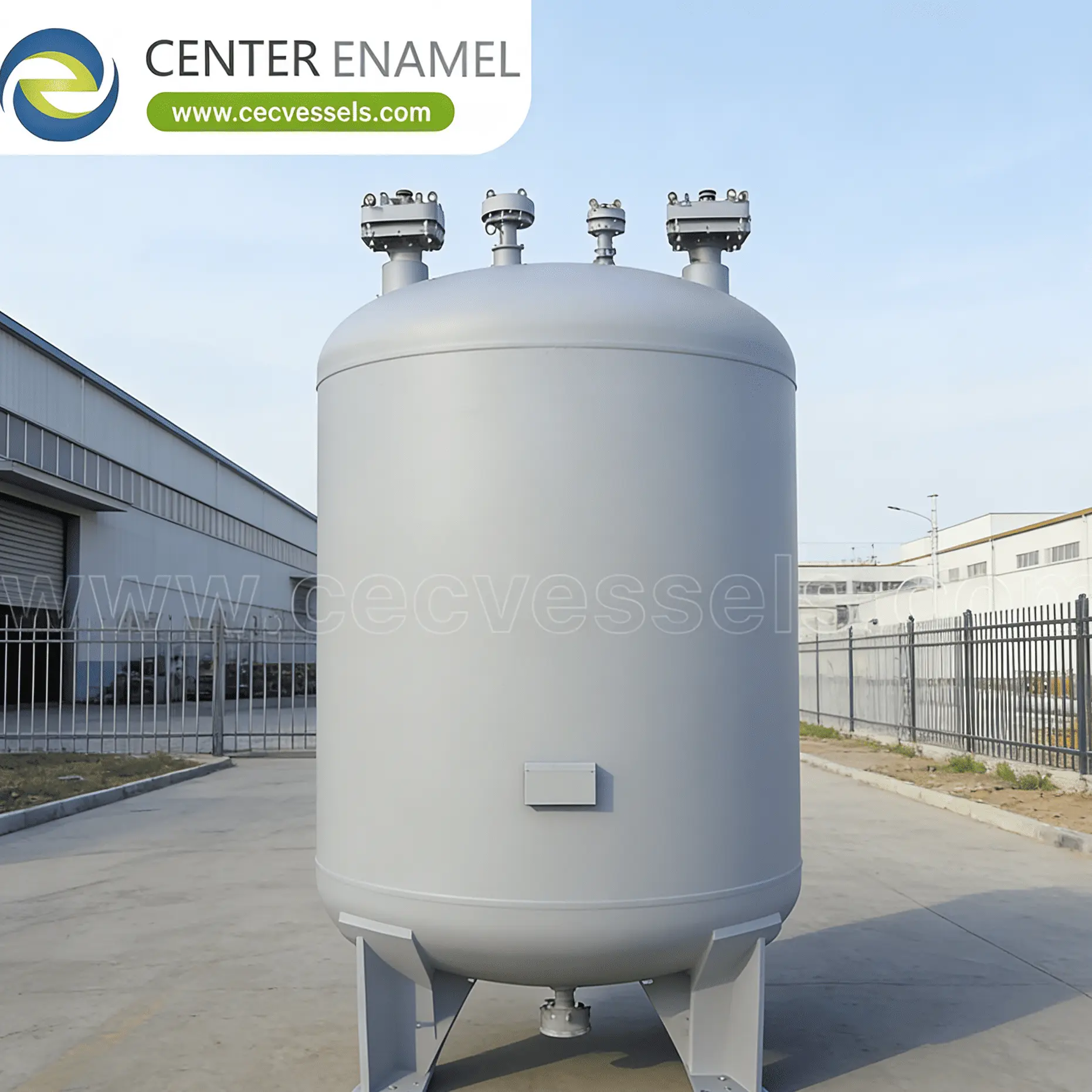
What Pressure Vessels Are Used in Wet-Process Separator Production?
Wet-process separator production can require several types of process vessels and liquid-handling equipment, particularly in the mixing, extraction, and solvent-recovery sections.
Typical equipment includes:
Blending vessels: Used for controlled polymer-liquid mixing and temperature management.
Extraction tanks: Used to contact the stretched film with an extraction liquid and remove the pore-forming component.
Solvent storage tanks: Used to hold fresh and recovered process liquids.
Distillation vessels and columns: Used to separate process liquids during solvent recovery.
Condensers and heat exchangers: Used to control process temperatures and condense recovered vapor streams.
The required vessel material, volume, design temperature, operating conditions, agitation system, heating or cooling method, and applicable design standard should be determined from the actual process data.
What Factors Should Be Considered When Selecting Wet-Process Vessels?
Process-vessel selection should be based on the actual operating conditions rather than vessel size alone.
Important engineering parameters include:
Process medium and chemical composition
Operating and design temperature
Operating and design pressure
Vessel working volume
Material compatibility
Agitation requirements
Heating and cooling requirements
Nozzle configuration
Internal components
Cleaning requirements
Solvent-recovery configuration
Applicable design code
Required inspection and testing
For wet-process separator lines, the vessel design should also consider how the equipment integrates with upstream mixing, downstream extraction, solvent recovery, pumps, heat exchangers, and process-control systems.
Frequently Asked Questions About the Wet Process of Separators
What is the wet process of separator manufacturing?
The wet process is a microporous separator manufacturing method that combines a polyolefin with a liquid pore-forming component, forms a film, stretches it, extracts the liquid phase, dries the film, and heat-sets the final separator.
Why is it called the wet process?
It is called the wet process because a liquid phase is used during separator formation and pore development. In battery-separator manufacturing, paraffin oil and other liquid process components can be used before extraction.
What polymer is commonly used in the wet process?
Polyethylene is one of the most common polymers used for wet-process battery separators. HDPE and UHMWPE are frequently discussed in wet-process separator research and manufacturing.
What is the purpose of paraffin oil in the wet process?
Paraffin oil can function as a liquid pore-forming component in polyethylene separator manufacturing. It is later extracted from the stretched polymer film to create the interconnected microporous structure.
What is the extraction stage in separator manufacturing?
The extraction stage removes the liquid pore-forming component from the stretched polymer film. An appropriate extraction solvent dissolves the liquid phase, leaving micropores within the polymer matrix.
What is biaxial stretching in the wet process?
Biaxial stretching means stretching the separator precursor in both the machine direction (MD) and transverse direction (TD). This process changes polymer orientation and contributes to the required film thickness, pore morphology, and mechanical properties.
What is the difference between wet-process and dry-process separators?
Wet-process separators use a liquid phase and an extraction step to develop the microporous structure, while dry-process separators generally develop pores through controlled stretching and morphology changes without the same liquid extraction route.
What equipment is required for wet-process separator manufacturing?
A typical line can include heated blending vessels, extruders, casting rolls, MD and TD stretching equipment, extraction tanks, drying ovens, heat-setting equipment, solvent-recovery units, distillation columns, condensers, storage tanks, pumps, and heat exchangers.
What is the role of a wet-process extraction tank?
The extraction tank provides controlled contact between the stretched separator film and the extraction liquid. It removes the pore-forming liquid and supports formation of the final microporous membrane structure.
Can Center Enamel manufacture vessels for wet-process separator production?
Center Enamel provides process equipment and pressure-vessel solutions for industrial fluid-processing applications. Vessel design can be developed according to the required process medium, volume, temperature, pressure, material, internal components, and applicable engineering standard.
Engineering Support for Wet-Process Separator Equipment
Wet-process separator manufacturing requires close integration between polymer processing, liquid extraction, thermal management, and solvent recovery. Process vessels therefore need to be designed around the actual production sequence rather than treated as independent equipment.
Center Enamel can support the engineering and fabrication of process vessels used in mixing, extraction, storage, heat transfer, and liquid recovery systems. Project-specific vessel design can be developed from process conditions, equipment dimensions, material requirements, applicable standards, and connection details.


