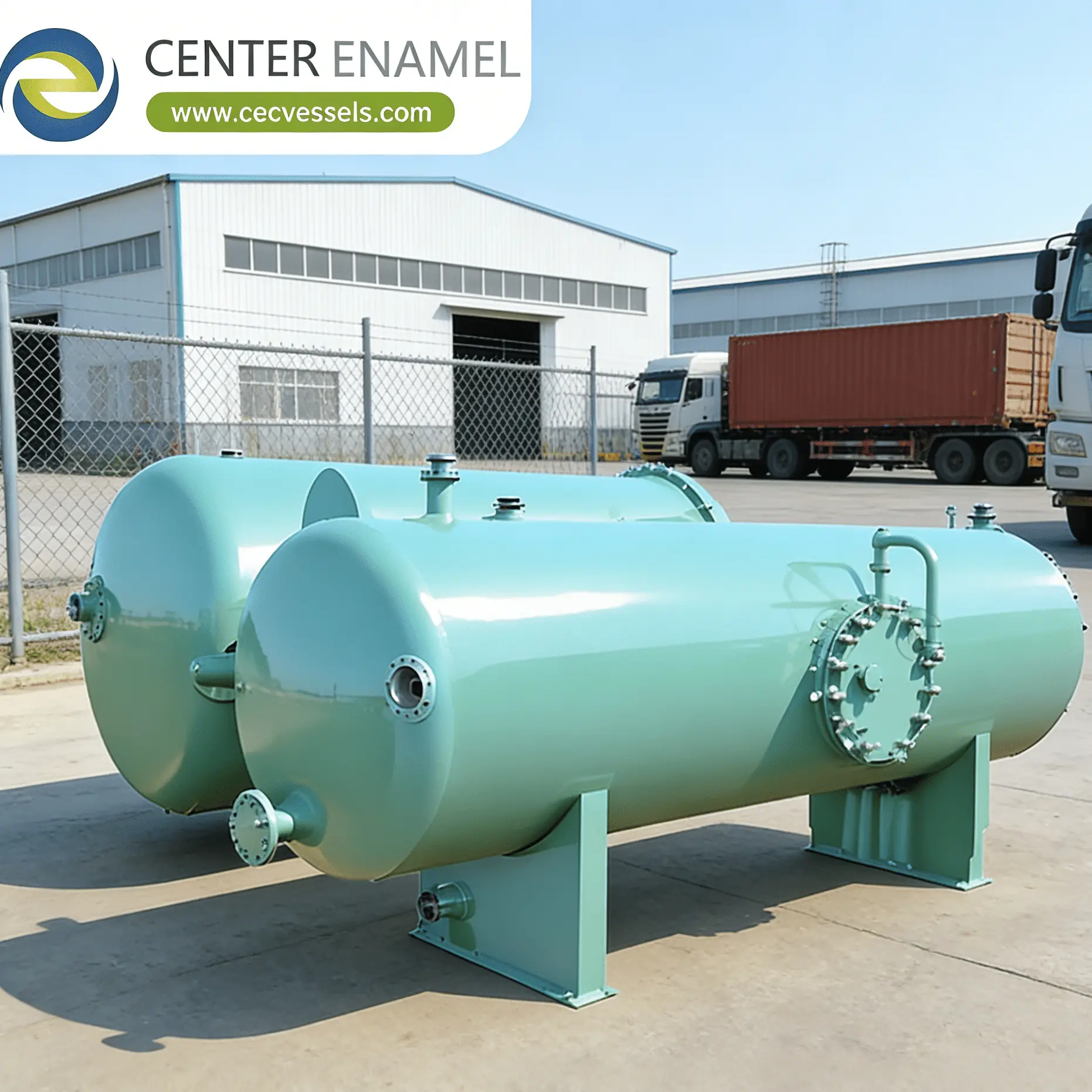
Thermal energy is the internal energy associated with the microscopic motion and interactions of particles within a substance. In heat transfer, thermal energy moves between regions at different temperatures through conduction, convection, radiation, or phase-change processes. Industrial heat exchangers transfer thermal energy between process fluids for heating, cooling, condensation, evaporation, and heat recovery.
What Is Thermal Energy?
Thermal energy is the portion of a substance's internal energy associated with the microscopic motion and interactions of its particles. The particles in solids, liquids, and gases are continuously moving and interacting, and their microscopic behavior contributes to the thermal state of the material.
Temperature and thermal energy are related but are not the same quantity. Temperature describes the average kinetic energy of particles, while the total thermal energy of a material also depends on factors such as mass, material properties, molecular structure, and the state of the substance.
For example, a large tank of warm water can contain more total thermal energy than a small cup of hotter water because the larger quantity of water contains many more particles. Therefore, temperature alone does not determine the total amount of thermal energy available for transfer.
What Is Heat Transfer?
Heat transfer is the movement of thermal energy caused by a temperature difference. Thermal energy naturally transfers from a region of higher temperature toward a region of lower temperature until thermal equilibrium is approached.
The term heat describes energy in transit because of a temperature difference. Thermal energy describes energy associated with the thermal state of a material. This distinction is important when explaining industrial heating and cooling systems.
In an industrial heat exchanger, for example, a hot process fluid transfers thermal energy to a colder fluid through a separating heat-transfer surface. The hot fluid loses thermal energy while the cold fluid gains thermal energy.
How Does Thermal Energy Transfer?
Thermal energy can be transferred through three primary heat-transfer mechanisms: conduction, convection, and radiation. Phase change is also important in many industrial thermal processes because evaporation and condensation involve significant amounts of latent heat.
Conduction
Conduction is the transfer of thermal energy through a material caused by microscopic interactions between particles. In a metal heat exchanger, thermal energy passes through the wall separating two fluid streams.
The rate of conductive heat transfer depends on factors including thermal conductivity, wall thickness, heat-transfer area, and temperature difference. Materials with higher thermal conductivity generally provide a more effective path for conductive heat transfer.
In a shell and tube heat exchanger, for example, thermal energy passes through the tube wall from the hotter fluid to the colder fluid.
Convection
Convection is the transfer of thermal energy between a surface and a moving fluid. Convection can occur naturally because of density differences or can be enhanced by pumps, fans, or other fluid-moving equipment.
Industrial heat exchangers commonly use forced convection because controlled fluid flow increases contact between the process fluid and the heat-transfer surface.
For example, hot water flowing through tubes can transfer thermal energy to colder water flowing around the tubes. The thermal energy first moves from the hot water to the tube wall and then from the tube wall to the colder water.
Radiation
Thermal radiation transfers energy through electromagnetic waves and does not require direct physical contact between two materials. Radiation becomes particularly important at elevated temperatures and in applications involving furnaces, combustion systems, radiant heaters, and thermal processing equipment.
Unlike conduction and convection, thermal radiation can transfer energy through a vacuum.
Phase Change
Phase change involves the absorption or release of latent heat when a substance changes between solid, liquid, and gas states.
Evaporation requires a substance to absorb thermal energy, while condensation releases thermal energy. Because phase change can transfer substantial amounts of energy at relatively constant temperature, it is widely used in evaporators, condensers, steam systems, refrigeration equipment, and process heating systems.
Thermal Energy vs. Temperature vs. Heat
Thermal energy, temperature, and heat describe different aspects of thermal behavior.
Temperature indicates the average kinetic energy of particles in a substance. Thermal energy represents energy associated with the microscopic thermal state of the substance and depends on the amount and properties of the material. Heat refers to energy transferred between systems because of a temperature difference.
A simple example is water in two containers. A small quantity of hot water may have a higher temperature than a large quantity of warm water, but the large quantity can contain more total thermal energy.
This distinction is important in industrial process design because equipment selection depends not only on temperature but also on mass flow rate, heat capacity, phase behavior, heat-transfer area, and required thermal duty.
How Does a Heat Exchanger Transfer Thermal Energy?
A heat exchanger transfers thermal energy between two or more fluids while controlling the flow paths of the process streams. In many industrial designs, the fluids remain physically separated by a conductive wall.
A typical heat-transfer sequence contains three steps:
Thermal energy moves from the hot fluid to the heat-transfer surface through convection.
Thermal energy passes through the solid wall by conduction.
Thermal energy moves from the wall to the colder fluid through convection.
The overall heat-transfer performance depends on the temperature difference, heat-transfer area, fluid properties, flow velocity, material thermal conductivity, and heat exchanger configuration.
The temperature difference between the hot and cold streams provides the driving force for heat transfer. Increasing the effective heat-transfer area can also increase the amount of thermal energy transferred within a given process.
Common Types of Thermal Energy Heat Exchangers
Different industrial processes require different heat exchanger configurations. Common designs include shell and tube heat exchangers, plate heat exchangers, double-pipe heat exchangers, air-cooled heat exchangers, and jacketed vessels.
Shell and Tube Heat Exchanger
A shell and tube heat exchanger contains a bundle of tubes installed inside an outer shell. One fluid flows through the tubes while another fluid flows through the shell side.
Thermal energy transfers through the tube walls between the two fluid streams. Baffles can direct shell-side flow across the tubes and increase fluid contact with the heat-transfer surface.
Shell and tube heat exchangers are widely used in chemical processing, petrochemical production, power generation, heating systems, cooling systems, and heat recovery applications.
Plate Heat Exchanger
A plate heat exchanger uses multiple thin plates to create separate flow channels for the hot and cold fluids. Thermal energy passes through the plates from one stream to another.
The corrugated plate structure can provide a large effective heat-transfer area within a compact equipment footprint. Plate heat exchangers are commonly used for liquid heating and cooling, food processing, HVAC systems, and industrial thermal management.
Double-Pipe Heat Exchanger
A double-pipe heat exchanger consists of one pipe positioned inside another pipe. One fluid flows through the inner pipe while the second fluid flows through the surrounding passage.
The simple configuration can be suitable for relatively small heat-transfer duties and applications where straightforward installation and maintenance are important.
Jacketed Vessel
A jacketed vessel transfers thermal energy between a process material inside a vessel and a heating or cooling medium circulating through an external jacket.
Jacketed vessels are commonly used for batch processing, chemical reactions, mixing, temperature-controlled storage, and other processes where the contents need controlled heating or cooling.
What Factors Affect Thermal Energy Transfer?
Several process parameters determine how effectively thermal energy can be transferred between materials or fluid streams.
Temperature Difference
A larger temperature difference generally provides a stronger driving force for heat transfer. The actual temperature profile depends on the selected flow arrangement and process conditions.
Heat-Transfer Area
A larger effective heat-transfer area can increase the amount of thermal energy transferred. Tubes, plates, fins, and other engineered surfaces can be used to increase available transfer area.
Thermal Conductivity
Thermal conductivity describes how readily a material conducts thermal energy. Heat exchanger walls are commonly manufactured from materials selected for their combination of thermal conductivity, mechanical properties, corrosion resistance, and process compatibility.
Fluid Properties
Fluid density, viscosity, specific heat capacity, thermal conductivity, and phase behavior all influence heat-transfer performance.
A high-viscosity fluid, for example, can behave differently from a low-viscosity fluid under the same flow conditions. Heat exchanger design therefore needs to consider the actual properties of the process streams.
Flow Arrangement
Parallel flow, counter flow, and cross flow produce different temperature profiles.
In parallel flow, the hot and cold fluids enter from the same end and move in the same general direction. In counter flow, the two fluids move in opposite directions. Counter-flow arrangements can maintain a useful temperature difference across a larger portion of the heat-transfer surface and are widely used for efficient thermal transfer.
Industrial Applications of Thermal Energy Transfer
Thermal energy transfer is essential in many industrial processes where materials must be heated, cooled, evaporated, condensed, or maintained within a defined temperature range.
Chemical and Petrochemical Processing
Heat exchangers can heat process fluids, cool reaction products, condense vapors, and recover thermal energy between process streams.
Oil and Gas Processing
Thermal energy transfer equipment can be used for crude oil preheating, product cooling, condensation, gas processing, and heat recovery.
Food and Beverage Processing
Heat exchangers provide controlled heating and cooling for liquids and can support processes such as pasteurization, product temperature control, and thermal treatment.
Pharmaceutical Processing
Controlled thermal transfer is important for maintaining specified process temperatures during formulation, mixing, reaction, cleaning, and other manufacturing operations.
Power Generation
Heat exchangers are used throughout steam and cooling cycles to transfer thermal energy between water, steam, air, and other working fluids.
Wastewater and Environmental Treatment
Thermal equipment can support temperature control, evaporation, concentration, sludge treatment, and heat recovery in selected wastewater and environmental processes.
Why Is Thermal Energy Recovery Important?
Thermal energy recovery allows useful energy from a hot process stream to be transferred to another stream instead of being released without further use.
For example, a hot outlet stream can preheat a colder incoming process stream through a heat exchanger. The incoming stream requires less additional heating, while the hot outlet stream is cooled.
This type of heat recovery can improve overall thermal management and reduce the amount of external heating or cooling required by a process.
Materials Used for Thermal Energy Transfer Equipment
Material selection directly affects heat-transfer performance, equipment durability, fabrication requirements, and process compatibility.
Stainless steel is widely used because it provides a combination of corrosion resistance, mechanical strength, cleanability, and thermal performance. Carbon steel can also be selected for suitable process environments where its material properties meet the application requirements.
Other materials, including copper alloys, titanium, and specialized alloys, may be considered when thermal conductivity, corrosion resistance, temperature conditions, or fluid compatibility require different material properties.
The appropriate material should be selected according to the process fluid, temperature, thermal duty, mechanical design requirements, cleaning method, and applicable engineering standards.
Thermal Energy Equipment from Center Enamel
Center Enamel designs and manufactures industrial process equipment for thermal energy transfer and fluid processing applications. The product range includes heat exchangers and other process vessels used for heating, cooling, condensation, thermal management, and related industrial operations.
Equipment configuration can be developed according to the required heat-transfer duty, process fluid properties, material requirements, flow arrangement, equipment dimensions, and applicable design standards.
For a customized thermal energy transfer system, key engineering information typically includes fluid type, inlet and outlet temperatures, flow rate, heat-transfer duty, material requirements, operating conditions, and installation requirements.
Frequently Asked Questions About Thermal Energy in Heat Transfer
What is thermal energy in simple terms?
Thermal energy is energy associated with the microscopic motion and interactions of particles within a substance. The amount of thermal energy depends on the material, quantity, temperature, and physical state.
Is thermal energy the same as heat?
No. Thermal energy is associated with the thermal state of a material, while heat is energy transferred between systems because of a temperature difference.
What are the three main methods of heat transfer?
The three primary methods are conduction, convection, and radiation. Industrial thermal systems also frequently involve phase-change heat transfer through evaporation and condensation.
How does a heat exchanger transfer thermal energy?
A heat exchanger transfers thermal energy from a hotter fluid to a colder fluid through a heat-transfer surface. In a typical indirect heat exchanger, convection occurs on both fluid sides and conduction occurs through the separating wall.
What factors affect heat transfer?
Important factors include temperature difference, heat-transfer area, thermal conductivity, fluid properties, flow velocity, flow arrangement, and phase behavior.
What is the difference between thermal energy and temperature?
Temperature represents the average kinetic energy of particles, while thermal energy refers to the energy associated with the thermal state of the material. Thermal energy also depends on the amount and properties of the material.
Which heat exchanger is commonly used for industrial applications?
Shell and tube heat exchangers are widely used in industrial applications because their configuration can accommodate different fluids, heat-transfer duties, flow arrangements, materials, and process requirements. Plate, double-pipe, air-cooled, and jacketed systems are also selected for specific applications.
Can thermal energy be recovered?
Yes. Heat recovery systems transfer thermal energy from a hot process stream to a colder stream. This approach can reduce the additional heating or cooling requirement of the overall process and improve thermal energy utilization.
Thermal Energy and Industrial Heat Transfer
Thermal energy provides the basis for industrial heating, cooling, evaporation, condensation, and heat recovery. Understanding the difference between thermal energy, temperature, and heat transfer helps engineers select suitable equipment and operating conditions.
Heat exchangers provide a controlled method for transferring thermal energy between process streams. Shell and tube, plate, double-pipe, air-cooled, and jacketed systems can be selected according to fluid properties, thermal duty, heat-transfer area, flow arrangement, material requirements, and process configuration.
For industrial applications, effective thermal management depends on matching the heat-transfer equipment with the actual process conditions. Center Enamel can provide customized heat-transfer and process equipment based on project-specific thermal, material, dimensional, and engineering requirements.


