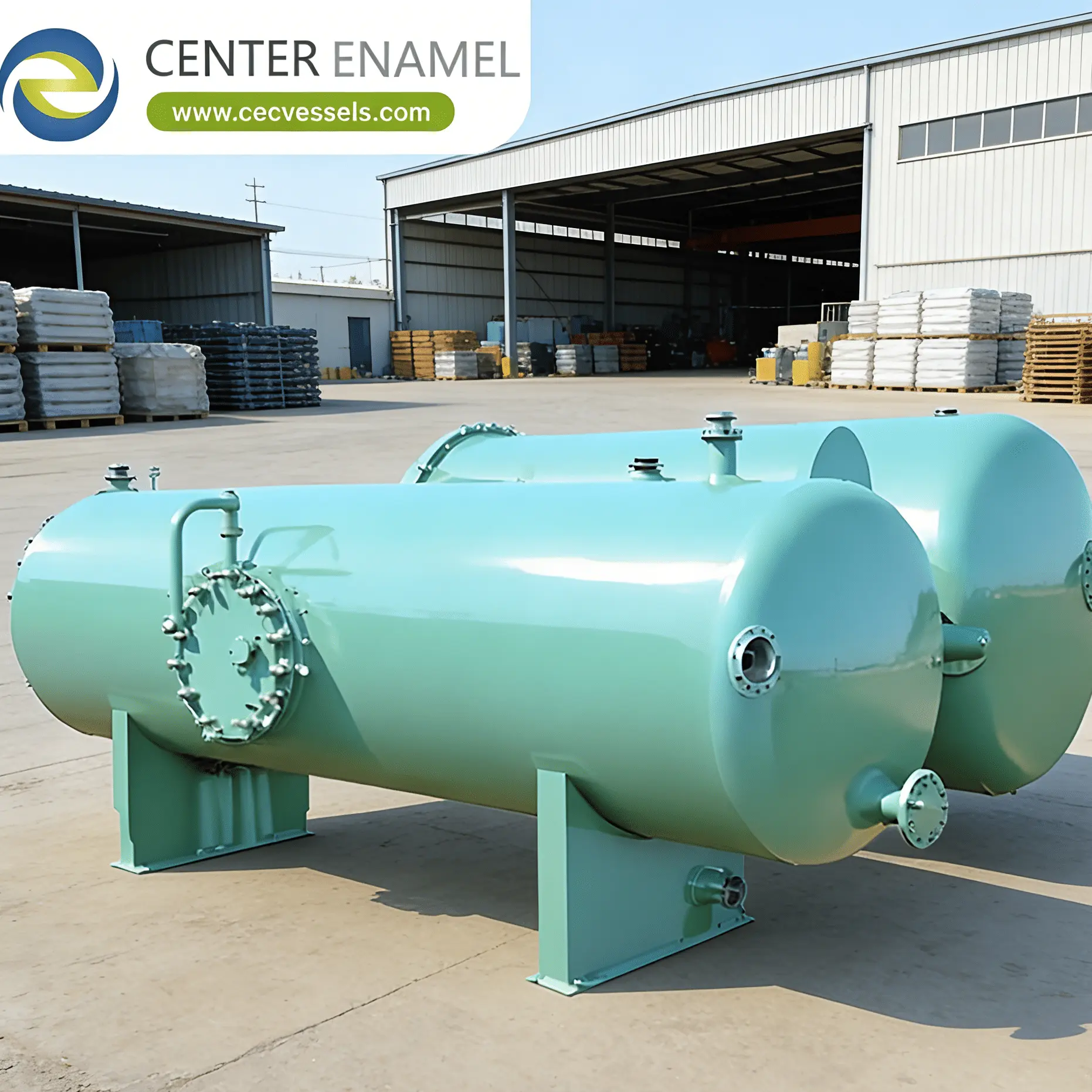
Forced-Circulation MVR Evaporator: What Makes Forced Circulation Suitable for Difficult Liquids
A Forced-Circulation MVR Evaporator is an advanced thermal concentration system that combines mechanical vapor recompression technology with continuous forced liquid circulation. It is designed to concentrate process liquids while improving heat utilization and maintaining controlled circulation through the evaporation system. MVR, or Mechanical Vapor Recompression, recycles the secondary vapor generated during evaporation. Instead of continuously relying on fresh steam as the primary heat source, the generated vapor is compressed by a mechanical vapor compressor, increasing its temperature and pressure level so that it can be reused as a heating medium. The forced-circulation configuration uses a circulation pump to continuously move the process liquid through the heat exchanger and evaporation chamber. This arrangement is particularly suitable for liquids with high concentrations of dissolved solids, increased viscosity, or a tendency to form crystals during concentration. By combining forced circulation with MVR technology, the evaporator can provide controlled heat transfer, continuous liquid movement, and efficient vapor reuse within one integrated process system. How Does a Forced-Circulation MVR Evaporator Work?The working principle begins with the introduction of feed liquid into the evaporation system. The liquid is combined with circulating concentrate and continuously transported through the heat exchanger by a circulation pump. The heating section transfers thermal energy to the circulating liquid. As the liquid enters the evaporation chamber, part of the volatile component vaporizes. The generated secondary vapor is separated from the concentrated liquid. The vapor then enters the mechanical vapor compressor. The compressor increases the vapor temperature so that it can be reused as a heating medium in the heat-transfer section. Meanwhile, the concentrated liquid continues circulating through the system. A portion of the concentrate is discharged when it reaches the required concentration, while the remaining liquid returns to the circulation loop. This continuous circulation provides a stable flow through the heat-transfer equipment and helps maintain consistent evaporation conditions. Why Is Forced Circulation Suitable for Difficult Liquids?Some process liquids become increasingly viscous or contain more suspended and dissolved solids as evaporation progresses. These characteristics can affect the way liquid moves through an evaporation system. Forced circulation addresses this requirement by using a dedicated circulation pump to maintain continuous liquid movement. The high circulation rate can improve heat-transfer conditions and maintain a more uniform liquid distribution across the heat-transfer surfaces. This makes the configuration suitable for concentrated liquids that require consistent circulation during evaporation. Forced circulation is also useful when crystallization may occur during concentration. Rather than relying primarily on natural circulation caused by density differences, the circulation pump actively moves the liquid through the system. This configuration can support applications involving high-solids solutions, concentrated wastewater, salt-containing liquids, chemical solutions, and other process streams where maintaining controlled liquid movement is important. What Are the Main Components of a Forced-Circulation MVR Evaporator?A complete Forced-Circulation MVR Evaporator consists of several interconnected components. Circulation PumpThe circulation pump is one of the defining components of a forced-circulation system. It continuously transports the process liquid through the heat exchanger and evaporation chamber. Pump selection depends on flow rate, liquid viscosity, solids concentration, temperature, and other process conditions. Heat ExchangerThe heat exchanger transfers thermal energy to the circulating liquid. Its design directly affects evaporation capacity and overall thermal performance. Different heat-transfer configurations can be considered according to the properties of the process liquid and the desired evaporation conditions. Evaporation ChamberThe evaporation chamber provides the space for vapor-liquid separation. After the circulating liquid receives thermal energy, part of the volatile component vaporizes and is separated from the concentrated solution. The chamber dimensions and internal configuration can be customized according to the process capacity and operating conditions. Mechanical Vapor CompressorThe mechanical vapor compressor is the core component responsible for vapor recompression. It raises the temperature of the generated secondary vapor so that the vapor can be reused within the heating cycle. This vapor recycling principle is central to MVR technology and helps reduce dependence on continuously supplied fresh heating steam. Vapor-Liquid SeparatorThe vapor-liquid separation system separates generated vapor from the concentrated liquid. Proper separation helps ensure that vapor enters the compressor with appropriate process conditions while the concentrated liquid continues through the circulation loop. Control SystemTemperature, liquid level, flow rate, concentration, and other operating parameters can be monitored through an integrated control system. Automated control allows the evaporation process to be adjusted according to changing feed and production conditions. What Types of Liquids Can Be Processed?Forced-Circulation MVR Evaporators are suitable for many liquid streams that require concentration or volume reduction. High-solids liquids are one important application category. As evaporation removes water or another volatile component, the concentration of dissolved substances increases. Continuous circulation helps keep the concentrated liquid moving through the system. Viscous liquids can also benefit from forced circulation because the circulation pump actively transports the liquid rather than relying solely on natural flow. Crystallizing solutions represent another important application. When dissolved substances approach their solubility limits, crystals may begin to form. A forced-circulation configuration can maintain continuous movement of the concentrated liquid and support integration with crystallization processes. The technology can also be applied to chemical solutions, food-processing liquids, industrial wastewater, salt solutions, and other specialized process streams. The actual suitability of an MVR evaporator should always be determined according to the liquid composition, concentration, temperature, viscosity, solids content, and required evaporation capacity. What Are the Benefits of MVR Vapor Recompression?Mechanical vapor recompression improves the utilization of thermal energy within the evaporation process. During conventional evaporation, generated secondary vapor may be condensed or otherwise discharged from the main heating cycle. In an MVR system, this vapor becomes a reusable energy source after mechanical compression. The compressed vapor is returned to the heating section, where its increased temperature allows it to transfer heat to the circulating liquid. This creates a continuous thermal cycle in which evaporation vapor is reused rather than treated simply as a byproduct. For industrial plants operating continuously, this configuration can provide an effective approach to thermal energy management. The MVR system can also reduce the need for large amounts of continuously supplied fresh steam, depending on the process configuration and operating conditions. How Does Forced Circulation Improve Heat Transfer?Heat-transfer efficiency is closely connected with liquid flow conditions. When concentrated liquids have increased viscosity or contain significant dissolved solids, maintaining consistent circulation becomes particularly important. The circulation pump continuously moves liquid through the heat exchanger at a controlled flow rate. This creates a defined flow pattern across the heat-transfer surfaces. Continuous movement can improve contact between the liquid and heat-transfer surfaces and help maintain more uniform temperature distribution. The circulation loop can also be designed to keep concentrated liquid moving between the heat exchanger and evaporation chamber. This allows the evaporation process to operate continuously while maintaining the required liquid circulation rate. Heat exchanger dimensions, pump capacity, piping arrangement, and evaporation chamber configuration should therefore be considered together during system design. Where Are Forced-Circulation MVR Evaporators Used?Forced-Circulation MVR Evaporators are used across several industrial sectors. Chemical IndustryChemical manufacturing often involves concentrated solutions requiring controlled evaporation. MVR evaporation can be integrated with reactors, crystallizers, separators, storage tanks, and other process equipment. Wastewater TreatmentIndustrial wastewater may contain dissolved salts, minerals, organic compounds, and other substances. Evaporation can reduce liquid volume and concentrate dissolved components for further treatment or recovery. Forced circulation is particularly applicable to wastewater streams where the concentrate requires continuous movement through the evaporation system. Food and Beverage ProcessingFood processing applications may require concentration of liquid ingredients, extracts, syrups, and other solutions. Material selection and system configuration can be adapted to the required processing conditions. Pharmaceutical ProcessingEvaporation can be used for concentration and solvent removal in selected pharmaceutical processes. Stainless steel construction and appropriate surface finishing can be considered where hygienic processing is required. Salt and Mineral RecoverySolutions containing dissolved salts and minerals can be concentrated through evaporation before entering crystallization and solid-liquid separation stages. The Forced-Circulation MVR Evaporator can therefore serve as an important component in resource recovery systems. How Is a Forced-Circulation MVR Evaporator Integrated into a Process System?An MVR evaporator can operate as part of a larger industrial process. The feed liquid may first pass through filtration, clarification, pretreatment, or equalization. It then enters the evaporation system, where the circulating liquid is heated and partially vaporized. The concentrated liquid can subsequently move to crystallization, centrifugation, filtration, drying, or storage. The vapor generated during evaporation enters the vapor compressor and is returned to the heating system. Condensate generated through heat transfer can be collected and directed toward reuse or further treatment. This integrated configuration allows evaporation, vapor reuse, concentration, crystallization, and downstream separation to work as one coordinated process. Material Selection and ManufacturingMaterial selection is an important part of Forced-Circulation MVR Evaporator design because process liquids can have different chemical and physical characteristics. Stainless steel is widely used in evaporation equipment because of its corrosion resistance, cleanability, and suitability for many chemical, food, pharmaceutical, and environmental applications. Carbon steel can also be selected for suitable industrial applications where the process conditions permit. Protective surface treatment can be applied according to the intended operating environment. Center Enamel evaluates material requirements together with process conditions when developing customized evaporation equipment. The manufacturing process includes raw material inspection, cutting, forming, welding, machining, assembly, surface treatment, and final inspection. Key dimensions and component positions are checked throughout fabrication. Heat exchangers, circulation piping, evaporation chambers, separators, compressor connections, supports, and other components are assembled according to approved engineering drawings. Center Enamel as a Forced-Circulation MVR Evaporator ManufacturerCenter Enamel is an industrial equipment manufacturer providing customized process equipment for chemical processing, environmental applications, wastewater treatment, and other industrial sectors. As a Forced-Circulation MVR Evaporator Manufacturer, Center Enamel combines process equipment engineering, fabrication capabilities, material selection, quality control, and project support. Our engineering team can evaluate feed flow rate, evaporation capacity, liquid concentration, solids content, viscosity, temperature, circulation requirements, heat-transfer conditions, and downstream processing requirements. Based on these parameters, the evaporator configuration can be customized to include appropriate circulation pumps, heat exchangers, evaporation chambers, vapor separators, vapor compressors, piping, instrumentation, and control components. This integrated approach helps ensure that the evaporation equipment corresponds with the actual process requirements. Why Choose a China Forced-Circulation MVR Evaporator Manufacturer?Choosing an experienced China Forced-Circulation MVR Evaporator Manufacturer can provide access to customized engineering and manufacturing capabilities for industrial evaporation projects. Center Enamel has manufacturing experience covering evaporators, reactors, heat exchangers, separators, pressure vessels, and storage equipment. This broad product portfolio allows our engineering team to consider evaporation as part of the customer's complete process system. From technical consultation and preliminary design to fabrication, inspection, delivery, and project support, Center Enamel provides coordinated equipment manufacturing services. Customized configurations can be developed for chemical processing, wastewater treatment, food and beverage production, pharmaceutical applications, salt recovery, mineral processing, and other industrial applications. The equipment can be developed according to customer process requirements, material specifications, production capacity, installation conditions, and applicable technical standards. Quality Control for MVR Evaporation EquipmentQuality control is maintained throughout the manufacturing process. Raw materials are inspected before fabrication, while forming, welding, machining, assembly, and surface treatment are performed according to established manufacturing procedures. Dimensional inspections verify vessel geometry, heat-exchanger connections, piping positions, and component installation. Welded areas can receive appropriate non-destructive inspection according to project requirements. Equipment components are also checked during assembly to ensure that the finished system corresponds with approved drawings. Final inspection covers appearance, dimensions, connections, internal components, surface conditions, and other specified requirements. Manufacturing and inspection documentation can be prepared to support project quality management and equipment traceability. Supporting Efficient Concentration of Difficult LiquidsThe Forced-Circulation MVR Evaporator combines two important technologies: active liquid circulation and mechanical vapor recompression. Forced circulation maintains continuous movement of concentrated liquid through the heat-transfer system, while MVR technology reuses generated vapor as a thermal energy source. This combination makes the system particularly suitable for high-solids, viscous, and crystallizing liquids that require controlled circulation during evaporation. Center Enamel provides customized evaporation equipment for chemical processing, wastewater treatment, food and beverage production, pharmaceutical applications, salt recovery, mineral processing, and other industrial sectors. As a Forced-Circulation MVR Evaporator Manufacturer and China Forced-Circulation MVR Evaporator Manufacturer, Center Enamel integrates equipment design, material selection, fabrication, inspection, and project support to develop evaporation solutions based on actual process requirements. For projects involving difficult liquids, selecting the appropriate circulation configuration, heat-transfer system, vapor recompression arrangement, and downstream process integration can help create a practical and efficient evaporation system.
|