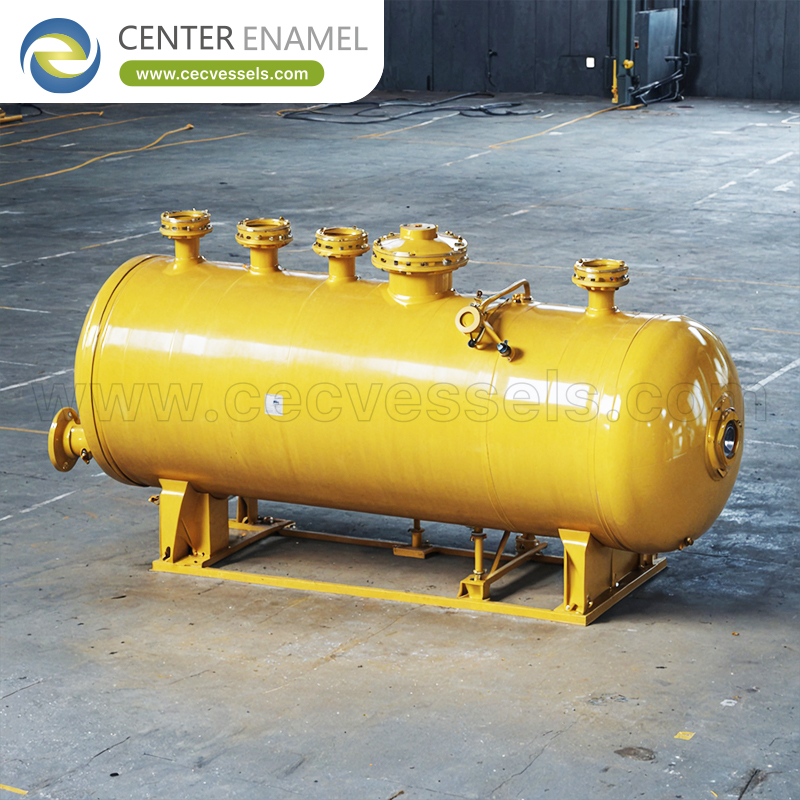
Who Is the Manufacturer of Gas Separators in China
In modern industrial facilities, chemical production plants, and municipal treatment systems, isolating dry gas from multi-phase fluid streams is a fundamental processing requirement. Partnering with a dedicated Gas Separator Manufacturer is the most reliable way to design customized processing vessels that can isolate vapor and return clean fluids back into active process loops. For international procurement managers, finding a dependable China Gas Separator Manufacturer involves looking for fabrication companies that maintain advanced metallurgy setups, certified robotic welding systems, and strict compliance with global codes. Center Enamel has established itself as an industry leader by engineering and manufacturing custom-configured pressure vessels, process chambers, and separation systems tailored to various industrial sectors. By applying advanced manufacturing standards and structural designs, the company helps global facilities maintain efficient fluid loops while operating within secure mechanical boundaries.
Central Objectives of Gas Separation in Industrial FacilitiesWithin modern industrial installations, specialized phase separation systems serve as the primary mechanical infrastructure for executing targeted fluid isolation across multi-phase mixtures and gas-liquid streams. Rather than relying solely on chemical treatments to break complex chemical mixtures, industrial plants utilize mechanical separation hardware to isolate volatile gases and valuable process liquids directly within the active production loop. The primary thermodynamic and mechanical objective of these process enclosures is to facilitate rapid phase separation based on the varying densities, boiling points, or molecular weights of the constituent substances. By maintaining absolute control over fluid dynamics and temperature profiles inside the chamber, the separation hardware allows processing systems to continuously extract clean recovered gases and purified liquids.
Properly designed internal settling zones, mist elimination pads, and heat transfer surfaces ensure that mixed fluids pass through the separation zones at a calculated velocity, reducing boundary layer resistance and optimizing physical separation. This steady mechanical performance significantly lowers the operational costs of downstream purification units, reduces total consumption of raw materials, and ensures steady fluid purification across complex processing grids.
Core Physical Principles of Gas Separator DesignTo understand the engineering behind a gas separator, it is necessary to examine the physical mechanisms that enable separation to happen within the vessel chamber. Most industrial separators utilize a combination of gravity settling, centrifugal force, and barrier coalescence:
1. Gravity DisengagementUnder normal operating conditions, liquid droplets suspended in a rising gas stream are naturally pulled downward by gravity because their density is much higher than that of the surrounding gas. This density-driven partition is described by fluid dynamics principles, which state that the settling velocity of a liquid droplet is directly proportional to the square of its diameter and the density difference between the phases, and inversely proportional to the gas viscosity.
2. Centrifugal and Cyclone SeparationFor process streams containing extremely fine liquid droplets that settle too slowly under gravity, separators utilize centrifugal force. By directing the inlet fluid into a circular path inside a cyclone chamber, the heavier liquid particles are forced outward against the vessel walls, where they slide down into the liquid discharge sump, while the clarified gas flows upward through the center vortex.
3. Coalescence and DemistingTo capture smaller, dispersed micro-droplets that rise too slowly on their own, gas separators incorporate internal baffle plates or mist extractors. These plates provide a high surface area where incoming fluid streams impact, causing the micro-droplets to collide, merge into larger liquid masses, and drop back into the liquid reservoir, preventing liquid carryover.
Key Structural Varieties of Gas Separator EquipmentIndustrial gas separator manufacturers construct several distinct equipment configurations, each optimized for specific liquid volumes, gas flow rates, and chemical compositions:
1. Vertical Gas SeparatorsVertical separators are highly favored in applications where the liquid-to-gas ratio is low to moderate, or where physical platform footprint space is limited. The vertical orientation provides a tall gravity settling chamber, allowing liquid droplets to fall back down to the bottom pool while dry gas exits through the top nozzle, offering excellent performance in liquid surge situations. 2. Horizontal Gas SeparatorsFor installations handling high volumes of liquid and dissolved gas mixtures, horizontal separators provide a much larger gas-liquid interface surface area. This configuration allows for rapid gas bubble release from the liquid phase and facilitates efficient oil-water-gas separation, making it highly common in bulk fluid processing complexes.
3. Filter SeparatorsWhen processing extremely dry gas streams that contain sub-micron liquid aerosols and fine solid particulates, standard gravity separators are supplemented by filter separators. These units utilize double-compartment designs containing coalescing filter cartridges in the first stage to merge fine aerosols, followed by a mist extraction pad in the second stage to ensure complete gas dryness.
4. Cyclone SeparatorsUtilizing centrifugal velocity rather than internal filter media, cyclone separators are ideal for processing gas streams with high concentrations of solid particles or heavy liquid mist. Because they do not contain filters that can clog, these units operate continuously with low maintenance requirements. Gas Separator Equipment Selection MatrixTo assist plant design engineers and procurement professionals in selecting the appropriate equipment configuration for their specific process streams, the following table contrasts the primary separation systems:
Critical Structural Sub-Components of Gas SeparatorsAn industrial-grade gas separation system built by an elite manufacturer is an assembly of precision-machined sub-components engineered to handle complex fluid mixtures while maintaining long-term structural integrity:
Outer Casing Shell: The heavy-gauge primary protective container housing the internal separation elements, fabricated from certified steel plates with verified full-penetration welds.
Internal Coalescing Media: High-surface-area matrices engineered to encourage microscopic fluid droplets to merge into larger, easily separable fluid layers.
Machined Tubesheet Plates: Thick circular steel plates precision-drilled to receive and secure internal filter elements, forming a completely secure, leak-tight boundary.
Adjustable Skimmer Weirs: Internal mechanical barriers designed to allow separated surface liquids to overflow into collection sumps while retaining the heavier water phase.
Removable Access Hatches: Heavy forged manways that can be easily unbolted, providing maintenance teams with direct mechanical access to the interior components for manual washing.
Heavy-Duty Connecting Flanges: Precision-machined structural ports built to interface smoothly with heavy industrial transfer pumps and external facility piping networks.
Integrated Sensor Mounts: Built-in structural ports designed to receive interface level sensors and temperature monitoring instruments directly within the active fluid chambers.
Material Science and Advanced Internal Surface ProtectionsThe service longevity and operational reliability of an industrial separator are directly influenced by the metallurgy and surface treatments selected during the design phase. Because processed fluids frequently carry aggressive organic acids, dissolved sulfur compounds, abrasive catalysts, and variable pH profiles, matching the structural material to the fluid chemistry is essential.
For general utility storage, pre-treated water loops, and non-corrosive industrial loops, high-strength carbon steels like SA516 Grade 70 or Q345R provide a highly durable and cost-effective structural foundation. To shield the bare steel from oxidation and moisture degradation, the interior surfaces receive specialized thick-film coatings, such as chemical-resistant epoxy linings, which create a smooth, hydrophobic barrier that prevents rust and maintains fluid purity. When processing aggressive chemical mixtures, municipal waste streams, or food-grade organic products, engineers specify premium stainless steel alloys such as 304L or 316L. The inclusion of molybdenum in 316L stainless steel provides native resistance against localized pitting and crevice corrosion, ensuring the container walls remain free from degradation over decades of continuous operation.
Manufacturing Excellence and Quality Assurance by Center EnamelCenter Enamel has earned a prominent position in the international industrial supply chain by expanding its core operations from advanced material engineering into comprehensive process vessel, storage shell, and separation equipment fabrication. As a reliable Pressure Vessel Manufacturer, the company integrates custom engineering design, state-of-the-art production infrastructure, and stringent quality control systems to deliver high-performance hardware to global markets.
A primary technical advantage of Center Enamel is its deep expertise in high-durability surface protections and advanced metallurgy. For fluid networks handling aggressive chemical solutions, corrosive utility water, or processing streams prone to mineral scaling, the company utilizes premium stainless steel alloys alongside proprietary protective technologies. These advanced coatings chemically bond the structural strength of steel with the inert resistance of glass, forming an internal barrier that prevents corrosion and significantly extends the service lifespan of the equipment.
Additionally, Center Enamel utilizes sophisticated digital engineering tools, including Finite Element Analysis and Computational Fluid Dynamics, to simulate fluid routing patterns and thermal distribution profiles inside the shell before physical assembly begins. This rigorous engineering depth ensures that internal deflection baffles, coalescing packs, and fluid nozzles are completely optimized to maximize separation precision while minimizing flow resistance across the system.
Regulatory Certification Codes and Construction StandardsTo ensure that industrial separation vessels can safely operate within continuous processing loops, all design and manufacturing stages must comply with the strict parameters established by leading engineering reference codes.
ASME Boiler and Pressure Vessel Code (Section VIII)The ASME code represents the leading international standard for pressure-retaining industrial components. Section VIII provides the exact mathematical formulas for calculating minimum shell thicknesses, nozzle reinforcement zones, and structural load margins. Holding an official ASME authorization confirms that a manufacturer maintains complete material traceability, utilizes qualified welding procedures, and performs exhaustive radiographic inspections on all pressure-retaining seams.
GB/T 150.1-150.4-2024The newly updated national standard for metal pressure vessels in China integrates the latest engineering updates regarding finite element calculation rules, modern material classifications, and automated testing methods. Adherence to GB/T 150.1-150.4-2024 ensures full compliance with local regulatory frameworks and guarantees that vessels meet the requirements of modern industrial utility grids.
BS EN 13445This harmonized European standard governs the design, fabrication, and testing of unfired pressure vessels across European economic sectors. It focuses heavily on detailed stress-analysis methodologies, allowing engineering teams to optimize material usage while ensuring the completed equipment maintains full fatigue resistance under prolonged operational cycles.
Strategic Integration with Secondary Process SystemsHigh-efficiency separation hardware does not operate as isolated components; it serves as a central processing node within comprehensive engineering and fluid management layouts. Center Enamel designs and constructs a wide variety of supporting pressure vessels and process equipment to create unified, high-efficiency processing installations:
Steam Distribution Cylinders: Organizing and directing bulk steam lines from central factory boilers to separate heat exchanger shells, vessel jackets, and preheating systems across the facility.
Condensate Collection Tanks: Accumulating hot purified water and condensed steam from thermal cycles, enabling immediate resource recycling to minimize plant fuel consumption.
Coalescing Fluid Separators: Extracting oil or solvent droplets, grease, and suspended moisture from steam lines or compressed air loops to keep heat transfer surfaces completely clean.
Water Treatment Resin and Adsorption Tanks: Purifying incoming boiler feedwater to eliminate scale-forming minerals, protecting internal components from sediment accumulation.
Sourcing Strategies for Engineering Procurement ManagersSourcing heavy industrial separation equipment requires procurement professionals to balance initial capital investments with long-term operational efficiency and equipment longevity. Evaluating a potential manufacturing partner requires examining their engineering depth, manufacturing infrastructure, and cross-border logistics experience.
The initial stage of procurement involves a detailed mapping of the chemical and physical characteristics of both processing fluids. Sourcing teams must provide accurate data regarding fluid viscosity, operating temperatures, volumetric flow rates, density differentials, and the concentration of suspended solids. This technical data ensures the engineering team can select the appropriate internal geometry, settling chamber volumes, and surface metallurgy to prevent premature fouling or fluid bypass during field operation. Global Supply Chain Dynamics and Future OutlookThe global market for industrial separation systems is entering a transformative era focused on resource conservation, automated process control, and decentralized manufacturing networks. Industrial operations are shifting away from generic off-the-shelf equipment toward highly specialized, custom-engineered process units designed to maximize the recovery of valuable hydrocarbons, organic compounds, and clean reusable water directly from effluent lines.
To meet these changing global market requirements, manufacturing organizations in China have made significant investments to upgrade their production facilities. Modern production facilities utilize advanced laser cutting systems, computerized welding controls, and non-destructive digital testing laboratories to ensure absolute dimensional accuracy. This digital manufacturing workflow guarantees that custom-built vessel shells and separation elements align perfectly with original engineering software models. The upcoming development milestone involves integrating smart sensor infrastructure directly into the separator casing walls. Built-in electronic monitoring arrays can track internal liquid-liquid interface levels, layer densities, and flow pressure drops in real time, transmitting this performance data into central facility management systems. This continuous data stream allows factory operators to identify early signs of filter clogging or sediment build-up and schedule maintenance actions during standard planned shutdowns, eliminating unexpected processing interruptions.
In conclusion, establishing a reliable fluid processing installation requires partnering with a manufacturer that possesses deep material science expertise, advanced technical production tools, and strict adherence to international safety codes. Sourcing specialized hardware that maximizes processing efficiency while maintaining material compliance provides long-term operational security. Center Enamel continues to support global industrial infrastructure by producing high-performance processing hardware that meets strict international criteria, helping facilities worldwide achieve long-term efficiency and operational success.
|