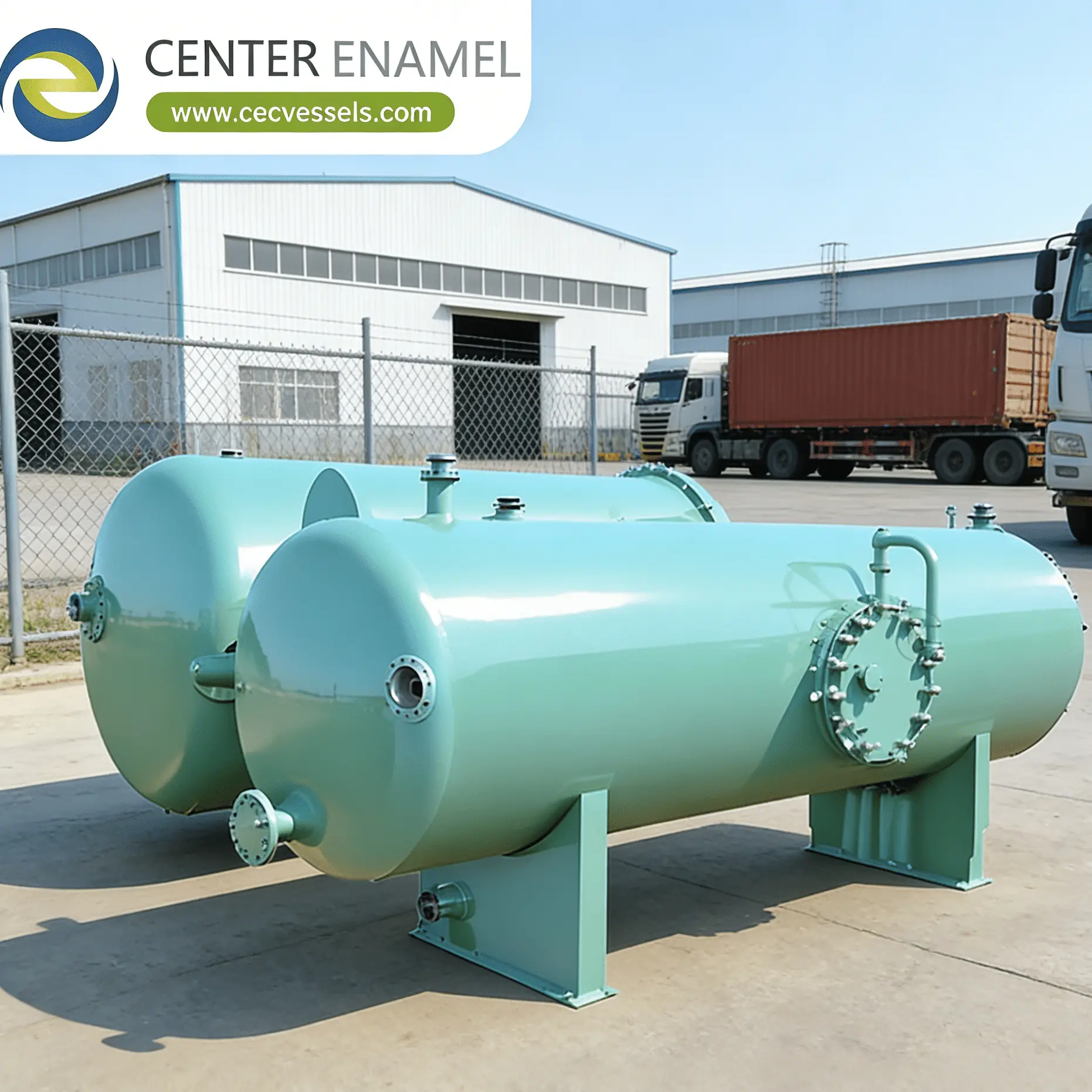
Working Principle of the Hydrogenation Gas-Liquid Reactor
Hydrogenation processes occupy a central and indispensable role in modern chemical engineering, petrochemical refinement, fine chemical production, and pharmaceutical manufacturing. At the core of these complex industrial transformations lies the hydrogenation reactor, a specialized pressure vessel meticulously engineered to facilitate multi-phase reactions involving gaseous hydrogen, liquid reactants, and solid heterogeneous catalysts. Mastering the hydrogenation reactor working principle allows chemical engineers, plant operators, and process designers to optimize mass transfer kinetics, enhance reaction rates, manage severe thermal fluxes, and ensure stable, scalable, and safe production cycles across diverse industrial applications.
Historically, industrial hydrogenation faced severe technological bottlenecks primarily stemming from the inherent difficulty of mixing gases and liquids in the presence of solid catalysts. Because hydrogen gas possesses low solubility in most liquid reaction media, traditional reactors relied heavily on high-pressure gas compression, massive external stirring devices, and inefficient bubbling techniques. These legacy systems often suffered from poor interfacial area creation, massive energy consumption, and inadequate temperature control. Modern reactor engineering, however, has revolutionized this domain by introducing advanced internal circulation and external loop configurations that fundamentally transform how gas, liquid, and solid phases interact inside the reaction vessel.
Thermodynamic and Kinetic Fundamentals of Hydrogenation
To fully appreciate the mechanical and fluid dynamic features of modern hydrogenation equipment, one must first examine the fundamental thermodynamics and kinetics governing catalytic hydrogenation reactions. A typical catalytic hydrogenation process is a tri-phase reaction system comprising:
lThe gas phase, consisting of molecular hydrogen. lThe liquid phase, containing dissolved reactants, solvents, or organic substrates. lThe solid phase, represented by heterogeneous catalysts such as palladium on carbon, platinum, nickel, or ruthenium.
The overall rate of a hydrogenation reaction is rarely determined solely by the intrinsic chemical reaction rate occurring on the surface of the catalyst. Instead, it is almost invariably controlled by mass transfer steps. The transfer of hydrogen from the gas bubble into the liquid bulk, followed by its diffusion through the liquid boundary layer surrounding the catalyst particle, constitutes the primary rate-limiting step.
Therefore, the working principle of any advanced hydrogenation reactor centers on maximizing the volumetric mass transfer coefficient, commonly denoted as kL a. By increasing the interfacial surface area between the gas and liquid phases and minimizing mass transfer resistance, modern reactor systems dramatically accelerate reaction kinetics, shorten batch times, and improve overall chemical yield and selectivity.
Internal Self-Priming Gas-Liquid Circulation Reactors
A major breakthrough in reactor technology is the self-priming gas-liquid internal circulation reactor. The operational principle of this specialized equipment is designed to eliminate the need for complex external gas compressors while simultaneously achieving exceptional gas dispersion.
The heart of an internal self-priming reactor is a specially engineered hollow agitator shaft coupled with a unique multi-blade turbine impeller. As the motor drives the agitator at high rotational speeds within the reaction vessel, a strong centrifugal force is generated. This dynamic movement creates a localized pressure drop, or negative pressure zone, immediately behind the impeller blades.
Because the hollow shaft extends upward from the impeller into the vapor headspace above the liquid level, this negative pressure acts as a natural vacuum pump. Unreacted hydrogen gas residing in the headspace is continuously drawn down through the interior of the hollow shaft and forced directly into the liquid medium.
Simultaneously, liquid reactants and suspended solid catalyst particles are swept into the mixing vortex created by the turbine blades. The hollow turbine mechanically shears and disperses the incoming hydrogen into millions of micro-scale bubbles. These micro-bubbles are then distributed uniformly throughout the entire liquid volume by lower axial flow paddles. This continuous internal loop creates a highly turbulent, homogeneous suspension that drastically reduces mass transfer resistance and ensures that every catalyst particle is constantly bombarded with fresh dissolved hydrogen.
External Circulation and Venturi Mixing Configurations
While internal self-priming systems offer exceptional performance for many standard batch processes, certain high-capacity industrial applications require alternative approaches to manage extreme reactant loads or massive heat release. This has led to the widespread adoption of external circulation configurations, often integrated with advanced Venturi mixing technology.
In an external circulation reactor setup, the reaction liquid is continuously drawn from the bottom of the main reaction vessel using a specialized heavy-duty centrifugal pump. This liquid stream is then forcefully routed through an external pipeline containing a Venturi tube or jet nozzle.
Simultaneously, fresh or recycled hydrogen gas from the reactor headspace is introduced into the Venturi suction port. As the high-velocity liquid stream passes through the narrow throat of the Venturi tube, it creates a powerful localized pressure drop that forcefully draws the gas into the liquid stream. The immense shear forces generated within the Venturi throat break the gas down into ultra-fine micro-bubbles, creating an intensely dispersed two-phase mixture before it is reintroduced back into the main vessel through distribution nozzles located near the bottom of the reactor.
The primary advantages of this external loop approach include exceptionally rapid reaction rates, excellent capability for continuous or semi-continuous operation, and superior integration with external heat exchangers. Because the gas-liquid mixing occurs outside the main vessel in a dedicated shear zone, the main reactor vessel can be optimized purely for residence time and thermal management.
The Crucial Role of Agitation and Catalyst Suspension
Catalysts are the cornerstone of industrial hydrogenation, responsible for lowering the activation energy required for chemical transformations to occur. However, heterogeneous catalysts exist as solid particles suspended within a liquid medium, introducing severe fluid dynamic challenges. If agitation is inadequate, solid catalysts rapidly settle toward the bottom of the reactor, forming a stagnant sludge layer. This phenomenon, known as catalyst settling or dead-zone formation, renders a large percentage of the catalyst inactive and can lead to localized overheating and dangerous run-away reactions.
Modern hydrogenation reactors solve this problem through sophisticated impeller design. Combining hollow turbine impellers with secondary pitched-blade axial flow elements ensures comprehensive bulk fluid motion. The axial flow elements lift settled catalyst particles from the vessel floor and drive them upward, while the radial and hollow turbine elements disperse gas outward.
This harmonious fluid dynamic synergy keeps catalyst particles uniformly suspended in a stable slurry. As a result, the active catalytic sites remain fully exposed and accessible to both dissolved hydrogen and liquid organic substrates. Furthermore, rigorous mechanical agitation prevents thermal stratification, ensuring that the entire volume of the reactor maintains a uniform temperature profile.
Thermal Management in Exothermic Hydrogenation Reactions
Most catalytic hydrogenation reactions are highly exothermic, meaning they release vast quantities of thermal energy as chemical bonds are formed. If this heat is not removed efficiently and continuously, the internal temperature of the reactor can rise exponentially, leading to catalyst deactivation, boiling of the solvent, unwanted side reactions, or catastrophic over-pressurization of the vessel.
The working principle of advanced hydrogenation reactors incorporates sophisticated thermal management systems to handle these intense energy fluxes. Internal cooling coils, external half-pipe jackets, and specialized plate heat exchangers are integrated directly into the reactor design.
In internal circulation reactors, the rapid movement of the liquid slurry enhances the convective heat transfer coefficient between the fluid and the vessel walls or internal cooling surfaces. In external circulation systems, the pumped liquid loop can be easily routed through an external shell-and-tube heat exchanger, providing massive cooling capacity that far exceeds what internal coils alone can achieve. Precise temperature control ensures that sensitive pharmaceutical intermediates are not degraded by thermal stress, maintaining high product quality and process safety.
Key Operational Parameters and Engineering Considerations
Optimizing the performance of a hydrogenation reactor requires continuous monitoring, precise control, and careful tuning of several critical operational parameters:
lGas-Liquid Mass Transfer Rate (kL a): The speed at which hydrogen dissolves into the liquid phase often acts as the master variable controlling the entire process. Advanced reactor designs directly maximize this parameter through high-shear agitation and micro-bubble generation. lReaction Temperature: Maintaining strict thermal boundaries prevents runaway reactions, minimizes byproduct formation, and protects temperature-sensitive functional groups in complex organic molecules. lOperating Pressure: Consistent pressure monitoring ensures a steady, reliable driving force for gas dissolution while ensuring that the mechanical integrity of the pressure vessel remains well within safe engineering limits. lPower Consumption and Energy Efficiency: While external loops and high-speed turbine agitators deliver exceptional mixing efficiency, they demand substantial electrical power. Balancing high mass transfer performance with energy economy is a primary goal for modern chemical equipment designers. lCatalyst Loading and Recovery: Managing the concentration of solid catalysts ensures optimal reaction velocity without overloading filtration systems downstream.
Industrial Applications Across Sectors The versatility, efficiency, and reliability of advanced hydrogenation reactors have driven their adoption across a wide spectrum of modern manufacturing industries:
lThe Pharmaceutical Industry: Hydrogenation is heavily utilized in the synthesis of complex active pharmaceutical ingredients, selective reduction of nitro groups, debenzylation, and the saturation of olefinic bonds. Clean, tightly controlled internal circulation reactors ensure high purity and compliance with strict regulatory standards. lPetrochemical Refining: Large-scale hydrogenation reactors are deployed for hydroprocessing, hydrotreating, desulfurization, and upgrading heavy crude oil fractions into clean-burning diesel, gasoline, and jet fuel. These heavy-duty vessels operate under extreme temperatures and pressures. lFine Chemicals and Agrochemcials: Specialized reactors are employed to manufacture precursors, specialty polymers, plasticizers, and agricultural intermediates. lFood Processing: Hydrogenation plays a vital role in the hardening of edible oils, transforming liquid vegetable oils into stable fats used in margarines, shortenings, and various food formulations.
The hydrogenation reactor stands as an undisputed cornerstone of modern chemical engineering, enabling efficient, scalable, and safe molecular transformations across pharmaceuticals, petrochemicals, and fine chemical manufacturing. By leveraging innovative technologies such as self-induced internal circulation turbines and external Venturi mixing loops, contemporary reactor designs successfully overcome the historical mass transfer limitations that plagued earlier chemical processing equipment. Understanding the fundamental working principles of these sophisticated systems—ranging from gas-liquid mass transfer and fluid dynamics to catalyst suspension and thermal management—ensures optimized operational performance, superior reaction rates, and long-term industrial reliability. As engineering methodologies continue to evolve, the hydrogenation reactor will remain at the forefront of sustainable and efficient chemical production.
|